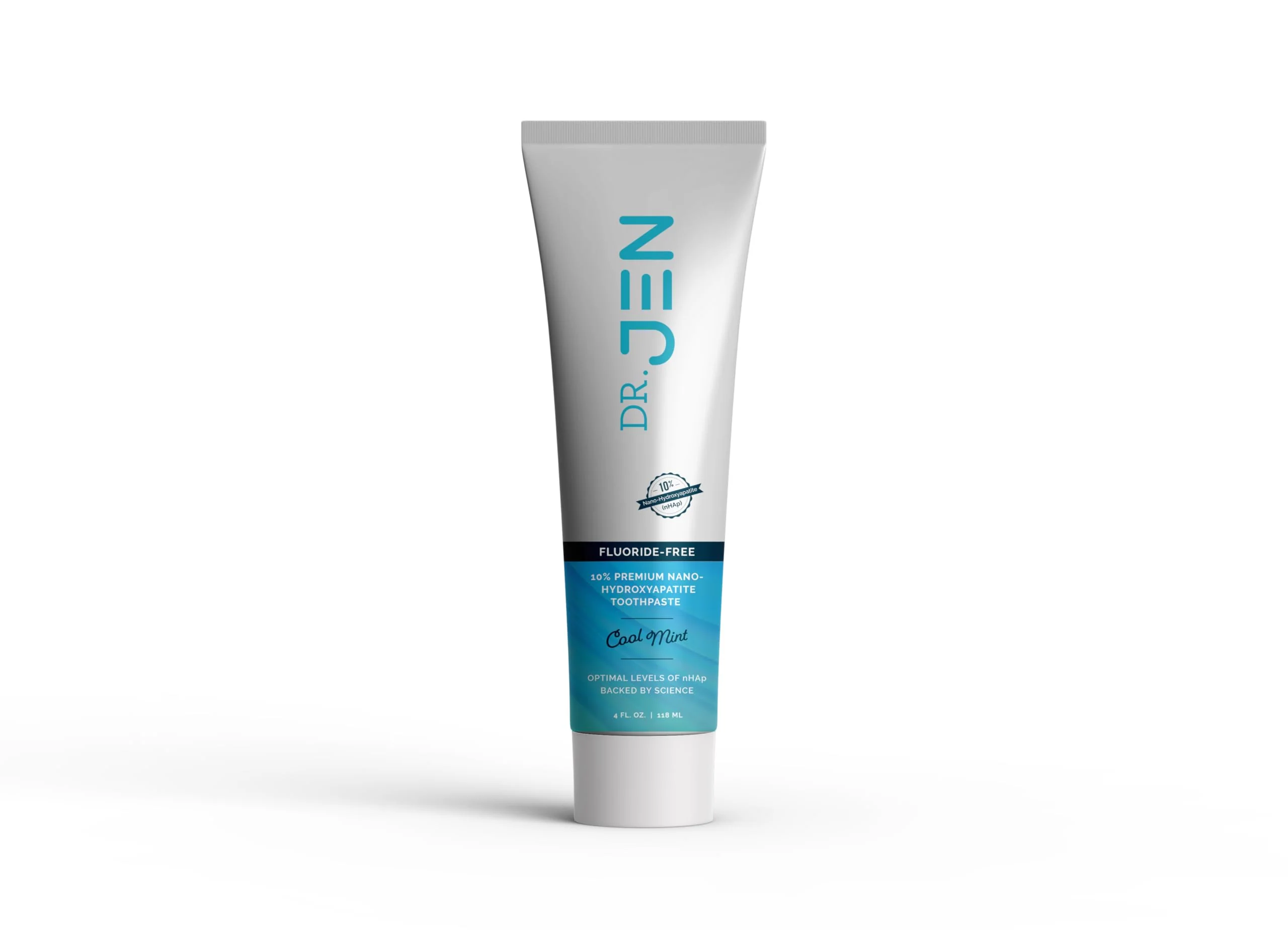
For over half a century, the blueprint for dental health was simple: brush with fluoride, twice a day, no exceptions. Fluoride was the “gold standard,” credited with a massive global reduction in tooth decay. However, a new player has emerged from the world of regenerative medicine—Nano-Hydroxyapatite (nHAp).
While the dental community has long relied on chemical fortification, we are now entering the era of biomimetic restoration. This article explores the chemistry, safety, and clinical performance of the two most important minerals in your medicine cabinet.
1. The Anatomy of a Tooth
To understand how these ingredients work, we first have to look at what they are trying to save. Your enamel is the hardest substance in your body, but it isn’t a solid, dead block. It is a complex crystal lattice.
The primary building block of this lattice is Hydroxyapatite, represented by the chemical formula:
Ca₁₀(PO₄)₆(OH)₂
This mineral is made of Calcium (Ca), Phosphate (PO₄), and Hydroxyl (OH) groups. Under a microscope, these crystals are arranged in tightly packed rods. When you eat acidic foods or when bacteria ferment sugar, they release hydrogen ions that dissolve these crystals. This is demineralization.
2. Fluoride: The Chemical Reinforcer
Fluoride (F⁻) does not actually “rebuild” your tooth in the way many people think. Instead, it acts as a catalyst to change the tooth’s chemical identity.
The Conversion to Fluorapatite
When you brush with fluoride, the fluoride ions replace the hydroxyl (OH) ions in your natural tooth mineral. This creates a new, tougher substance called Fluorapatite:
Natural Enamel: Ca₁₀(PO₄)₆(OH)₂
+ Fluoride Treatment = Reinforced Enamel: Ca₁₀(PO₄)₆F₂
The “Acid Shield”
The main advantage of Fluorapatite is its Critical pH.
- Natural Hydroxyapatite starts to dissolve at a pH of 5.5.
- Fluorapatite does not begin to dissolve until the pH hits 4.5.
By lowering the threshold at which your teeth dissolve, fluoride gives you a “safety net” against acidic drinks like coffee or soda.
3. Hydroxyapatite: The Biological Builder
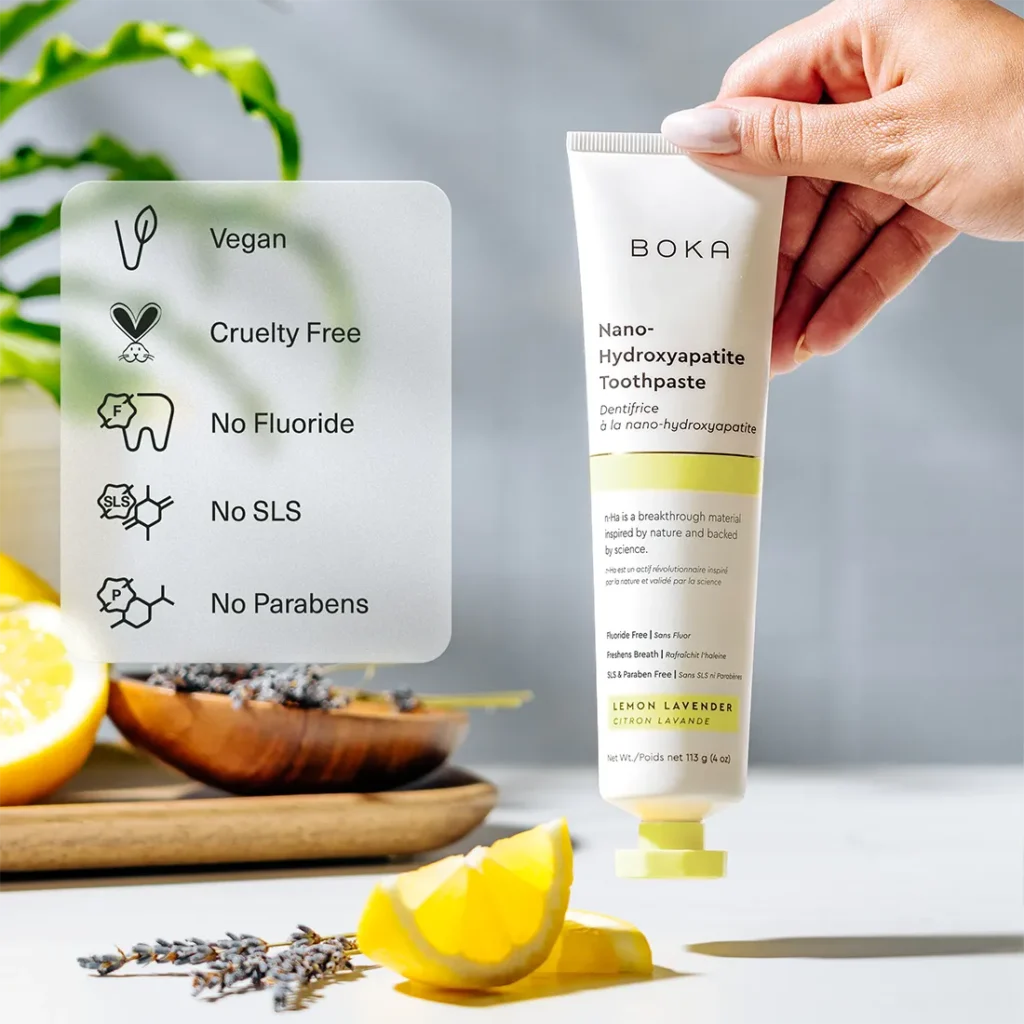
While fluoride creates a harder, synthetic-hybrid surface, Nano-Hydroxyapatite (nHAp) is essentially “liquid enamel.” It is the exact same material your body uses to build teeth.
How Nano-Technology Changes the Game
Standard hydroxyapatite is too large to do much for your teeth. However, Nano-Hydroxyapatite uses particles between 20 and 100 nanometers. Because these particles are so small, they have a massive surface area and a high “binding affinity” for your teeth.
- Remineralization: Instead of just changing the surface chemistry, nHAp fills in the “potholes” in your enamel with actual calcium and phosphate.
- Biofilm Shield: nHAp makes the tooth surface incredibly smooth. This makes it much harder for plaque bacteria to “hook” onto your teeth.
- Dentin Desensitization: This is the “killer feature” of nHAp.
4. The Sensitivity Solution
If you have ever felt a sharp pain when drinking cold water, you likely have exposed dentin tubules. These are tiny tunnels that lead directly to the nerve of the tooth.
- Fluoride helps sensitivity eventually by hardening the surface, but it’s a slow process.
- Nano-Hydroxyapatite physically enters these tunnels and plugs them up. Clinical trials show that nHAp is often more effective than traditional “sensitive” toothpastes (which usually just numb the nerve with Potassium Nitrate) because it treats the physical cause of the pain.
5. Safety and Biocompatibility
The most debated topic in modern oral care is toxicity.
- Fluoride: While safe in small topical doses, fluoride is a systemic toxin if swallowed in large amounts. This is why children’s toothpaste carries a warning. Excessive fluoride during tooth development can also cause Dental Fluorosis, leading to white spots or brittle enamel.
- Hydroxyapatite: Since your bones and teeth are already made of it, nHAp is 100% biocompatible. If a child swallows a whole tube of hydroxyapatite toothpaste, the body simply sees it as extra calcium and phosphate. It is the ultimate “no-worry” ingredient for families.
6. Which One is Better?
| Feature | Fluoride (F⁻) | Hydroxyapatite (nHAp) |
| Action | Hardens enamel (Chemical) | Rebuilds enamel (Physical) |
| Acid Resistance | Extreme (pH 4.5) | Standard (pH 5.5) |
| Sensitivity Relief | Moderate/Slow | Excellent/Fast |
| Safety | Toxic if ingested | Non-toxic / Biocompatible |
| Whitening | None | Mild (Smoothing effect) |
Use Fluoride if:
- You have a very high-sugar or high-acid diet.
- You have a history of frequent, deep cavities.
- You are looking for the most affordable option.
Use Hydroxyapatite if:
- You have sensitive teeth.
- You are looking for a non-toxic option for children.
- You want a “biomimetic” approach that restores natural enamel.
- You want to avoid the risk of fluorosis or systemic fluoride intake.
Quick Shop
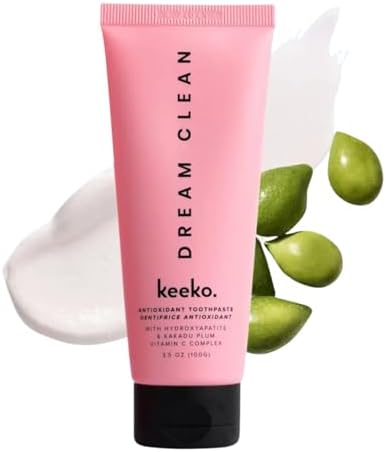


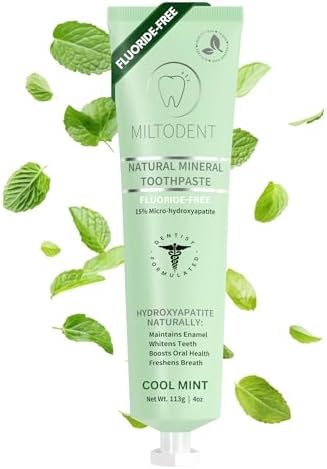
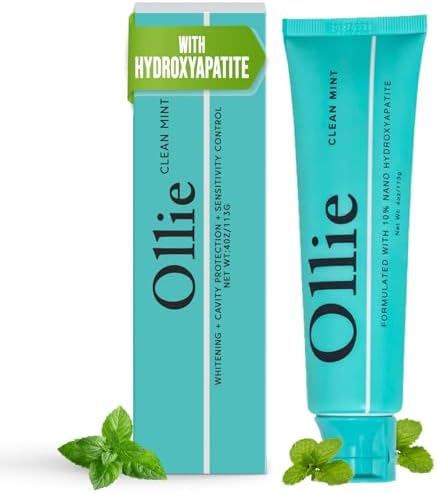
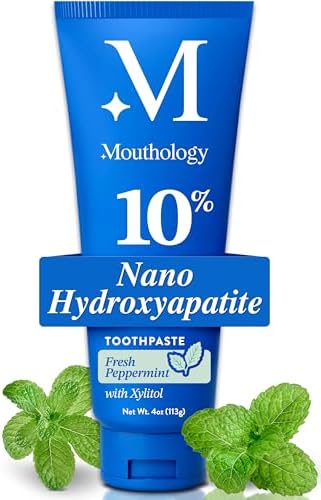
The battle between Ca₁₀(PO₄)₆(OH)₂ and Fluoride is no longer about which one “wins,” but about which one fits your lifestyle. Fluoride is a powerful shield, but Hydroxyapatite is a master builder. For many, the best results come from using a combination of both—or switching to HAp for a safer, more natural daily routine.