Sonic vs Oscillating Toothbrush: Which Electric Brush Is Better for Your Teeth and Gums?
Amazon Affiliate Disclosure:
Hydropaste may earn a commission when you buy through qualifying links on this page. This does not affect our editorial recommendations, comparison logic, or how we evaluate toothbrush technology.
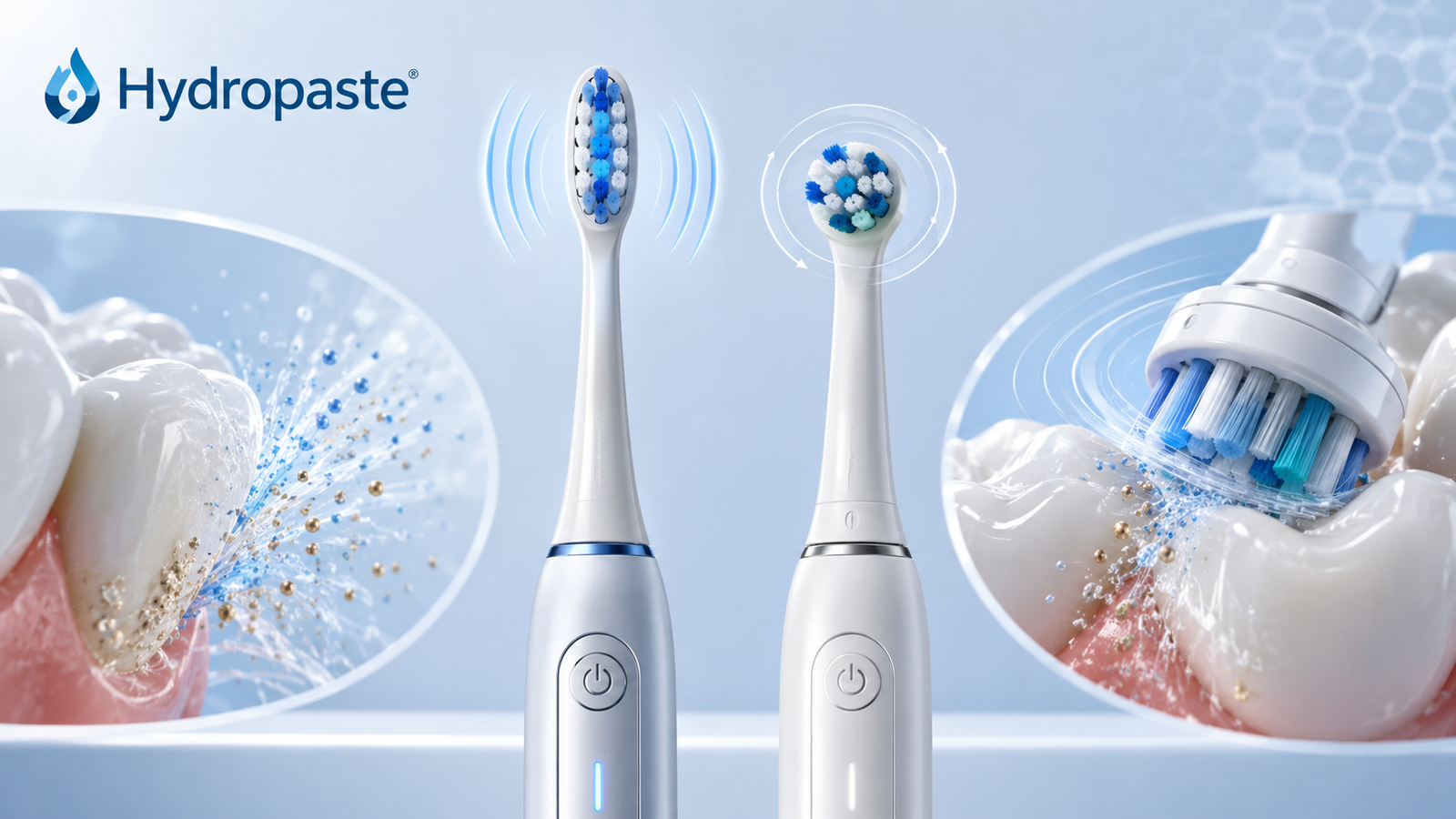
Choosing between a sonic vs oscillating toothbrush, is one of the most important decisions in the electric toothbrush category. Both can clean better than a manual toothbrush when used correctly, but they do not clean in the same way. A sonic toothbrush uses high-speed vibration and sweeping motion. An oscillating-rotating toothbrush usually uses a small round head that rotates, pulses, and cups each tooth individually.
The difference matters because brushing is not only about removing visible plaque. It is also about protecting the gumline, controlling brushing pressure, improving consistency, reaching difficult areas, and building a routine that you can actually maintain.
This guide belongs to the Electric Toothbrush Hub inside Hydropaste’s broader Soft Tissue Integration center, where we study how oral-care technology interacts with gums, enamel, plaque biofilm, and daily hygiene behavior.
Quick Jump
| User Intent | Go To Section |
|---|---|
| I want the simplest answer | Sonic vs Oscillating Toothbrushes: Quick Verdict |
| I have sensitive gums | Best Choice for Gum Health |
| I want plaque removal | Plaque Removal Comparison |
| I am buying for braces | Braces, Crowns, Implants and Dental Work |
| I want smart features | Trends and Latest Technology |
| I want price guidance | Costs: Sonic vs Oscillating Toothbrushes |
| I want risks before buying | Risks and Limitations |
| I want a side-by-side chart | Sonic vs Oscillating Toothbrush Comparison Chart |
What This Guide Is For
This guide helps readers decide whether a sonic toothbrush vs oscillating toothbrush is better for their specific mouth, habits, and dental priorities.
It is designed for people comparing:
- Sonic toothbrushes such as Philips Sonicare-style brushes
- Oscillating-rotating toothbrushes such as Oral-B-style round-head brushes
- Smart electric toothbrushes with apps, timers, pressure sensors, and brushing feedback
- Budget electric toothbrushes versus premium models
- Gentle gum-care brushing versus more intensive plaque-focused cleaning
This page should also support internal navigation toward your related cluster pages. Readers who want to view ranking products can continue to Best Electric Toothbrushes, while readers focused on safety features can move into Pressure Sensor Brushes Explained.
Who Needs This Sonic vs Oscillating Toothbrush Guide?
This comparison is most useful for people who are not just buying a toothbrush, but trying to solve a real oral-care problem.
People With Gum Sensitivity
If your gums bleed easily, feel tender, or recede around the tooth necks, brushing force matters as much as brush type. Sonic brushes often feel smoother and less aggressive, while oscillating brushes can feel more direct. The right choice depends on technique, pressure control, and brush-head softness.
People With Heavy Plaque Buildup
If plaque collects around the gumline, behind the lower front teeth, or between crowded teeth, an oscillating-rotating toothbrush may feel more controlled because the small round head can isolate each tooth surface.
People Switching From Manual Brushing
A sonic brush may feel closer to a traditional toothbrush shape, while an oscillating brush requires a slower tooth-by-tooth technique. If you brush too fast with either type, cleaning performance drops.
People With Braces, Crowns, Bridges, Implants or Aligners
Dental work creates edges, margins, attachments, and hidden plaque traps. Brush-head shape becomes more important here. A compact oscillating head may clean around brackets and crown margins well, while a sonic brush may feel easier for full-arch coverage.
Caregivers and Older Adults
For seniors, people with arthritis, or anyone with reduced hand dexterity, the best electric toothbrush is usually the one that reduces technique burden. Larger handles, pressure sensors, visible timers, and easy replacement heads may matter more than motor type, especially when oral hygiene is part of a broader senior care routine supported by caregivers and virtual aging-care resources like TeleGeriatric.
For broader daily oral-care guidance, Hydropaste’s homepage connects electric brushing with toothpaste selection, gum support, enamel care, and preventive dental routines.
Benefits of Understanding Sonic vs Oscillating Toothbrushes
The benefit of comparing these two technologies is not simply choosing a “winner.” It helps match brushing motion to biology, behavior, and risk.
1. Better Plaque Control
Electric toothbrushes can improve plaque removal compared with manual brushing when used consistently. Reviews of oscillating-rotating power toothbrushes have reported stronger plaque, gingivitis, and bleeding reduction versus manual brushes, though product design and user technique still matter.
2. Improved Gumline Cleaning
Plaque that sits near the gumline contributes to inflammation. Both sonic and oscillating designs can help disrupt plaque biofilm, but they require different brushing movements.
3. Less Overbrushing When Sensors Are Used
Modern electric toothbrushes increasingly include pressure sensors. These warn users when they press too hard, which is especially important for people with recession, sensitive gums, or aggressive brushing habits.
4. More Consistent Brushing Time
Most electric toothbrushes include a two-minute timer and quadrant pacing. This is one of the most underrated benefits because many people manually brush for far less than two minutes.
5. Better Buying Decisions
Understanding the difference between sonic and oscillating toothbrushes helps readers avoid buying based only on brand popularity, vibration numbers, or discount pricing.
Sonic vs Oscillating Toothbrushes: Quick Verdict
Choose a sonic toothbrush if you want a smoother brushing feel, longer battery life, quieter operation, and a brush shape that feels closer to a manual toothbrush.
Choose an oscillating-rotating toothbrush if you want a small round head, tooth-by-tooth cleaning, strong plaque disruption, and a more guided brushing style.
Choose a smart pressure-sensing model if you brush too hard, have gum recession, use whitening toothpaste, or want better control around the gumline.
The evidence landscape generally supports electric toothbrushes over manual brushing, and some clinical summaries suggest oscillating-rotating brushes may have an advantage for plaque and gingivitis in certain comparisons, although the real-world difference can be small when brushing technique is excellent.
How Sonic Toothbrushes Work
A sonic toothbrush uses rapid vibration to move bristles side to side at high speed. Many sonic brushes also create a fluid-like cleaning effect around the tooth surface, helping toothpaste and saliva move along the gumline.
The brush head is usually longer and more oval, similar to a manual toothbrush. This makes sonic brushes feel familiar for people switching from manual brushing.
Sonic Toothbrush Strengths
Sonic toothbrushes are often preferred by users who want:
- A gentler brushing sensation
- Quieter operation
- Longer battery life
- A larger brush head for broader coverage
- A familiar brushing style
- A premium bathroom design
- Strong travel convenience
Sonic models are also popular in the market. One 2026 market forecast estimated sonic electric toothbrushes as a major product category, with sonic models expected to account for a large share of demand.
Sonic Toothbrush Weaknesses
Sonic brushes may be less ideal for people who need a very compact head to clean tooth-by-tooth. Some users also move sonic brushes too much, treating them like manual brushes. That can reduce cleaning effectiveness.
How Oscillating-Rotating Toothbrushes Work
An oscillating-rotating toothbrush usually has a small circular brush head. Instead of sweeping across several teeth at once, it rotates back and forth around each tooth. Many premium models add pulsation, micro-vibration, magnetic drive motors, pressure sensors, and app-based brushing maps.
Oral-B’s modern iO line, for example, includes features such as smart pressure sensors, Bluetooth connectivity, smart brushing modes, magnetic charging, and app-based brushing recognition.
Oscillating-Rotating Toothbrush Strengths
Oscillating brushes are often preferred by users who want:
- A smaller head for individual tooth cleaning
- Strong gumline plaque disruption
- Better control around molars
- A brushing method that slows the user down
- Pressure-sensor feedback
- Smart coaching and brushing-zone tracking
Oscillating-Rotating Toothbrush Weaknesses
The brushing feel can be more intense. Some users find the round head less comfortable at first. It also requires a different technique: you guide the brush slowly from tooth to tooth instead of scrubbing.
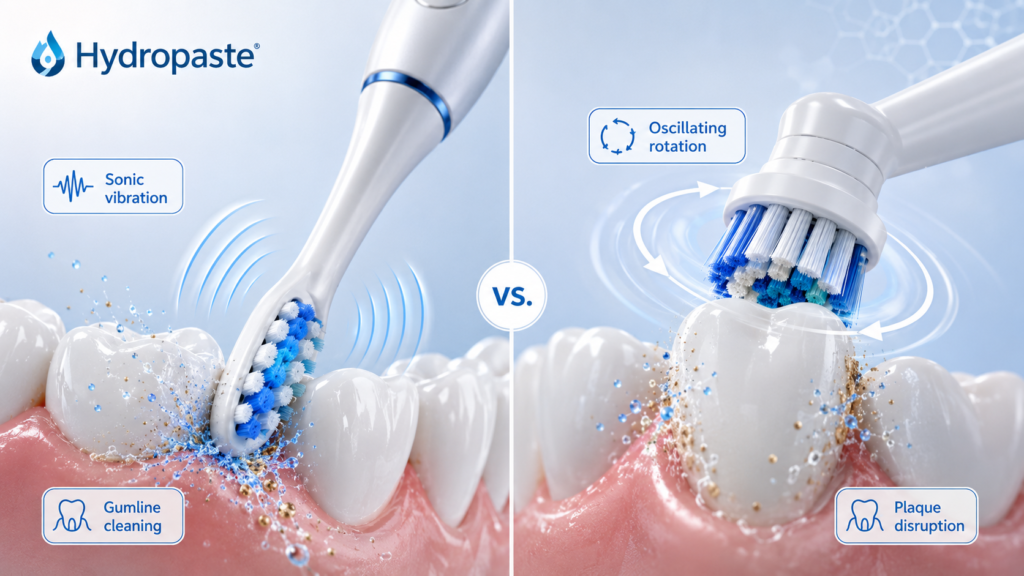
Sonic vs Oscillating Toothbrush Comparison Chart
| Category | Sonic Toothbrush | Oscillating-Rotating Toothbrush | Better Choice |
|---|---|---|---|
| Brush motion | High-speed side-to-side vibration | Round head rotates, oscillates, and often pulses | Depends on preference |
| Brush-head shape | Longer, oval, manual-like | Small, round, tooth-focused | Oscillating for precision |
| Gum comfort | Often feels smoother | Can feel more intense | Sonic for sensitivity |
| Plaque disruption | Strong with correct technique | Strong tooth-by-tooth cleaning | Oscillating for heavy plaque |
| Learning curve | Easy for manual brush users | Requires slower positioning | Sonic for beginners |
| Noise level | Usually quieter | Often louder, though premium models are smoother | Sonic |
| Battery life | Often longer | Varies by model | Sonic |
| Smart features | Common in premium models | Very common in premium models | Tie |
| Pressure control | Available on many models | Often highly visible and advanced | Oscillating |
| Travel use | Often strong battery advantage | Travel cases vary by model | Sonic |
| Best for | Sensitive users, quiet brushing, full-mouth coverage | Plaque control, tooth-by-tooth brushing, gumline focus | Depends on oral condition |
Best Choice for Gum Health
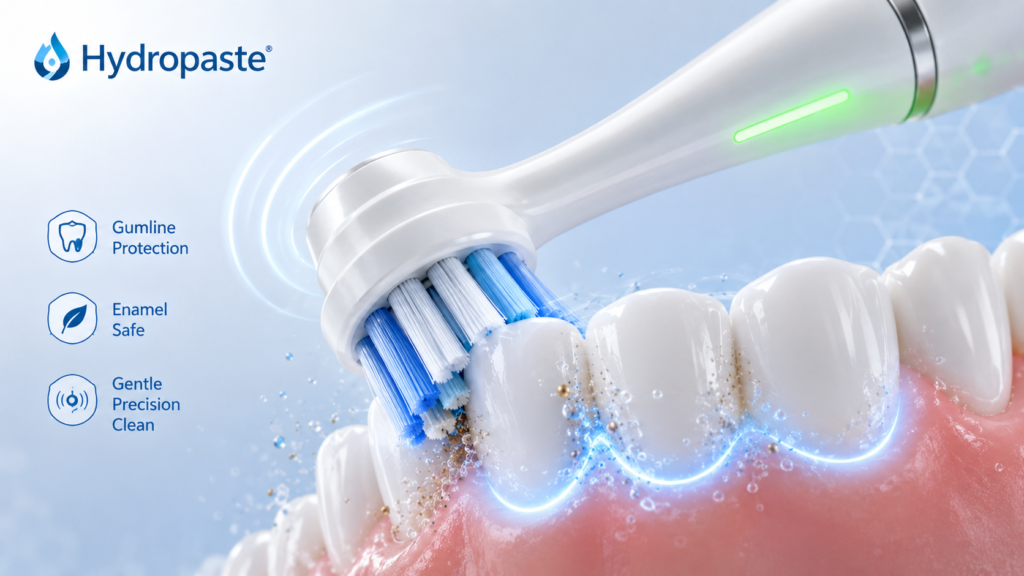
For gum health, the best electric toothbrush is not automatically sonic or oscillating. It is the brush that controls pressure, encourages two-minute brushing, and cleans the gumline without trauma.
Choose Sonic for Gum Sensitivity
A sonic toothbrush may be better if your gums are tender, your dentist has mentioned recession, or you dislike an aggressive brushing sensation. The smoother feel may encourage consistency.
Choose Oscillating for Gumline Plaque
An oscillating-rotating toothbrush may be better if your issue is plaque accumulation along the gumline. The small head can be guided carefully around each tooth margin.
Choose Pressure Sensor Over Motor Type
For many users, a visible pressure sensor is more important than sonic versus oscillating. If you press too hard, even the best brush can become a problem.
Plaque Removal Comparison
Plaque removal depends on four variables:
- Brush motion
- Brush-head design
- Brushing time
- User technique
Oscillating-rotating brushes have a strong clinical reputation because they mechanically cup and clean each tooth. Sonic brushes also perform well, especially when the user holds the bristles gently at the gumline and allows vibration to do the work.
A useful editorial framing is this:
Sonic brushing is more like controlled vibration across a wider surface. Oscillating brushing is more like precision polishing around each tooth.
Neither replaces flossing, interdental brushes, or professional dental care.
Sonic Toothbrush vs Oscillating Toothbrush for Different Users
Best for Sensitive Teeth
A sonic toothbrush with a sensitive mode and soft brush head is usually the more comfortable starting point. Look for:
- Soft bristles
- Low-intensity mode
- Pressure sensor
- Two-minute timer
- Gentle-start feature
Best for Heavy Plaque
An oscillating-rotating toothbrush may be stronger for users who need focused plaque removal around the gumline, molars, and tooth margins.
Best for Beginners
A sonic toothbrush may feel easier because the brush head resembles a manual toothbrush. However, beginners who brush too fast may benefit from an oscillating toothbrush because it forces a slower tooth-by-tooth method.
Best for Braces
Both can work, but a compact oscillating head may feel more precise around brackets. Sonic brushes can still be effective if the user angles the bristles carefully around wires and gum margins.
Best for Travel
Sonic models often win on battery life and quiet operation. However, premium oscillating models with charging travel cases can also be travel-friendly. For readers comparing portable charging options, link to Travel Electric Toothbrush Case.
Best for Smart Brushing
Premium oscillating models often have strong app ecosystems, real-time coaching, and brushing recognition. Sonic models are also advancing quickly with app guidance and intensity personalization.
Braces, Crowns, Implants and Dental Work
Dental restorations change how brushing should be approached.
Braces
Brackets create plaque-retentive zones. A small round oscillating head may help clean around brackets, but sonic brushes can cover arch surfaces efficiently.
Crowns and Bridges
Crown margins need gentle but thorough plaque control. Use a soft brush head and avoid aggressive pressure.
Dental Implants
Implants require careful gumline cleaning because inflammation around implant tissue can progress without pain in early stages. A brush with pressure control is strongly preferred.
Clear Aligners
Aligner users often brush more frequently. A sonic brush may feel gentler for repeated daily brushing, while an oscillating brush may help with nighttime plaque control.
Trends and Latest Technology in Electric Toothbrushes
Electric toothbrushes are moving beyond basic motor speed. The category is becoming a blend of oral-care hardware, behavior coaching, sensor feedback, and subscription replacement heads.
1. AI Brushing Recognition
Premium models now use app-based brushing recognition to show missed areas and coach brushing technique. Oral-B lists AI brushing recognition and real-time guidance among the features of its higher-end electric toothbrushes.
2. Smart Pressure Sensors
Pressure sensors are becoming a must-have feature, especially for users with sensitive gums or recession risk. Some models now provide visible lights, vibration changes, or app alerts.
3. Hybrid Motion Toothbrushes
Some newer brushes combine oscillation and vibration rather than sitting neatly in one category. Laifen’s Wave Pro, for example, has been marketed with wide oscillation, high-frequency vibration, app reports, and pressure-sensor features.
4. App-Based Monthly Reports
Instead of only showing live brushing feedback, newer smart brushes increasingly summarize brushing habits over time. This helps users identify patterns: skipped zones, excessive pressure, short brushing sessions, and inconsistent night brushing.
5. Value-Focused Sonic Brushes
Affordable sonic toothbrushes are becoming more competitive, often including multiple modes, timers, travel cases, and long battery life at lower price points. Recent retail coverage has highlighted sub-$50 sonic brushes with features once limited to premium models.
Upcoming Models and What to Expect Next
The next generation of sonic and oscillating toothbrushes will likely compete less on “vibrations per minute” and more on intelligent brushing control.
Expected Features in Upcoming Electric Toothbrush Models
| Feature | Why It Matters |
|---|---|
| Adaptive pressure control | Slows or softens brushing when users press too hard |
| Better gumline detection | Helps users clean margins without damaging tissue |
| Hybrid sonic-oscillating motors | Combines smooth vibration with tooth-specific movement |
| AI brushing maps | Shows missed areas more accurately |
| Smarter travel charging | Makes premium brushes easier for frequent travelers |
| Subscription brush-head reminders | Keeps bristles effective over time |
| Sensitive gum modes | Supports users with recession, bleeding, or tenderness |
| Better battery diagnostics | Shows real battery health instead of basic charge levels |
Costs: Sonic vs Oscillating Toothbrushes
Electric toothbrush pricing varies widely. The right price tier depends on whether the user needs simple cleaning, gum protection, smart coaching, or premium travel features.
Electric Toothbrush Cost Table
| Price Range | Typical Features | Best For |
|---|---|---|
| Under $30 | Basic vibration, simple timer, few modes | Budget users upgrading from manual |
| $30–$70 | Better battery, multiple modes, travel case, replacement heads | Most everyday users |
| $70–$150 | Pressure sensor, stronger motor, better heads, gum modes | Gum health and plaque control |
| $150–$300+ | Smart app, brushing map, premium charger, display, travel case | Tech-focused users and habit tracking |
| Ongoing cost | Replacement brush heads every few months | All electric toothbrush users |
Cost Insight
A cheaper electric toothbrush with a timer and soft brush head may outperform a premium smart brush if the expensive brush is used carelessly. But for users who brush too hard, skip zones, or need accountability, premium pressure sensors and app feedback can be worth the extra cost.
Risks and Limitations
Electric toothbrushes are helpful, but they are not risk-free when misused.
1. Overbrushing
Too much pressure can irritate gums and contribute to enamel wear, especially when combined with abrasive toothpaste.
2. False Confidence
A smart brush does not clean between teeth. Floss, interdental brushes, or water flossers may still be needed.
3. Wrong Brush Head
Medium or firm brush heads can be too harsh for many users. Soft heads are usually the safer default.
4. Battery and Charging Issues
Budget models may lose battery strength faster. Premium models may require proprietary chargers or cases.
5. App Dependence
Smart brushing apps can help, but users should not become dependent on them for every session. Good technique matters even without an app.
6. Gum Recession Concerns
People with existing gum recession should prioritize pressure sensors, soft bristles, and gentle technique. They should also ask their dentist or hygienist which brush motion fits their mouth.
Buying Framework: How to Choose the Right Brush
Choose Sonic If You Want:
- A quieter brush
- Smoother brushing feel
- Longer battery life
- A manual-like brush shape
- Gentle daily brushing
- Better travel simplicity
Choose Oscillating-Rotating If You Want:
- Tooth-by-tooth precision
- Strong plaque disruption
- Compact brush head
- Gumline focus
- More guided brushing behavior
- Strong pressure-sensor options
Choose a Smart Brush If You Need:
- Real-time pressure alerts
- Missed-zone feedback
- Brushing history
- Better compliance
- Support for children, seniors, or caregivers
- Coaching for poor brushing habits
Readers who are ready to compare actual models should continue to Top Rated Electric Toothbrush 2026 after reading this guide.
Charts and Tables
Sonic vs Oscillating Toothbrush Decision Matrix
| User Type | Better Fit | Why |
|---|---|---|
| Sensitive gums | Sonic or pressure-sensing oscillating | Smoother feel or controlled force |
| Heavy plaque | Oscillating-rotating | Better tooth-by-tooth focus |
| New electric brush user | Sonic | Familiar shape and easier transition |
| Braces user | Oscillating or compact sonic head | Precision around brackets |
| Traveler | Sonic | Usually strong battery life and quiet use |
| Tech-focused user | Smart oscillating or smart sonic | App feedback and brushing reports |
| Aggressive brusher | Any brush with pressure sensor | Pressure control matters most |
| Budget buyer | Mid-range sonic | Strong value and long battery life |
Feature Priority Chart
| Priority | Must-Have Feature | Nice-to-Have Feature |
|---|---|---|
| Gum protection | Pressure sensor | Sensitive mode |
| Plaque control | Quality brush head | App brushing map |
| Travel | Long battery life | Charging travel case |
| Family use | Easy replacement heads | Multiple brush modes |
| Senior use | Large handle | Visible pressure light |
| Kids/teens | Timer and pacer | App rewards |
| Premium users | Smart coaching | Display screen |
Editorial Recommendation
For most readers, the best choice is not based on motor speed alone.
A sonic toothbrush is usually the better first electric toothbrush for users who want comfort, quiet operation, and a familiar brushing style.
An oscillating-rotating toothbrush is usually better for users who want more controlled plaque removal, especially around individual teeth and gum margins.
A pressure-sensing electric toothbrush is the safest upgrade for people with gum sensitivity, recession, or aggressive brushing habits.
The most practical recommendation is this:
Buy the brush that improves your weakest habit.
If you brush too hard, buy a pressure-sensor model. If you brush too quickly, buy a brush that forces slower tooth-by-tooth cleaning. If you avoid brushing because the sensation is too intense, buy a gentler sonic brush.
Frequently Asked Questions
Is a sonic toothbrush better than an oscillating toothbrush for sensitive gums?
A sonic toothbrush may be better for sensitive gums because the brushing sensation often feels smoother and less forceful. Many users with tenderness, gum recession, or enamel sensitivity prefer sonic brushes because the head shape feels familiar and the vibration is easier to tolerate.
That said, an oscillating toothbrush with a soft brush head, sensitive mode, and pressure sensor can also be safe for gums. The bigger issue is brushing force. If you press hard, scrub aggressively, or use a worn brush head, either type can irritate gum tissue. For sensitive gums, prioritize soft bristles, a visible pressure sensor, and a gentle brushing technique.
Which removes more plaque: sonic or oscillating rotating toothbrush?
An oscillating-rotating toothbrush may have an advantage for focused plaque removal because the small round head is designed to cup and clean each tooth individually. This can be especially useful around the gumline, molars, and crowded teeth.
Sonic toothbrushes also remove plaque effectively when used correctly. They work best when the bristles are held gently at the gumline and allowed to vibrate rather than being scrubbed like a manual toothbrush. In daily life, technique and consistency often matter more than the motor category alone.
Are oscillating toothbrushes too harsh for receding gums?
Oscillating toothbrushes are not automatically too harsh for receding gums, but they can feel more intense than sonic brushes. The risk comes from excessive pressure, stiff bristles, abrasive toothpaste, or brushing too long in one area.
If you have gum recession, choose an oscillating toothbrush with a pressure sensor, sensitive mode, and soft brush head. Guide the brush slowly and lightly. Do not press the head into the gumline. If recession is active or worsening, ask a dental professional whether your brushing technique needs adjustment.
Is a sonic toothbrush better for braces than an oscillating toothbrush?
A sonic toothbrush can work well for braces because it covers a wider surface and can move fluid and toothpaste around brackets and wires. However, an oscillating toothbrush may offer better precision around individual brackets because the round head is smaller.
For braces, the best choice depends on patience and technique. If you want speed and comfort, sonic may feel easier. If you want detailed bracket-by-bracket cleaning, oscillating may be better. In both cases, orthodontic brush heads, interdental brushes, and flossing aids are still important.
What is the best electric toothbrush for gum health and plaque control?
The best electric toothbrush for gum health and plaque control should include three features: a pressure sensor, a two-minute timer, and soft replacement brush heads. A sonic brush may be better for comfort, while an oscillating-rotating brush may be better for tooth-by-tooth plaque disruption.
For most users, the smartest buying choice is a mid-range or premium brush with pressure feedback rather than the highest vibration count. Gum health depends on consistent, gentle, complete brushing—not aggressive motor power.
People Also Ask
Do dentists recommend sonic or oscillating toothbrushes?
Many dental professionals recommend electric toothbrushes in general because they help users brush longer and more consistently. Some prefer oscillating-rotating brushes for plaque control, while others recommend sonic brushes for comfort and patient compliance.
The recommendation often depends on the patient. A person with heavy plaque may benefit from an oscillating brush. A person with gum sensitivity may prefer sonic. A person who brushes too hard may need a pressure-sensor brush more than a specific motor type.
Is Oral-B better than Sonicare for plaque?
Oral-B-style oscillating-rotating brushes are often associated with strong plaque removal because the round head cleans one tooth at a time. Sonicare-style sonic brushes are often praised for comfort, battery life, quiet operation, and broad cleaning coverage.
For plaque, the better brush is the one used correctly twice daily. If a user rushes, presses too hard, or does not replace brush heads, either brand style can underperform. For plaque-heavy users, an oscillating brush with pressure control may be the stronger starting point.
Does a sonic toothbrush clean between teeth?
A sonic toothbrush may help move toothpaste and saliva around tooth surfaces, but it does not replace flossing or interdental cleaning. Plaque between tight contacts still requires floss, interdental brushes, or another between-teeth cleaning method.
This is a common misconception. Electric toothbrushes improve brushing, but they do not fully solve interdental cleaning. Users with bleeding gums, food trapping, or periodontal pockets should not rely on brushing alone
Are expensive electric toothbrushes worth it?
Expensive electric toothbrushes can be worth it if the added features solve a real problem. Pressure sensors, brushing maps, travel charging cases, and app feedback can help users who brush too hard, miss areas, travel often, or need habit coaching.
They are not always necessary. A mid-range brush with a timer, soft heads, and pressure sensor may be enough for many users. Paying more only makes sense when the technology improves behavior, comfort, or consistency.
How often should you replace sonic or oscillating toothbrush heads?
Most users should replace electric toothbrush heads every three months, or sooner if the bristles flare, flatten, discolor, or feel rough. Worn bristles clean less effectively and may become harsher on the gumline.
People with braces, heavy plaque, or aggressive brushing may need replacement heads more frequently. A fresh soft brush head is one of the simplest ways to improve cleaning without buying a new handle.
Which One Should You Buy?
The sonic vs oscillating toothbrushes debate is not about which technology is universally superior. It is about fit.
Choose sonic if you want comfort, quietness, long battery life, and a brushing style that feels natural.
Choose oscillating-rotating if you want precision, plaque-focused cleaning, and a guided tooth-by-tooth routine.
Choose smart pressure-sensing technology if your priority is gum protection, brushing discipline, and safer daily technique.