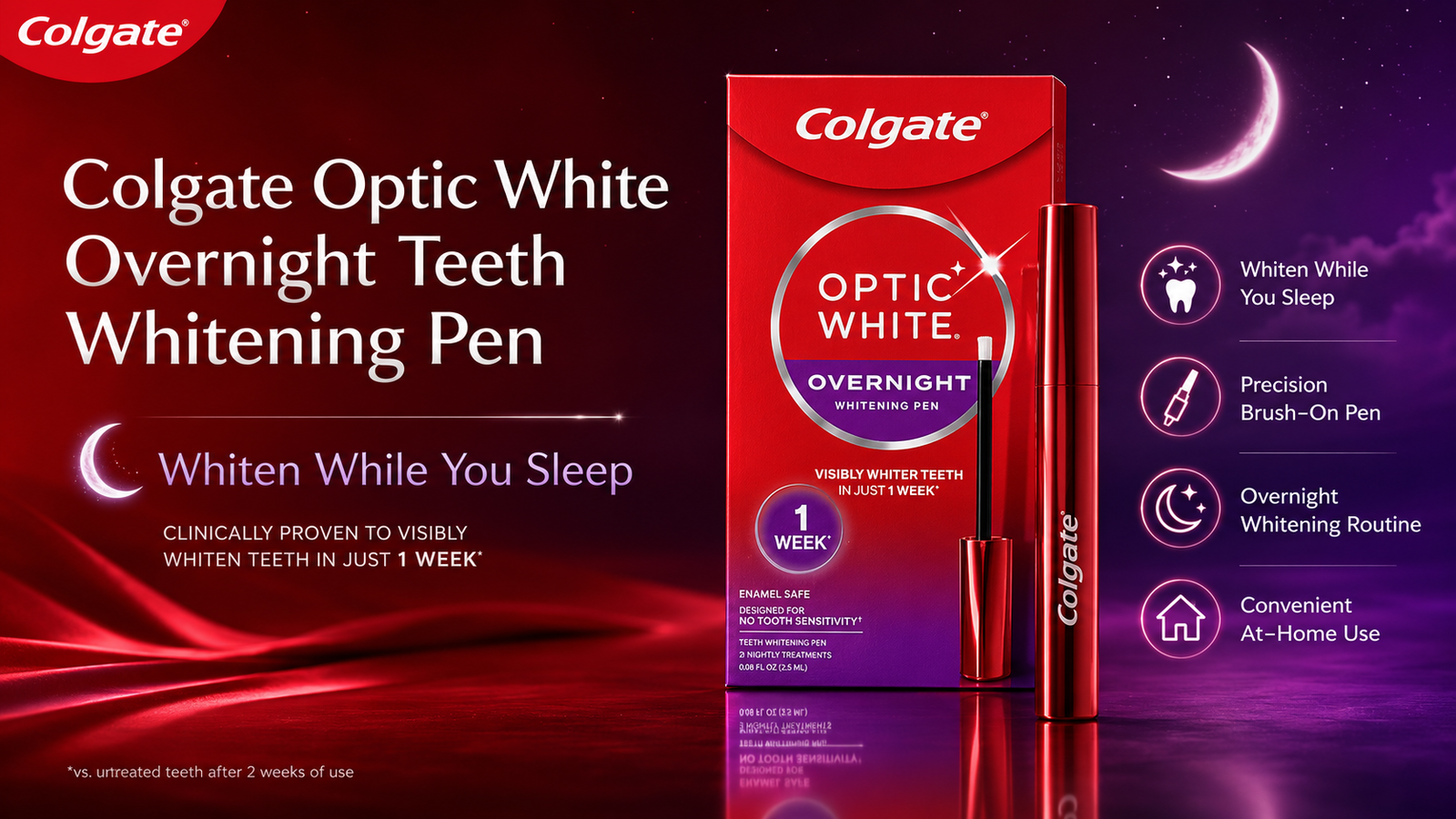
Colgate Optic White Pen Review: Does the Overnight Whitening Pen Work?
Amazon Affiliate Disclosure:
HydroPaste.com participates in the Amazon Services LLC Associates Program, an affiliate advertising program designed to provide a way for websites to earn advertising fees by linking to Amazon.com and related product pages. As an Amazon Associate, we may earn from qualifying purchases. This does not affect the price you pay, and our editorial content remains independent, research-driven, and focused on helping readers make informed oral care decisions.
The modern teeth whitening category has moved far beyond the old choice between expensive dental-office whitening and inconvenient at-home strips. Today, many people want a brighter smile without interrupting their schedule, changing their routine, or wearing whitening trays during the day. That is exactly where Colgate Optic White Overnight Teeth Whitening Pen enters the conversation. Designed for nighttime use, this whitening pen turns sleep hours into a cosmetic oral care window, allowing the formula to stay on the tooth surface while you are not eating, drinking, speaking, or rinsing.
For anyone exploring Colgate Optic White, overnight teeth whitening, teeth whitening pen reviews, or best whitening pen for yellow teeth, the appeal is clear: convenience. Instead of setting aside 30 to 60 minutes for strips, trays, or LED devices, the overnight pen is applied after brushing and left to work while you rest. The idea is simple but powerful. Nighttime is the one part of the day when your teeth are relatively undisturbed, making it a practical moment for a leave-on whitening treatment.
At HydroPaste, we look at oral care through both performance and ingredient logic. While hydroxyapatite-based products focus on enamel support and remineralization, products like Colgate Optic White sit in a different cosmetic whitening category. That makes them especially relevant for readers comparing whitening systems, enamel-friendly toothpaste routines, and non-hydroxyapatite oral care options. For a broader look at whitening and cosmetic oral care products outside the hydroxyapatite space, see our guide to non-hydroxyapatite oral care.
The quest for a whiter, more radiant smile has always required a balance between visible results and real-life usability. Traditional whitening strips can be effective, but they may feel slippery, restrictive, or awkward to wear. Whitening trays can provide fuller coverage, but they often require more preparation and cleanup. In-office treatments may deliver dramatic results, but they are usually expensive and not always necessary for people seeking gradual brightening at home. The Colgate Optic White Overnight Teeth Whitening Pen appeals to users who want a more discreet, lower-effort option that fits into an existing brushing routine.
This overnight approach also reflects a larger shift in the oral aesthetics market. Consumers are no longer searching only for “the strongest teeth whitening product.” They are searching for easy teeth whitening at home, whitening products for busy schedules, overnight whitening treatments, enamel-safe whitening routines, and affordable alternatives to professional teeth whitening. The best whitening products are now judged not only by how white they make teeth look, but also by how consistently people can use them.
Colgate Optic White’s pen format is part of that convenience-driven movement. A brush-tip applicator gives users targeted control over visible front teeth, allowing the formula to be painted directly onto areas where surface stains are most noticeable. For coffee drinkers, tea lovers, red wine drinkers, and people dealing with everyday discoloration, this type of product can feel more manageable than full-mouth whitening systems. It is not a replacement for professional dental care, but it can become part of a structured cosmetic whitening routine.
It is also worth placing Colgate Optic White in context with other premium oral care brands. Some users are drawn to performance-led whitening systems, while others prefer luxury toothpaste brands, flavor-forward brushing experiences, or aesthetic bathroom-shelf products. If you are comparing whitening-focused oral care with more design-led toothpaste brands, our Marvis toothpaste guide offers a useful look at a very different side of the non-hydroxyapatite category.
In this article, we examine the science, application method, benefits, limitations, and real-world role of the Colgate Optic White Overnight Teeth Whitening Pen. The goal is not to treat whitening as a miracle promise, but to understand where this product fits: a nighttime cosmetic whitening tool designed for people who want a brighter smile without daytime disruption.
Quick Verdict: Is the Colgate Optic White Pen Worth It?
The Colgate Optic White Overnight Whitening Pen is worth considering if you want a convenient whitening product for mild surface stains from coffee, tea, wine, or everyday discoloration. It is easier to use than strips, but it requires dry teeth, consistent nightly application, and realistic expectations.
- Best for: mild to moderate surface stains
- Not best for: crowns, veneers, fillings, deep discoloration, or severe sensitivity
- Main ingredient: hydrogen peroxide-based whitening gel
- Use time: apply before bed and brush off in the morning
- Main advantage: convenient overnight whitening
- Main drawback: results vary and application must be precise
1. The Science of Circadian Whitening
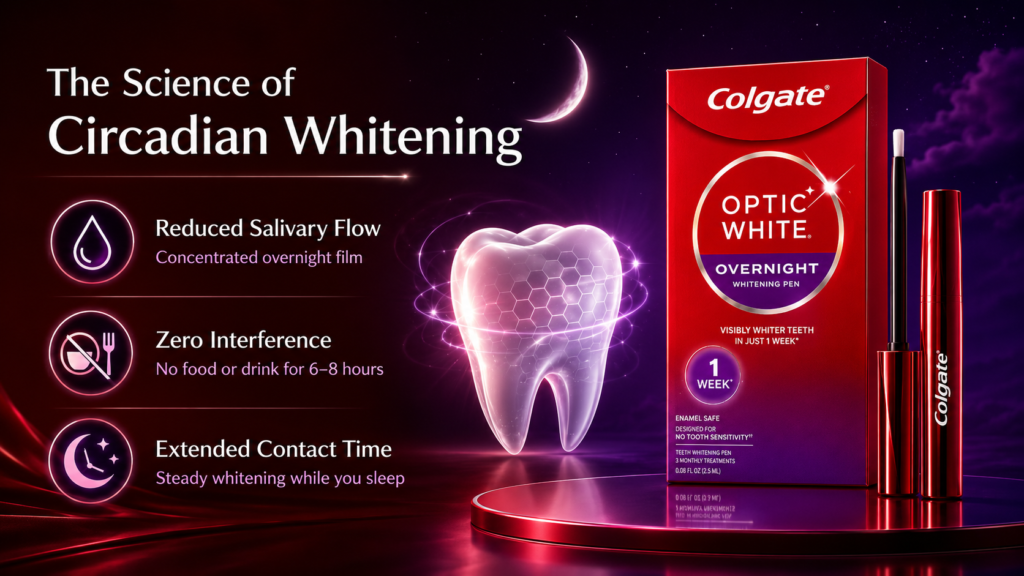
The phrase circadian whitening describes a simple but powerful idea: the best time to support a whitening routine may be the part of the day when the mouth is least disturbed. While most people think about whitening in terms of ingredients, strips, gels, or whitening toothpaste, timing also matters. Night creates a different oral environment from daytime. During sleep, you are not drinking coffee, sipping tea, eating colored foods, rinsing frequently, or constantly moving saliva across the tooth surface. That quieter window is what makes an overnight teeth whitening pen especially appealing.
For years, the whitening category has been dominated by daytime solutions: best whitening toothpaste, charcoal toothpaste, peroxide toothpaste, whitening strips, LED whitening kits, and stain-removal mouth rinses. These products can all play a role in a cosmetic oral care routine, but many of them compete with the realities of daily life. Morning brushing is followed by coffee. Lunch may include acidic sauces, tea, soda, or fruit juices. Evening brushing may be rushed. The Colgate Optic White Overnight Teeth Whitening Pen takes a different approach by using the longest uninterrupted period in the oral care cycle: the hours you spend asleep.
Reduced Salivary Flow and Better Whitening Film Retention
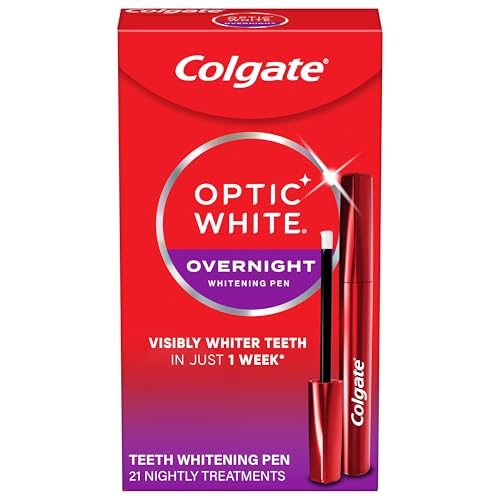
- WHAT’S INCLUDED: One 0.08 OZ Colgate Optic White Overnight Teeth Whitening Pen powered by hydrogen peroxide
- RAPID WHITENING: Removes 15 years of stains in just 1 week* (*When used as directed, see product packaging)
- OVERNIGHT MAGIC: Apply before sleeping, and wake up to a whiter smile* (*When used as directed, see product packaging)
During the day, saliva is highly active. It protects the mouth, supports pH balance, helps wash away food particles, and contributes to the natural cleansing of teeth. For general oral health, that is beneficial. For a leave-on whitening product, however, constant saliva movement can dilute or disturb the whitening film before it has enough time to remain evenly on the enamel surface.
At night, salivary flow naturally slows. This reduced movement may allow a brush-on whitening film to stay in place more effectively than it would during active daytime hours. That is one of the biggest differences between an overnight whitening treatment and a standard daytime whitening product. Instead of relying only on brief contact, the pen is designed to create a thin, targeted layer over visible teeth, supporting a more consistent whitening routine while you sleep.
This matters especially for people comparing whitening toothpaste vs whitening pen options. A toothpaste works during brushing and may help polish surface stains or support gradual stain reduction, depending on its formula. A whitening pen, by contrast, is not rinsed away immediately. It is applied after brushing and left on the teeth. That extended leave-on format is the central advantage of the overnight method.
Zero Interference from Food, Drinks and Daytime Staining
One of the biggest challenges in any at-home teeth whitening routine is stain interruption. Many people brush with a teeth whitening toothpaste in the morning, then immediately expose their teeth to coffee, black tea, energy drinks, cola, tomato-based sauces, berries, or other highly pigmented foods. This does not make whitening useless, but it can slow visible progress because stain-causing compounds keep returning to the enamel surface throughout the day.
Nighttime creates a cleaner cosmetic window. For six to eight hours, most users are not eating, drinking, or introducing new stain sources. There is no espresso, no red wine, no acidic soda, and no dark sauce interfering with the whitening layer. This makes the overnight period especially practical for people dealing with yellow teeth, coffee stains on teeth, tea stains, or gradual discoloration from daily habits.
That is why an overnight whitening pen can pair well with a broader whitening system. A user may brush with a whitening toothpaste for stains in the evening, floss, allow the teeth to dry briefly as directed, and then apply the Colgate Optic White Overnight Pen to the most visible front teeth. In this structure, the toothpaste prepares the mouth through normal brushing, while the pen provides a more targeted cosmetic whitening step.
Extended Contact Time Without Daytime Discomfort
Most whitening strips and daytime whitening gels are designed around short sessions. Many require 15, 30, or 60 minutes of wear time, which can feel inconvenient during a busy day. Some users dislike the sensation of strips, the taste of gels, or the restriction on talking and drinking while the product is in place. A brush-on overnight format is designed to reduce that friction.
The Colgate Optic White Overnight Teeth Whitening Pen uses precision application rather than full-tray coverage. The pen format allows users to focus on teeth that show most clearly when smiling, especially the upper and lower front teeth. Once applied, the whitening film stays on during sleep rather than requiring active wear time during the day. This makes it attractive for people searching for easy teeth whitening at home, overnight whitening for yellow teeth, best teeth whitening pen, and low-effort whitening routine options.
Extended contact time is important because whitening is not only about intensity; it is also about consistency. A product that fits easily into a nightly routine may be used more regularly than a stronger but more inconvenient option. For many consumers, the best whitening system is not necessarily the most aggressive one. It is the one they can use correctly, repeatedly, and comfortably.
How Whitening Toothpastes Fit Into the Overnight Whitening Routine
A common mistake is treating whitening toothpaste and whitening pens as competing products. In reality, they often serve different roles. A whitening toothpaste is usually the foundation of the daily routine. It helps clean the teeth, freshen breath, remove plaque, and reduce the appearance of surface stains through polishing agents or whitening-focused ingredients. Some formulas are made for daily stain removal, while others focus on enamel care, sensitivity support, or cosmetic brightness.
An overnight whitening pen is a targeted add-on. It does not replace brushing, flossing, or routine dental care. Instead, it works after the basic oral hygiene steps are complete. This makes the nighttime sequence more strategic:
Brush with a whitening toothpaste to clean the enamel surface.
Floss to remove debris between teeth.
Dry the visible teeth as directed by the product instructions.
Apply the whitening pen in a thin, controlled layer.
Let the film set before sleeping.
Avoid eating or drinking after application.
This routine is especially relevant for readers comparing best whitening toothpaste 2026, Colgate Optic White toothpaste, Colgate whitening pen, peroxide whitening toothpaste, enamel-safe whitening toothpaste, and overnight teeth whitening products. The toothpaste handles daily cleaning and surface stain management; the pen adds leave-on cosmetic whitening during the quietest hours of the oral cycle.
The Cosmetic Logic Behind Whitening While You Sleep
The appeal of nighttime whitening is not only scientific; it is behavioral. People are more likely to stick with a whitening routine when it feels simple. Daytime whitening can interrupt work, meals, calls, errands, or travel. Overnight whitening fits into a habit people already have: brushing before bed.
This is why the Colgate Optic White Overnight Pen has become a useful product concept in the broader at-home teeth whitening market. It meets the demand for visible smile brightening without requiring trays, strips, LED lights, or appointment-based whitening. For people who already use a whitening toothpaste but want a more targeted boost, the overnight pen offers a logical next step.
The central advantage is timing. During sleep, the mouth is quieter, stain exposure is lower, and the whitening layer has a better opportunity to remain undisturbed. That is the foundation of circadian whitening: using the body’s natural overnight rhythm to make cosmetic whitening easier, more consistent, and more convenient.
2. Hydrogen Peroxide Precision
The core of the Colgate Optic White advantage lies in its delivery system. Unlike traditional gels that can be runny, the overnight pen uses a unique, quick-drying formula.
The Mechanism
The pen dispenses a clear liquid that, once applied to the tooth surface, dries within seconds into a thin, water-shielding film. Inside this film is Hydrogen Peroxide, the gold standard in professional whitening. Because the film is localized, the peroxide stays on the tooth and off the gums, which is the primary cause of irritation in older whitening methods.
Sensitivity Management
A common fear with whitening is the “zing” of tooth sensitivity. Colgate has engineered this formula to be enamel-safe and designed for “low-to-no” sensitivity. By spreading the whitening process over a week of nightly applications rather than a single harsh treatment, the teeth adapt more comfortably to the oxidation process.
3. The Application Ritual
To achieve the “3 shades whiter in two weeks” promise, the application must be precise. It fits seamlessly into a nighttime hygiene routine:
- Brush: Start with a clean slate. Use your regular toothpaste to remove plaque.
- Dry: This is the most crucial step. Use a tissue to pat your teeth dry. The whitening film adheres best to a dry surface.
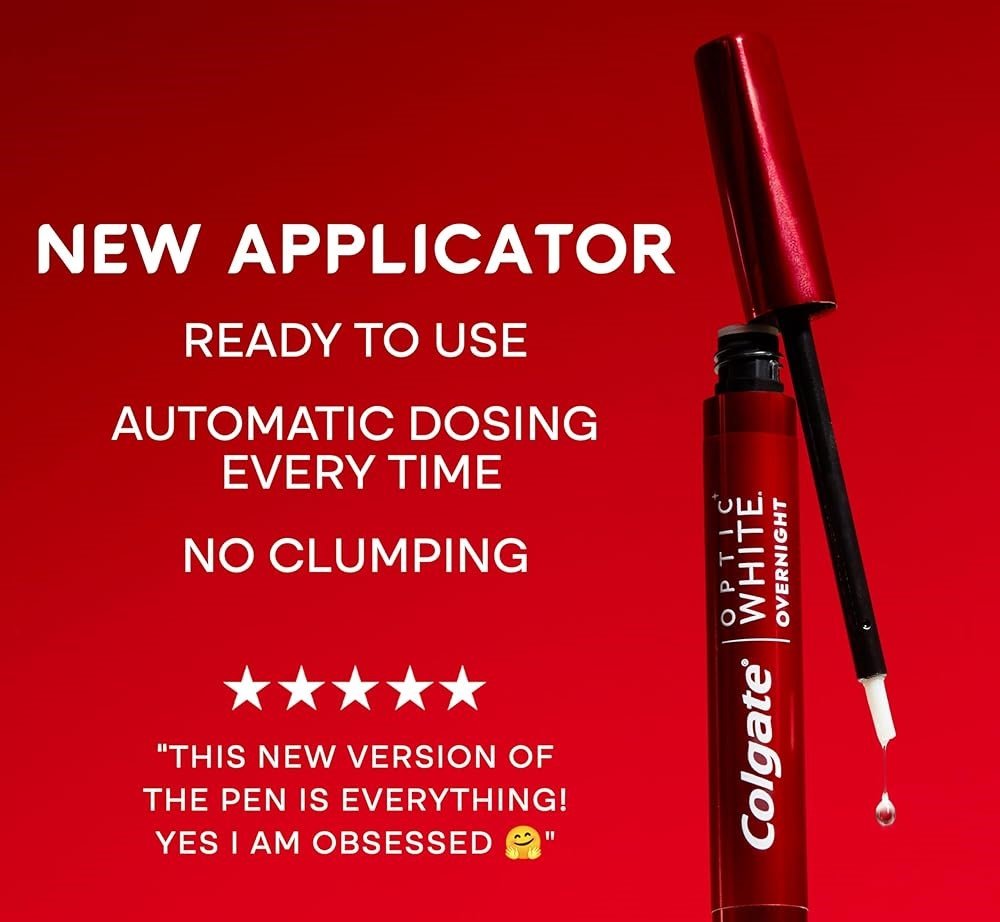
- Click: Click the end of the pen until a small drop of serum appears.
- Apply: Apply a thin layer to each tooth. One or two clicks is usually enough for an entire row of teeth.
- Sleep: The serum dries quickly. Go to bed and let the formula work its magic.
- Brush Again: In the morning, simply brush your teeth as usual to remove the film and reveal the progress.
4. The Competition
How does the Colgate Optic White Overnight Pen stack up against other popular methods?
| Feature | Overnight Pen | Whitening Strips | Professional Trays |
| Application Time | 2 Minutes | 30-60 Minutes | 1-2 Hours |
| Comfort | High (Dries thin) | Medium (Slippery) | Low (Bulky trays) |
| Precision | High (Targeted) | Low (One size fits all) | High (Custom fit) |
| Cost | Affordable | Moderate | High |
5. “Overnight Advantage” Matters
Beyond just the chemistry, the psychological and lifestyle benefits are immense. We live in a “skip-the-wait” culture. By moving the teeth whitening process to the sleep cycle, Colgate has effectively removed the “chore” aspect of oral care.
There is no “waiting to eat” after application because you are unconscious. There is no lisping while trying to talk through strips because your mouth is closed. It turns a beauty treatment into a passive habit, much like applying a night cream for your skin.
6. Real Results
While individual results vary based on the starting shade of the teeth and habits (like smoking or heavy red wine consumption), the Colgate Optic Whitening system is designed for cumulative success.
- Days 1-3: Removal of surface-level proteins and initial film.
- Days 4-7: Deepening of the peroxide penetration to tackle intrinsic stains.
- Day 14: Maximum results, often reaching several shades lighter than the starting point.
7. The Verdict
The Colgate Optic White Overnight Pen isn’t just a product; it’s a refinement of dental technology. It respects the user’s time and physiological “quiet periods” to deliver results that were once only possible in a clinical setting. For those looking to upgrade their smile without rearranging their schedule, the overnight advantage is clear.
8. Ingredients Breakdown: What’s Really Inside?
Understanding what you’re applying to your teeth is essential for both trust and results. The Colgate Optic White Overnight Teeth Whitening Pen uses a streamlined ingredient profile designed for safety and effectiveness:
- Hydrogen Peroxide – The active whitening agent that penetrates enamel and breaks down stains at a molecular level.
- Film-Forming Polymers – These create the thin, adhesive layer that locks the formula onto teeth overnight.
- Stabilizers – Help maintain the potency of hydrogen peroxide over time.
- Flavoring Agents – Provide a neutral or mildly fresh taste without irritation.
Unlike abrasive whitening toothpastes, this system avoids mechanical enamel wear and instead relies on controlled oxidation.
9. Who Should Use an Overnight Whitening Pen?
This product isn’t just for cosmetic enthusiasts—it’s designed for a wide range of users:
Ideal Candidates
- Coffee, tea, or red wine drinkers
- Busy professionals who lack daytime availability
- Individuals with mild to moderate staining
- First-time users hesitant about harsh treatments
Who Should Avoid It
- Individuals with untreated cavities or gum disease
- Those with dental restorations (crowns/veneers won’t whiten)
- People with extreme sensitivity without dental consultation
For best results, consult a dentist if you have pre-existing oral health conditions.
10. Common Mistakes to Avoid
Even the most advanced whitening system can underperform if used incorrectly. Avoid these pitfalls:
- Skipping the drying step → reduces film adhesion
- Over-applying the gel → wastes product and may increase sensitivity
- Using on wet teeth → dilutes the formula
- Inconsistent usage → slows cumulative results
- Eating immediately after application → disrupts the film
Consistency and precision are key to achieving visible whitening.
11. Maintenance After Whitening
Once you’ve achieved your desired shade, maintaining results becomes the priority:
- Use a whitening toothpaste 2–3 times per week
- Limit staining beverages or use a straw
- Rinse mouth after consuming acidic or pigmented foods
- Reapply the overnight pen once or twice weekly as a “top-up”
Think of whitening as a cycle—not a one-time event.
FAQs (Frequently Asked Questions)
1. How long does it take to see results?
Most users notice visible improvement within 3–5 days, with full results in about 14 days.
2. Is it safe for daily use?
Yes, when used as directed, it is enamel-safe and suitable for nightly application.
3. Does it cause tooth sensitivity?
It’s formulated for low sensitivity, but mild discomfort may occur in some users.
4. Can I use it with braces?
No, it’s not recommended as it may whiten unevenly around brackets.
5. Will it work on crowns or veneers?
No, whitening agents do not affect artificial dental materials.
6. Do I need to rinse after applying?
No, you should leave it on overnight and brush it off in the morning.
7. Can I drink water after applying?
It’s best to avoid drinking anything after application to preserve the film.
8. How many clicks should I use?
Typically 1–2 clicks per row of teeth is sufficient.
9. Is it better than whitening strips?
It offers more convenience and precision, especially for overnight use.
10. How often should I repeat the treatment cycle?
Every 2–3 months, depending on lifestyle and staining habits.
Ready to Transform Your Smile?
A brighter smile no longer requires carving time out of your day. With overnight whitening, the transformation happens quietly—while you sleep—so you wake up one step closer to confidence.
Buy Now ☝️
People Also Ask (PAA)
1. Does overnight teeth whitening really work?
Yes, extended contact time allows deeper stain breakdown compared to short treatments.
2. Is hydrogen peroxide safe for teeth?
In controlled concentrations, it is widely recognized as safe and effective.
3. Why do teeth whiten faster at night?
Reduced saliva and zero interference improve treatment efficiency.
4. Can I sleep with whitening gel on my teeth?
Yes, products specifically designed for overnight use are safe for this purpose.
5. How many shades whiter can I get?
Most users achieve 2–4 shades improvement over two weeks.
6. What causes tooth discoloration?
Common causes include coffee, tea, smoking, aging, and poor oral hygiene.
7. Is overnight whitening better than LED kits?
It can be more convenient, though both methods can be effective.
8. Can whitening damage enamel?
Not when using dentist-approved or regulated products properly.
9. Should I brush before or after whitening?
Always brush before applying and again in the morning.
10. Can I use it every night indefinitely?
It’s best used in cycles, with maintenance applications afterward.
White Thoughts: The Future of Passive Oral Care
The Colgate Optic White Overnight Teeth Whitening Pen represents a broader shift toward passive beauty optimization—products that work while you rest. By aligning with the body’s natural rhythms and eliminating friction from daily routines, overnight whitening is more than a trend—it’s a glimpse into the future of personal care.
If convenience, comfort, and clinically backed results matter to you, this innovation offers a compelling upgrade to traditional whitening methods.