Condition-Based Remineralization: How to Remineralize Teeth by Enamel Condition
Amazon Affiliate Disclosure
Hydropaste.com participates in the Amazon Services LLC Associates Program, an affiliate advertising program designed to provide a means for websites to earn advertising fees by linking to Amazon.com and affiliated websites. Product recommendations are based on formulation relevance, intended use, ingredient profile and suitability for the enamel condition being discussed.
Updated on July, 2026.
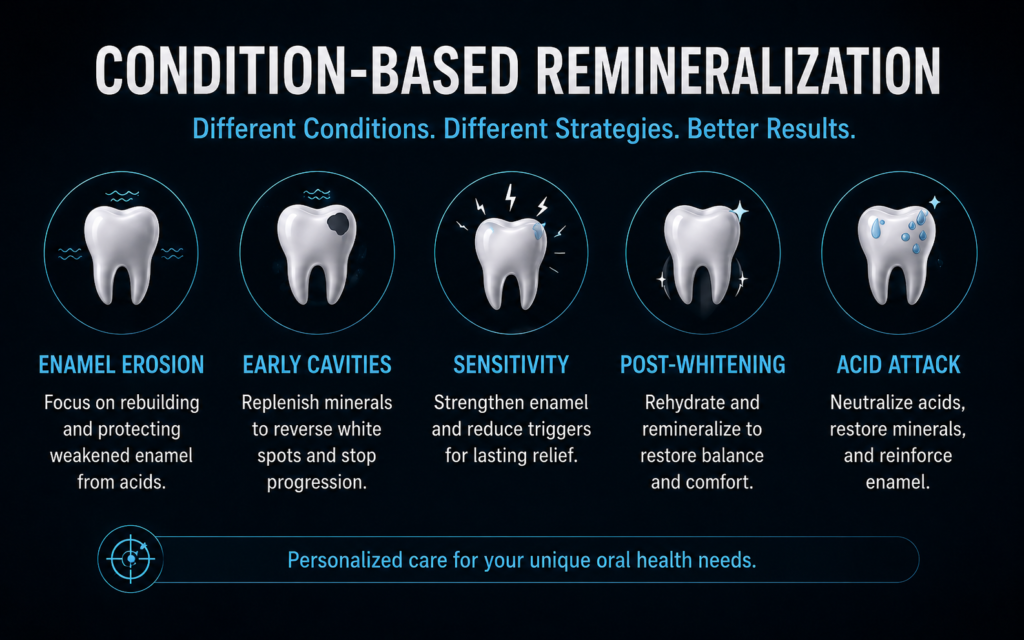
Condition-based remineralization begins with a simple but frequently overlooked principle: weakened enamel should not be treated as though every form of mineral loss has the same cause.
A person experiencing early tooth decay does not necessarily need the same strategy as someone whose enamel has been softened by acidic drinks. Teeth that become sensitive after whitening require a different response from teeth exposed repeatedly to reflux, dry mouth or frequent snacking. Even when the symptoms look similar, the biological process underneath them can be very different.
That distinction matters because remineralization is not merely the act of buying an enamel-strengthening toothpaste. It is the coordinated process of identifying what is removing minerals, reducing that pressure and creating conditions in which saliva, fluoride, hydroxyapatite, calcium, phosphate or other therapeutic agents can stabilize the remaining tooth structure.
This guide explains how to remineralize teeth according to the condition involved, when home care may be appropriate, which ingredient systems make sense for different situations and when enamel damage has moved beyond what remineralization can reasonably address.
For a broader explanation of mineral loss, crystal repair and preventive enamel care, begin with the Enamel Repair center.
Quick Picks: Jump to Your Enamel Condition
- What Is Condition-Based Remineralization?
- What This Guide Is For
- Who Needs Condition-Based Remineralization?
- Benefits of a Condition-Specific Strategy
- How Enamel Demineralization and Remineralization Work
- The Condition Identification Framework
- Enamel Erosion Repair Strategy
- Early Cavity Reversal Guide
- Post-Whitening Enamel Repair
- Acid Attack Recovery Protocol
- Sensitivity and Enamel Loss
- How to Remineralize Teeth at Home
- Best Remineralizing Toothpaste by Condition
- Remineralizing Gum for Enamel Support
- Hydroxyapatite vs Fluoride
- Can Enamel Grow Back?
- Condition-Based Remineralization Timeline
- Enamel Condition Comparison Chart
- What Can Prevent Remineralization?
- When Home Remineralization Is Not Enough
- Upcoming Trends and Latest Enamel Repair Technology
- Condition-Based Remineralization FAQs
- People Also Ask
- Editorial Insights
What Is Condition-Based Remineralization?
Condition-based remineralization is an enamel-care framework that matches the repair strategy to the cause, location, activity and severity of mineral loss.
Instead of asking only, “Which toothpaste repairs enamel?” it asks five more useful questions:
- Is the mineral loss caused primarily by bacterial acids, dietary acids, stomach acids, whitening, abrasion, low saliva flow or a combination?
- Is the affected surface still intact?
- Is the problem active, stable or progressing?
- Is enamel involved, or has dentin become exposed?
- Which mineral-delivery system best fits the condition?
The aim is not to assign a toothpaste to every symptom. It is to understand whether the tooth is in a state where mineral recovery can occur and what must change for that recovery to become more likely.
Remineralization Is a Process, Not a Product Claim
A remineralizing product may supply fluoride, hydroxyapatite, calcium, phosphate or another active material. That product still operates inside a larger biological environment.
If acidic drinks are being consumed throughout the day, saliva never receives a long enough recovery period. If plaque remains undisturbed between teeth, an anti-cavity ingredient may not reach the lesion consistently. If reflux is repeatedly bathing the back of the teeth in stomach acid, surface treatment alone will not remove the cause.
Condition-based remineralization therefore has three layers:
- Cause control: Reduce the source of mineral loss.
- Surface support: Deliver an appropriate protective or remineralizing agent.
- Behavioral timing: Use the product when it can remain on the tooth long enough to work.
What This Guide Is For
This guide is designed to help individuals understand which enamel remineralization strategy may be relevant to a specific oral condition.
It is especially useful for distinguishing between:
- Early caries and non-bacterial erosion
- Temporary post-whitening sensitivity and progressive enamel loss
- Surface softening and permanent structural loss
- Enamel sensitivity and exposed-dentin sensitivity
- Fluoride-centered and hydroxyapatite-centered routines
- Daily prevention and dentist-supervised treatment
The guide does not diagnose cavities, reflux, cracked teeth, gum recession or enamel-development disorders. Those conditions may produce overlapping symptoms and require an oral examination.
The Central Objective
The central objective is to preserve as much natural tooth structure as possible before irreversible damage occurs.
In minimally invasive dentistry, an intact but demineralized enamel surface represents an opportunity. The tooth may not require drilling simply because its mineral density has declined. When a lesion is early, non-cavitated and manageable, improving the local environment may help arrest progression and increase mineral content.
Once the surface has physically collapsed, however, remineralization cannot reconstruct the missing anatomy. That distinction should shape every enamel repair treatment.
Who Needs Condition-Based Remineralization?
Condition-based remineralization may be relevant to individuals with one or more of the following patterns.
People With Early White or Chalky Enamel Changes
A white spot can indicate subsurface porosity beneath an apparently intact surface. This is commonly seen around orthodontic brackets, near plaque-retentive areas or where early caries has begun.
Not every white mark is active decay. Developmental enamel differences, fluorosis, dehydration and previous mineral loss can also change tooth color. Persistent or new white spots should therefore be evaluated before assuming they can be treated with toothpaste alone.
People Who Frequently Consume Acidic Drinks
Carbonated drinks, sports drinks, energy drinks, citrus beverages, vinegar-based drinks and repeated flavored-water exposure can create recurring erosive pressure.
Frequency is often more important than a single serving. Sipping an acidic beverage over several hours can produce repeated low-pH episodes, reducing the uninterrupted recovery time available to saliva.
People With Dry Mouth
Saliva dilutes acids, helps clear carbohydrates, supplies calcium and phosphate and contributes to the protective film over tooth surfaces. When saliva flow is reduced, the mouth loses part of its natural remineralization infrastructure.
Dry mouth can be associated with medications, dehydration, mouth breathing, medical treatment or systemic conditions. Persistent dryness deserves professional assessment rather than being managed only with toothpaste.
People Experiencing Tooth Sensitivity
Sensitivity to cold, sweetness, touch or air may occur when dentin becomes exposed or when pathways within dentin transmit stimuli toward the pulp.
Enamel wear can contribute, but sensitivity can also be associated with gum recession, cracks, decay, whitening, leaking restorations, aggressive brushing or other causes. Remineralization may help in selected situations, but the symptom should not automatically be treated as proof of enamel loss.
People Using Whitening Products
Whitening can temporarily increase sensitivity even when major structural enamel loss has not occurred. The response may involve peroxide movement, fluid shifts and pulpal irritation rather than literal removal of a visible enamel layer.
A condition-based plan considers product strength, frequency, existing sensitivity, baseline erosion and the person’s overall caries risk before deciding whether whitening should continue.
People With Reflux, Recurrent Vomiting or Occupational Acid Exposure
Intrinsic acids can affect tooth surfaces differently from dietary acids. Reflux often affects the inner surfaces of upper teeth, while dietary erosion may appear more prominently on outer or biting surfaces depending on the exposure pattern.
Repeated stomach-acid contact is a medical and dental concern. Mineral toothpaste may protect the surface, but the source of exposure also needs to be addressed.
Benefits of a Condition-Specific Strategy
It Reduces Unnecessary Product Switching
Many people move rapidly between whitening toothpaste, sensitivity toothpaste, fluoride-free toothpaste, high-fluoride products, mouth rinses and mineral serums without identifying the dominant problem.
A condition-based system narrows the decision. The chosen product must serve the condition rather than merely carrying an attractive “repair” label.
It Separates Reversible Weakening From Irreversible Loss
Early mineral loss can be very different from a cavity with a broken surface, a chipped edge or advanced erosive wear.
Understanding this prevents unrealistic expectations. Remineralization can strengthen and stabilize remaining enamel. It cannot replace a missing cusp, rebuild a deep cavity or restore the original thickness of heavily eroded teeth.
It Improves Ingredient Selection
Fluoride, nano-hydroxyapatite, stannous fluoride, potassium salts, arginine, bioactive glass and calcium-phosphate systems do not all work in precisely the same way.
A person with high caries activity may prioritize established anti-cavity protection. Someone with mild sensitivity and a preference for fluoride-free care may evaluate hydroxyapatite. A person with exposed dentin may need tubule-occluding or nerve-calming technology in addition to enamel support.
It Makes the Routine More Sustainable
The strongest formulation has limited practical value when it tastes unpleasant, irritates the mouth or is used inconsistently.
Condition-based remineralization considers effectiveness, tolerability, brushing behavior, dietary patterns and long-term adherence together.
How Enamel Demineralization and Remineralization Work
Enamel is a highly mineralized tissue built primarily from organized apatite crystals. It does not contain living cells capable of growing a completely new outer layer after substantial tissue has been lost.
It does, however, participate in a continuing mineral exchange with the surrounding oral environment.
Demineralization
Demineralization occurs when acids lower the local pH enough to shift the mineral balance toward dissolution. Calcium and phosphate leave the enamel crystal structure, increasing porosity and reducing hardness.
The acid may come from two broad sources:
- Bacterial fermentation: Plaque bacteria metabolize fermentable carbohydrates and produce acids associated with caries.
- Direct chemical exposure: Dietary acids, gastric acids or environmental acids contact the tooth and contribute to erosion.
These processes may overlap, but they are not identical. Caries is biologically driven within plaque. Erosion is primarily chemical dissolution not initiated by bacteria.
Remineralization
Remineralization occurs when mineral ions redeposit into partially demineralized tissue and the local environment favors crystal stabilization rather than continued dissolution.
Topical fluoride encourages enamel remineralization and helps make the tooth surface more resistant to future caries-related acid challenges. It can also interfere with bacterial metabolism.
Hydroxyapatite-based products deliver a tooth-compatible calcium-phosphate mineral to the surface. Current evidence suggests that hydroxyapatite toothpaste may support remineralization of initial lesions and may provide a reasonable fluoride-free option for some individuals, although fluoride retains a broader and longer-established body of caries-prevention evidence.
The Remineralization Window
Remineralization is most realistic when:
- The enamel surface remains intact
- Mineral loss is early
- Acid frequency is reduced
- Plaque is controlled
- Saliva flow is adequate or supported
- A therapeutic agent contacts the tooth consistently
- The lesion can be monitored
The process becomes less predictable when the cause remains active or when the surface has already cavitated.
Condition Identification Framework
Before selecting an enamel repair treatment, classify the problem using the CAUSE framework.
C: Cause
Determine the likely dominant pressure:
- Plaque and frequent fermentable carbohydrates
- Acidic drinks or foods
- Reflux or vomiting
- Whitening exposure
- Mechanical abrasion
- Reduced saliva
- Multiple simultaneous factors
A: Activity
Ask whether the condition appears to be progressing.
Potential signs of activity include newly noticed chalkiness, increasing sensitivity, repeated food trapping, visible surface change, progressive thinning or changes documented during dental examinations.
U: Unbroken or Broken Surface
An intact surface may remain within the scope of remineralization.
A visibly broken surface, hole, chip, rough cavity or loss of tooth contour may require restorative assessment.
S: Site
Location provides clues.
| Location | Possible Pattern |
|---|---|
| Near the gumline | Plaque retention, abrasion, erosion, gum recession or root exposure |
| Between teeth | Early interproximal caries |
| Around orthodontic brackets | White spot lesions |
| Inner surfaces of upper teeth | Possible intrinsic acid exposure |
| Biting edges | Wear, erosion, grinding or trauma |
| One isolated tooth | Crack, restoration problem, localized decay or trauma |
| Widespread sensitivity | General erosion, whitening, dry mouth or multiple factors |
E: Escalation Threshold
Determine whether home care is reasonable or whether the condition needs professional examination.
Escalation is appropriate when there is pain, a visible hole, swelling, spontaneous aching, pain when biting, a fractured tooth, darkening, persistent one-sided sensitivity, rapidly progressing wear or suspected reflux.
Enamel Erosion Repair Strategy
Enamel erosion is the progressive chemical loss of tooth structure caused by acids not primarily produced by plaque bacteria.
The first objective is not to place more mineral on the tooth. It is to reduce the acid burden.
Step 1: Identify the Acid Pattern
Look beyond obvious soft drinks. Erosive exposure may come from:
- Energy and sports drinks
- Carbonated water with acidic flavoring
- Citrus water consumed repeatedly
- Sour candy
- Fruit juices
- Vinegar drinks
- Wine tasting
- Reflux
- Recurrent vomiting
- Acidic occupational environments
- Holding acidic liquid in the mouth before swallowing
The way a drink is consumed can change exposure. Frequent sipping, swishing and prolonged contact generally create a more difficult recovery environment than consuming the same drink with a meal.
Step 2: Reduce Frequency, Not Only Quantity
A person may consume a modest total amount of acid while still exposing the enamel repeatedly throughout the day.
Creating longer neutral periods gives saliva more opportunity to clear acids and support mineral balance.
Practical adjustments include:
- Consume acidic drinks with meals rather than between meals
- Avoid swishing acidic beverages
- Do not hold acidic liquid around the teeth
- Use a straw when appropriate and direct the drink past the front teeth
- Finish the drink rather than sipping continuously
- Rinse with plain water after exposure
- Avoid combining acidic beverages with immediate aggressive brushing
Evidence does not support treating a specific waiting period after acid exposure as a complete solution. Delayed brushing alone may not eliminate erosion-abrasion risk, so the more important strategy is reducing acid exposure and using gentle brushing pressure.
Step 3: Choose a Low-Abrasion Protective Toothpaste
Eroded enamel may be more vulnerable to mechanical wear. A highly abrasive stain-removing toothpaste can work against the goal of preserving softened surfaces.
Select a toothpaste designed for enamel protection or sensitivity rather than aggressive stain removal.
Possible active systems include:
- Fluoride
- Stannous fluoride
- Hydroxyapatite
- Calcium-phosphate systems
- Bioactive glass
- Combined sensitivity and enamel-protection formulations
Step 4: Protect the Remaining Surface
For a deeper condition-specific routine, see the enamel erosion repair strategy.
The word “repair” should be understood correctly. Early surface softening may re-harden to some degree when conditions improve. Lost tooth shape, shortened edges and cupped biting surfaces do not grow back through toothpaste.
Erosion Repair Priorities Chart
| Priority | Action | Why It Matters |
|---|---|---|
| 1 | Control the acid source | Prevents continued mineral dissolution |
| 2 | Reduce exposure frequency | Creates longer recovery periods |
| 3 | Use gentle brushing | Limits abrasion of vulnerable surfaces |
| 4 | Apply an appropriate therapeutic toothpaste | Supports surface protection and mineral recovery |
| 5 | Improve saliva conditions | Strengthens the natural recovery environment |
| 6 | Monitor shape and sensitivity | Detects progression that may require restoration |
Early Cavity Reversal Guide
The phrase “reverse a cavity” is often used too broadly.
A non-cavitated early caries lesion may be arrested and remineralized. A cavity with physical surface breakdown cannot be expected to close through toothpaste.
What an Early Lesion May Look Like
An early lesion may appear:
- White and chalky
- Duller than surrounding enamel
- Near the gumline
- Around orthodontic brackets
- In a plaque-retentive area
- Between teeth on dental imaging
- Brown but hard and inactive in some cases
Appearance alone is not enough to determine activity. A dentist may evaluate texture, location, plaque conditions, imaging and changes over time.
The Early Cavity Remineralization Sequence
1. Reduce Fermentable-Carbohydrate Frequency
The number of separate sugar and starch exposures matters because each exposure can support another plaque-acid episode.
The strategy is not simply “eat no sugar.” It is to reduce repeated exposure, particularly between meals and before sleep.
2. Disrupt Plaque Consistently
Remineralization agents work poorly when active plaque remains undisturbed at the lesion.
Brush thoroughly twice daily and clean between teeth according to professional guidance. Orthodontic appliances, crowded teeth and fixed retainers may require more targeted cleaning tools.
3. Use an Evidence-Based Anti-Cavity Active
Fluoride toothpaste remains the conventional standard for preventing caries and promoting remineralization of early lesions. ADA-accepted toothpastes making cavity-protection claims contain fluoride.
Hydroxyapatite has a growing evidence base for initial lesion remineralization and caries prevention. Product formulation, concentration, particle characteristics, contact time and adherence can influence performance, making brand-to-brand conclusions difficult without reviewing the complete formulation.
4. Preserve Toothpaste Contact
After brushing, avoid immediately washing away every trace of the therapeutic ingredient with repeated rinsing.
Follow the product directions and any instructions from a dentist, particularly for prescription-strength products.
5. Reassess the Lesion
A remineralization plan should have a monitoring point. A lesion that continues to progress may need professional fluoride treatment, resin infiltration, sealant placement, restorative care or another intervention.
See the complete early cavity reversal guide for a stage-by-stage explanation of non-cavitated lesions, white spots and escalation thresholds.
Post-Whitening Enamel Repair
Sensitivity after whitening does not automatically mean that a measurable layer of enamel has been stripped away.
Peroxide can move through the tooth and trigger temporary sensitivity through mechanisms involving dentin and pulpal response. Whitening may also alter surface conditions temporarily, especially when products are overused or combined with abrasive whitening toothpaste.
Before Whitening
A condition-based plan begins before the first treatment.
Whitening should be delayed or professionally reviewed when a person has:
- Untreated cavities
- Cracked teeth
- Severe sensitivity
- Exposed roots
- Active gum disease
- Significant erosion
- Failing restorations
- Unexplained tooth pain
During Whitening
Risk tends to increase when an individual:
- Exceeds the recommended wear time
- Uses treatments more frequently than instructed
- Combines multiple whitening systems
- Uses high-peroxide products without supervision
- Applies whitening gel to exposed roots
- Continues despite increasing pain
- Uses abrasive whitening toothpaste between treatments
After Whitening
A recovery routine may include:
- Pausing whitening when sensitivity becomes significant
- Using a gentle sensitivity toothpaste
- Applying hydroxyapatite or fluoride toothpaste as directed
- Avoiding highly acidic foods and drinks around treatment periods
- Reducing extreme temperature exposure
- Using a soft toothbrush with controlled pressure
- Following dentist-directed desensitizing treatment when needed
A 2024 systematic review found that desensitizing toothpaste reduced sensitivity in some whitening protocols but not in every concentration or treatment schedule. This supports a tailored approach rather than assuming one desensitizing product will work equally well for all whitening systems.
The post-whitening enamel repair page explains how to distinguish expected short-term sensitivity from warning signs that should stop treatment.
Acid Attack Recovery Protocol
An acid attack is a period in which the local environment shifts toward mineral loss.
The immediate goal is not to “neutralize” the mouth with a harsh home mixture. It is to end the exposure, support clearance and avoid adding unnecessary abrasion.
Immediate Recovery
After acidic food, drink or reflux exposure:
- End the exposure rather than continuing to sip.
- Rinse gently with plain water.
- Allow saliva to circulate.
- Avoid scrubbing the teeth aggressively.
- Use sugar-free gum when appropriate to stimulate saliva.
- Resume a normal gentle oral-care routine.
- Address repeated reflux or vomiting medically and dentally.
The 24-Hour Recovery Environment
A single protective action cannot compensate for repeated acid exposures throughout the rest of the day.
During a high-exposure day, prioritize:
- Plain water between meals
- Fewer acidic eating events
- A non-abrasive toothpaste
- Adequate hydration
- Saliva stimulation when suitable
- Avoidance of additional whitening
- Avoidance of unnecessary stain-removing powders
Why Neutral Time Matters
Enamel exists in a dynamic environment. Every day contains episodes of mineral loss and recovery.
When acid episodes are widely spaced, the recovery phases may dominate. When acidic or fermentable exposures recur throughout the day, mineral loss can become the prevailing direction.
The full acid attack recovery protocol provides routines for dietary acids, reflux exposure, sports drinks and repeated snacking.
Sensitivity and Enamel Loss
Tooth sensitivity is a symptom, not a diagnosis.
It can occur when dentin becomes exposed and fluid movement within microscopic dentinal tubules stimulates the nerve response. Enamel thinning can contribute, but it is only one possible pathway.
Common Sensitivity Patterns
| Sensitivity Pattern | Possible Explanation | Recommended Response |
|---|---|---|
| Brief cold sensitivity across several teeth | Whitening, erosion, exposed dentin or generalized sensitivity | Pause triggers and use a sensitivity-focused routine |
| One tooth hurts when biting | Crack, restoration issue, decay or inflammation | Dental assessment |
| Gumline sensitivity | Recession, abrasion, erosion or root exposure | Gentle cleaning and professional evaluation |
| Sweet sensitivity | Possible caries or exposed dentin | Caries assessment |
| Lingering heat or cold pain | Possible pulpal involvement | Prompt dental assessment |
| Sensitivity after whitening | Temporary treatment response or pre-existing exposure | Reduce or stop whitening and use desensitizing care |
| Widespread morning sensitivity | Grinding, dry mouth, reflux or multiple factors | Investigate the pattern rather than treating blindly |
Remineralization Versus Desensitization
These goals overlap but are not identical.
Remineralization aims to increase mineral density or improve resistance in weakened hard tissue.
Desensitization aims to reduce the transmission of painful stimuli, often by:
- Occluding dentinal tubules
- Reducing nerve excitability
- Creating a protective mineral layer
- Reducing exposure to triggers
Hydroxyapatite and bioactive mineral systems may help form deposits over exposed areas. Potassium-based products address nerve response. Stannous fluoride and other technologies may help protect or occlude sensitive surfaces.
The right choice depends on whether the dominant problem is early enamel demineralization, exposed dentin, post-whitening sensitivity or active disease.
Read more about the sensitivity and enamel loss link before assuming that every sensitive tooth needs the same mineral toothpaste.
How to Remineralize Teeth at Home
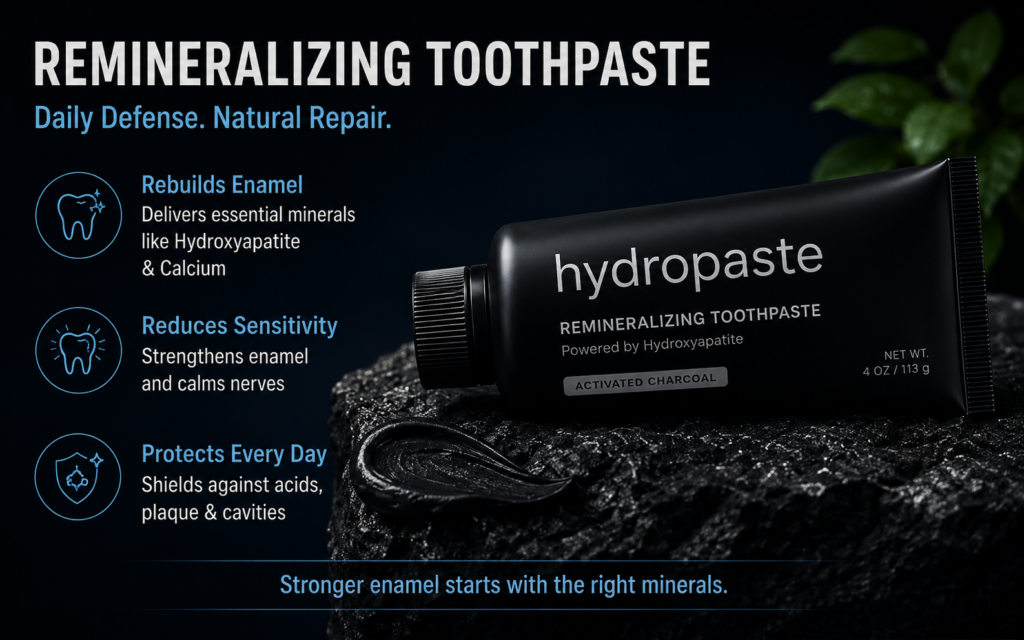
A home remineralization routine should be simple enough to maintain and specific enough to address the dominant condition.
Morning Routine
- Brush gently with the selected therapeutic toothpaste.
- Use a soft-bristled brush and controlled pressure.
- Clean all tooth surfaces rather than focusing only on visible front teeth.
- Follow product directions regarding rinsing.
- Avoid beginning the day with repeated acidic sipping.
Daytime Routine
- Consolidate snacks where practical.
- Consume acidic drinks with meals rather than continuously.
- Drink plain water between exposures.
- Use sugar-free gum when appropriate for saliva stimulation.
- Avoid using whitening powder or abrasive toothpaste after acidic foods.
- Maintain hydration.
Evening Routine
- Clean between the teeth.
- Brush with the selected remineralizing or anti-cavity toothpaste.
- Avoid eating or drinking sugary or acidic products afterward.
- Use any dentist-directed topical treatment.
- Address mouth breathing, dry mouth or reflux patterns where possible.
The Two-Layer Product Strategy
Some individuals may benefit from thinking in two layers:
- Base protection: A daily toothpaste chosen for caries prevention, erosion protection or sensitivity.
- Targeted support: A professionally recommended gel, paste, varnish, serum or leave-on mineral product.
More products are not automatically better. Combining formulations without understanding their active ingredients can increase irritation, cost and inconsistency.
Individuals comparing specific mineral toothpaste formulations can use the Hydroxyapatite Toothpaste Reviews page to examine ingredient systems and brand differences.
Remineralizing Gum for Enamel Support
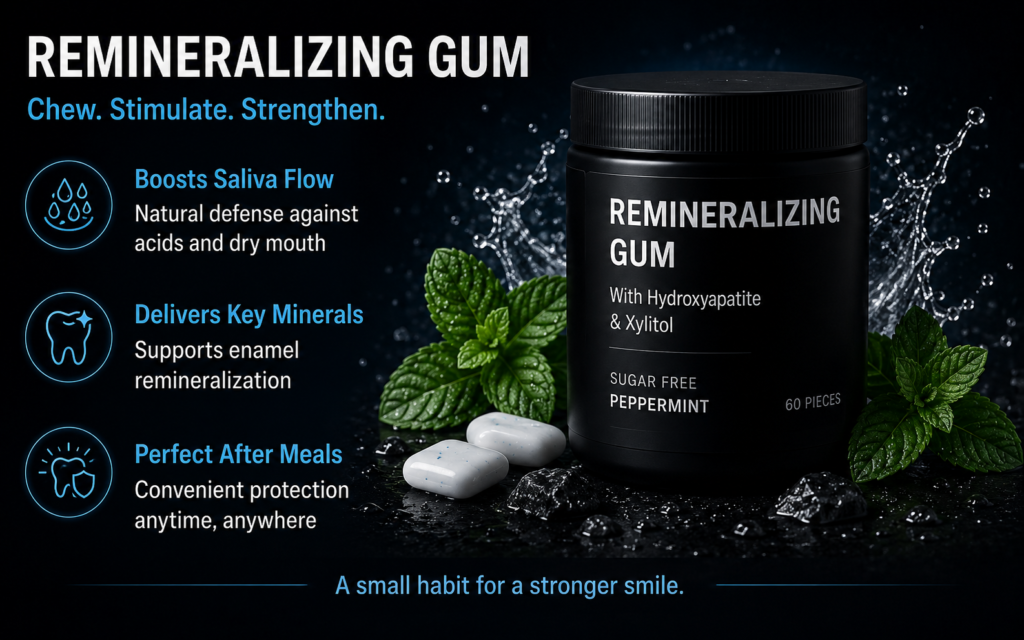
Remineralizing gum can be a useful daytime addition to a condition-based enamel care routine, particularly after meals when brushing is not practical. Its primary benefit does not necessarily come from a specialized mineral ingredient. Chewing itself stimulates saliva, and saliva is one of the mouth’s most important natural defenses against demineralization.
Increased saliva helps dilute and clear acids, raise oral pH and return calcium and phosphate to the environment surrounding the teeth. This can shorten the period during which enamel remains vulnerable after eating or drinking.
How Remineralizing Gum Works
Remineralizing gum may support enamel through one or more mechanisms:
- Stimulating saliva flow
- Increasing acid clearance
- Supporting pH recovery
- Supplying calcium-phosphate minerals
- Delivering hydroxyapatite or other surface-active ingredients
- Replacing sugar-containing gum with a non-cariogenic option
The term “remineralizing gum,” however, should not be interpreted as a promise that chewing gum can rebuild missing enamel. Its most realistic role is to improve the oral environment between brushing sessions and support the natural mineral exchange that occurs at the tooth surface.
Sugar-Free Gum Versus Mineral-Infused Gum
Standard sugar-free gum can be useful even when it does not contain a dedicated remineralizing active. Saliva stimulation alone may help the mouth recover after meals.
Mineral-infused gum may contain hydroxyapatite, calcium phosphate, bicarbonate, xylitol or related ingredients. These formulations may offer additional enamel-support potential, but effectiveness depends on the ingredient concentration, how readily it is released and how long the gum remains in contact with saliva and the teeth.
When Remineralizing Gum May Be Most Useful
Remineralizing gum may be particularly relevant for individuals who:
- Cannot brush immediately after lunch
- Experience frequent post-meal acid exposure
- Have mildly reduced saliva flow
- Consume snacks away from home
- Wear orthodontic appliances
- Are trying to reduce sugar-containing gum or mints
- Need a practical daytime addition to an enamel-protection routine
Chewing sugar-free gum after eating may be more useful than chewing it randomly throughout the day because it targets the period when oral acidity is most likely to rise.
When Remineralizing Gum Is Not Appropriate
Gum may not be suitable for people with jaw pain, temporomandibular joint problems, certain dental appliances or difficulty chewing safely. It should also not be relied upon to manage severe dry mouth, active cavities, reflux-related erosion or persistent tooth sensitivity without professional assessment.
Remineralizing Gum Versus Remineralizing Toothpaste
| Feature | Remineralizing Gum | Remineralizing Toothpaste |
|---|---|---|
| Main purpose | Daytime saliva and pH support | Direct brushing and therapeutic active delivery |
| Best timing | After meals or acidic exposure | Usually morning and evening |
| Plaque removal | No | Yes, when used with brushing |
| Mineral contact | Variable and saliva-dependent | More controlled and concentrated |
| Caries protection | Supportive | Primary daily role |
| Convenience | High | Requires brushing access |
| Replacement for dental treatment | No | No |
Remineralizing gum is therefore best understood as an adjunct. Toothpaste remains the main daily vehicle for anti-cavity and enamel-support ingredients, while gum can help maintain a more favorable environment between brushing sessions.
Best Remineralizing Toothpaste by Condition
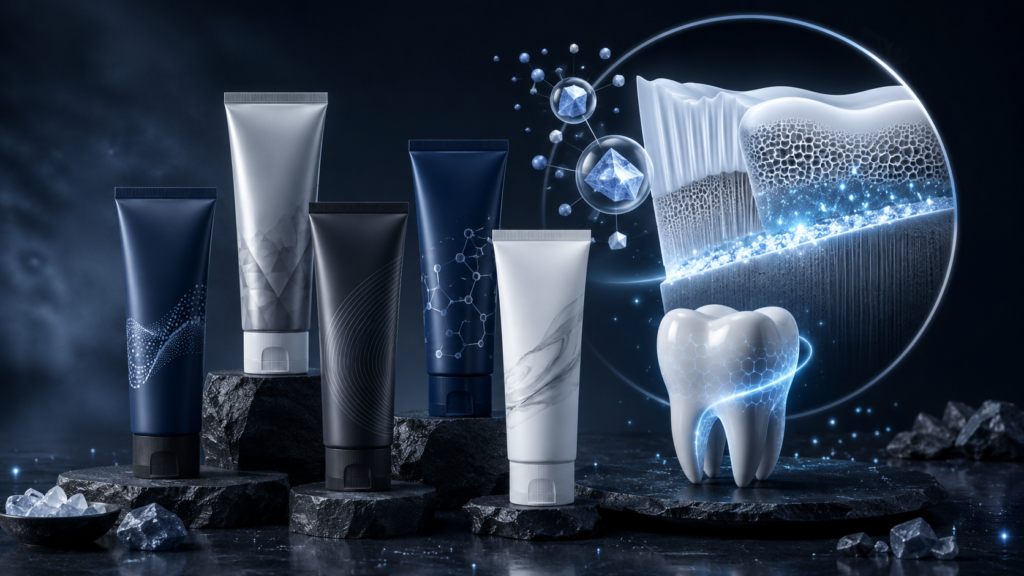
The best remineralizing toothpaste is not necessarily the product with the longest ingredient list. It is the formulation that addresses the dominant condition, has an appropriate evidence base and can be used consistently.
For High Caries Risk
Look for:
- Fluoride-based cavity protection
- A concentration appropriate for the individual’s age and risk
- Professional-strength options when prescribed
- Good tolerability
- A formulation that encourages consistent twice-daily use
A dentist may recommend a higher-fluoride prescription product for selected high-risk individuals. Such products should be used according to professional instructions.
For Early White Spot Lesions
Consider:
- Fluoride toothpaste
- Hydroxyapatite toothpaste
- Dentist-applied fluoride varnish
- Professional peptide-based treatment where available
- Plaque-control tools for orthodontic areas
- Resin infiltration for selected persistent lesions
The presence of a white spot does not guarantee that a toothpaste will restore the original appearance. Optical changes and mineral recovery do not always occur at the same rate.
For Acid Erosion
Prioritize:
- Low-abrasion cleaning
- Fluoride or stannous fluoride formulations designed for erosion protection
- Hydroxyapatite or mineral-depositing formulations
- Sensitivity support when dentin is involved
- Reduction of the acid source
No toothpaste can compensate fully for frequent unresolved acid exposure. The ADA notes that fluoride may contribute to remineralization in erosion management, while protection against erosion should not simply be presumed from fluoride use alone.
For Post-Whitening Sensitivity
Look for:
- Potassium nitrate or another desensitizing active
- Stannous fluoride
- Hydroxyapatite
- Gentle, non-whitening abrasives
- Product directions compatible with the whitening system
For Exposed Dentin
Potentially relevant technologies include:
- Tubule-occluding mineral systems
- Stannous fluoride
- Potassium salts
- Arginine-based formulations
- Bioactive glass
- Hydroxyapatite
Persistent or localized sensitivity should still be evaluated for decay, cracks, recession and restoration problems.
For Fluoride-Free Preferences
Hydroxyapatite is the leading mineral-based alternative with a growing clinical literature.
However, a product being fluoride-free does not automatically make it effective. Evaluate:
- Whether hydroxyapatite is clearly listed
- Whether the manufacturer explains the active system
- Whether the toothpaste is excessively abrasive
- Whether the product makes unrealistic regrowth claims
- Whether the person has high caries risk
- Whether a dentist has recommended additional protection
Toothpaste Selection Matrix
| Enamel Condition | First Product Priority | Useful Supporting Feature | Main Limitation |
|---|---|---|---|
| High caries activity | Proven anti-cavity protection | Higher-risk professional guidance | Cannot compensate for frequent plaque-acid exposure |
| Early white spot lesion | Remineralizing active | Plaque control and prolonged contact | Cosmetic appearance may not fully normalize |
| Dietary erosion | Low-abrasion enamel protection | Sensitivity relief | Acid source must be reduced |
| Reflux-related erosion | Surface protection | Dry-mouth support | Medical cause remains central |
| Post-whitening sensitivity | Desensitizing active | Mineral support | Whitening may need to pause |
| Exposed dentin | Tubule occlusion or nerve-calming active | Gentle brushing | Does not correct gum recession or structural loss |
| Fluoride-free routine | Hydroxyapatite | Low abrasivity | Evidence and formulations vary by product |
Hydroxyapatite vs Fluoride
Hydroxyapatite vs fluoride is often presented as a winner-takes-all competition. That framing oversimplifies the decision.
Both can support mineral stability, but they do so through different formulation strategies and occupy different positions in preventive dentistry.
How Fluoride Works
Topical fluoride can:
- Promote remineralization
- Reduce enamel solubility under caries-related acid challenge
- Support the formation of a more acid-resistant mineral environment
- Interfere with plaque-bacterial metabolism
- Provide established cavity-prevention benefits
Its strongest role is in caries prevention and management of early demineralization.
How Hydroxyapatite Works
Hydroxyapatite is chemically similar to the mineral phase of teeth. In toothpaste, appropriately formulated particles may:
- Deposit on the tooth surface
- Fill microscopic surface irregularities
- Supply calcium-phosphate mineral
- Reduce sensitivity through surface coverage or tubule occlusion
- Support remineralization of early lesions
A 2025 systematic review and meta-analysis concluded that hydroxyapatite toothpaste could be an effective alternative for preventing progression and promoting remineralization of initial caries lesions, although the evidence base remains smaller than that supporting fluoride.
Hydroxyapatite vs Fluoride Comparison Table
| Factor | Fluoride | Hydroxyapatite |
|---|---|---|
| Primary strength | Established cavity prevention | Biomimetic mineral deposition |
| Evidence history | Extensive and long-standing | Growing and increasingly clinical |
| Early lesion support | Strong | Promising |
| Sensitivity support | Depends on fluoride form and formula | Common formulation strength |
| Fluoride-free | No | Yes |
| Bacterial metabolism effect | Yes | Not the primary mechanism |
| Surface deposition | Indirect mineral stabilization and fluoride reservoirs | Direct mineral-particle deposition |
| Prescription-strength options | Available | Generally consumer formulations |
| Best suited to | Caries prevention and high-risk routines | Mineral support, sensitivity and fluoride-free preferences |
| Main caution | Must be used appropriately, especially in children | Product quality and evidence vary |
Can Fluoride and Hydroxyapatite Be Used Together?
Some formulations combine fluoride with hydroxyapatite, and emerging studies are evaluating whether dual systems provide complementary effects.
A combined formula is not automatically superior. Performance depends on ingredient compatibility, concentration, particle characteristics, delivery and clinical testing.
For a high-risk individual, the decision should be based on caries history and professional guidance rather than ingredient novelty alone.
Can Enamel Grow Back?
No toothpaste can regenerate a complete new layer of mature enamel after that layer has been physically lost.
That answer requires an important qualification.
What Can Happen
Partially demineralized enamel may regain mineral content. Its surface may become harder, less porous and more resistant to future acid attack.
An early non-cavitated lesion may be arrested. Some white spot lesions may improve clinically. Sensitivity may decrease when exposed areas are protected or dentinal tubules are occluded.
What Cannot Happen Through Toothpaste
Toothpaste cannot:
- Rebuild a missing tooth edge
- Fill a cavitated hole
- Restore the original thickness of severely eroded enamel
- Replace a fractured cusp
- Correct advanced tooth wear
- Reverse substantial loss of tooth shape
Why “Enamel Regrowth” Claims Require Caution
Marketing language often uses “rebuild,” “restore,” “regenerate” and “repair” interchangeably.
A more accurate interpretation is:
- Reharden: Improve mineral density in softened tissue
- Remineralize: Return mineral to partially demineralized areas
- Protect: Increase resistance to continued attack
- Occlude: Cover or block exposed dentinal tubules
- Restore: Replace missing anatomy with a dental material
These are not the same outcome.
Condition-Based Remineralization Timeline
Remineralization is gradual and depends on the condition remaining controllable.
First 24 Hours
Focus on:
- Ending repeated acid or sugar exposure
- Beginning gentle cleaning
- Selecting a relevant toothpaste
- Stopping damaging whitening or abrasive habits
- Rinsing after acid exposure
- Restoring hydration
Do not expect visible enamel rebuilding.
First Two Weeks
Possible early changes include:
- Reduced sensitivity
- Improved mouth comfort
- Better plaque control
- Fewer acid exposures
- Greater consistency with the routine
A lack of immediate visible change does not necessarily mean the plan is ineffective.
Four to Eight Weeks
At this stage, evaluate:
- Whether sensitivity is decreasing
- Whether new symptoms have appeared
- Whether white spots seem stable
- Whether the routine is sustainable
- Whether dietary frequency has changed
- Whether dry mouth remains unresolved
Three to Six Months
Dental reassessment may determine whether:
- A lesion has arrested
- Mineral density appears improved
- Professional fluoride is needed
- Resin infiltration is appropriate
- Erosion remains active
- Restorative treatment is necessary
- The strategy should be intensified or simplified
Timeline Chart
| Period | Primary Objective | What to Monitor |
|---|---|---|
| Day 1 | Stop the dominant mineral-loss pressure | Pain, visible damage, acid frequency |
| Week 1 | Establish consistent therapeutic contact | Tolerability and brushing technique |
| Weeks 2–4 | Stabilize the oral environment | Sensitivity and exposure frequency |
| Weeks 4–8 | Evaluate early response | Symptom trend and adherence |
| Months 3–6 | Confirm clinical stability | Lesion activity and structural progression |
| Long term | Prevent recurrence | Diet, saliva, plaque and product suitability |
Enamel Condition Comparison Chart
| Condition | Main Cause | Remineralization Potential | Product Priority | Professional Priority |
|---|---|---|---|---|
| Early non-cavitated caries | Plaque acids | Moderate to high when controlled | Anti-cavity and remineralizing toothpaste | Lesion monitoring |
| Cavitated decay | Structural breakdown | Low for restoring shape | Supportive only | Restorative evaluation |
| Early dietary erosion | Direct acid exposure | Some rehardening may occur | Low-abrasion enamel protection | Identify severity |
| Advanced erosion | Repeated chemical loss | Limited | Protection and sensitivity care | Restorative planning |
| Post-whitening sensitivity | Peroxide-related response | Not always a mineral-loss problem | Desensitizing toothpaste | Review whitening protocol |
| White spot after orthodontics | Plaque-related demineralization | Often treatable when intact | Fluoride, hydroxyapatite or professional treatment | Assess activity and appearance |
| Exposed dentin | Recession, erosion or wear | Enamel cannot cover the root again | Tubule-occluding or nerve-calming formula | Identify cause |
| Reflux-related erosion | Gastric acid | Limited unless exposure is controlled | Enamel protection | Medical and dental coordination |
| Dry-mouth demineralization | Reduced saliva protection | Variable | Anti-cavity protection and saliva support | Identify dryness cause |
What Can Prevent Remineralization?
Repeated Snacking
Frequent carbohydrate exposure can sustain plaque-acid production even when total sugar intake seems moderate.
Continuous Acidic Sipping
A mineral toothpaste used twice daily cannot fully offset an acidic drink contacting the teeth every few minutes.
Dry Mouth
Low saliva flow reduces acid clearance, buffering and mineral availability.
Plaque Retention
Thick plaque changes the local environment at the lesion and reduces effective contact between the tooth and therapeutic products.
Aggressive Brushing
High pressure, stiff bristles and abrasive toothpaste can increase wear, particularly where erosion or exposed dentin already exists.
Whitening Overuse
Repeated or excessive whitening may intensify sensitivity and distract from underlying enamel or dentin problems.
Unrealistic Product Rotation
Switching products every few days makes it difficult to evaluate tolerance or establish consistent exposure.
Unresolved Reflux
Reflux-related erosion cannot be managed adequately with toothpaste alone.
Mouth Breathing
Nighttime mouth breathing may contribute to dryness around exposed front teeth and gumline areas.
Untreated Cavitation
Once a lesion has physically broken down, home remineralization is no longer a substitute for dental evaluation.
When Home Remineralization Is Not Enough
Arrange a dental examination when any of the following occurs:
- A visible hole or broken area
- Tooth pain that occurs without a trigger
- Sensitivity that lingers after cold or heat
- Pain when biting
- Swelling or a gum boil
- Rapidly changing tooth color
- A cracked or fractured tooth
- Increasing transparency at the edges
- Progressive shortening or cupping
- One tooth behaving differently from the rest
- Repeated reflux or vomiting
- Persistent dry mouth
- Sensitivity that does not improve
- A white lesion that is enlarging
- Difficulty eating or drinking normally
Possible Professional Interventions
Depending on the condition, a dentist may consider:
- Fluoride varnish
- Prescription fluoride toothpaste
- Calcium-phosphate treatment
- Self-assembling peptide treatment
- Resin infiltration
- Sealants
- Desensitizing varnish
- Bonding
- Composite restoration
- Veneers or crowns in advanced wear
- Management of gum recession
- Saliva-flow assessment
- Medical referral for reflux or other causes
The goal is not to delay restorative treatment indefinitely. It is to recognize the point at which non-invasive management remains possible and the point at which structure must be restored.
Upcoming Trends and Latest Enamel Repair Technology
The next stage of enamel care is moving from broad “strengthening” claims toward targeted biomineralization, guided lesion repair and personalized risk management.
Self-Assembling Peptides
Self-assembling peptides are designed to create a scaffold within an early enamel lesion. This scaffold may encourage new mineral deposition inside the porous area rather than acting only on the outer surface.
Clinical evidence is promising, particularly for early non-cavitated lesions, but systematic reviews have also emphasized the limited number of trials, short follow-up periods and variability in study quality.
A 2024 randomized clinical trial found that a self-assembling peptide combined with fluoride varnish produced greater remineralization of incipient lesions than fluoride varnish alone during six months of follow-up.
Guided Enamel Regeneration
Guided enamel regeneration aims to influence mineral formation within the lesion using biomimetic structures.
This differs from claiming that an adult tooth can biologically manufacture an entirely new enamel crown. The practical target is early lesion repair within surviving tissue.
Smarter Hydroxyapatite Formulations
Future hydroxyapatite products are likely to focus less on the ingredient name alone and more on:
- Particle size distribution
- Surface charge
- Crystal shape
- Ion substitution
- Adhesion time
- Compatibility with fluoride
- Delivery into subsurface lesions
- Resistance to acidic dissolution
Ion-modified hydroxyapatite and functionalized mineral particles may allow formulations to be tuned for sensitivity, erosion or early caries rather than sold as one universal mineral system.
Multi-Active Toothpaste Systems
Emerging formulations may combine:
- Fluoride with hydroxyapatite
- Mineral particles with sensitivity agents
- Calcium-phosphate delivery with pH support
- Arginine with fluoride
- Bioactive glass with tubule-occluding ingredients
- Enzymes or proteins designed to support the oral environment
The challenge is proving that each combination remains stable and clinically useful rather than simply producing a longer ingredient list.
Saliva-Responsive Delivery
Future mineral treatments may be designed to respond to pH, saliva chemistry or acid exposure.
A condition-responsive product could remain relatively inactive at neutral pH, then release protective ions when the local environment becomes acidic.
Lesion-Specific Diagnostics
Early caries detection is moving beyond a simple visual check.
Future systems may combine:
- Digital imaging
- Fluorescence
- Optical coherence methods
- Quantitative mineral-density monitoring
- Saliva-risk measurements
- Longitudinal image comparison
The practical benefit is better differentiation between an inactive stain, a stable white spot and a lesion that is actively losing mineral.
Personalized Remineralization Protocols
The same toothpaste recommendation may not serve a person with dry mouth, frequent reflux, orthodontic appliances and low plaque levels in the same way it serves someone with high plaque activity and frequent sugar exposure.
Personalized protocols are likely to consider:
- Saliva flow
- Saliva buffering
- Lesion location
- Dietary frequency
- bacterial ecology
- medication use
- brushing pressure
- caries history
- erosion pattern
- product adherence
Technology Maturity Chart
| Technology | Current Maturity | Most Relevant Use | Main Evidence Need |
|---|---|---|---|
| Fluoride toothpaste | Established | Caries prevention and early lesions | Better condition-specific optimization |
| Hydroxyapatite toothpaste | Growing clinical adoption | Mineral support and sensitivity | More independent long-term trials |
| Bioactive glass | Established in selected sensitivity products | Dentin tubule occlusion | Broader comparative trials |
| Self-assembling peptides | Emerging clinical technology | Early non-cavitated lesions | Larger, longer clinical studies |
| Guided enamel regeneration | Emerging | Subsurface lesion repair | Real-world durability |
| Smart pH-responsive mineral delivery | Experimental | High-frequency acid challenge | Clinical translation |
| Ion-modified hydroxyapatite | Experimental to emerging | Condition-specific mineral support | Safety and comparative effectiveness |
| Digital lesion monitoring | Growing | Tracking early caries activity | Standardized clinical thresholds |
For broader oral-care systems, ingredient education and condition-focused product analysis, visit the Hydropaste Homepage.
Condition-Based Remineralization FAQs
Can early enamel damage be remineralized?
Early mineral loss may be remineralized when the enamel surface remains intact. The strategy must control the cause of demineralization, maintain plaque control and provide consistent exposure to fluoride, hydroxyapatite or another appropriate remineralizing system. A cavitated or physically broken surface cannot be rebuilt through toothpaste.
What is the best remineralizing toothpaste for weak enamel?
The best remineralizing toothpaste depends on why the enamel is weak. Fluoride toothpaste is generally prioritized for caries prevention. Hydroxyapatite may be considered for mineral deposition, sensitivity or a fluoride-free routine. Erosion may require a low-abrasion protective formulation, while exposed dentin may need tubule-occluding or potassium-based technology.
Can hydroxyapatite reverse early cavities?
Hydroxyapatite may support remineralization of early, non-cavitated lesions. It cannot close a cavity after the enamel surface has collapsed. Clinical monitoring is important because a white spot, stain and active caries lesion may look similar without a professional assessment.
How long does enamel remineralization take?
Symptom relief may occur within days or weeks, but meaningful lesion stabilization generally requires consistent care over a longer period. Dental reassessment after several months may be needed to determine whether an early lesion has arrested or whether further treatment is required.
Does tooth sensitivity always mean enamel loss?
No. Sensitivity may be associated with enamel thinning, exposed dentin, gum recession, whitening, tooth cracks, decay, grinding or restoration problems. Localized, severe or lingering sensitivity should be evaluated rather than treated only with sensitivity toothpaste.
FAQ Quick-Answer Table
| Question | Concise Answer |
|---|---|
| Can early enamel damage heal? | It may regain mineral when the surface is intact. |
| Can toothpaste fill a cavity? | No. A broken surface may need restoration. |
| Is hydroxyapatite useful? | It may support early remineralization and sensitivity relief. |
| Is fluoride still relevant? | Yes. It remains the most established anti-cavity active. |
| Does sensitivity prove erosion? | No. Several dental conditions can cause sensitivity. |
People Also Ask
How do you remineralize teeth naturally?
Natural remineralization depends primarily on saliva, adequate recovery time between acid exposures, plaque control and access to calcium and phosphate. A practical routine includes reducing frequent sugar and acid exposure, maintaining hydration, stimulating saliva when appropriate and using an evidence-based toothpaste.
Can enamel grow back after acid erosion?
Partially softened enamel may re-harden, but enamel that has been physically dissolved cannot grow back to its original thickness. Advanced erosion may require bonding, restorations or other professional treatment to replace missing structure.
Is hydroxyapatite better than fluoride for enamel repair?
Hydroxyapatite and fluoride have different strengths. Fluoride has the larger evidence base for cavity prevention. Hydroxyapatite offers biomimetic mineral deposition and may help with early lesions and sensitivity. The better option depends on caries risk, fluoride preference, formulation quality and the condition being treated.
Can you reverse a cavity without a filling?
An early, non-cavitated caries lesion may be arrested and remineralized. Once the surface has broken and a true cavity has formed, mineral toothpaste cannot restore the missing shape. A dentist must determine whether the lesion is still non-cavitated.
What foods help remineralize tooth enamel?
Foods that support saliva flow and provide nutrients such as calcium and phosphate can contribute to a tooth-friendly diet. More important than identifying one “remineralizing food” is reducing the frequency of sugary and acidic exposures. Food cannot rebuild enamel that has already been physically lost.
Editorial Insights
Condition-based remineralization changes the central question from “Which ingredient repairs enamel?” to “Why is this tooth losing mineral, and is the structure still recoverable?”
That is the more useful question because enamel damage is rarely a product deficiency alone.
A person with early plaque-driven caries needs fewer acid-producing episodes, better plaque disruption and reliable anti-cavity protection. A person with dietary erosion needs lower acid frequency and gentler abrasion. A person with post-whitening sensitivity may need to stop whitening rather than add another aggressive product. Someone with reflux needs protection for the teeth and attention to the underlying exposure.
The future of enamel care will be increasingly precise. Mineral systems will become more specialized. Peptide-based treatments may guide mineral formation inside early lesions. Digital monitoring may show whether a lesion is active before visible cavitation occurs. Saliva-responsive technologies may deliver protection when acidity rises.
Yet the most important principle will remain unchanged: remineralization works best before structure is lost.
The earlier the cause is identified, the more natural tooth tissue can be preserved. Once enamel has disappeared, the task changes from biological stabilization to restorative reconstruction. Condition-based remineralization is the framework that helps identify that boundary—and act while the tooth is still on the recoverable side of it.