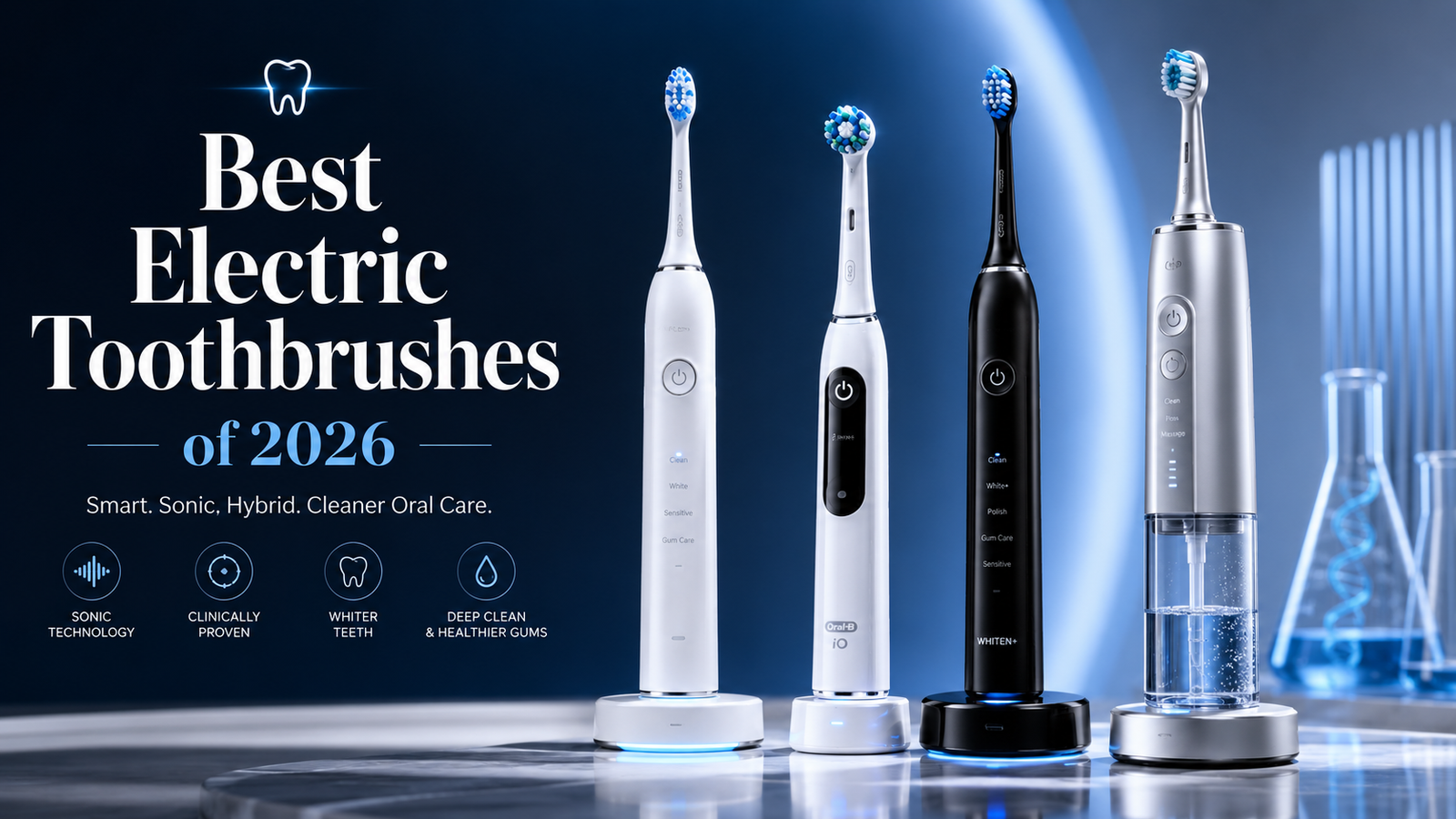
Best Electric Toothbrushes of 2026: Smart, Sonic, AI-Guided & Hybrid Cleaning Reviews
Updated on July, 2026.
Amazon Affiliate Disclosure
Hydropaste may earn a commission when readers purchase through qualifying affiliate links, including Amazon affiliate links. This does not increase your cost. Our recommendations are structured around oral-care use cases, product technology, formula compatibility, buyer intent, and practical daily value.
Electric toothbrushes have moved far beyond the old “powered brush” category. In 2026, the best electric toothbrush is no longer judged only by how fast the bristles move. The real question is sharper: does the brush match your plaque profile, gum sensitivity, enamel condition, orthodontic needs, whitening goals, and daily habits?
That is where modern oral care technology has changed the category. Today’s leading toothbrushes combine sonic vibration, oscillating-rotating mechanics, pressure sensors, brushing timers, gum-care modes, whitening settings, app-based coaching, and even integrated water flossing. Some models are designed for gentle everyday cleaning. Others are built for deep plaque removal, stain control, braces, implants, gumline maintenance, or people who simply never floss consistently.
At Hydropaste, this guide is written for readers who want more than a product list. It explains how electric toothbrush technology works, which features actually matter, which ones are mostly marketing, and how to choose the right brush for your mouth in 2026.
Quick Picks: Best Electric Toothbrushes of 2026
| Category | Best Pick | Why It Stands Out |
|---|---|---|
| Best Overall Electric Toothbrush | Philips Sonicare 4100 Series | Gentle sonic cleaning, pressure sensor, reliable plaque removal, strong value |
| Best All-in-One Oral Care System | 2-in-1 Oral Clean Kit | Combines electric brushing with water flossing for full-mouth cleaning |
| Most Innovative Hybrid Toothbrush | Soocas NEOS II | Brushes and water-flosses through one device for time-saving daily care |
| Best for Deep Plaque Removal | Oral-B Pro 1000 | Oscillating-rotating head gives strong mechanical plaque disruption |
| Best Electric Toothbrush for Whitening | Aquasonic Black Series Ultra Whitening | High-speed sonic action, whitening mode, strong value, travel-friendly package |
What This Guide Is For
This guide is for shoppers trying to choose the best electric toothbrush of 2026 without getting lost in exaggerated claims, confusing model names, or gadget-heavy marketing.
It helps you understand:
- Which electric toothbrush technology fits your mouth
- Whether sonic or oscillating brushes are better for your needs
- Why pressure sensors matter for gum protection
- Which brushes are best for sensitive teeth
- Which models help with whitening and coffee stains
- Whether a toothbrush and water flosser combo is worth it
- Which electric toothbrush works best for braces, aligners, implants, or retainers
- How much you should realistically spend
- Which features are essential and which are optional
A great toothbrush does not only clean teeth. It changes behavior. The best device is the one that helps you brush longer, press less aggressively, reach more surfaces, protect your gums, and stay consistent every day.
Who Needs an Electric Toothbrush in 2026?
Almost anyone can benefit from a well-chosen electric toothbrush, but some readers need one more urgently than others.
You should strongly consider an electric toothbrush if you have:
- Plaque buildup despite brushing daily
- Bleeding gums or early gingivitis signs
- Tooth sensitivity from overbrushing or enamel wear
- Receding gums
- Braces, aligners, retainers, bridges, implants, or crowns
- Coffee, tea, wine, or tobacco stains
- Limited hand dexterity
- A habit of brushing for less than two minutes
- Difficulty cleaning the back molars
- A tendency to scrub aggressively with a manual brush
Manual toothbrushes can work when used perfectly. The problem is that most people do not brush perfectly. They rush, scrub too hard, miss inner surfaces, neglect the gumline, or stop before two minutes. Electric toothbrushes reduce that margin of error.
Benefits of Using an Electric Toothbrush
Better Plaque Removal
The biggest benefit is more consistent plaque disruption. Electric brushes move faster and more consistently than the human hand, helping clean around the gumline, between teeth, and along hard-to-reach areas.
To explore more options, explore our article 6 Best Teeth Tools for Professional Plaque Removal: 2026 Reviews.
Improved Gumline Cleaning
Sonic brushes create fluid movement around the teeth, while oscillating brushes cup individual teeth with a round head. Both can improve gumline cleaning when used correctly.
Less Overbrushing Damage
Modern pressure sensors help protect against one of the most common brushing mistakes: pressing too hard. This matters because aggressive brushing can contribute to gum recession, enamel abrasion, and tooth sensitivity.
Better Brushing Discipline
Built-in timers and quadrant pacers help users brush for the full two minutes. This is not a small feature. Consistency is one of the most important predictors of oral hygiene success.
More Personalized Cleaning
The best electric toothbrushes now offer modes for:
- Sensitive teeth
- Whitening
- Gum care
- Deep cleaning
- Tongue cleaning
- Orthodontic cleaning
- Daily maintenance
Instead of forcing every mouth into one brushing intensity, modern toothbrushes let users match the cleaning pattern to their oral condition.
While choosing the right electric toothbrush is essential, it’s only one part of a full dental hygeine system.
Buying Guide: What Actually Matters in an Electric Toothbrush in 2026
Choosing an electric toothbrush should not start with the brand. It should start with the mouth.
A person with sensitive gums does not need the same brush as a coffee drinker chasing stain removal. Someone with braces needs different cleaning support than someone with veneers. A frequent traveler may care more about battery life, USB-C charging, and a travel case. A person who skips flossing may need a hybrid brush and water flosser more than a luxury app-connected model.
Here are the features that matter most.
1. Brushing Technology
The motor system determines how the toothbrush removes plaque, how it feels on the gums, and how aggressive or gentle the cleaning experience becomes.
Sonic toothbrush technology creates high-frequency micro-vibrations that improve plaque disruption while remaining gentle on gums.
Modern premium toothbrushes usually fall into three categories:
- Sonic toothbrushes
- Oscillating-rotating toothbrushes
- Hybrid brush and water flosser systems
Each has a different cleaning personality.
Sonic Toothbrush Technology
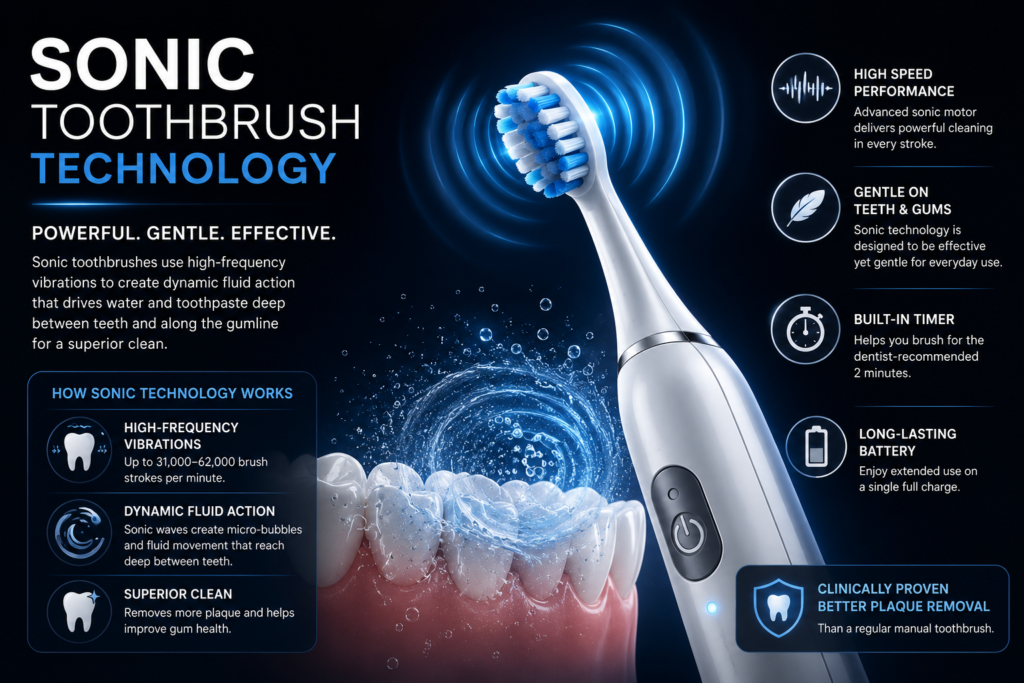
Best for: sensitive gums, daily maintenance, enamel-conscious brushing, quiet operation, braces, gumline care.
Sonic toothbrushes use high-frequency vibration to move the bristles rapidly. Many sonic toothbrushes operate in the range of roughly 30,000 to 40,000+ vibrations per minute, depending on the model.
The advantage of sonic technology is that it does not rely only on direct scrubbing. The fast movement agitates saliva, toothpaste, and water in the mouth, helping disturb plaque around the gumline and slightly beyond where the bristles physically touch.
This is why sonic brushes are popular for readers searching:
- best sonic toothbrush
- best sonic toothbrush for sensitive teeth
- electric toothbrush for receding gums
- quiet electric toothbrush
- electric toothbrush for gum health
- toothbrush for sensitive enamel
Sonic brushes often feel smoother than oscillating brushes. For many users, especially those with recession, sensitivity, implants, veneers, or delicate gums, that gentler feel makes sonic brushing easier to tolerate.
Oscillating-Rotating Toothbrush Technology
Best for: strong plaque removal, molar cleaning, surface polishing, people who like a “dentist-clean” feel.
Oscillating-rotating toothbrushes use a small round brush head that rotates, pulses, and moves around each tooth. The cleaning sensation is more mechanical and concentrated than sonic brushing.
This category remains extremely popular for people searching:
- best electric toothbrush for plaque removal
- best toothbrush for tartar buildup
- Oral-B vs Sonicare
- best electric toothbrush for deep cleaning
- best toothbrush for coffee stains
The main strength is direct plaque disruption. The round head can clean tooth-by-tooth, especially around molars and crowded areas.
The caution is pressure. If the user presses too hard, an oscillating brush can feel harsh. That is why pressure control is essential for anyone with gum recession, sensitivity, or enamel wear.
Hybrid Brush + Water Flossing Systems
Best for: braces, permanent retainers, implants, gum pockets, food trapping, people who skip flossing.
Hybrid oral-care systems are one of the fastest-growing categories in 2026. These systems combine electric brushing with water flossing. Some are two-device kits. Others integrate water jets into the brush head itself.
They appeal to users searching:
- electric toothbrush and water flosser combo
- best toothbrush for braces
- toothbrush with water flosser
- all in one oral care system
- best water flosser toothbrush combo
- electric toothbrush for implants
The appeal is simple: people know they should floss, but many do not. A hybrid system reduces friction by combining steps or keeping both tools together. For orthodontic users, water flossing can be especially useful because brackets, wires, and retainers trap food and plaque.
2. Pressure Sensors: Non-Negotiable for Gum Protection
One of the biggest brushing problems is invisible: excessive pressure.
Many people think harder brushing means cleaner teeth. In reality, too much force can irritate the gums, wear the enamel surface, and worsen sensitivity. A toothbrush with a pressure sensor helps correct that habit.
In 2026, the best electric toothbrush with pressure sensor systems may include:
- LED warning lights
- Handle vibration alerts
- Automatic speed reduction
- Haptic feedback
- App-based pressure tracking
- Gum-safe adaptive intensity
A pressure sensor is especially important if you are searching:
- best electric toothbrush for receding gums
- electric toothbrush for sensitive teeth
- toothbrush for enamel erosion
- toothbrush for gum disease prevention
- best toothbrush for aggressive brushers
For many users, the pressure sensor matters more than having six cleaning modes.
3. Smart Timers and Quadrant Pacing
Most dentists recommend brushing for two minutes, twice daily. The challenge is that many people overestimate how long they brush.
A smart timer solves this by guiding the user through a full brushing cycle.
Quadrant pacing usually divides the mouth into:
- Upper right
- Upper left
- Lower right
- Lower left
The toothbrush vibrates or pauses every 30 seconds, reminding the user to move to the next section.
This improves:
- full-mouth coverage
- gumline consistency
- plaque control
- brushing discipline
- long-term habit formation
A timer may seem basic, but it is one of the most important features for real-world results.
4. Battery Life and Charging
Battery life matters more than people expect. If a toothbrush dies often, users skip it or switch back to manual brushing.
In 2026, a good rechargeable electric toothbrush should offer:
- At least 10–14 days of battery life
- USB or USB-C charging when possible
- Travel-friendly charging
- Waterproof handle design
- A clear battery indicator
Premium models may offer:
- 30-day battery life
- Magnetic charging
- Travel charging cases
- Fast charging
- Battery percentage indicators
For travelers, battery life can be a deciding factor. A brush that lasts two to four weeks on one charge is easier to trust on business trips, holidays, and daily commuting routines.
5. Specialized Cleaning Modes
Multiple brushing modes are useful only when they match real oral-care needs.
Whitening Mode
Designed to polish surface stains from coffee, tea, wine, or tobacco. It does not replace professional whitening, but it can help maintain brightness.
Gum Care Mode
Uses gentler pulsations or intensity patterns to clean along the gumline without excessive force.
Sensitive Mode
Reduces motor intensity for users with enamel erosion, exposed roots, post-whitening sensitivity, or gum recession.
Deep Clean Mode
Often extends brushing time or increases intensity for a more thorough session.
Tongue Cleaning Mode
Helps reduce odor-causing bacteria on the tongue surface.
The best toothbrush is not the one with the most modes. It is the one with the right modes for your mouth.
View our complete guide on tongue cleaners
Key Electric Toothbrush Trends in 2026
AI-Guided Brushing Is Moving Into the Mainstream
AI brushing guidance is still more common in premium models, but it is shaping buyer expectations. Smart toothbrushes can now track missed zones, brushing pressure, brushing duration, and cleaning consistency.
For users who enjoy data, this can turn brushing into a measurable habit. For users who hate apps, a simple timer and pressure sensor may be enough.
Hybrid Flossing Is Becoming More Practical
The biggest weakness in oral hygiene is flossing compliance. Hybrid brush-and-floss systems solve that by making interdental cleaning easier, faster, and harder to ignore.
Expect more 2026 and 2027 models to combine:
- sonic brushing
- water flossing
- gum massage
- orthodontic cleaning
- travel-friendly reservoirs
USB-C Charging Is Replacing Bulky Chargers
Consumers increasingly expect oral-care devices to charge like phones, headphones, and other personal electronics. USB-C makes electric toothbrushes more travel-friendly and reduces bathroom clutter.
Sustainability Is Becoming a Buying Factor
More brands are focusing on:
- recyclable brush heads
- reduced plastic packaging
- longer battery life
- replaceable heads
- compact chargers
- subscription brush-head replacement
Sustainability is not the only reason to buy a toothbrush, but it increasingly affects brand preference.
Best Electric Toothbrush Reviews 2026
1. Best Overall: Philips Sonicare 4100 Series
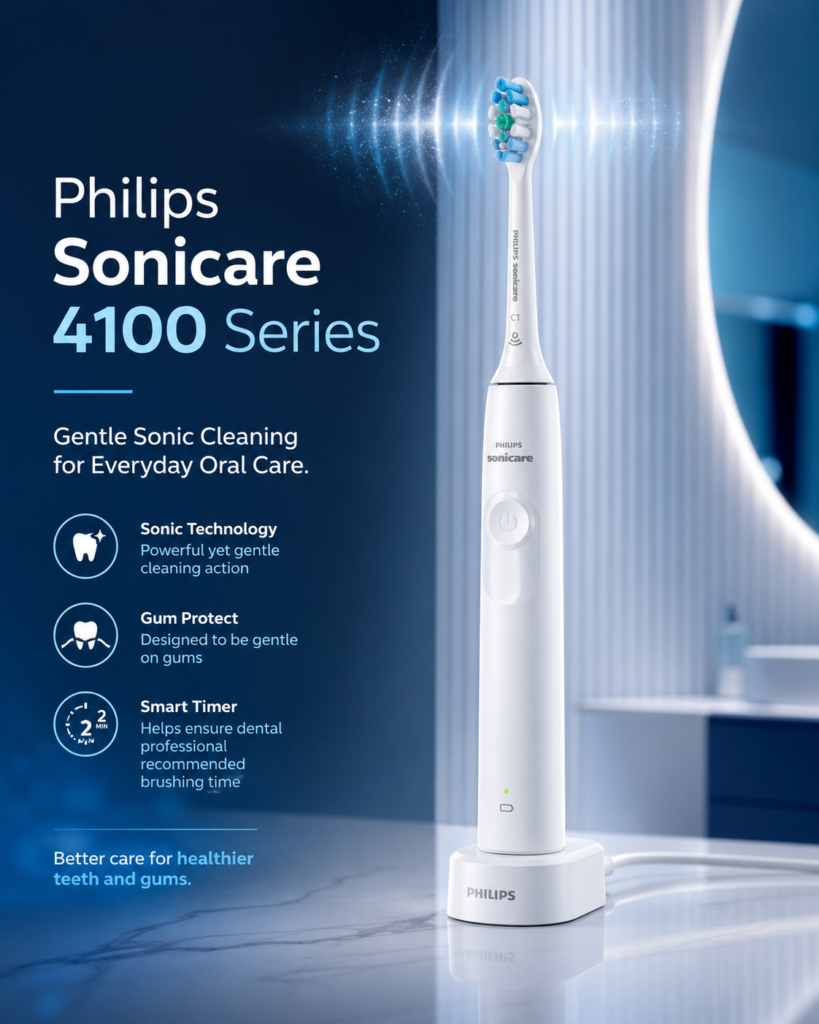
The Philips Sonicare 4100 Series is one of the best overall electric toothbrushes of 2026 because it delivers the features most people actually need without unnecessary complexity.
It is not the flashiest smart toothbrush. That is part of its strength. It gives users sonic cleaning, a pressure sensor, a two-minute timer, quadrant pacing, BrushSync replacement reminders, and reliable battery life in a simple, approachable package.
Why It Stands Out
The Sonicare 4100 uses Philips sonic technology, delivering up to approximately 31,000 brush strokes per minute. The movement is fast enough to disrupt plaque effectively, yet smooth enough for people who dislike harsh mechanical brushing.
The pressure sensor is one of the most useful features. If the user presses too hard, the handle pulses as a reminder to ease off. This makes it a strong fit for users with sensitive gums, gum recession risk, or a history of overbrushing.
Best For
- Everyday users
- Gum health
- Sensitive gums
- First-time electric toothbrush buyers
- People upgrading from manual toothbrushes
- Users who want quality without app complexity
What Could Be Better
The Sonicare 4100 is not the most advanced smart toothbrush. It does not offer the same level of app-based coaching, AI tracking, or multiple advanced modes as higher-end models. But for most people, its simplicity is an advantage.
Editorial Verdict
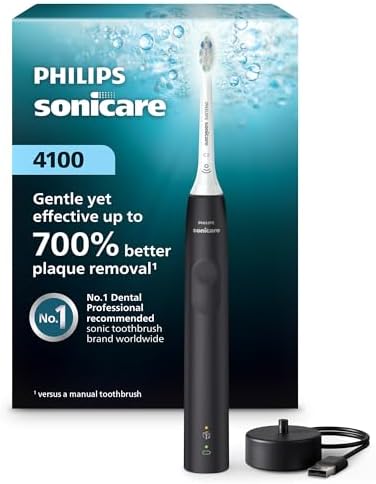

The Philips Sonicare 4100 Series is the best all-around recommendation for most readers because it balances cleaning power, comfort, pressure control, price, and ease of use.
2. Best All-in-One System: 2-in-1 Oral Clean Kit
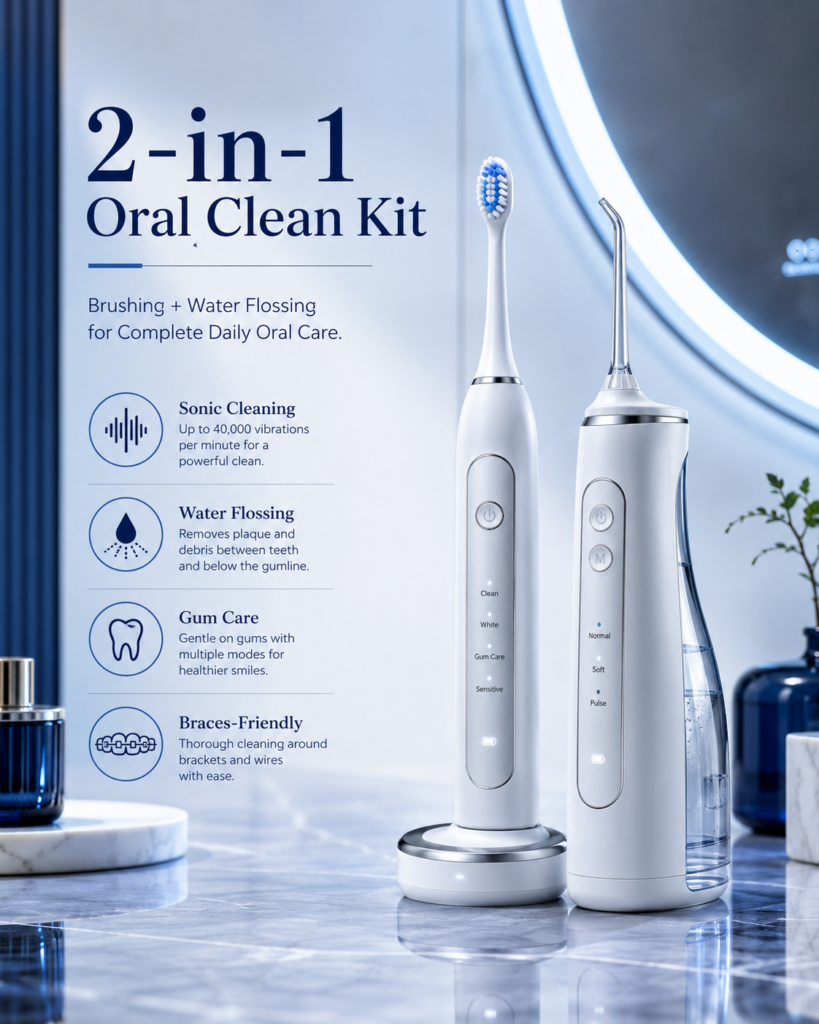
A 2-in-1 Oral Clean Kit is ideal for readers who want an electric toothbrush and water flosser in one system. This category is not about minimalism. It is about complete oral hygiene.
A typical kit includes a sonic toothbrush plus a water flosser base or attachment. The toothbrush handles plaque on tooth surfaces, while the water flosser helps flush debris from between teeth and along the gumline.
Why It Stands Out
Many people brush daily but skip flossing. A combo system helps solve that behavior gap by placing brushing and interdental cleaning in the same routine.
This is especially useful for:
- Braces
- Permanent retainers
- Dental implants
- Bridges
- Crowded teeth
- Food trapping
- Gum pocket maintenance
Best For
- Orthodontic patients
- Families
- People who hate string floss
- Implant or bridge care
- Users who want one bathroom station for brushing and flossing
What Could Be Better
These systems can take up more counter space. Some also require more maintenance because of water tanks, nozzles, and extra parts. If you want a compact travel brush, this is not always the easiest choice.
Editorial Verdict

- 【Family Dental Center PRO】Water flosser and electric toothbrush combo. The Cordless Water Flosser uniquely combines wate…
- 【Your Perfect Flossing Choice】 This water flosser comes with a 200 ml water tank and 2000 mAh battery that is easily rec…
- 【Powerful Sonic Toothbrush】Ultrasonic motor generates 38,000 micro-vibrations per minute. More whitening effect and deep…
A 2-in-1 oral clean kit is the best choice for readers who want to improve brushing and flossing consistency together, especially if they wear braces, retainers, or implants.
3. Soocas NEOS II | Best Electric Toothbrush with Water Flosser
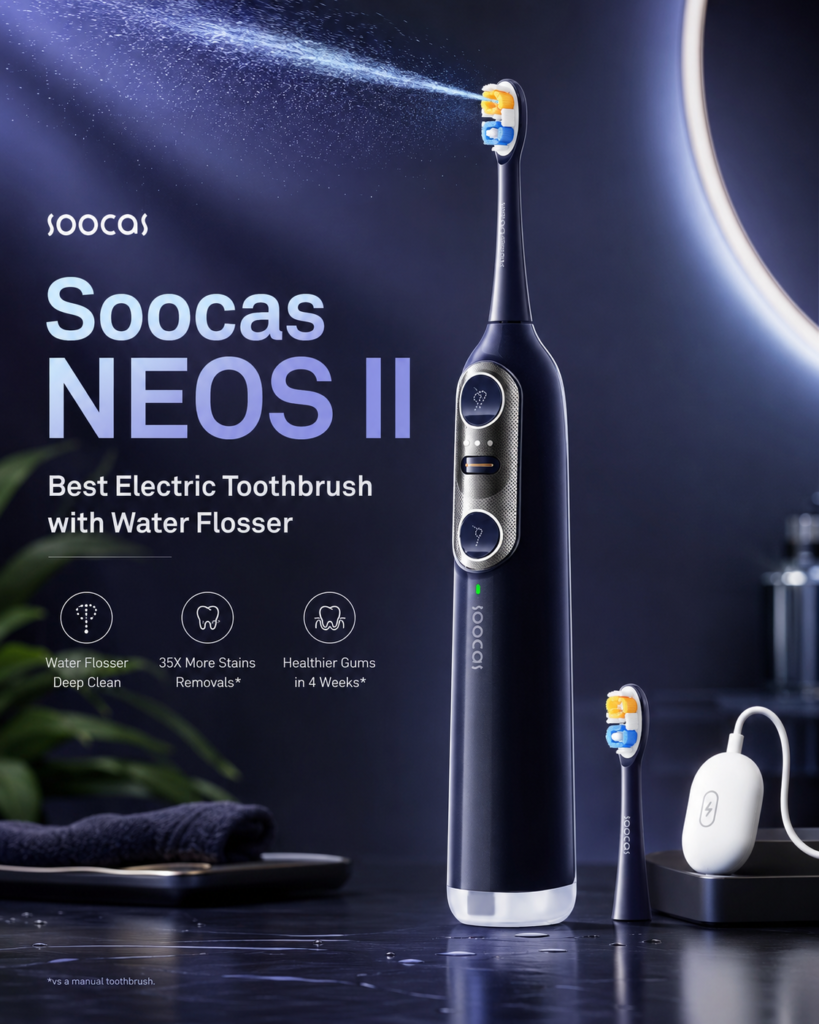
The Soocas NEOS II represents one of the most interesting directions in oral care: simultaneous brushing and flossing.
Unlike a traditional kit where the electric toothbrush with water flosser are separate tools, the NEOS II is designed as a true hybrid device. It brushes the tooth surface while a water jet targets interdental spaces.
Why It Stands Out
The biggest advantage is time. Many people skip flossing because it feels like an extra step. A hybrid device reduces the routine into one motion.
That makes the Soocas NEOS II attractive for readers searching:
- best toothbrush for lazy flossers
- toothbrush that flosses at the same time
- electric toothbrush water flosser combo
- best toothbrush for braces and gums
Best For
- Busy users
- People who skip flossing
- Orthodontic patients
- Users who want innovation
- Tech-forward oral-care buyers
What Could Be Better
Hybrid devices can feel unusual at first. They may also require more cleaning and refilling than a standard electric toothbrush. Some users may prefer separate brushing and flossing tools for greater control.
Editorial Verdict
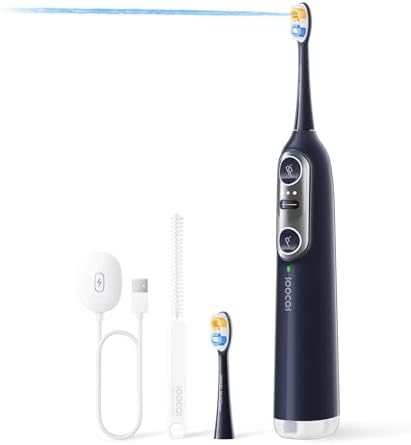
- BRUSH & FLOSS IN ONE GO, SAVE YOUR TIME: Tired of a cluttered counter? The Soocas NEOS II combines a powerful sonic toot…
- DEEP CLEAN & GUM CARE: Enjoy a comprehensive daily cleaning experience with up to 35x more stain removal than a manual b…
- PERFECT FOR TRAVEL WITH 30-DAY BATTERY: Enjoy a full month of travel on a single charge. This cordless portable water fl…
The Soocas NEOS II is the best innovation pick because it addresses one of the biggest real-world oral-care problems: people do not floss consistently.
4. Best Mechanical Toothbrush for Deep Plaque Removal: Oral-B Pro 1000
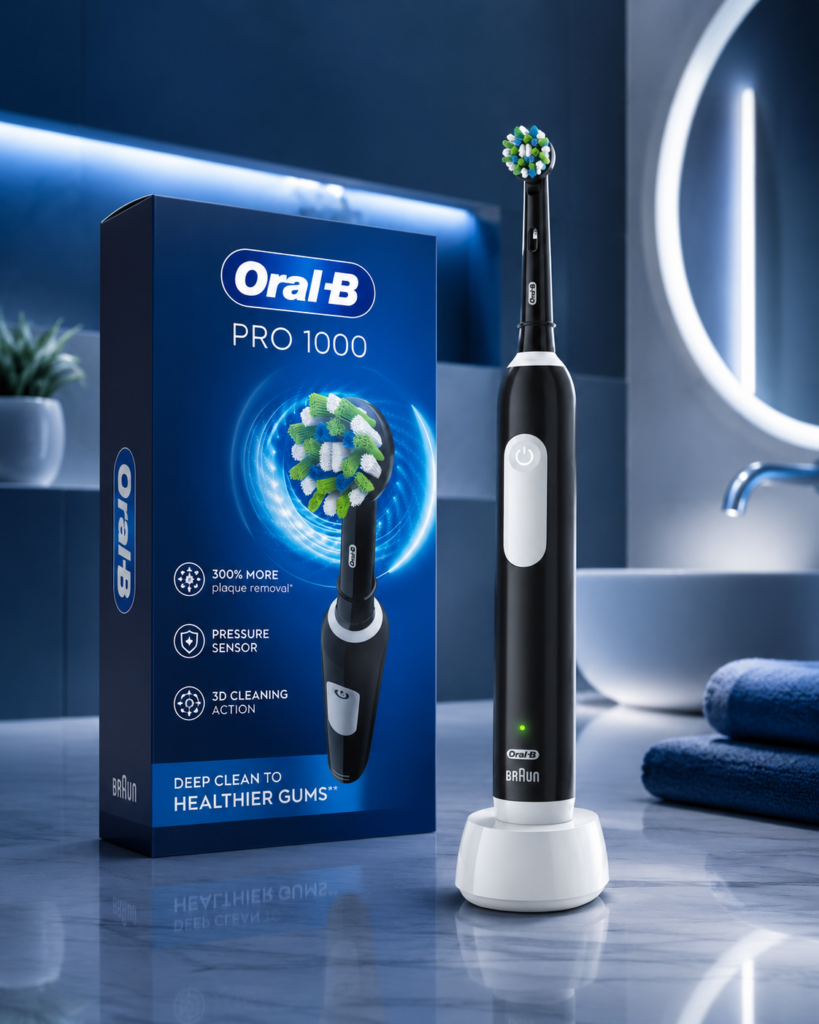
The Oral-B Pro 1000 remains one of the strongest value picks for deep plaque removal. It uses oscillating-rotating-pulsating technology with a round brush head that surrounds individual teeth.
This is the brush for someone who wants a straightforward, mechanical clean without app features, luxury packaging, or unnecessary modes.
Why It Stands Out
The Oral-B Pro 1000 is simple, durable, and effective. The round head helps clean tooth-by-tooth, which can be useful around molars and tight spaces.
It is especially attractive for users who search:
- best budget electric toothbrush
- best Oral-B toothbrush for plaque
- best electric toothbrush for tartar prevention
- electric toothbrush for deep cleaning
Best For
- Plaque removal
- Budget-conscious shoppers
- Users who prefer a stronger cleaning feel
- Manual toothbrush users switching to electric
- People who do not want app features
What Could Be Better
It may feel too intense for some users with sensitive gums. The battery life is also usually shorter than many sonic competitors. People with gum recession or sensitivity should use a soft brush head and avoid pressing hard.
Editorial Verdict

- REMOVE UP TO 100% MORE PLAQUE* along the gumline whilst PROTECTING GUMS with our dentist-inspired round brush head techn…
- PROTECT YOUR GUMS with sensi cleaning mode and GUM PRESSURE CONTROL that automatically stops brush pulsations when brush…
- MAXIMIZE CLEANING performance with 3 EASY-TO-USE CLEANING MODES + handle-integrated quadrant timer that alerts you every…
The Oral-B Pro 1000 is the best deep-clean value brush because it focuses on the essentials: strong plaque disruption, simple design, and affordable long-term use.
5. Best Sonic Toothbrush for Whitening: Aquasonic Black Series Ultra Whitening
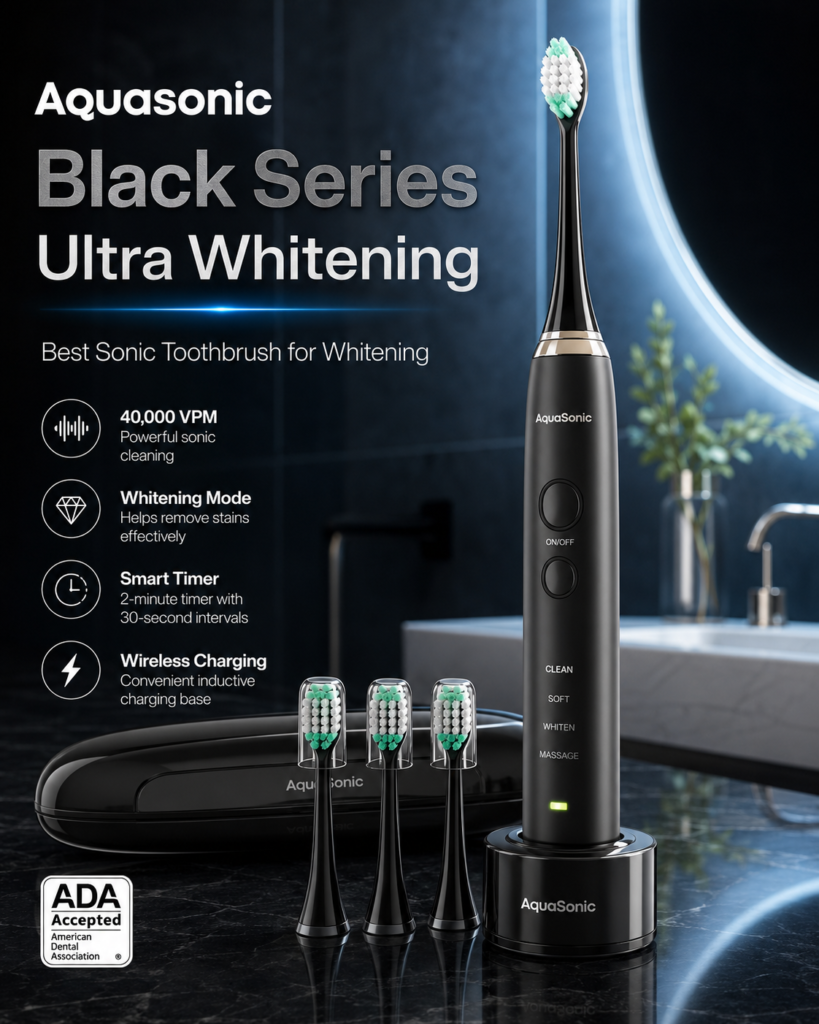
The Aquasonic Black Series Ultra Whitening is a strong pick for users focused on surface stains, aesthetics, travel value, and a premium look without a premium price.
It typically offers high-speed sonic vibration, multiple brushing modes, several replacement heads, wireless charging, and a travel case.
Why It Stands Out
The Aquasonic Black Series is especially appealing to coffee, tea, wine, and tobacco users who want a whitening-focused brushing routine. Its whitening mode is designed for surface stain polishing, not deep bleaching.
That distinction matters. A whitening toothbrush does not chemically change the internal shade of the tooth like professional whitening. Instead, it helps remove surface buildup and maintain brightness.
Best For
- Coffee and tea drinkers
- Surface stain maintenance
- Travel
- Whitening-focused brushing
- Buyers who want multiple brush heads included
- Users who want a premium-looking brush at a value price
What Could Be Better
For very sensitive gums, a gentler sonic brush such as the Sonicare 4100 may feel more comfortable. Whitening modes can feel intense if used too aggressively.
Editorial Verdict


The Aquasonic Black Series is the best whitening-value toothbrush because it combines sonic power, stain-focused modes, a stylish finish, included accessories, and travel convenience.
Comparison of Best Electric Toothbrushes 2026
| Model | Technology | Best For | Pressure Sensor | Battery Life | Main Strength |
|---|---|---|---|---|---|
| Philips Sonicare 4100 | Sonic | Gum health, daily brushing, sensitivity | Yes | Around 14 days | Best overall balance |
| 2-in-1 Oral Clean Kit | Sonic + water flosser | Braces, implants, interdental cleaning | Varies by kit | Varies | Complete oral hygiene system |
| Soocas NEOS II | Hybrid brush + water jet | People who skip flossing | Model-dependent | Around 30 days in some configurations | Brushing and flossing at once |
| Oral-B Pro 1000 | Oscillating-rotating | Deep plaque removal | Mechanical pressure control | Around 10 days | Strong mechanical clean |
| Aquasonic Black Series | Sonic | Whitening and travel | Mode-based / varies | Up to around 30 days | Whitening value and accessories |
Which Electric Toothbrush Is Right for You?
If You Want the Best Overall Brush
Choose Philips Sonicare 4100 Series. It has the right mix of sonic cleaning, gum protection, timer guidance, and price.
If You Wear Braces or Have Implants
Choose a 2-in-1 Oral Clean Kit or a hybrid system such as Soocas NEOS II. Water flossing is especially helpful around brackets, wires, implants, and retainers.
If You Want Maximum Plaque Removal on a Budget
Choose Oral-B Pro 1000. It is simple, powerful, and one of the most reliable deep-clean options.
If You Want Whitening Support
Choose Aquasonic Black Series Ultra Whitening. It is built for surface stain polishing and aesthetic maintenance.
If You Hate Flossing
Choose Soocas NEOS II or a brush-and-flosser combo. The best flossing tool is the one you actually use.
Best Electric Toothbrushing Technique | How to Use an Electric Toothbrush Properly
Buying the right electric toothbrush is only half the job. The other half is technique. Even the best electric toothbrush of 2026 cannot protect your gums, remove plaque effectively, or support cleaner teeth if it is used like a manual brush. The biggest mistake most people make is scrubbing aggressively, moving too fast, or pressing the brush head into the gums as if more force means a deeper clean.
Electric toothbrushes are designed to do the movement for you. Your role is to guide the brush slowly, hold it at the right angle, cover every surface, and let the motor perform the cleaning action. When used properly, an electric toothbrush can improve plaque removal, support gumline hygiene, reduce overbrushing, and create a more consistent daily oral-care routine.
This technique works for most sonic toothbrushes, oscillating-rotating toothbrushes, smart toothbrushes, whitening electric toothbrushes, and rechargeable toothbrushes with pressure sensors.
Step-by-Step Electric Toothbrush Technique
1. Place the Brush at the Gumline
Start by positioning the brush head where the tooth meets the gum. This is the most important zone in daily brushing because plaque often collects along the gum margin before it becomes visible. If this area is skipped, the teeth may look clean from the front while plaque continues to build up near the gums.
Hold the brush at a gentle 45-degree angle toward the gumline. The bristles should lightly touch both the tooth surface and the edge of the gum. Do not force the brush under the gum or press it into the tissue. The goal is controlled contact, not pressure.
For people with bleeding gums, gum recession, braces, aligners, crowns, implants, or sensitive teeth, this step matters even more. The gumline is where inflammation, plaque retention, and sensitivity often begin. A smart electric toothbrush with a pressure sensor can help train the user to clean this area without causing irritation.
Editorial tip: Think of the brush as a precision tool, not a scrub brush. You are polishing and disrupting plaque, not sanding the tooth.
2. Do Not Scrub — Let the Brush Do the Work
The most common electric toothbrush mistake is using it like a manual toothbrush. Manual brushing depends on your hand movement. Electric brushing depends on the motor. If you scrub back and forth while the brush head is already vibrating or rotating, you may reduce control and increase the risk of gum irritation.
Instead, place the brush head on one tooth or a small group of teeth and move slowly. Let the bristles vibrate, rotate, or pulse against the surface. Your hand should guide the brush from area to area, not perform the cleaning motion itself.
This is especially important with sonic toothbrushes and oscillating-rotating brushes. Sonic toothbrushes use rapid micro-vibrations to create fluid movement around the teeth and gumline. Oscillating brushes use a round head to clean tooth by tooth. Both are designed to work best when the user slows down.
For whitening modes, this matters even more. A whitening electric toothbrush can help remove surface stains from coffee, tea, red wine, or smoking, but aggressive scrubbing does not make whitening faster. It may increase sensitivity and gum irritation.
Better technique: glide, pause, move. Do not scrub.
3. Pause on Each Tooth
A good electric toothbrush routine is slower than most people expect. Instead of sweeping quickly across the teeth, hold the brush head briefly on each tooth surface. A pause of two to three seconds per tooth surface allows the bristles to disrupt plaque more effectively.
Move in a predictable pattern:
Start at the back molars, then move tooth by tooth toward the front. After finishing the outer surfaces, move to the inner surfaces, then the chewing surfaces. This prevents random brushing, which is one reason many people miss the same areas every day.
If you use an oscillating-rotating toothbrush, cup the round brush head around each tooth and let it clean before moving to the next one. If you use a sonic toothbrush, rest the bristles lightly along the tooth and gumline so the vibration can work without extra force.
This technique is particularly useful for:
- plaque removal
- gumline cleaning
- sensitive teeth
- braces and aligners
- crowded teeth
- back molars
- whitening maintenance
- electric toothbrush users who tend to rush
The pause is what turns brushing from a fast habit into a complete cleaning routine.
4. Follow the Quadrants
The best electric toothbrushes use timers and quadrant pacers for a reason: most people do not brush evenly. They may spend too much time on the front teeth and too little time on the inner surfaces or back molars.
Divide the mouth into four sections:
| Mouth Section | Brushing Time |
|---|---|
| Upper right | 30 seconds |
| Upper left | 30 seconds |
| Lower right | 30 seconds |
| Lower left | 30 seconds |
This creates the standard two-minute brushing routine recommended for daily oral hygiene. If your brush vibrates or pauses every 30 seconds, use that signal as your cue to move to the next quadrant.
Do not treat the timer as a suggestion. It is one of the most valuable features in a modern electric toothbrush. A two-minute timer helps improve consistency, while quadrant pacing helps prevent overcleaning one area and neglecting another.
For users with braces, implants, bridges, or gum problems, two minutes may not always feel like enough. In those cases, brushing can be followed with interdental cleaning, flossing, or a water flosser. The toothbrush cleans surfaces; flossing tools clean between teeth.
5. Clean All Tooth Surfaces
A complete electric toothbrush technique must cover more than the visible front teeth. The areas people miss most often are the inner surfaces of the lower front teeth, the back side of molars, the gumline, and the chewing grooves.
Make sure to clean:
| Surface | How to Brush It |
|---|---|
| Outer surfaces | Hold the brush at the gumline and move slowly tooth by tooth |
| Inner surfaces | Angle the brush carefully, especially behind front teeth |
| Chewing surfaces | Let the bristles sit briefly in grooves and pits |
| Back molars | Slow down; these areas trap plaque and food debris |
| Gumline | Use light pressure and a gentle 45-degree angle |
| Tongue surface | Use tongue mode or gentle brushing to reduce odor-causing buildup |
For the inside of the front teeth, tilt the brush vertically and clean one tooth at a time. This area often develops tartar because saliva minerals collect behind the lower front teeth. An electric toothbrush can help reduce plaque buildup there, but hardened tartar still requires professional cleaning.
For back molars, open slightly rather than stretching the mouth wide. This relaxes the cheek and gives the brush head more room to reach the last tooth.
6. Use Light Pressure
Light pressure is one of the most important rules of electric brushing. Pressing harder does not make the brush clean better. In many cases, it makes the brush less effective because the bristles cannot move properly. It can also irritate the gums and contribute to sensitivity over time.
If your electric toothbrush has a pressure sensor, pay close attention to it. If the brush flashes, vibrates differently, pulses, slows down, or changes sound, reduce pressure immediately. These alerts are not cosmetic features; they are gum-protection tools.
Too much pressure may contribute to:
- gum recession
- enamel abrasion
- exposed dentin
- tooth sensitivity
- gumline discomfort
- faster brush-head wear
- poorer plaque removal because bristles are crushed against the tooth
A good rule is this: hold the toothbrush with your fingertips rather than gripping it tightly in your fist. A lighter grip naturally reduces brushing force.
For users with sensitive teeth, gum recession, veneers, crowns, implants, or enamel erosion, a soft brush head and gentle mode are better than a high-intensity deep-clean mode.
Learn how to brush your teeth properly with an electric toothbrush in this video demonstration by Dr.Chhaya Chauhan.
How to Use an Electric Toothbrush with Toothpaste
Apply a pea-sized amount of toothpaste to the brush head. Place the brush in your mouth before turning it on to prevent splatter. Begin at the gumline and follow the quadrant method.
For fluoride toothpaste, many dental professionals recommend spitting out the excess rather than rinsing heavily with water immediately. This helps active ingredients remain on the teeth longer. If you use hydroxyapatite toothpaste, sensitivity toothpaste, whitening toothpaste, or prescription toothpaste, follow the product instructions and your dentist’s advice.
Avoid using too much toothpaste. More foam does not mean better cleaning. In fact, excessive foam may make people spit early and shorten brushing time.
Best Technique for Sonic vs Oscillating Toothbrushes
Sonic Toothbrush Technique
With a sonic toothbrush, use a light touch and let the micro-vibrations work. Keep the bristles angled toward the gumline and move slowly across each tooth surface. Sonic brushes are especially useful for people who prefer a smoother brushing feel, have sensitive gums, or want a gentler daily clean.
Oscillating-Rotating Toothbrush Technique
With an oscillating-rotating brush, guide the round brush head from tooth to tooth. Let it cup each tooth briefly before moving on. Do not drag it quickly across several teeth at once. This style works best when the user gives each tooth individual attention.
Both technologies can clean well. The best result depends on correct technique, not just motor type.
Technique Tips for Special Cases
If You Have Braces
Brush above and below the brackets, then clean directly over the brackets. Angle the brush to reach under wires and around the gumline. Follow with interdental brushes or a water flosser to remove trapped debris.
If You Wear Aligners
Brush before putting aligners back in, especially after meals. Plaque, acids, and food residue can sit under trays if teeth are not cleaned properly. Use a gentle electric toothbrush and clean along the gumline carefully.
If You Have Sensitive Teeth
Use sensitive mode, soft bristles, light pressure, and avoid aggressive whitening settings. Spend extra care at the gumline, but do not push into exposed root areas.
Checkout our best-ever list of best hydroxyapatite toothpaste for sensivity
If You Have Gum Recession
Pressure control is essential. Use a soft brush head and let the bristles touch the gumline lightly. Avoid scrubbing exposed root surfaces.
If You Drink Coffee or Tea
Focus on slow, consistent surface cleaning rather than aggressive polishing. Whitening modes can help with surface stain maintenance, but they should not be used as an excuse to brush harder.
Electric Toothbrush Technique Checklist
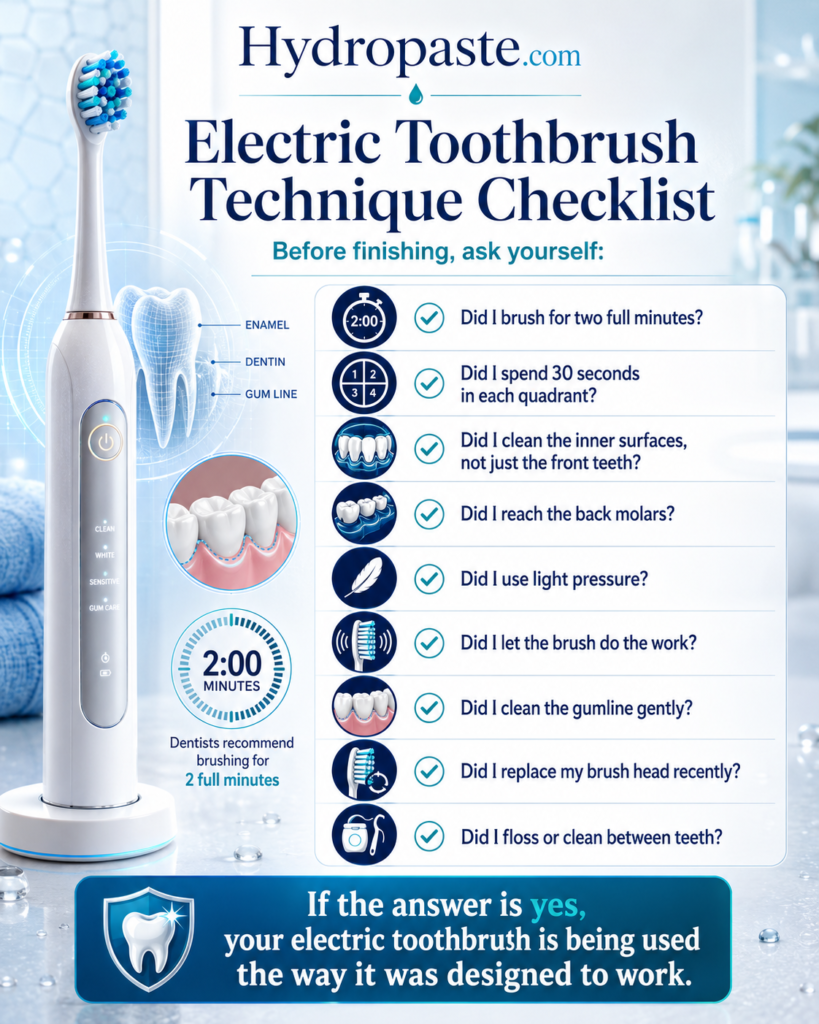
Editorial Takeaway
The best electric toothbrush technique is calm, slow, and deliberate. Do not scrub. Do not rush. Do not press hard. Place the brush at the gumline, move tooth by tooth, follow the two-minute quadrant system, and clean every surface with light pressure.
A premium electric toothbrush can provide sonic power, pressure feedback, whitening modes, AI tracking, and long battery life, but the real upgrade happens when the user changes technique. Better brushing is not harder brushing. It is smarter, gentler, more complete brushing — every day.
Common Electric Toothbrush Mistakes
Avoid these habits:
- Scrubbing aggressively
- Pressing too hard
- Brushing for less than two minutes
- Skipping the inner surfaces
- Ignoring the gumline
- Using old, frayed brush heads
- Using whitening mode every time despite sensitivity
- Forgetting to floss or use interdental cleaning
- Sharing brush heads
- Storing the brush head in a damp closed case every day
Replace brush heads every three months, or sooner if the bristles fray.
Cost Guide: How Much Should You Spend?
| Price Tier | Typical Features | Best For |
|---|---|---|
| Budget | Basic motor, timer, simple brush head | Manual brush upgraders |
| Mid-range | Pressure sensor, timer, better battery, multiple heads | Most users |
| Premium | App coaching, AI tracking, advanced modes, travel case | Tech-forward users |
| Hybrid systems | Water flosser integration, larger base, multiple nozzles | Braces, implants, flossing compliance |
| Luxury smart brushes | AI feedback, mouth mapping, premium design | Users who want data-driven coaching |
For most people, the best value is in the mid-range. A pressure sensor, timer, comfortable brush head, and reliable battery matter more than luxury app features.
Risks and Cautions
Electric Toothbrushes Can Still Damage Gums If Misused
A powered brush does not automatically protect you from overbrushing. Too much pressure, hard bristles, or aggressive daily whitening mode can irritate gums and enamel.
Whitening Modes Are Not Professional Whitening
Whitening modes help polish surface stains. They do not replace bleaching, dental cleaning, or professional whitening treatment.
Water Flossers Do Not Remove Hardened Tartar
Water flossers help remove debris and disrupt plaque, but they cannot remove hardened calculus. Tartar must be removed by a dental professional.
Sensitive Teeth Need Gentler Settings
If you experience sharp sensitivity, use a sensitive mode, soft brush head, and low pressure. Persistent pain needs dental evaluation.
Kids Need Supervision
Children can use electric toothbrushes, but they should use age-appropriate models and brush under adult supervision.
Editorial Winner
Best Overall Electric Toothbrush of 2026: Philips Sonicare 4100 Series
For most Hydropaste readers, the Philips Sonicare 4100 Series is the most balanced recommendation. It is gentle enough for daily gumline care, strong enough for plaque control, simple enough for beginners, and advanced enough to include a pressure sensor and smart brushing timer.
That said, the “best” brush depends on the mouth:
- Choose Sonicare 4100 for overall performance and gum comfort.
- Choose Oral-B Pro 1000 for deep plaque removal on a budget.
- Choose Aquasonic Black Series for whitening value.
- Choose Soocas NEOS II for innovation and skipped-flossing problems.
- Choose a 2-in-1 Oral Clean Kit for braces, implants, and full-mouth cleaning.
The future of brushing is not only more power. It is smarter pressure, better coverage, easier flossing, gentler gum care, and oral-care routines people can actually maintain.
FAQs
What is the best electric toothbrush of 2026?
The best electric toothbrush of 2026 for most users is the Philips Sonicare 4100 Series because it balances sonic cleaning, gum comfort, pressure control, timer guidance, and price. It is powerful enough for daily plaque removal but gentle enough for users who dislike harsh brushing.
For deep plaque removal, the Oral-B Pro 1000 is a strong value pick. For whitening, the Aquasonic Black Series is a better match. For braces, implants, or skipped flossing, a 2-in-1 Oral Clean Kit or Soocas NEOS II may be more useful.
Are electric toothbrushes better than manual toothbrushes?
Electric toothbrushes are often better for most people because they reduce technique errors. They provide consistent movement, built-in timers, quadrant pacing, and in many cases, pressure sensors. A manual toothbrush can clean well, but only if the user brushes long enough, uses the right pressure, reaches every surface, and maintains proper technique.
The biggest advantage of an electric brush is behavioral: it helps people brush more consistently.
Is a sonic toothbrush better than an oscillating toothbrush?
Neither is universally better. Sonic toothbrushes are often better for users with sensitive teeth, gum recession, implants, veneers, or delicate gums because the brushing feel is smoother. Oscillating toothbrushes are often better for people who want stronger mechanical plaque removal and a more noticeable “deep clean” feeling.
Choose sonic for comfort and gum care. Choose oscillating for strong tooth-by-tooth plaque disruption.
What is the best electric toothbrush for sensitive teeth?
The best electric toothbrush for sensitive teeth is usually a sonic brush with a sensitive mode, soft bristles, and a pressure sensor. The Philips Sonicare 4100 Series is a strong choice because it combines gentle sonic movement with pressure feedback.
People with sensitivity should avoid scrubbing, use low pressure, and choose a toothpaste designed for sensitivity or enamel support.
What is the best electric toothbrush for gum health?
The best electric toothbrush for gum health should include a pressure sensor, soft brush heads, a timer, and a gentle cleaning motion. The Philips Sonicare 4100 Series is a strong gum-health pick because it provides sonic cleaning and pressure alerts without feeling overly aggressive.
For people with gum pockets, implants, or periodontal maintenance needs, adding a water flosser or choosing a 2-in-1 oral clean system may improve interdental cleaning.
What is the best electric toothbrush for whitening?
The Aquasonic Black Series Ultra Whitening is a strong whitening-focused option because it uses high-speed sonic action and whitening-oriented brushing modes. It is best for surface stains from coffee, tea, wine, or tobacco.
However, whitening modes mainly help polish external stains. They do not replace professional whitening or dental cleaning.
What is the best electric toothbrush for braces?
A 2-in-1 Oral Clean Kit or Soocas NEOS II is often the best choice for braces because orthodontic appliances trap plaque and food around brackets, wires, and gumlines. Brushing alone may not clean these areas well enough.
A toothbrush and water flosser combo can help remove debris from hard-to-reach spaces and improve daily orthodontic hygiene.
Which Is the Best Mechanical Toothbrush on the Market?
The Oral-B Pro 1000 is one of the best mechanical toothbrushes for most users because it combines strong plaque removal, a built-in pressure sensor, a two-minute timer and affordable replacement brush heads. Its oscillating and rotating cleaning action is particularly effective around the gumline and between teeth. Users who prefer a quieter sonic brushing experience may consider the Philips Sonicare 4100, but the Oral-B Pro 1000 remains a dependable overall choice for everyday cleaning, value and ease of use.
How often should I replace an electric toothbrush head?
Replace the brush head every three months, or sooner if the bristles become frayed, bent, stained, or splayed. A worn brush head cleans less effectively and may irritate the gums.
People with braces may need to replace brush heads more often because brackets wear bristles faster.
Are expensive electric toothbrushes worth it?
Expensive electric toothbrushes are worth it only if you will use the advanced features. App tracking, AI feedback, pressure maps, and multiple modes can help some users, but many people get excellent results from a mid-range brush with a pressure sensor and timer.
Do not overpay for features you will ignore.
Can an electric toothbrush remove tartar?
An electric toothbrush can help prevent tartar by disrupting plaque before it hardens, but it cannot remove hardened tartar once it has formed. Tartar requires professional dental scaling.
People Also Ask
Which electric toothbrush do dentists recommend most often?
Dentists often recommend electric toothbrushes with soft brush heads, built-in timers, and pressure sensors. The specific brand matters less than whether the brush encourages gentle, consistent, two-minute brushing. Sonicare and Oral-B are commonly recommended categories because they have long-standing electric toothbrush systems and broad brush-head availability.
What features should I look for in the best electric toothbrush in 2026?
Look for a pressure sensor, two-minute timer, quadrant pacer, soft brush head options, long battery life, waterproof design, and comfortable cleaning modes. For braces or implants, consider water flossing compatibility. For whitening, look for a polishing or whitening mode. For sensitivity, prioritize gentle sonic action and low-intensity settings.
Is 40,000 vibrations per minute too strong?
Not necessarily. High vibration speed can be effective when the toothbrush is designed well and used with light pressure. The problem is not vibration speed alone; it is aggressive technique. Users with sensitivity should use a soft brush head, sensitive mode, and minimal pressure.
Should I rinse after brushing with an electric toothbrush?
Many dental professionals advise spitting out excess toothpaste rather than rinsing heavily, especially when using fluoride toothpaste, because rinsing may wash away beneficial ingredients too quickly. If you use a specialty toothpaste, follow product instructions and your dentist’s guidance.
Can kids use electric toothbrushes?
Yes, children can use electric toothbrushes when the model is age-appropriate and brushing is supervised. Kids should use smaller brush heads, gentle modes, and appropriate toothpaste amounts. Parents should help ensure the child brushes all surfaces and does not press too hard.
Is a water flosser toothbrush combo worth it?
A water flosser toothbrush combo is worth it for people who skip flossing, wear braces, have implants, use retainers, or struggle with food trapping. It may not fully replace string floss for everyone, but it can dramatically improve compliance because it makes interdental cleaning easier.
What is better for braces: sonic toothbrush or water flosser?
For braces, the best routine often includes both. A sonic toothbrush cleans tooth surfaces and gumlines, while a water flosser helps flush debris around brackets and wires. A hybrid or 2-in-1 system can be especially practical for orthodontic users.
How long do electric toothbrushes last?
A good electric toothbrush handle may last three to five years with proper care. Battery performance, water exposure, charging habits, and build quality all affect lifespan. Brush heads should still be replaced every three months.
Do electric toothbrushes help with bad breath?
Yes, electric toothbrushes can help with bad breath by removing plaque and bacteria more effectively than rushed manual brushing. For better breath, also clean the tongue, floss or water-floss daily, stay hydrated, and address gum disease or dry mouth if present.
What is the best budget electric toothbrush?
The Oral-B Pro 1000 is one of the strongest budget electric toothbrush choices because it provides effective oscillating-rotating cleaning without unnecessary extras. For a gentler sonic option, the Philips Sonicare 4100 Series offers a strong balance of performance and value.