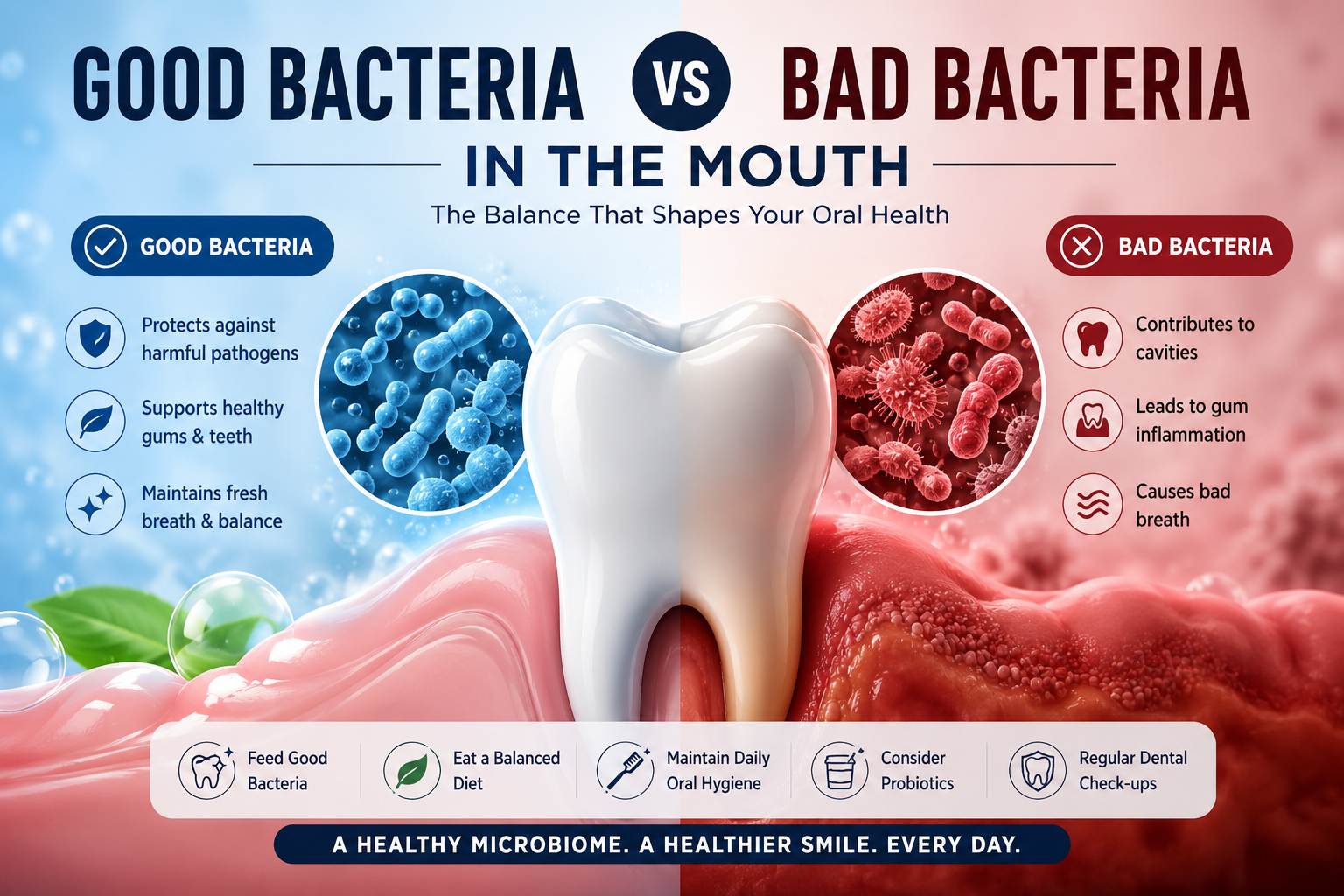
Good Bacteria vs Bad Bacteria in Mouth
Amazon Affiliate Disclosure
Hydropaste may earn a commission from qualifying purchases made through Amazon affiliate links. This does not change the price you pay or influence the editorial standards of this article. Product mentions, oral care routines and ingredient discussions are written to help individuals understand oral microbiome balance, not to replace professional dental advice.
Why Good Bacteria in Mouth Matter More Than Most People Realize
Good bacteria in mouth health are not a trend, a wellness slogan or a softer way to describe oral hygiene. They are part of the living defense system inside your mouth. Every tooth surface, gumline, tongue groove, cheek surface and saliva film hosts microbial communities that help shape breath, plaque behavior, enamel risk, gum comfort and even how acidic the mouth becomes after meals.
The mistake many people make is thinking the mouth should be “sterile.” It should not. A healthy mouth is not a bacteria-free mouth. It is a balanced ecosystem where helpful microbes, saliva minerals, immune signals, oxygen levels and daily cleaning habits keep disease-associated microbes from taking over.
The oral cavity is one of the most microbially rich areas of the human body, with research commonly describing more than 700 bacterial species in the mouth and surrounding oral habitats. The Human Oral Microbiome Database also tracks hundreds of taxa connected to the mouth and aerodigestive tract, showing how complex this ecosystem really is. (PMC)
That is why the real question is not simply “Do I have bacteria in my mouth?” Everyone does. The sharper question is: which bacteria are dominant, what are they doing, and is the environment helping good bacteria hold the line against harmful shifts?
This guide explains good bacteria vs bad bacteria in mouth health from the ground up: what the terms actually mean, how oral dysbiosis begins, why sugar and low saliva change the equation, how plaque biofilm becomes risky, and what a microbiome-friendly routine looks like.
Quick Jump
Use these quick navigation links to move directly to the section that matches your concern.
What Good and Bad Bacteria Actually Mean
The phrase “good bacteria vs bad bacteria in mouth” is useful for everyday understanding, but the biology is more subtle. Most oral bacteria are not permanently good or permanently bad. Their behavior depends on location, abundance, diet, pH, oxygen level, saliva flow, immune response and the other microbes around them.
A microbe that behaves quietly in one part of the mouth may become risky when the environment changes. A small amount of acid-producing bacteria may not cause a cavity if saliva flow is strong, minerals are available and sugar exposure is limited. The same bacteria can become more harmful in a dry mouth with frequent snacking and thick plaque.
A better way to think about mouth bacteria is through roles.
| Microbial Role | What It Means | Example Effect |
|---|---|---|
| Supportive / commensal | Lives in the mouth without causing damage and may help maintain balance | Competes for space, supports stable biofilm, helps regulate pH |
| Opportunistic | Usually controlled, but can become harmful when conditions change | Overgrows after dry mouth, poor plaque control or frequent sugar exposure |
| Acid-producing | Converts fermentable carbohydrates into acids | Can lower pH and increase enamel demineralization risk |
| Inflammation-associated | Thrives in deeper gum pockets or oxygen-poor plaque | Can contribute to bleeding, swelling and periodontal imbalance |
| Nitrate-reducing | Helps convert dietary nitrate through the oral nitrate-nitrite-nitric oxide pathway | May support nitric oxide biology and oral-systemic signaling |
So “bad bacteria in mouth” usually means bacteria that are overactive, overgrown, misplaced or thriving in an unhealthy environment. “Good bacteria in mouth” usually means a stable microbial community that helps resist disease-associated shifts.
This distinction matters because harsh oral care that only tries to “kill germs” can miss the bigger goal. The better goal is ecological control: reduce harmful biofilm behavior while preserving a stable, resilient mouth environment.
How Microbiome Science Explains Good and Bad Bacteria in Mouth
Modern Microbiome science looks at the mouth less like a simple surface to scrub and more like a living microbial landscape. The teeth are hard mineral surfaces. The gums are soft immune-active tissues. The tongue has grooves and papillae. Saliva moves constantly. Oxygen varies from the front of the mouth to the gumline. Each area creates its own microbial neighborhood.
This is why two people can brush the same number of times per day and still have different outcomes. One person may have strong saliva flow, fewer sugar exposures and stable plaque. Another may have dry mouth, frequent acidic drinks and gumline biofilm that matures quickly.
The mouth is also dynamic. It changes hour by hour.
Morning breath is not just a social annoyance; it reflects reduced saliva flow during sleep and increased bacterial byproducts. A sugary snack does not simply “feed cavities”; it gives acid-producing bacteria a temporary advantage. Bleeding gums are not only a brushing issue; they may signal a microbial and inflammatory shift at the gumline.
Scientific reviews describe oral health as a state of microbial equilibrium, while disruption of that balance can lead to dysbiosis, a microbial shift associated with disease risk. (PMC)
A practical mouth microbiome model looks like this:
| Daily Input | Microbial Response | Oral Health Outcome |
|---|---|---|
| Regular cleaning | Biofilm stays thinner and less mature | Lower plaque burden |
| Frequent sugar | Acid-producing bacteria gain advantage | Higher cavity risk |
| Low saliva | Acids clear slowly, minerals are reduced | Dry mouth, sensitivity, decay risk |
| Gumline plaque | Anaerobic bacteria increase | Gum inflammation risk |
| Mineral support | Enamel surface gets repair opportunity | Better remineralization conditions |
| Gentle tongue cleaning | Odor-producing biofilm reduced | Fresher breath |
The science points to one practical lesson: oral care should not be a war against all bacteria. It should be a routine that keeps the ecosystem from drifting toward acid, inflammation and odor.
What Is Oral Microbiome and Why It Matters
To understand good bacteria vs bad bacteria in mouth health, it helps to first understand What is oral microbiome. The oral microbiome is the community of bacteria, fungi, viruses, archaea and other microorganisms that live in the mouth, along with the genes, biofilms and chemical signals they produce.
It is not one uniform layer. It is a network of habitats.
| Oral Habitat | Why It Matters |
|---|---|
| Teeth | Hard surfaces allow plaque biofilm to attach and mature |
| Gumline | Immune-active zone where inflammation often begins |
| Tongue | Major reservoir for odor-producing organisms and debris |
| Saliva | Carries minerals, enzymes, immune factors and microbes |
| Cheeks and soft tissues | Host soft-tissue microbial communities |
| Tonsillar and throat area | Links oral ecology with the wider aerodigestive tract |
The oral microbiome matters because the mouth is the first biological gateway for food, drinks, air, hygiene products and environmental exposure. It is also the place where enamel minerals are repeatedly lost and replaced throughout the day.
A healthy oral microbiome helps with ecological resistance. That means the existing microbial community makes it harder for harmful organisms to dominate. When the ecology weakens, the mouth becomes easier territory for acid-producing, sulfur-producing or inflammation-associated microbes.
This is why a person can brush daily and still have recurring cavities or gum inflammation. Brushing is essential, but brushing alone does not control every driver. Meal timing, saliva flow, interdental cleaning, mouthwash choice, dental restorations, medication-related dry mouth and sleep breathing patterns can all affect the balance.
Good Bacteria in Mouth: What They Do
Good bacteria in mouth health are not “friendly” in a cartoonish sense. They are helpful because they support stability. They occupy space, compete with more harmful organisms, participate in chemical signaling and help maintain a microbial environment that is less favorable to disease.
They Compete for Space
The mouth has limited surface area. Bacteria attach to tooth surfaces, tongue surfaces and gumline niches. When stable commensal communities occupy those spaces, harmful overgrowth becomes harder.
This is similar to a well-maintained garden. Bare soil invites weeds. A healthy ground layer resists invasion.
In the mouth, the “ground layer” is biofilm. The goal is not to eliminate biofilm completely. The goal is to keep it thin, oxygenated, disrupted and less disease-promoting.
They Help Keep the Microbial Community Stable
Good bacteria help prevent sudden swings in the ecosystem. A stable oral microbiome is less likely to shift rapidly toward acid production, gum inflammation or odor.
Stability matters because oral disease often develops from repeated small imbalances rather than one dramatic event. A single dessert does not usually cause a cavity. Daily sugar exposure plus low saliva plus thick plaque plus time can.
Some Support Nitrate-Nitrite-Nitric Oxide Pathways
Certain oral bacteria help reduce dietary nitrate into nitrite, which can contribute to nitric oxide biology. Nitric oxide is involved in blood vessel function and antimicrobial signaling. Reviews have highlighted nitrate-reducing oral bacteria as an important area of research because of their connection to nitric oxide metabolism and cardiometabolic outcomes. (PMC)
This is one reason harsh antiseptic overuse deserves caution. If a product strongly suppresses broad bacterial populations without a clear need, it may disturb organisms that participate in beneficial pathways.
They Help Resist Odor-Producing Overgrowth
Bad breath is often linked to volatile sulfur compounds produced by bacteria living on the tongue, in plaque or around gum pockets. A balanced mouth does not guarantee perfect breath, but it makes odor-producing overgrowth less likely.
Tongue cleaning, hydration, nasal breathing support and gumline care can all influence this part of the ecosystem.
They Help Maintain a More Favorable pH Environment
The mouth constantly moves between mineral loss and mineral repair. When pH drops too low after sugar or acidic drinks, enamel becomes more vulnerable. Helpful microbial balance, strong saliva and fewer frequent acid attacks help the mouth return toward safer conditions.
Bad Bacteria in Mouth: When Microbes Become Harmful
Bad bacteria in mouth health are usually harmful because of what they produce, where they live or how dominant they become. The most important categories are acid-producing bacteria, gum-disease-associated bacteria and odor-producing bacteria.
Cavity-Associated Bacteria
Cavities are not caused by sugar alone. They occur when bacteria metabolize fermentable carbohydrates and produce acids that repeatedly lower pH at the tooth surface. Over time, minerals leave the enamel faster than they are replaced.
Streptococcus mutans is one of the most studied cavity-associated bacteria. Research describes it as a major etiological agent of human dental caries, especially because it lives in tooth-surface biofilms and is well adapted to acidic conditions. (PMC)
That does not mean S. mutans is the only organism involved. Cavities are ecological. They emerge from a biofilm environment that favors acid production, acid tolerance and frequent carbohydrate exposure.
Gum-Disease-Associated Bacteria
Gum problems often involve bacteria that thrive in deeper, oxygen-poor plaque near or below the gumline. These organisms are associated with inflammation, bleeding, tissue breakdown and periodontal pocket progression.
Porphyromonas gingivalis is often discussed as a keystone pathogen in periodontitis research because it can influence the microbial community and immune response even when present in relatively low abundance. (PMC)
This is why gum disease is not just “dirty teeth.” It is a breakdown in the relationship between plaque biofilm, the immune system and the gum environment.
Bad Breath-Associated Bacteria
Bad breath bacteria often live on the tongue coating, in gum pockets or in areas where food debris and dead cells accumulate. They produce sulfur-like odors as they break down proteins.
Mouthwash may temporarily mask the issue, but if tongue coating, gum inflammation, dry mouth or tonsil debris is the underlying driver, the odor often returns.
Opportunistic Bacteria
Some bacteria become harmful only when the environment allows them to overgrow. Dry mouth, antibiotics, poor plaque disruption, frequent snacking, smoking, uncontrolled blood sugar, mouth breathing and poorly cleaned dental appliances can all create opportunities.
The practical point: bad bacteria are not just a list of names. They are a pattern of behavior.
Good Bacteria in Mouth vs Bad Bacteria in Mouth: Comparison Chart
The following chart shows the difference between healthy mouth bacteria behavior and harmful bacterial behavior.
| Category | Good Bacteria in Mouth | Bad Bacteria in Mouth |
|---|---|---|
| Main role | Supports microbial stability | Drives acid, odor or inflammation |
| Relationship with plaque | Part of thinner, more stable biofilm | Dominates mature, sticky or oxygen-poor biofilm |
| Effect on enamel | Less likely to push pH into danger zone | Produces acids that increase demineralization risk |
| Effect on gums | Helps maintain ecological balance | Associated with bleeding, swelling and pocketing |
| Effect on breath | Helps resist odor-producing overgrowth | Produces volatile sulfur compounds and unpleasant odor |
| Common trigger | Balanced saliva, cleaning, diet rhythm | Sugar frequency, dry mouth, poor gumline cleaning |
| Best strategy | Preserve balance and disrupt excess plaque | Reduce overgrowth and change the environment |
| Product approach | Gentle, consistent, mineral-supportive care | Avoid relying only on harsh “kill everything” routines |
| Long-term goal | Resilience | Lower disease pressure |
A useful way to summarize it:
| Mouth Condition | Dominant Pattern | Likely Risk |
|---|---|---|
| Balanced mouth | Stable bacteria, normal saliva, controlled plaque | Lower cavity and gum risk |
| Acidic mouth | Frequent sugar, low pH, acid-tolerant bacteria | Tooth decay and sensitivity |
| Inflamed gumline | Mature plaque, anaerobic bacteria, immune activation | Gingivitis or periodontitis risk |
| Dry mouth | Low saliva, poor acid clearance, odor buildup | Cavities, bad breath, irritation |
| Over-sanitized mouth | Broad microbial suppression, disrupted ecology | Possible imbalance or dryness |
The healthiest mouth is not the one with the fewest bacteria. It is the one with the best-controlled bacterial behavior.
The Dysbiosis Framework: How Balance Turns Into Disease
Oral dysbiosis means the microbial community has shifted away from balance. It does not always mean a dangerous infection. It means the ecosystem is becoming more favorable to disease-associated organisms.
Think of dysbiosis as a five-stage drift.
Stage 1: Environmental Pressure
The mouth is exposed to frequent sugar, acidic drinks, dry mouth, poor sleep breathing, low mineral support or inconsistent cleaning.
Stage 2: Biofilm Maturation
Plaque becomes thicker and more organized. Bacteria begin living in layers, making the biofilm harder to disrupt.
Stage 3: Chemical Shift
The local environment becomes more acidic, more oxygen-poor or more inflammatory.
Stage 4: Microbial Selection
Bacteria that tolerate acid, low oxygen or inflammation gain an advantage.
Stage 5: Tissue or Enamel Impact
The person may notice sensitivity, white spots, cavities, bleeding gums, bad breath or gum pocket progression.
Here is the framework in table form:
| Dysbiosis Stage | What Happens | What It Feels Like |
|---|---|---|
| Pressure | Sugar, dryness, stress, poor cleaning or acidic habits increase | Often no symptoms |
| Biofilm maturity | Plaque thickens and becomes harder to remove | Fuzzy teeth, morning buildup |
| Chemistry change | pH drops or gumline oxygen decreases | Sour taste, odor, sensitivity |
| Microbial shift | Acidic or inflammatory bacteria dominate | Bad breath, bleeding, recurring plaque |
| Damage phase | Enamel or gum tissue begins to show change | Cavities, gum pain, recession, dental diagnosis |
This framework helps explain why early intervention matters. The best time to support good bacteria in mouth health is before pain, bleeding or visible decay appears.
Signs of Too Much Bad Bacteria in Mouth
A person cannot identify oral bacteria by looking in the mirror. But the mouth gives clues when the microbial environment is drifting.
Common signs include:
| Sign | Possible Microbiome Meaning |
|---|---|
| Persistent bad breath | Tongue coating, gumline bacteria, dry mouth or sulfur-producing biofilm |
| Bleeding gums | Gumline inflammation and plaque-driven immune response |
| Frequent cavities | Acid-producing biofilm and repeated pH drops |
| White spots on enamel | Early mineral loss from acid exposure |
| Thick plaque buildup | Biofilm maturing faster than it is disrupted |
| Sour or metallic taste | Acidic environment, inflammation or medication effects |
| Dry mouth | Reduced saliva protection and slower acid clearance |
| Gum tenderness | Inflammation at the gingival margin |
| Recurrent mouth irritation | Possible immune, dryness, product or microbial imbalance issue |
These signs do not prove one specific bacterial species is present. They point to conditions that allow harmful bacterial behavior.
A simple self-check can help:
| Question | If Yes, Watch For |
|---|---|
| Do your gums bleed when brushing or flossing? | Gumline inflammation |
| Do your teeth feel fuzzy a few hours after brushing? | Fast plaque regrowth |
| Do you snack or sip sweet drinks often? | Repeated acid attacks |
| Do you wake with dry mouth? | Low overnight saliva protection |
| Does breath return quickly after mouthwash? | Underlying biofilm issue |
| Do you get cavities despite brushing? | Diet timing, pH, saliva or interdental plaque problem |
If symptoms persist, a dental professional should assess the underlying cause. Microbiome balance is important, but it does not replace diagnosis.
What Causes Bad Bacteria in Mouth to Overgrow?
The keyword question “what causes bad bacteria in mouth” has a straightforward answer: bad bacteria overgrow when the environment rewards them.
The mouth is a competitive ecosystem. Every habit either supports balance or gives disease-associated bacteria an advantage.
Frequent Sugar Exposure
The frequency of sugar exposure matters as much as the amount. Sipping sweet drinks, grazing on snacks or eating sticky carbohydrates throughout the day keeps feeding acid-producing biofilm.
It is not only candy. Crackers, dried fruit, sweetened coffee, sports drinks, flavored waters and frequent “healthy” snacks can all extend acid exposure.
Dry Mouth
Saliva is one of the mouth’s strongest natural defenses. It helps wash away debris, buffer acids and carry minerals. When saliva is low, acids stay longer and bacteria can behave more aggressively.
Dry mouth may be linked to medications, dehydration, mouth breathing, sleep issues, stress, caffeine, alcohol, autoimmune conditions or aging.
Poor Gumline Cleaning
Brushing the visible tooth surface is not enough. The gumline and interdental spaces are where plaque can mature into more inflammatory biofilm.
This is why flossing, interdental brushes or water flossing may be important depending on spacing, gum health and dental work.
Overuse of Harsh Antiseptic Mouthwash
Some mouthwashes are useful for specific needs, especially when recommended by a dental professional. But daily broad-spectrum antiseptic use without a clear reason may not be ideal for everyone.
A microbiome-friendly approach asks: does this product solve the problem, or does it simply burn, dry and temporarily mask symptoms?
Acidic Drinks and Low pH Habits
Carbonated drinks, citrus drinks, vinegar-based beverages and frequent acidic sipping can push the mouth toward enamel stress. Acidic drinks do not need bacteria to begin weakening enamel; they can lower pH directly.
When acid exposure combines with acid-producing bacteria, enamel risk increases.
Smoking and Vaping
Smoking affects saliva, gum blood flow, immune response and plaque behavior. Vaping may also contribute to dryness and soft-tissue irritation in some individuals.
Poorly Cleaned Appliances
Retainers, aligners, night guards, dentures and mouth guards can hold biofilm against teeth and gums. If they are not cleaned properly, they can become microbial reservoirs.
Diets Low in Fiber and Mineral Support
A soft, low-fiber diet reduces chewing stimulation and may lower saliva flow. A mineral-poor routine may also give enamel fewer opportunities for repair.
Stress and Sleep Breathing
Stress can change saliva, clenching behavior and immune regulation. Mouth breathing during sleep can dry oral tissues and worsen morning odor.
The cause chart:
| Cause | What It Changes | Likely Result |
|---|---|---|
| Frequent sugar | More bacterial acid production | Cavity risk |
| Dry mouth | Less acid buffering and washing | Cavities, odor, irritation |
| Poor interdental cleaning | Mature plaque between teeth | Gum inflammation, decay |
| Acidic sipping | Lower pH | Sensitivity, erosion risk |
| Harsh mouthwash overuse | Possible dryness and ecology disruption | Temporary freshness, possible imbalance |
| Appliances not cleaned | Biofilm reservoir | Odor, plaque, gum irritation |
| Smoking | Immune and gum environment changes | Periodontal risk |
| Mouth breathing | Tissue dryness | Bad breath, plaque changes |
How Microbiome Balance Protects Teeth and Gums
Microbiome Balance is the central idea behind modern oral care. The goal is not to destroy every organism in the mouth. The goal is to keep plaque controlled, support saliva, protect enamel minerals and prevent disease-associated bacteria from gaining too much power.
Microbiome balance protects the mouth in four main ways.
1. It Reduces Acid Pressure on Enamel
When the mouth is balanced, acid attacks are shorter and less intense. Saliva can bring pH back toward safer levels, and minerals have more opportunity to return to enamel.
2. It Keeps Gumline Biofilm Less Inflammatory
Regular plaque disruption prevents biofilm from maturing into oxygen-poor layers that favor periodontal pathogens.
3. It Supports Breath Freshness at the Source
A balanced routine addresses the tongue, saliva and gumline rather than simply covering odor with strong flavor.
4. It Makes Oral Care More Sustainable
People often overcorrect when they notice bad breath or plaque: aggressive brushing, strong mouthwash, whitening overuse. These may irritate tissues or worsen dryness. A balance-focused routine is gentler and more consistent.
The microbiome balance model:
| Goal | Daily Action | Why It Works |
|---|---|---|
| Keep biofilm thin | Brush thoroughly twice daily | Disrupts plaque before it matures |
| Protect between teeth | Clean interdentally once daily | Targets hidden plaque zones |
| Support saliva | Hydrate and manage dry mouth | Helps pH recovery |
| Reduce acid frequency | Limit constant snacking/sipping | Gives enamel recovery time |
| Support minerals | Use remineralizing toothpaste | Helps enamel resist acid cycles |
| Control odor | Clean tongue gently | Reduces tongue biofilm reservoir |
| Avoid overkill | Use mouthwash strategically | Preserves balance while targeting needs |
Food, Saliva, pH and Biofilm: The Hidden Control System
The mouth is controlled by four forces: food, saliva, pH and biofilm. Most oral health problems begin when these forces stop working together.
Food: The Fuel Signal
Bacteria respond to what enters the mouth. Fermentable carbohydrates give acid-producing bacteria fuel. Fibrous foods stimulate chewing and saliva. Nitrate-rich vegetables may support nitrate-reducing oral bacteria. Sticky foods cling longer. Acidic drinks lower pH quickly.
The food question is not only “Is this healthy?” It is also “How often does this expose my teeth to acid or bacterial fuel?”
Saliva: The Repair Fluid
Saliva buffers acids, carries calcium and phosphate, lubricates tissues and helps clear debris. When saliva is strong, the mouth can recover more quickly after meals.
When saliva is weak, everything becomes harder: plaque sticks, acids linger, breath worsens and enamel repair slows.
pH: The Mineral Switch
Enamel is sensitive to pH. When pH drops, minerals leave. When pH recovers, minerals can return. Oral bacteria matter because some produce acids that lower the local pH inside plaque.
A person may not feel a pH drop. That is why cavities can develop silently.
Biofilm: The Bacterial City
Plaque is not random dirt. It is organized biofilm. Bacteria attach, communicate, share resources and protect each other. Mature biofilm can be much harder to disrupt than fresh plaque.
That is why consistent cleaning matters more than occasional aggressive cleaning.
| Control Force | Balanced Pattern | Risk Pattern |
|---|---|---|
| Food | Meals spaced, low constant sugar | Frequent grazing, sticky sweets, acidic sipping |
| Saliva | Hydrated, good flow, nasal breathing | Dry mouth, mouth breathing, medication dryness |
| pH | Recovers between meals | Repeated low-pH episodes |
| Biofilm | Disrupted daily | Thick, mature, hidden at gumline |
Daily Oral Care Strategy to Support Good Mouth Bacteria
A microbiome-friendly routine should be simple enough to follow and strong enough to change the environment.
Morning Routine
Brush for two minutes with a remineralizing toothpaste. Focus on the gumline, back molars and inner surfaces. Clean the tongue gently if morning breath or tongue coating is present.
Avoid brushing aggressively. The goal is controlled plaque disruption, not tissue punishment.
Midday Strategy
After meals, rinse with water if brushing is not possible. Chew sugar-free gum if it suits you and your dental situation. Avoid sipping sweet or acidic drinks for hours.
If you drink coffee, citrus, soda or sparkling drinks, try to avoid brushing immediately after strong acid exposure. Rinse with water and allow time for saliva to buffer.
Evening Routine
Brush again and clean between teeth. Nighttime is critical because saliva flow drops during sleep. Leaving plaque and food debris overnight gives bacteria a long, quiet window to work.
Weekly Review
Once a week, check your routine honestly:
| Question | Adjustment |
|---|---|
| Are gums bleeding? | Improve gumline and interdental cleaning; schedule care if persistent |
| Is breath returning quickly? | Add tongue cleaning and evaluate dry mouth |
| Are teeth sensitive? | Review acid exposure and remineralizing support |
| Is plaque heavy by afternoon? | Improve brushing technique and reduce grazing |
| Are aligners or guards smelling? | Improve appliance cleaning |
A strong daily strategy is not complicated. It is consistent, targeted and respectful of the oral ecosystem.
Oral Probiotics for Mouth Health: Helpful or Overhyped?
Oral probiotics for mouth health are gaining attention because people want a smarter alternative to simply killing bacteria. The idea is appealing: introduce beneficial strains that may help compete with harmful organisms, support breath freshness or improve microbial balance.

- ADVANCED ORAL HEALTH PROBIOTICS from Dr. Paul O’Malley D.D.S. are a powerful defense for a healthy mouth made with 7 cli…
- SUPPORTS IMMUNITY & FIGHTS BAD BREATH at its source, naturally controlling “bad” cultures to help restore a non-acidic p…
- CLINICALLY RESEARCHED A potent blend of 7 dental probiotics; these oral probiotics for teeth and gums are gluten, dairy …
But oral probiotics should be understood carefully.
They are not a replacement for brushing, flossing, dental treatment, saliva support or diet changes. They may be useful as part of a broader routine, especially for people dealing with bad breath, recurring imbalance or post-treatment maintenance, but expectations should be realistic.
How Oral Probiotics May Help
| Possible Benefit | What It Means |
|---|---|
| Competitive support | Helpful strains may compete for space and nutrients |
| Breath support | Some strains may reduce odor-associated patterns |
| Gum support | May help shift microbial balance when paired with cleaning |
| Post-antibiotic support | May support recolonization after disruption |
| Routine reinforcement | Encourages people to think beyond “kill germs” care |
Where Oral Probiotics Fall Short
| Limitation | Why It Matters |
|---|---|
| Strain-specific effects | Not all probiotics do the same thing |
| Temporary colonization | Some may not permanently stay in the mouth |
| Weak routine cannot be corrected by a lozenge | Biofilm still needs mechanical disruption |
| Severe gum disease needs care | Probiotics cannot clean periodontal pockets |
| Dry mouth may override benefit | Low saliva can keep the environment unstable |
The best way to view oral probiotics is as support, not rescue. They may help the ecology, but they cannot compensate for constant sugar exposure, thick plaque or untreated dental disease.
Hydroxyapatite, Fluoride, Mouthwash and Microbiome-Friendly Care
Oral care products shape the mouth environment. Some products support enamel, some suppress bacteria, some freshen breath, some whiten, and some do several things at once. The key is choosing products based on the problem you are solving.
Hydroxyapatite Toothpaste
Hydroxyapatite is relevant to microbiome-friendly care because it focuses on mineral support rather than simply killing bacteria. Since tooth enamel is made primarily of hydroxyapatite-like mineral, hydroxyapatite toothpaste is often positioned around remineralization, sensitivity support and enamel surface care.
For individuals interested in oral microbiome balance, hydroxyapatite may fit well into a routine that aims to support enamel while avoiding an overly harsh feel.
Fluoride Toothpaste
Fluoride remains one of the most established cavity-prevention ingredients. It helps enamel resist acid and supports remineralization. For many individuals, fluoride toothpaste is a standard choice recommended by dental professionals.
Mouthwash
Mouthwash should be chosen carefully.
| Mouthwash Type | Best Use | Microbiome Consideration |
|---|---|---|
| Fluoride rinse | Cavity prevention support | Mineral-focused, not mainly antibacterial |
| Alcohol-free breath rinse | Freshness support | Less drying than alcohol-heavy formulas |
| Antiseptic rinse | Short-term or professional guidance | May be too broad for casual overuse |
| Dry mouth rinse | Saliva comfort support | Useful when dryness drives imbalance |
| Whitening rinse | Cosmetic support | May irritate some mouths if overused |
The mistake is using the strongest product for every issue. Bad breath from tongue coating, cavities from sugar frequency and gum bleeding from plaque need different strategies.
Microbiome-Friendly Product Checklist
| Product Question | Why It Matters |
|---|---|
| Does it dry the mouth? | Dryness favors odor and acid retention |
| Does it support minerals? | Enamel needs repair between acid attacks |
| Is it too abrasive? | Roughened surfaces may hold plaque more easily |
| Is it necessary daily? | Strong antiseptics may not be ideal without a reason |
| Does it solve the cause? | Flavor alone does not fix dysbiosis |
Oral microbiome education helps you understand patterns, but symptoms deserve professional attention when they persist.
When to See a Dental Professional
See a dental professional if you notice:
| Symptom | Why It Should Be Checked |
|---|---|
| Bleeding gums for more than one to two weeks | May indicate gingivitis or periodontal disease |
| Persistent bad breath | Could involve gum disease, tongue coating, dry mouth or medical factors |
| Tooth sensitivity that is worsening | May involve enamel loss, gum recession or decay |
| White, brown or black spots on teeth | May indicate demineralization or cavities |
| Loose teeth | Possible advanced periodontal involvement |
| Gum swelling or pus | Possible infection |
| Dry mouth that does not improve | May require medication review or salivary support |
| Pain when chewing | Could involve decay, cracks, inflammation or bite issues |
The earlier dysbiosis is addressed, the easier it is to shift the environment back toward balance. Waiting until pain appears often means the problem has moved beyond the early stage.
Hydropaste Homepage and Oral Care Navigation
For broader oral care education, ingredient guides and microbiome-friendly product thinking, visit the Homepage. A strong oral care routine works best when each part has a clear role: toothpaste for enamel and plaque control, interdental cleaning for hidden biofilm, tongue care for odor reservoirs, and smart product selection for the specific issue you are trying to solve.
The bigger lesson is that oral health is not only about teeth looking clean. It is about keeping the mouth’s microbial environment stable enough to protect enamel, gums, breath and comfort over time.
Editorial Insights: The Future of Bacteria in Mouth Health
The future of oral care will not be built around the old idea that all bacteria are enemies. The better future is ecological dentistry: understanding which bacterial behaviors matter, what conditions make them worse and how daily routines can make the mouth more resilient.
In practical terms, this means oral care will become more personalized.
One person may need stronger cavity protection because frequent acid exposure is the main issue. Another may need gumline biofilm control. Another may need dry mouth support. Another may need tongue biofilm management. Another may benefit from oral probiotics for mouth health after the foundations are already in place.
This is where the good bacteria vs bad bacteria in mouth conversation becomes useful. It gives individuals a better mental model. Instead of chasing freshness for ten minutes, they can ask better questions:
Is my mouth too dry?
Is my plaque maturing too quickly?
Am I feeding acid-producing bacteria too often?
Is my mouthwash helping or just masking?
Am I cleaning the gumline and between teeth?
Am I supporting enamel minerals after acid exposure?
The healthiest routine is not the harshest routine. It is the one that repeatedly shifts the mouth back toward balance.
FAQs: Good Bacteria in Mouth
What are good bacteria in mouth health?
Good bacteria in mouth health are microbes that help maintain a stable oral environment. They compete for space, support balanced biofilm, help resist harmful overgrowth and may participate in beneficial chemical pathways such as nitrate reduction. They are not “good” because they are magical; they are helpful because they keep the microbial community from drifting toward acid, inflammation or odor.
| Good Bacteria Function | Oral Health Benefit |
|---|---|
| Occupy surfaces | Makes it harder for harmful bacteria to dominate |
| Support stable biofilm | Reduces sudden ecological shifts |
| Help regulate pH indirectly | Supports enamel-friendly conditions |
| Compete with odor organisms | Helps breath stay fresher |
| Participate in nitrate pathways | Supports nitric oxide-related oral-systemic biology |
A useful way to think about good bacteria is this: they are part of the mouth’s neighborhood security system. They do not eliminate every threat, but they help prevent harmful organisms from taking over the entire area.
How do I know if I have bad bacteria in mouth?
You cannot identify bad bacteria in mouth by sight alone, but you can recognize patterns that suggest harmful bacterial activity. Persistent bad breath, bleeding gums, frequent cavities, thick plaque, sour taste, tongue coating and recurring sensitivity may all point toward oral imbalance.
| Symptom | Possible Bacterial Pattern |
|---|---|
| Bad breath | Odor-producing bacteria on tongue or gumline |
| Bleeding gums | Inflammation-associated plaque |
| Frequent cavities | Acid-producing biofilm |
| White spots | Early enamel mineral loss |
| Fuzzy teeth | Fast plaque accumulation |
| Dry mouth | Reduced saliva defense |
These symptoms do not confirm one specific organism. They show that the environment may be favoring harmful bacterial behavior. If symptoms continue, a dental professional should evaluate the cause.
What causes bad bacteria in mouth to grow faster?
Bad bacteria in mouth grow faster when the oral environment rewards them. The biggest triggers include frequent sugar exposure, dry mouth, poor interdental cleaning, acidic drinks, smoking, mouth breathing, poorly cleaned aligners or retainers, and mature plaque around the gumline.
| Trigger | What It Does |
|---|---|
| Frequent sugar | Fuels acid-producing bacteria |
| Dry mouth | Reduces acid buffering and mineral flow |
| Poor flossing | Allows hidden plaque to mature |
| Acidic drinks | Lowers pH directly |
| Mouth breathing | Dries tissues overnight |
| Dirty appliances | Holds biofilm against teeth |
| Harsh overuse of mouthwash | May disrupt balance or worsen dryness |
The most overlooked cause is frequency. A person may eat a moderate amount of sugar, but if it is spread across the whole day, the mouth may spend too much time in an acidic state.
Are oral probiotics for mouth health worth using?
Oral probiotics for mouth health may be useful for some individuals, especially when the goal is breath support, microbial balance or post-treatment maintenance. However, they should not be treated as a replacement for brushing, interdental cleaning, saliva support or dental care.
| Oral Probiotics May Help When | They May Not Help Much When |
|---|---|
| Breath issues are mild to moderate | Gum disease is untreated |
| Routine is already consistent | Plaque is thick and mature |
| Dryness is managed | Dry mouth remains severe |
| Diet is not constantly sugary | Sugar exposure is frequent |
| Product uses relevant strains | Formula is generic or poorly matched |
The best approach is to fix the environment first: clean biofilm, support saliva, reduce acid frequency and maintain dental visits. Probiotics can then be considered as a support layer.
Can you remove all bacteria from your mouth?
No, and trying to remove all bacteria from the mouth is not the right goal. The mouth is supposed to have bacteria. A healthy oral microbiome depends on balance, not sterility.
| Goal | Better Strategy |
|---|---|
| Remove all bacteria | Not realistic or desirable |
| Kill germs constantly | May be too broad for daily care |
| Control harmful biofilm | Useful and realistic |
| Support good bacteria | Better long-term strategy |
| Protect enamel and gums | Best practical outcome |
The smarter goal is to disrupt excess plaque, reduce harmful bacterial behavior, support mineral repair and keep the mouth from becoming dry, acidic or inflamed.
People Also Ask: Bacteria in Mouth
Is bacteria in mouth always bad?
No. Bacteria in mouth are not always bad. Many oral bacteria are part of normal biology and help maintain microbial stability. Problems begin when the balance shifts toward acid-producing, odor-producing or inflammation-associated organisms.
| Type of Bacteria in Mouth | Normal Role | Risk When Imbalanced |
|---|---|---|
| Commensal bacteria | Help maintain stable ecology | May be displaced by harmful organisms |
| Acid-producing bacteria | Can exist in small amounts | Can dominate after frequent sugar exposure |
| Anaerobic gumline bacteria | May exist in plaque communities | Can increase with mature gumline biofilm |
| Odor-associated bacteria | Break down proteins | Can cause persistent bad breath |
| Nitrate-reducing bacteria | Participate in nitrate metabolism | May be reduced by harsh disruption |
The real issue is not bacterial presence. It is bacterial behavior.
What kills bad bacteria in the mouth naturally?
The body does not rely on one “natural killer” of bad bacteria. It uses saliva, immune defenses, oxygen exposure, chewing, pH buffering and microbial competition. Daily oral care supports these natural systems by disrupting plaque and reducing the conditions that harmful bacteria prefer.
| Natural Defense | How It Helps |
|---|---|
| Saliva | Buffers acid and washes debris |
| Chewing | Stimulates saliva flow |
| Good bacteria | Compete against harmful organisms |
| Tongue movement | Helps clear soft debris |
| Immune response | Monitors gumline bacteria |
| Nasal breathing | Reduces dry mouth risk |
To support these defenses, drink water, clean teeth and gums consistently, limit constant snacking, clean the tongue gently and manage dry mouth.
How can I increase good bacteria in mouth?
You can support good bacteria in mouth by creating conditions that favor balance: consistent plaque disruption, enough saliva, lower sugar frequency, mineral-supportive toothpaste, gentle tongue cleaning and careful mouthwash use.
| Action | Why It Supports Good Bacteria |
|---|---|
| Brush twice daily | Prevents harmful biofilm maturity |
| Clean between teeth | Reduces hidden plaque zones |
| Stay hydrated | Supports saliva ecology |
| Reduce grazing | Limits acid-producing bacterial advantage |
| Eat fibrous foods | Stimulates saliva and chewing |
| Avoid unnecessary harsh rinses | Helps preserve microbial diversity |
| Consider oral probiotics | May support balance when basics are strong |
The strongest “probiotic” habit is often not a supplement. It is a stable daily routine that stops harmful bacteria from being rewarded.
What foods help good mouth bacteria?
Foods that support good mouth bacteria tend to stimulate saliva, reduce constant sugar exposure and provide nutrients without feeding acid-producing biofilm all day. Fibrous vegetables, leafy greens, dairy foods if tolerated, nuts, water and balanced meals can support a healthier oral environment.
| Food Pattern | Mouth Effect |
|---|---|
| Fibrous vegetables | Chewing and saliva stimulation |
| Leafy greens | Nitrate support for oral nitrate reducers |
| Plain yogurt or fermented dairy | May support microbial diversity, depending on product |
| Cheese | Helps stimulate saliva and may support pH recovery |
| Water | Helps rinse debris and reduce dryness |
| Nuts | Lower sugar snack option |
| Protein-rich meals | Less acid-feeding than constant sweets |
The timing matters. A sweet food eaten with a meal is usually less damaging than the same food slowly nibbled over two hours.
Does mouthwash kill good bacteria in mouth?
Some mouthwashes can reduce broad bacterial populations, which may include both helpful and harmful bacteria. That does not mean all mouthwash is bad. It means mouthwash should be matched to the goal.
| Mouthwash Situation | Better Interpretation |
|---|---|
| Dentist-recommended antiseptic | Use as directed for a specific reason |
| Daily alcohol-heavy rinse for breath | May dry the mouth or mask the cause |
| Fluoride rinse | Supports enamel rather than mainly killing bacteria |
| Dry mouth rinse | Helps comfort and saliva-related issues |
| Gentle alcohol-free rinse | May be better for routine freshness |
If bad breath, bleeding gums or cavities persist, mouthwash alone is unlikely to solve the issue. The cause may be tongue biofilm, gumline plaque, dry mouth, diet frequency or dental disease.