
Biomimetic Mineral Repair Compounds: The Future of Enamel Remineralization Science
Amazon Affiliate Disclosure
Hydropaste.com may earn a commission from qualifying purchases made through affiliate links, including Amazon links. This does not change the price you pay. Editorial recommendations are based on ingredient science, formulation logic, oral care risk profiles, and practical product fit rather than commission value.
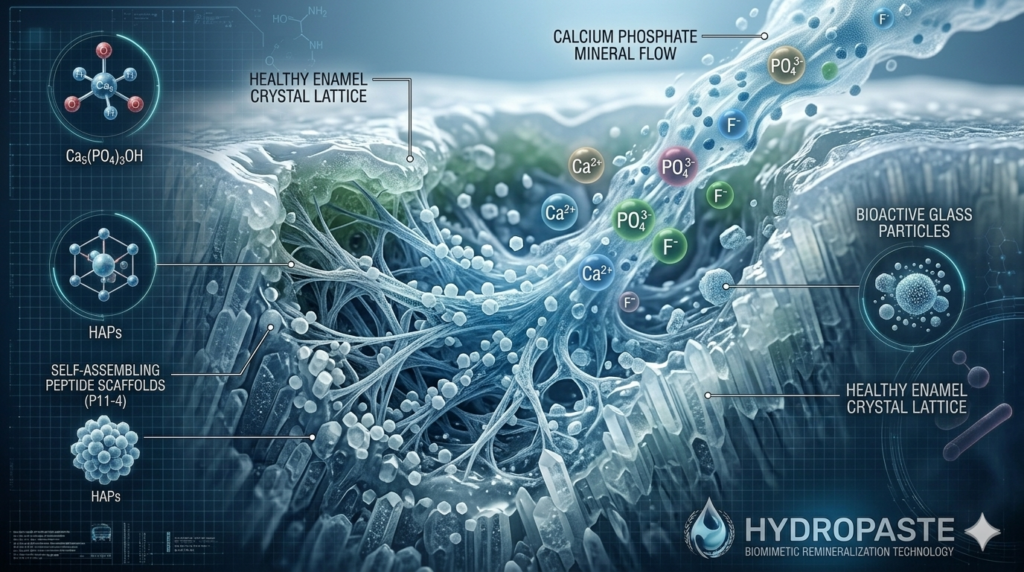
Biomimetic mineral repair compounds represent the most advanced edge of enamel remineralization science. The word “biomimetic” means that a material is designed to imitate, support, or cooperate with natural biological structure. In enamel care, that means compounds that do more than simply clean the tooth. They are designed to behave like mineral-building systems: binding to enamel, releasing calcium and phosphate, forming apatite-like layers, blocking dentinal tubules, or guiding new mineral growth inside early lesions.
This cluster page belongs under the enamel remineralization science hub on Hydropaste. It sits after the more established ingredient pages because biomimetic repair is the bridge between today’s toothpaste and tomorrow’s targeted enamel therapy.
Fluoride remains central for cavity prevention. Hydroxyapatite provides tooth-like mineral particles. Calcium phosphate systems support mineral availability. Stannous fluoride adds sensitivity, plaque, and gumline benefits. Biomimetic mineral repair compounds pull these ideas into a broader category: materials engineered to help enamel recover in a way that resembles natural mineral repair.
Recent research continues to evaluate hydroxyapatite, bioactive glass, calcium phosphate systems, and self-assembling peptides as enamel remineralization technologies, with particular attention to white spot lesions, early caries, sensitivity, and non-invasive repair. Self-assembling peptide P11-4, for example, has been studied as a biomimetic agent that can penetrate early lesions and support hydroxyapatite crystal nucleation. (PMC)
Comprehensive Article Navigation & Clinical Directory
| Reader Goal | Article Section (H2) | Core Concept & What You’ll Learn | Editorial Insight (Key Takeaway) |
| Set Expectations | What This Guide Is For | Deconstruct popular marketing buzzwords like “liquid enamel” and filter realistic claims from hyperbole. | The Hype Filter: Read this first to learn how to spot overhyped “enamel regrowth” claims before spending money on premium pastes. |
| Identify Candidates | Who Needs Biomimetic Mineral Repair Compounds? | Discover the 6 specific profiles—from orthodontic patients to the fluoride-hesitant—who benefit most from these compounds. | Targeted Utility: These compounds are highly specific therapies best utilized for early, non-collapsed subsurface lesions and structural hypersensitivity. |
| Isolate Advantages | Benefits of Biomimetic Mineral Repair Compounds | Explore tooth-compatible material mechanics, structural scaffolding properties, and combination therapies. | Synergistic Action: Combining biomimetic minerals with fluoride often yields superior protective matrices compared to either ingredient used in isolation. |
| Understand the Science | What Biomimetic Mineral Repair Means | Learn the core biological logic and the detailed 6-part mineral repair mechanism (from surface recognition to occlusion). | No Living Cells: Enamel cannot regenerate biologically. True biomimetic action is a chemical replication of natural tooth mineral architectures. |
| Explore the Clinical Shift | Biomimetic Dentistry: The Broader Clinical Shift | Examine how the wider clinical dental space is shifting toward stress-reduced restorations and maximum tooth structure retention. | The Macro Shift: Daily at-home biomimetic oral care is the preventative extension of minimally invasive, tooth-preserving clinical therapies. |
| Analyze Ingredients | Types of Biomimetic Mineral Repair Compounds | Deep dive into the 7 primary ingredient variants including Nano-HAp, Bioactive Glass, CPP-ACP, and P11-4 peptides. | Material Diversity: Not all biomimetic agents function identically. Some deposit structural particles directly, while others act as ionic release reservoirs. |
| Compare Core Technologies | Biomimetic Compounds vs Fluoride | Weigh structural, biology-inspired mineral building blocks against the traditional, acid-resistant ionic pathway of fluoride. | Complementary, Not Mutually Exclusive: Fluoride hardens existing structures; biomimetic agents replenish lost physical mineral volume. |
| Differentiate Mineral Profiles | Biomimetic Compounds vs Hydroxyapatite | Clarify why hydroxyapatite is a major structural cornerstone of this category, but does not represent the entire chemical landscape. | Beyond Hydroxyapatite: Do not ignore peptide scaffolds or functionalized glasses, which provide targeted dynamic mineralization pathways. |
| Evaluate Therapeutic Benefits | Biomimetic Compounds vs Stannous Fluoride | Balance multi-benefit anti-plaque/anti-gingivitis performance against targeted crystalline repair. | The Plaque Factor: If gumline bleeding and microbial biofilms are your primary concerns, stannous chemistry remains a vital necessity. |
| Navigate Delivery Systems | Product Categories: Where Biomimetic Repair Appears | Identify the differences between daily pastes, premium nano-gels, specialized creams, and clinical varnishes. | Delivery Dictates Results: Active mineral concentration and structural contact time during delivery determine the overall clinical outcome. |
| Formulate a Purchase Strategy | What to Look for in a Biomimetic Mineral Repair Product | Learn to scan ingredient labels for valid active systems, appropriate pH environments, and non-abrasive formulations. | The Low-Abrasion Rule: High-abrasion formulas cancel out repair benefits by scrubbing away newly formed, delicate surface mineral matrices. |
| Budget & Compare Value | Costs: What Biomimetic Mineral Repair Products Usually Cost | Analyze cost structures from mid-tier retail products to premium specialized treatments and professional kits. | Value Allocation: Do not overpay for daily maintenance; save your financial premium for high-concentration white spot treatment protocols. |
| Mitigate Risks & Blindspots | Risks and Limitations | Detail the clear clinical boundaries—including milk protein allergies (CPP-ACP) and why open cavitated lesions cannot be self-treated. | The Ultimate Boundary: Once enamel completely collapses into a physical cavity, only clinical intervention can safely restore form and function. |
| Preview Industry Horizons | Trends & Latest Tech in Biomimetic Enamel Remineralization | Survey the evolution of mainstream fluoride alternatives, peptide scaffolding, and minimally invasive diagnostic shifts. | Mainstream Infiltration: Biomimetic science is successfully transitioning from high-end specialty labs into everyday commercial oral care portfolios. |
| Anticipate Next-Gen Pipelines | Upcoming Models in Biomimetic Mineral Repair | Get a technical preview of tomorrow’s oral care: saliva-responsive release systems, smart brushes, and risk-customized profiles. | Smart Prevention: The future belongs to adaptive, pH-triggered chemistry that activates specifically during acute microbial acid challenges. |
| Review Technical Schematics | Charts & Tables | Consult condensed reference matrices comparing compound mechanisms, user situations, and ingredient performance variations. | Data at a Glance: Use these structural tables for a rapid, evidence-backed side-by-side assessment of competitive mineral categories. |
| Execute Personalized Selection | Comparison Section: Which Biomimetic Compound Should You Choose? | Use an actionable, diagnostic roadmap to match specific oral symptoms to the ideal biomimetic compound countermeasure. | Your Custom Protocol: Match the exact material behavior (e.g., tubule sealing vs. subsurface scaffolding) to your dominant symptom profile. |
What This Guide Is For
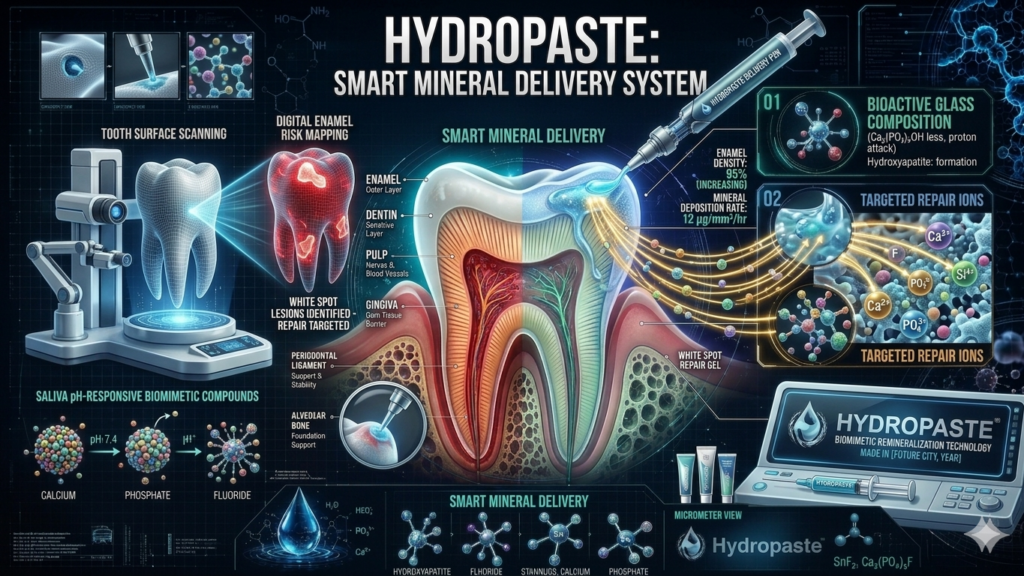
This guide is for readers who want to understand the next generation of biomimetic tooth repair products and technologies. Many oral care products now use phrases such as “enamel repair,” “liquid enamel,” “biomimetic minerals,” “tooth-like repair,” “nano repair,” “bioactive minerals,” or “regenerative enamel support.”
Some of these claims are useful. Some are too broad. Some are ahead of what toothpaste can realistically do.
This page explains:
What biomimetic mineral repair compounds are
How biomimetic enamel remineralization differs from ordinary toothpaste cleaning
Which ingredients belong in this category
How hydroxyapatite, bioactive glass, CPP-ACP, and peptides compare
What self-assembling peptide enamel repair means
Which compounds are available now and which are more professional or emerging
How to judge product claims without falling for exaggerated “enamel regrowth” language
Where biomimetic repair fits next to fluoride, calcium phosphate, and stannous fluoride
For gumline and sensitivity-focused fluoride, see stannous fluoride effects.
Who Needs Biomimetic Mineral Repair Compounds?
People With Early Enamel Demineralization
Biomimetic compounds are most relevant when enamel has lost minerals but has not collapsed into an open cavity. These early lesions may appear chalky, matte, porous, or white. If the surface is still intact, mineral repair support may be useful.
People With White Spot Lesions
White spot lesions are one of the strongest use cases for biomimetic remineralization. They often occur after braces, around plaque-prone areas, or after repeated acid exposure. Self-assembling peptide P11-4, hydroxyapatite, fluoride, and calcium phosphate systems are frequently discussed in this context. A 2023 systematic review and meta-analysis described P11-4 as a non-invasive intervention studied for initial caries lesions. (ScienceDirect)
People With Tooth Sensitivity
Biomimetic materials can help sensitivity when they form mineral deposits over exposed dentin or block open dentinal tubules. Hydroxyapatite and bioactive glass are especially relevant here.
People Interested in Fluoride-Free Mineral Repair
Hydroxyapatite and some bioactive glass or calcium phosphate systems appeal to readers who want mineral support without fluoride. This does not mean fluoride is unnecessary for everyone. High-cavity-risk users may still need fluoride-based care.
People Comparing Premium Toothpaste Claims
Premium oral care is crowded with “repair” language. Biomimetic mineral repair compounds help readers understand which claims have a plausible mechanism and which are mostly marketing.
People Interested in Non-Invasive Dentistry
The future of enamel care is not only drilling and filling. Dentistry is moving toward earlier detection, lesion arrest, mineral repair, resin infiltration, smart monitoring, and minimally invasive treatment. Biomimetic compounds are part of that shift.
Benefits of Biomimetic Mineral Repair Compounds
1. Tooth-Compatible Mineral Support
Biomimetic compounds are designed to interact with tooth mineral structure. Hydroxyapatite, for example, resembles the mineral family already present in enamel and dentin.
2. Early Lesion Remineralization
Some biomimetic systems aim to support mineral deposition inside early enamel lesions rather than only on the surface. Self-assembling peptides are especially interesting because they may form scaffolds that encourage mineral growth within the lesion body.
3. Sensitivity Relief
Hydroxyapatite, bioactive glass, and related mineral systems can reduce sensitivity by blocking dentinal tubules. This can reduce the pathway through which cold, air, sweet, and touch triggers reach the nerve.
4. Fluoride-Free Options
Some biomimetic compounds provide remineralization support without fluoride. This is commercially important for users who prefer fluoride-free oral care.
5. Combination Potential
Biomimetic compounds can be combined with fluoride, calcium phosphate, stannous fluoride, or low-abrasion systems. Newer reviews suggest that hydroxyapatite plus fluoride combinations may outperform fluoride alone in some remineralization and caries-prevention comparisons, although outcomes depend on product design and study type. (MDPI)
6. Better Fit for Preventive Dentistry
The strongest use case is early intervention. Biomimetic materials are most powerful before enamel collapses into a cavity.
What Biomimetic Mineral Repair Means
Biomimetic Does Not Mean “Instant Enamel Regrowth”
A scientifically honest definition matters. Biomimetic mineral repair does not mean a toothpaste can regrow a missing tooth wall. Enamel has no living cells and cannot regenerate like bone.
Biomimetic repair means the compound is designed to imitate or support natural enamel mineral behavior.
That may include:
Attaching to enamel crystals
Filling microscopic defects
Releasing calcium and phosphate
Forming apatite-like mineral layers
Guiding mineral nucleation
Blocking dentinal tubules
Improving surface smoothness
Supporting early lesion remineralization
The Core Biomimetic Logic
Natural enamel is highly organized calcium phosphate mineral. When early acid damage removes mineral, the ideal repair system should do more than dump minerals randomly. It should place the right material near the right surface in a form the tooth can use.
That is the goal of biomimetic enamel remineralization.
The 6-Part Biomimetic Repair Mechanism
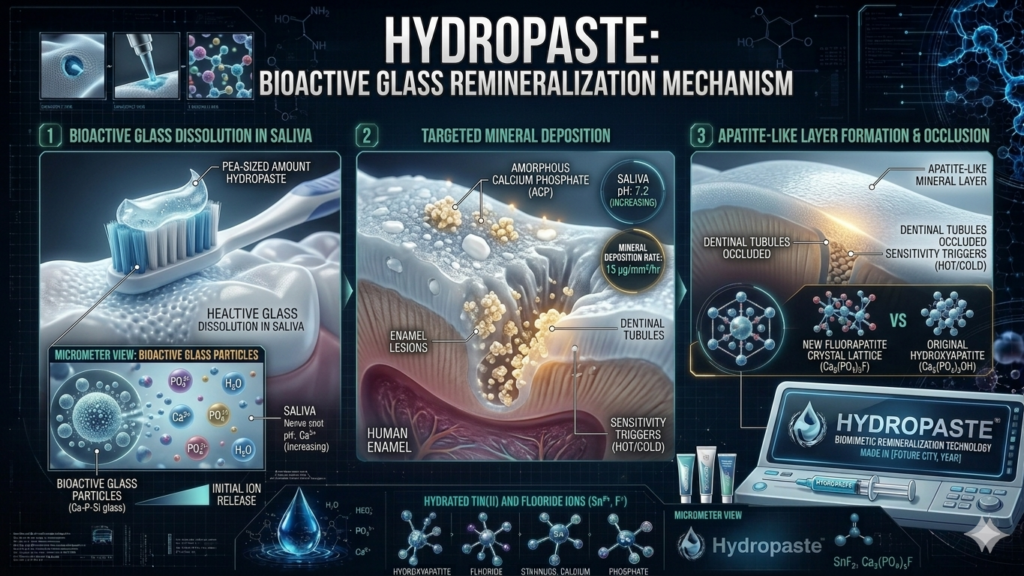
1. Surface Recognition
The compound interacts with enamel or dentin surfaces. Hydroxyapatite particles, for example, can adhere to roughened enamel because they are mineral-compatible with tooth structure.
2. Defect Filling
Particles or mineral deposits settle into microscopic defects. This can smooth the surface and reduce porosity.
3. Ion Release
Some systems release calcium, phosphate, silica, fluoride, or other ions under oral conditions. Bioactive glass is a key example.
4. Mineral Nucleation
Some biomimetic systems create conditions where new apatite-like crystals can form. Self-assembling peptides are studied for this scaffold-like behavior.
5. Tubule Occlusion
Mineral deposits can block exposed dentinal tubules, reducing sensitivity.
6. Repeated Contact Reinforcement
Daily or targeted use can support ongoing mineral deposition. Biomimetic repair is rarely a single-use event. It depends on contact time, pH, saliva, plaque control, and consistency.
Biomimetic Mineral Repair Pathway Chart
| Stage | What Happens | Biomimetic Role |
|---|---|---|
| Acid challenge | Enamel loses calcium and phosphate | Lesion becomes porous |
| Early lesion | Surface may remain intact | Repair is still possible |
| Biomimetic contact | Compound reaches enamel or dentin | Surface interaction begins |
| Mineral activity | Particles attach or ions release | Calcium/phosphate support increases |
| Nucleation or deposition | Apatite-like mineral forms | Lesion or surface gains mineral support |
| Tubule blocking | Deposits seal dentin channels | Sensitivity may reduce |
| Maintenance | Routine controls future mineral loss | Repair must be protected |
Biomimetic Dentistry: The Broader Clinical Shift
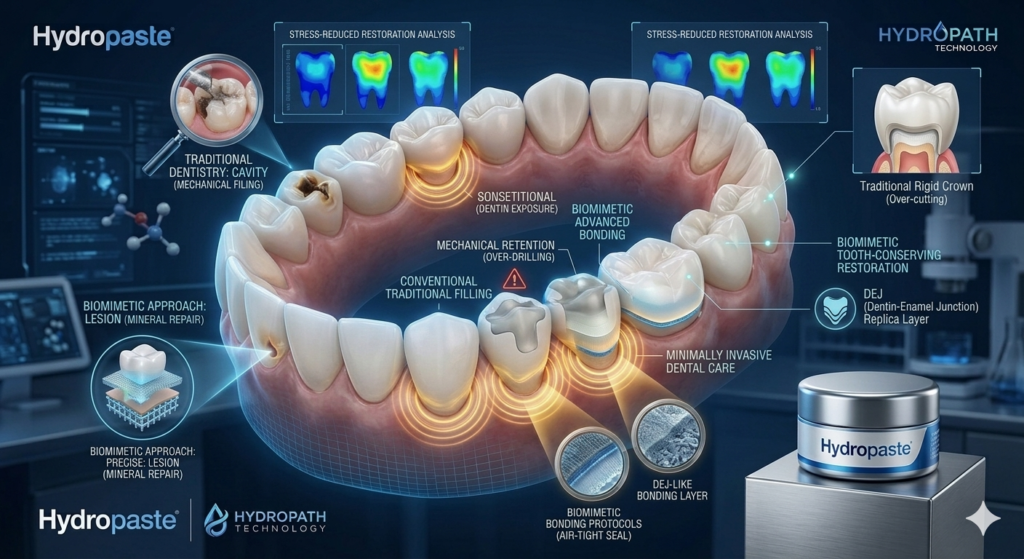
Biomimetic mineral repair toothpaste isn’t emerging in a vacuum. It is the direct consumer offshoot of biomimetic dentistry—a rapidly growing philosophy in modern oral care focused on treating teeth by mimicking their natural mechanics, function, and structure.
Traditionally, dental restorations relied heavily on mechanical retention. To fix a cavity or structural defect, a dentist often had to cut away significant portions of healthy tooth structure just to make a rigid silver or porcelain crown stay in place. Biomimetic dentistry flips this script by prioritizing tooth-preserving dentistry and advanced adhesive science.
The Core Pillars of Biomimetic Treatment
Instead of treating the tooth like a mechanical object to be carved, biomimetic clinicians treat it as a biological complex that must retain its natural flexibility and structural integrity.
- Stress-Reduced Restorations: Natural teeth bend slightly under chewing pressure. Traditional rigid materials don’t give, causing stress fractures over time. Biomimetic materials are engineered with a modulus of elasticity matching natural dentin and enamel, letting the tooth distribute forces safely.
- Maximum Structure Retention: By utilizing advanced bonding layers that mimic the natural dentin-enamel junction (DEJ), clinicians can perform minimally invasive dental care, conserving healthy enamel and pulp that would otherwise be drilled away.
- Sealing Out Bacteria: Rather than just filling a hole, biomimetic protocols focus on creating an airtight, structural bond that seals the tooth against micro-leakage, significantly lowering the long-term risk of structural failure or root canals.
The At-Home Connection: Biomimetic mineral repair compounds bring this exact philosophy into your daily routine. Just as a biomimetic dentist uses advanced composite matrices to replicate dentin structure in the clinic, biomimetic toothpaste uses agents like hydroxyapatite and self-assembling peptides to reinforce your enamel framework at home.
Types of Biomimetic Mineral Repair Compounds
1. Hydroxyapatite
Hydroxyapatite is the most consumer-visible biomimetic mineral compound. It is closely related to the natural mineral structure of enamel and dentin.
How It Works
Hydroxyapatite particles may:
Attach to rough enamel
Fill microscopic defects
Support enamel surface smoothness
Occlude dentinal tubules
Improve sensitivity
Support early remineralization
Hydroxyapatite toothpaste has been reviewed as a fluoride-free option for caries prevention and enamel remineralization, with evidence suggesting it can be a promising alternative in appropriate users. (ScienceDirect)
For the complete mechanism, read hydroxyapatite mechanism.
2. Nano-Hydroxyapatite
Nano-hydroxyapatite uses smaller particles with larger surface-area potential. This may improve interaction with microscopic enamel defects and dentinal tubules.
Best Use Cases
Nano-hydroxyapatite is especially relevant for:
Sensitivity
White spot support
Fluoride-free toothpaste
Post-whitening discomfort
Mild enamel roughness
Premium biomimetic toothpaste
Important Buying Note
“Nano” is not a guarantee of quality. Concentration, particle shape, abrasivity, pH, and full formula design matter.
3. Bioactive Glass
Bioactive glass is a mineral-releasing material that can interact with saliva and tooth surfaces. It may release calcium, phosphate, sodium, silica, or other ions depending on the glass composition.
How It Works
Bioactive glass can:
Release mineral ions
Support apatite-like layer formation
Occlude dentinal tubules
Support sensitivity relief
Contribute to remineralization conditions
A 2025 review described bioactive glasses as promising for enamel remineralization and caries management because of their ion-releasing ability and capacity to promote mineral formation. (MDPI)
Best Use Cases
Bioactive glass is especially relevant for:
Dentin hypersensitivity
Exposed tubules
Root sensitivity
Mineral-active toothpaste
Early enamel support
Professional desensitizing products
4. CPP-ACP and CPP-ACPF
CPP-ACP stands for casein phosphopeptide-amorphous calcium phosphate. It is a milk-derived system that stabilizes calcium and phosphate and holds them near the tooth surface.
CPP-ACPF adds fluoride.
How It Works
CPP-ACP acts like a mineral reservoir. It keeps calcium and phosphate available near enamel, especially useful when the tooth is recovering from acid exposure.
Best Use Cases
White spot lesions
Post-orthodontic mineral support
Early enamel demineralization
Professional remineralization routines
Mineral creams or mousse products
Safety Note
CPP-ACP is derived from milk protein. People with milk protein allergy should avoid it unless a qualified clinician advises otherwise.
5. Self-Assembling Peptides
Self-assembling peptides are one of the most advanced biomimetic enamel repair technologies. P11-4 is the best-known example in dental remineralization discussions.
How Self-Assembling Peptide Enamel Repair Works
The concept is different from ordinary toothpaste. A peptide can diffuse into an early enamel lesion and assemble into a scaffold-like matrix. That matrix may encourage calcium and phosphate to nucleate into new mineral within the lesion.
This is why peptide systems are described as biomimetic: they do not simply coat the surface; they attempt to guide mineral repair inside the lesion environment.
A 2025 study on self-assembling peptide P11-4 described white spot lesions as subsurface enamel demineralization and evaluated remineralization behavior compared with other agents. (PMC)
Best Use Cases
Early caries lesions
White spot lesions
Post-orthodontic demineralization
Non-invasive lesion management
Professional or clinician-guided enamel repair
Availability Note
Self-assembling peptide systems are not the same as ordinary retail toothpaste. They are more likely to appear in professional or specialized dental settings.
6. Functionalized Calcium Phosphate Systems
Functionalized calcium phosphate systems are designed to deliver calcium and phosphate more effectively, especially in formulas that also contain fluoride.
How They Work
The goal is formula compatibility. Calcium can react too early with fluoride or phosphate if not properly managed. Functionalized systems try to keep minerals usable until brushing or contact with saliva.
Best Use Cases
Fluoride-enhanced mineral toothpaste
White spot support
High-risk enamel maintenance
Daily mineral support formulas
7. Peptide-Calcium Phosphate Hybrids
Future biomimetic systems may combine peptides with calcium phosphate or hydroxyapatite-like mineral particles. The peptide provides structural guidance. The mineral system provides building blocks.
This is one of the most important upcoming directions in enamel repair because it moves closer to controlled mineral architecture rather than simple mineral delivery.
Biomimetic Mineral Repair Compounds
| Compound Type | Main Mechanism | Best For | Fluoride-Free? | Availability |
|---|---|---|---|---|
| Hydroxyapatite | Tooth-like particle deposition | Sensitivity, enamel smoothing, fluoride-free care | Usually yes | Common toothpaste |
| Nano-hydroxyapatite | Smaller particle defect filling | Sensitivity, white spots, premium repair | Usually yes | Premium toothpaste |
| Bioactive glass | Ion release and apatite-like layer formation | Sensitivity, tubule occlusion, mineral support | Often yes, varies | Toothpaste and professional products |
| CPP-ACP | Calcium phosphate reservoir | White spots, early lesions | Usually yes | Creams, mousse, specialty products |
| CPP-ACPF | CPP-ACP plus fluoride | Higher-risk white spots | No | Specialty/professional products |
| Self-assembling peptide P11-4 | Scaffold-guided mineral nucleation | Early lesions, white spots | Usually yes | Professional/specialized |
| Functionalized TCP | Calcium delivery with fluoride compatibility | Fluoride toothpaste enhancement | Usually no when paired with fluoride | Toothpaste |
| Peptide-mineral hybrids | Guided mineral architecture | Future targeted repair | Varies | Emerging |
Biomimetic Compounds vs Fluoride
Fluoride and biomimetic mineral repair compounds are often compared, but the better approach is to understand their different roles.
Fluoride helps enamel become more acid-resistant and supports remineralization through fluoride-enhanced mineral chemistry. Biomimetic compounds imitate or support tooth mineral behavior directly.
Comparison Chart
| Category | Fluoride | Biomimetic Mineral Repair Compounds |
|---|---|---|
| Main role | Acid-resistant remineralization | Tooth-like or biology-inspired mineral repair |
| Best for | High cavity risk, decay prevention | Early lesions, sensitivity, white spots, premium repair |
| Mechanism | Fluoride ion chemistry | Particle deposition, ion release, scaffold-guided mineralization |
| Fluoride-free | No | Often, but not always |
| Sensitivity support | Strong as stannous fluoride | Strong with hydroxyapatite or bioactive glass |
| White spot relevance | High | High |
| Product maturity | Very established | Mixed: some established, some emerging |
| Professional role | Varnish, prescription paste | Peptides, gels, infiltrative/mineral systems |
Biomimetic Compounds vs Hydroxyapatite
Hydroxyapatite is one of the most important biomimetic compounds, but it is not the entire category.
Hydroxyapatite Is Best Understood As:
A tooth-like mineral particle
A fluoride-free remineralization option
A sensitivity-support compound
A surface smoothing ingredient
A biomimetic enamel support system
The Larger Biomimetic Category Also Includes:
Bioactive glass
Self-assembling peptides
CPP-ACP
CPP-ACPF
Functionalized calcium phosphate
Peptide-mineral scaffolds
Ion-responsive mineral systems
For the focused hydroxyapatite article, see hydroxyapatite mechanism.
Biomimetic Compounds vs Stannous Fluoride
Stannous fluoride is a multi-benefit fluoride active. It supports enamel, plaque control, gingivitis, tubule occlusion, and erosion protection. Biomimetic compounds focus more on mineral mimicry, mineral deposition, and guided repair.
Comparison Chart
| Category | Stannous Fluoride | Biomimetic Mineral Repair Compounds |
|---|---|---|
| Main strength | Cavities + sensitivity + plaque + gumline | Mineral repair and biological imitation |
| Gumline support | High | Usually lower |
| Sensitivity support | High | High with HAp or bioactive glass |
| Fluoride-free | No | Often |
| White spot support | Moderate to high | High |
| Best user | Gumline plaque + sensitivity + cavities | Early enamel damage + mineral repair interest |
For the gumline-focused fluoride category, see stannous fluoride effects.
Where Biomimetic Repair Appears
1. Hydroxyapatite Toothpaste
This is the most common consumer form of biomimetic enamel support. It is used daily and usually positioned for fluoride-free remineralization, sensitivity, or enamel repair.
2. Nano-Hydroxyapatite Toothpaste
A premium category focused on microscopic enamel defects, sensitivity, and surface smoothing.
3. Bioactive Glass Toothpaste
Often positioned for sensitivity and mineral repair. It may release ions and help block dentinal tubules.
4. CPP-ACP Creams and Dental Mousse
Specialty products often used for white spots or post-orthodontic mineral support.
5. Self-Assembling Peptide Treatments
More professional or specialized than ordinary toothpaste. Used for early lesions and white spot management in certain clinical contexts.
6. Biomimetic Whitening Toothpaste
These products aim to brighten by smoothing enamel and reducing surface roughness rather than relying only on abrasive stain removal.
7. Professional Biomimetic Enamel Therapies
These may include peptide-based systems, remineralizing gels, resin infiltration combinations, professional desensitizers, or advanced lesion-management protocols.
What to Look for in a Biomimetic Mineral Repair Product
Clear Active System
Look for specific ingredient names, not vague claims.
Strong labels may mention:
Hydroxyapatite
Nano-hydroxyapatite
Bioactive glass
Calcium sodium phosphosilicate
CPP-ACP
CPP-ACPF
Functionalized tricalcium phosphate
Self-assembling peptide P11-4
Low Abrasion
A biomimetic toothpaste should not rely on aggressive scrubbing. If enamel is weak, sensitive, eroded, or demineralized, harsh abrasives can work against the repair goal.
Realistic Repair Language
A credible product should say it supports remineralization, enamel strengthening, sensitivity relief, or early lesion repair. Be cautious with claims that imply it can regrow missing enamel or heal open cavities.
Fluoride Status
Some biomimetic systems are fluoride-free. Others combine with fluoride. Read the label carefully.
Intended Use
Daily toothpaste, gels, professional peptide systems, and dental creams are not interchangeable. Contact time and concentration matter.
Allergy and Age Notes
CPP-ACP involves milk-derived protein. Fluoride-containing systems require age-appropriate use. Children need supervision with any toothpaste or mineral cream.
What Biomimetic Mineral Repair Products Usually Cost
Biomimetic products are usually priced above basic toothpaste because they use specialty ingredients, premium positioning, or professional delivery systems.
Biomimetic Product Cost Chart
| Product Type | Typical Cost Level | Best For |
|---|---|---|
| Standard hydroxyapatite toothpaste | Mid | Daily fluoride-free enamel support |
| Nano-hydroxyapatite toothpaste | Mid to premium | Sensitivity and surface repair |
| Bioactive glass toothpaste | Mid to premium | Sensitivity and mineral release |
| CPP-ACP cream/mousse | Premium | White spots and targeted mineral support |
| CPP-ACPF product | Premium | White spots with fluoride support |
| Self-assembling peptide treatment | Professional/specialized | Early lesions and white spots |
| Professional biomimetic therapy | Higher | Dentist-guided lesion management |
| Hybrid fluoride + biomimetic toothpaste | Mid to premium | Multi-mechanism enamel protection |
While basic formulations rely on coarse abrasives to scrub away external stains, advanced clinical-grade alternatives utilize native structural elements to patch microscopic lesion sites. This is exactly why we highlight Dr. Jen’s enamel repair toothpaste and Ollie toothpaste as a top-tier choice for targeted biomimetic tooth repair, offering an optimal balance of structural remineralization and gentle microbiome maintenance.
Best Value Strategy
A reader should not buy the most expensive biomimetic product automatically. The best value depends on the problem.
For daily fluoride-free enamel support, hydroxyapatite toothpaste may be enough.
For sensitivity, hydroxyapatite or bioactive glass may fit.
For white spots, CPP-ACP, CPP-ACPF, hydroxyapatite, fluoride, or professional peptide systems may be considered.
For high cavity risk, fluoride should remain part of the discussion.
For severe lesions, professional treatment is more important than premium toothpaste.
Risks and Limitations
Biomimetic Compounds Cannot Heal Open Cavities
This is the most important limitation. Early mineral loss can sometimes be remineralized. Missing tooth structure cannot be replaced by toothpaste.
Product Claims Can Outrun the Science
“Biomimetic” sounds advanced, so brands may overuse it. A product should name the compound, explain the mechanism, and avoid impossible claims.
Not All Hydroxyapatite Products Are Equal
Particle size, concentration, purity, formula pH, abrasivity, and contact time matter. “Contains hydroxyapatite” is not enough by itself.
Peptide Systems Are Not Ordinary Toothpaste
Self-assembling peptide treatments are more specialized and may not be available as everyday retail toothpaste in many markets.
CPP-ACP Has Milk Protein Allergy Concerns
People with milk protein allergy should avoid CPP-ACP unless cleared by a qualified clinician.
High Cavity Risk May Still Need Fluoride
Fluoride-free biomimetic products may be useful, but people with frequent cavities, dry mouth, exposed roots, orthodontic appliances, or high sugar frequency may need fluoride-based prevention.
Sensitivity Can Signal Disease
Mineral toothpaste may help sensitivity, but sharp, localized, biting-related, or lingering pain needs dental diagnosis.
Trends & Latest Tech in Biomimetic Enamel Remineralization
Hydroxyapatite as a Mainstream Fluoride-Free Alternative
Hydroxyapatite toothpaste is moving from niche to mainstream. Current reviews continue to discuss its role in preventing caries progression and supporting enamel remineralization, especially for fluoride-free users. (ScienceDirect)
Bioactive Glass for Mineral Release and Sensitivity
Bioactive glass is expanding beyond sensitivity claims into broader enamel and dentin repair discussions. Newer reviews describe bioactive glasses as promising in caries management because of ion release and mineral formation potential. (MDPI)
Self-Assembling Peptides for White Spot Lesions
Peptide-guided remineralization is one of the most exciting trends because it aims to work inside early lesions. Studies and reviews continue to evaluate P11-4 for white spot lesion reduction and early caries management. (ScienceDirect)
Hybrid Fluoride + Biomimetic Systems
The next generation of enamel products may not force a choice between fluoride and biomimetic compounds. Some formulas may combine hydroxyapatite, fluoride, calcium phosphate, or bioactive glass for broader support.
Low-Abrasion Remineralizing Whitening
Whitening toothpaste is shifting toward enamel-safe brightness. Biomimetic minerals may support smoother, glossier enamel surfaces without aggressive polishing.
Professional-Minimal Intervention Dentistry
Dentistry is increasingly focused on early diagnosis, lesion arrest, non-invasive remineralization, and conservative repair. Biomimetic compounds fit naturally into that movement.
Upcoming Models in Biomimetic Mineral Repair
1. Saliva-Responsive Mineral Systems
Future products may release minerals when pH drops, helping enamel precisely when acid risk is highest.
2. Peptide-Mineral Hybrid Gels
Peptides may be paired with calcium phosphate or hydroxyapatite to guide mineral formation more intelligently inside early lesions.
3. Smart Toothbrush + Mineral Repair Pairing
Connected toothbrushes may eventually identify high-risk areas and recommend mineral repair routines based on brushing pressure, missed zones, sensitivity, or plaque pattern.
4. Post-Orthodontic White Spot Kits
After braces, white spots can become a major cosmetic concern. Future kits may combine low-abrasion cleaning, hydroxyapatite, fluoride, calcium phosphate, and professional peptide systems.
5. Personalized Toothpaste by Risk Type
Instead of “one enamel repair toothpaste,” biomimetic products may be categorized by dry mouth, sensitivity, acid erosion, white spots, high cavity risk, gumline recession, or whitening sensitivity.
6. Regenerative Surface Coatings
Professional biomimetic coatings may become more refined, creating mineral-like protective layers on erosion-prone enamel or exposed dentin.
Charts & Tables
Biomimetic Compound Decision Matrix
| User Situation | Best-Fit Biomimetic Direction | Why |
|---|---|---|
| Fluoride-free daily enamel support | Hydroxyapatite toothpaste | Tooth-like mineral particles |
| Sensitivity from exposed dentin | Hydroxyapatite or bioactive glass | Tubule occlusion |
| White spots after braces | CPP-ACP, hydroxyapatite, peptide systems | Early lesion mineral support |
| High cavity risk | Fluoride + biomimetic hybrid | Acid resistance plus mineral repair |
| Acid erosion | Low-abrasion HAp or bioactive glass | Surface support and sensitivity care |
| Professional early lesion care | Self-assembling peptide | Scaffold-guided repair potential |
| Milk protein allergy | Avoid CPP-ACP | Casein-derived system |
| Gumline plaque and sensitivity | Stannous fluoride or hybrid formula | Biofilm plus tubule support |
Biomimetic Compounds by Mechanism
| Compound | Particle Deposition | Ion Release | Scaffold Guidance | Tubule Occlusion | White Spot Use |
|---|---|---|---|---|---|
| Hydroxyapatite | High | Moderate | Low | High | High |
| Nano-hydroxyapatite | High | Moderate | Low | High | High |
| Bioactive glass | Moderate | High | Low | High | Moderate |
| CPP-ACP | Low | High | Low | Moderate | High |
| CPP-ACPF | Low | High | Low | Moderate | High |
| P11-4 peptide | Low | Indirect | High | Low | High |
| Functionalized TCP | Low | High | Low | Low to moderate | Moderate |
Biomimetic vs Conventional Enamel Ingredients
| Category | Conventional Fluoride | Biomimetic Mineral Compounds |
|---|---|---|
| Main promise | Acid resistance and cavity prevention | Mineral-mimicking repair support |
| Common products | Toothpaste, varnish, prescription paste | HAp toothpaste, bioactive glass, CPP-ACP, peptide treatments |
| Best stage | Prevention and early lesions | Early lesions, sensitivity, white spots |
| Works through | Fluoride chemistry | Mineral deposition, ion release, guided nucleation |
| Fluoride-free | No | Often |
| Consumer maturity | Established | Growing |
| Future potential | Personalized fluoride protocols | Smart mineral repair and targeted lesion therapy |
Which Biomimetic Compound Should You Choose?
Choose Hydroxyapatite If:
You want fluoride-free daily enamel support, sensitivity relief, surface smoothing, and a toothpaste that works through tooth-like mineral particles.
Choose Nano-Hydroxyapatite If:
You want a premium formula aimed at microscopic enamel defects, sensitivity, or white spot support.
Choose Bioactive Glass If:
Your main concern is sensitivity, exposed dentin, or tubule occlusion with mineral release.
Choose CPP-ACP If:
You are focused on white spots or early enamel mineral loss and do not have milk protein allergy.
Choose CPP-ACPF If:
You want calcium phosphate support plus fluoride for stronger acid-resistance potential.
Choose Self-Assembling Peptide If:
You are exploring professional or specialized treatment for early caries lesions or white spot lesions.
Choose Stannous Fluoride If:
Your concern includes sensitivity, plaque, gingivitis, gumline bleeding, and cavities together.
Practical Biomimetic Enamel Repair Routine
Morning Routine
Use a biomimetic toothpaste suited to your main concern. Hydroxyapatite may fit fluoride-free enamel support. Bioactive glass may fit sensitivity. A fluoride-biomimetic hybrid may fit higher cavity risk.
After Acid Exposure
After soda, citrus, sports drinks, wine, vinegar-heavy meals, or reflux, rinse with water and allow saliva to recover. Do not brush immediately after acid exposure because enamel may be temporarily softened.
Night Routine
Night brushing matters because saliva flow decreases during sleep. Biomimetic minerals may have longer contact time overnight when used correctly.
White Spot Routine
White spot improvement requires patience. Use the product as directed for weeks to months, control plaque, reduce sugar frequency, and ask a dentist whether the lesion is active, inactive, developmental, fluorosis-related, or cavitated.
Sensitivity Routine
If using hydroxyapatite or bioactive glass for sensitivity, consistency matters. Tubule occlusion improves with repeated exposure. If sensitivity is sharp, localized, or worsening, get a dental exam.
FAQs
What are biomimetic mineral repair compounds?
Biomimetic mineral repair compounds are dental materials designed to imitate or support natural tooth mineral repair. They may attach to enamel, release calcium and phosphate, form apatite-like layers, guide mineral nucleation, or block exposed dentinal tubules.
Examples include hydroxyapatite, nano-hydroxyapatite, bioactive glass, CPP-ACP, CPP-ACPF, functionalized calcium phosphate, and self-assembling peptides. Their goal is to support enamel remineralization in a way that resembles natural tooth mineral behavior.
Can biomimetic tooth repair rebuild enamel?
Biomimetic tooth repair can support early enamel remineralization, but it cannot regrow missing enamel after a cavity has formed. Enamel does not regenerate like skin or bone because it has no living cells.
The realistic benefit is mineral repair support for early, non-cavitated lesions, enamel roughness, white spots, and sensitivity. Once the tooth surface collapses into a cavity, restorative dental treatment is needed.
Is hydroxyapatite a biomimetic mineral repair compound?
Yes, hydroxyapatite is one of the most important biomimetic mineral repair compounds in consumer toothpaste. It resembles the mineral family naturally present in enamel and dentin.
Hydroxyapatite may attach to enamel, fill microscopic surface defects, support smoother tooth surfaces, and block dentinal tubules. That is why it is commonly used in fluoride-free remineralizing toothpaste and sensitivity toothpaste.
What is self assembling peptide enamel repair?
Self-assembling peptide enamel repair uses peptide materials, such as P11-4, that can enter early enamel lesions and form a scaffold-like structure. This scaffold may encourage calcium and phosphate minerals to nucleate and form new apatite-like crystals inside the lesion.
This approach is different from ordinary toothpaste because it aims to guide mineral repair within the early lesion, not only coat the surface. It is mostly associated with professional or specialized non-invasive caries management.
Is bioactive glass good for enamel remineralization?
Bioactive glass may support enamel remineralization by releasing mineral ions and encouraging apatite-like layer formation on tooth surfaces. It is also widely discussed for sensitivity because it can help block dentinal tubules.
Its effectiveness depends on the glass composition, formula, contact time, oral pH, saliva, and the user’s enamel condition. It is best viewed as a mineral-active support system, not a cure for open cavities.
People Also Ask
What is biomimetic enamel remineralization?
Biomimetic enamel remineralization is the use of tooth-compatible or biology-inspired materials to support mineral repair in weakened enamel. Instead of only cleaning the surface, these systems aim to imitate natural mineral behavior.
This may involve hydroxyapatite particles filling enamel defects, bioactive glass releasing minerals, CPP-ACP holding calcium and phosphate near enamel, or self-assembling peptides guiding crystal growth inside early lesions.
Are biomimetic toothpastes better than fluoride toothpaste?
Biomimetic toothpastes are not automatically better than fluoride toothpaste. They work differently. Fluoride is especially strong for cavity prevention and acid-resistant remineralization. Biomimetic toothpastes may be especially useful for fluoride-free mineral support, sensitivity, enamel smoothing, and early lesion support.
High-cavity-risk users may still need fluoride. Lower-risk users who want fluoride-free support may prefer hydroxyapatite or other biomimetic systems. Some future formulas may combine both.
Which biomimetic compound is best for sensitive teeth?
Hydroxyapatite and bioactive glass are two of the most relevant biomimetic compounds for sensitive teeth. Both can help by forming mineral deposits that block exposed dentinal tubules.
Hydroxyapatite is often chosen for fluoride-free sensitivity support. Bioactive glass is often chosen for mineral release and tubule occlusion. Stannous fluoride is another strong option when sensitivity is paired with plaque or gumline inflammation.
Can biomimetic repair help white spots after braces?
Biomimetic repair may help some white spots after braces if the spots are early, non-cavitated enamel lesions. Hydroxyapatite, CPP-ACP, CPP-ACPF, fluoride, bioactive glass, and self-assembling peptides may all be considered depending on the case.
However, some white spots are old, deep, developmental, or cosmetic. If they do not improve with remineralization, professional options such as resin infiltration, microabrasion, whitening balance, or restorative treatment may be needed.
Is biomimetic toothpaste safe for daily use?
Many biomimetic toothpastes, such as hydroxyapatite and some bioactive glass formulas, are designed for daily use when used according to label directions. Safety depends on the ingredient, concentration, abrasivity, age of the user, and whether fluoride or allergens are included.
CPP-ACP products should be avoided by people with milk protein allergy. Children should be supervised with any toothpaste. People with active decay, severe sensitivity, or persistent white spots should ask a dentist rather than relying only on toothpaste.
Editorial Insights
To maximize the therapeutic impact of your biomimetic oral care regimen, our editorial board suggests keeping three overarching principles in mind:
Consistency Trumps Premium Pricing: A mid-priced, low-abrasion hydroxyapatite toothpaste used systematically twice a day will yield better mineral integration than an ultra-premium peptide gel applied inconsistently.
Porous vs. Collapsed Lesions: Biomimetic minerals can effectively reinforce porous, intact enamel (such as early white spot lesions), but they cannot rebuild structural tooth volume once an open cavity has developed.
The Power of Combination: For high-cavity-risk profiles, choosing a product that bridges the gap—such as a functionalized calcium phosphate system or a hydroxyapatite formula containing fluoride—frequently offers more comprehensive protection than moving entirely fluoride-free.