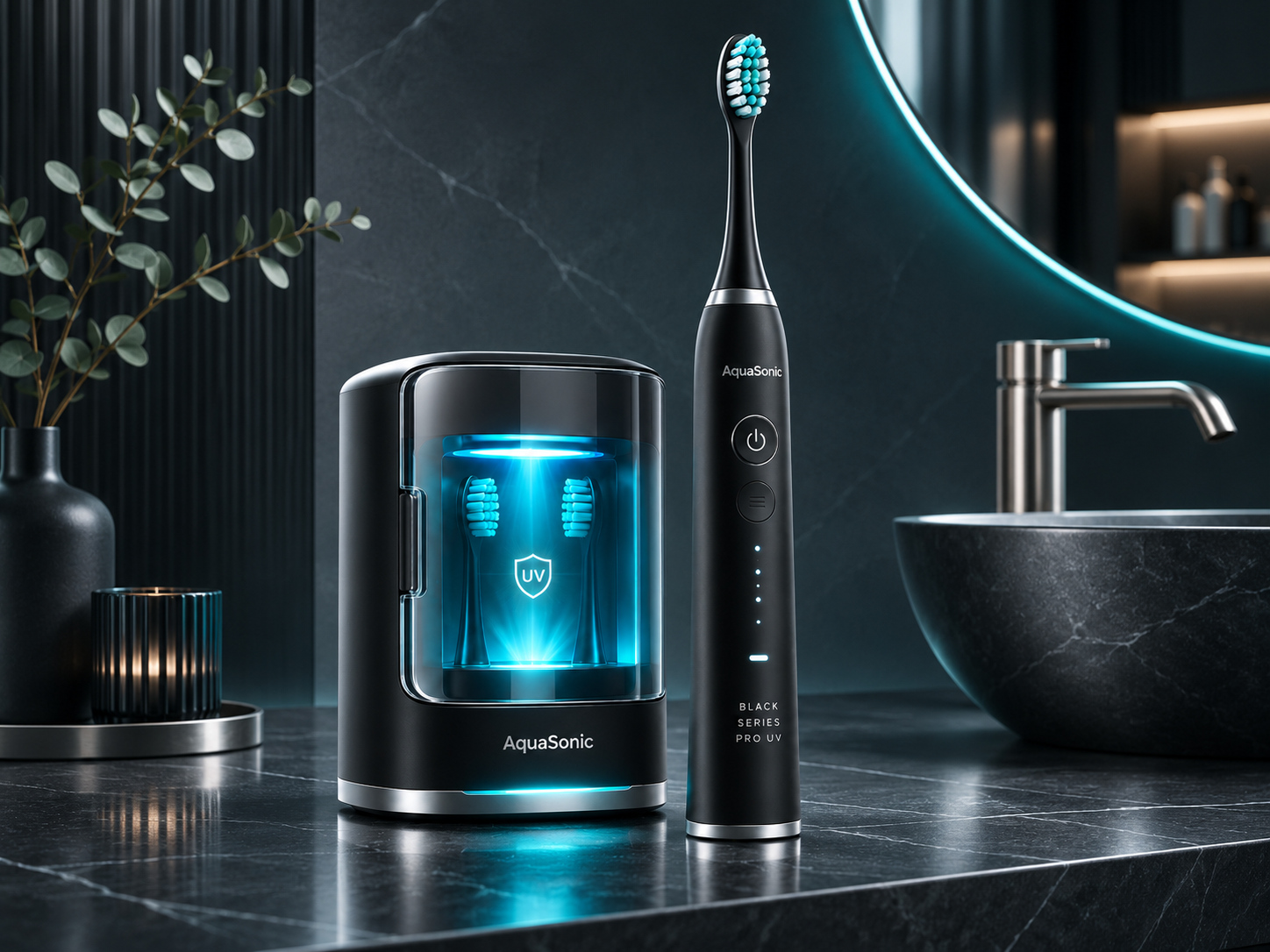
Aquasonic Black Series PRO UV Review 2026
Amazon Affiliate Disclosure
Hydropaste may earn a commission from qualifying purchases through affiliate links, including Amazon links. This does not affect the price you pay. Our product discussions are written to help readers compare brushing systems, gum-care tools, and oral-care routines with a clear focus on safety, fit, and long-term oral wellness.
Updated in November, 2026.
The electric toothbrush category has shifted aggressively toward sonic power, automated hygiene and smarter maintenance, and the AquaSonic Black Series PRO UV sits directly at that intersection. It is not simply another rechargeable sonic toothbrush. The system combines a UV sanitizing base, multiple brushing modes and an extensive accessory bundle designed to compete with premium oral-care brands at a more accessible price.
For readers comparing the best electric toothbrushes of 2026, the AquaSonic Black Series PRO UV stands out because it addresses both daily plaque removal and post-brushing brush-head hygiene within one integrated system. Its combination of high-speed sonic movement, customizable cleaning settings and UV sanitation gives it a feature profile that differs meaningfully from conventional entry-level electric toothbrushes.
If you are evaluating whether an AquaSonic toothbrush can rival established alternatives from Oral-B or Philips Sonicare, this review examines the question with engineering-level clarity. We assess its cleaning technology, UV sanitizing performance, brushing modes, battery design, included accessories and long-term value to determine whether the Black Series PRO UV is a genuine premium alternative or simply a feature-heavy budget option.
For a broader ecosystem perspective, explore Homepage and the clinical brushing science behind Soft-Tissue Integration
Quick Picks (Jump Navigation)
- Overview of Aquasonic Black Series PRO UV
- Who should buy this toothbrush
- Conditions it helps improve
- Key benefits and performance
- Risks and limitations
- Comparison with top competitors
- Final buying decision
- Buy Aquasonic Now
What Is the AquaSonic Black Series PRO UV Toothbrush?
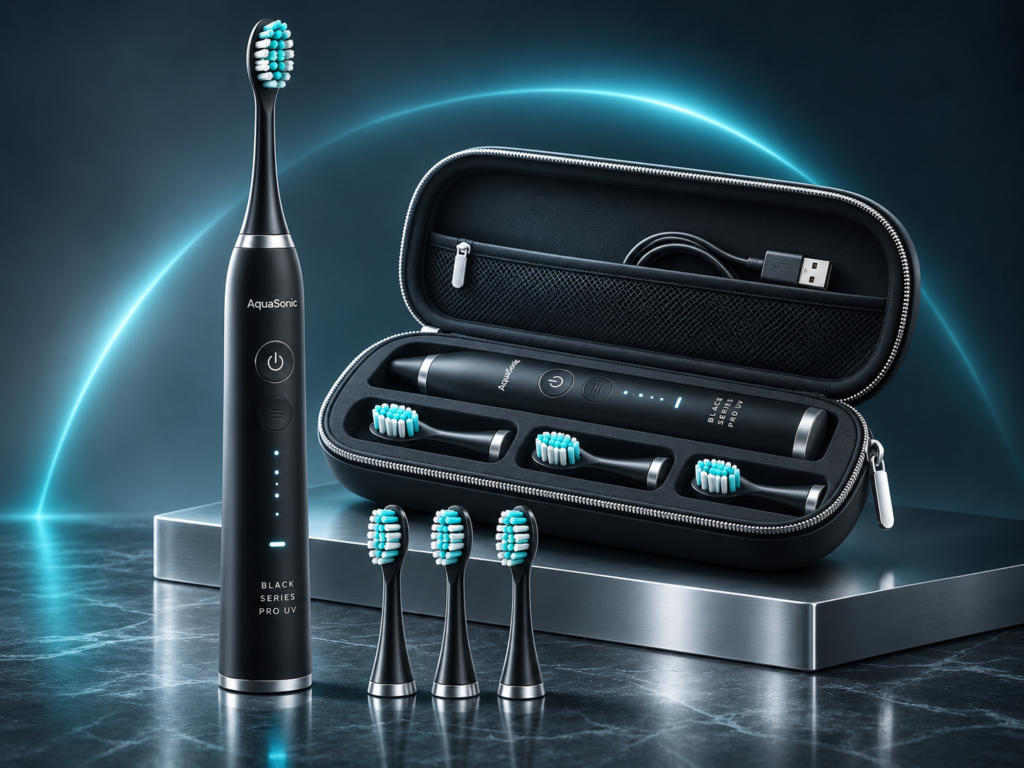
The AquaSonic Black Series PRO UV is a rechargeable sonic electric toothbrush designed to bring together high-frequency plaque removal, customizable brushing, automated brush-head hygiene, and travel convenience within one integrated oral-care system.
Unlike conventional electric toothbrushes that focus primarily on motor performance, the AquaSonic Black Series PRO combines a 50,000-vibrations-per-minute sonic motor, five brushing modes, a UV sanitizing chamber, six ProFlex replacement brush heads, wireless charging, and a protective travel case.
Its defining characteristic is not any single specification. It is the combination of everyday brushing functionality and accessories that would otherwise need to be purchased separately.

- ADA Accepted Toothbrush with Powerful Technology: Black Series PRO is the next generation of the best-selling Black Seri…
- Wireless Charging & Long Battery Life: Enjoy the convenience of wireless charging and a long-lasting battery that gives …
- Waterproof & Ergonomic Satin-Touch Handle – Designed for durability and comfort, the Black Series PRO boasts a waterproo…
For buyers researching the best electric toothbrushes of 2026, this makes the AquaSonic Black Series PRO UV an interesting alternative to more expensive brushing systems from Philips Sonicare and Oral-B.
AquaSonic Black Series vs Black Series PRO: What Makes the PRO Different?
The original AquaSonic Black Series established the product family as an accessible option for users seeking rechargeable sonic cleaning without premium-brand pricing.
The Black Series PRO builds on that foundation by introducing a more powerful advertised motor, an expanded selection of brushing modes, redesigned replacement heads, and integrated UV brush-head sanitization.
The standard Black Series is listed with a 40,000-VPM motor, four brushing modes, eight brush heads, and a travel case. The Black Series PRO increases the advertised motor output to 50,000 VPM and provides five modes, six ProFlex heads, and a UV sanitizing charging dock.
However, the difference between 40,000 and 50,000 vibrations per minute should not be interpreted as a guaranteed improvement in clinical plaque removal. Actual brushing effectiveness depends on brush-head geometry, bristle contact, pressure, brushing duration, and the user’s ability to clean every tooth surface consistently.
The more meaningful upgrade is the expanded oral-care system, particularly for users who value adjustable cleaning intensity and automated brush-head maintenance.
AquaSonic Black Series PRO UV: Core Features and Specifications
| Feature | AquaSonic Black Series PRO UV |
|---|---|
| Toothbrush technology | High-frequency sonic vibration |
| Motor performance | 50,000 vibrations per minute |
| Brushing modes | Clean, Soft, Whiten, Massage, Deep Clean |
| Smart timer | Two-minute timer with 30-second pacing |
| UV sanitizer | Automated brush-head sanitizing chamber |
| Replacement heads | Six ProFlex toothbrush heads |
| Brush-head design | Firmer central bristles, softer outer bristles |
| Charging system | Wireless charging dock |
| Battery | Up to 30 days, manufacturer-stated |
| Travel accessories | Protective travel case |
| Water resistance | IPX7-rated toothbrush handle |
| ADA acceptance | Marketed as ADA Accepted |
Specifications reflect the currently advertised AquaSonic Black Series PRO configuration. Product packaging, accessories, and regional availability should be checked before purchase.
The Role of ADA Acceptance
AquaSonic markets the Black Series PRO as an ADA Accepted electric toothbrush.
The American Dental Association lists the AquaSonic toothbrush family among its accepted powered toothbrushes, with acceptance based on evidence of safety and effectiveness in removing plaque and helping prevent or reduce gingivitis when used as directed.
This provides a meaningful credibility consideration for the brushing system, but it should not be interpreted as independent ADA verification of the UV sanitizer’s advertised germ-reduction percentage.
For buyers, the distinction matters: evidence supporting a toothbrush’s plaque-removal effectiveness is separate from evidence supporting its additional hygiene technology.
For comparison with emerging smart brushes, see 👉 Best Electric Toothbrushes of 2026
Who Should Buy the AquaSonic Black Series PRO UV Toothbrush?
Choosing the right electric toothbrush is not simply a matter of selecting the strongest motor or the product with the longest feature list. A toothbrush must suit the user’s brushing habits, oral-health priorities, physical comfort, and willingness to maintain the device over time.
The AquaSonic Black Series PRO UV is particularly relevant to consumers who want to establish a more structured oral-care routine without investing in an expensive connected toothbrush ecosystem.
However, its suitability differs considerably between users. Someone struggling with inconsistent brushing may benefit from its guided cleaning routine, while someone who habitually brushes too aggressively may be better served by a model with real-time pressure feedback.
Understanding these differences is essential before deciding whether the AquaSonic Black Series PRO is the right long-term purchase.
Ideal Users: Who Benefits Most From the AquaSonic Black Series PRO?
1. People With Recurring Plaque Buildup and Surface Staining
Consumers who frequently notice plaque around their gumline or removable discoloration from coffee and tea may find the AquaSonic toothbrush a useful addition to their oral-care routine.
These individuals often need more than an occasional intensive brushing session. They need a consistent cleaning approach that addresses areas where deposits tend to accumulate.
The AquaSonic Black Series PRO may be particularly relevant for people who:
- Frequently notice plaque near their back molars or lower front teeth.
- Consume coffee, tea, or other strongly pigmented beverages regularly.
- Find manual brushing tiring or difficult to perform consistently.
- Want a powered toothbrush that encourages more deliberate cleaning.
- Prefer adjustable cleaning sensations for different daily preferences.
Importantly, the presence of heavy plaque or staining does not necessarily indicate that a more powerful toothbrush is required.
Persistent buildup may result from incomplete surface coverage, inadequate interdental cleaning, or hardened calculus that cannot be removed with ordinary brushing.
For this reason, users who continue to experience substantial deposits despite an improved routine should seek professional dental cleaning and individualized hygiene advice.
Best fit: Adults seeking a more structured approach to daily plaque control and maintenance of cleaner-looking tooth surfaces.
2. Manual Toothbrush Users Considering Their First Sonic Electric Toothbrush
Moving from a manual toothbrush to a powered system can involve a period of adjustment.
Manual brushing depends heavily on the user’s ability to coordinate small cleaning movements, maintain appropriate pressure, and distribute sufficient attention across the mouth.
A sonic toothbrush changes the physical experience by generating rapid bristle movement automatically.
For first-time buyers, the AquaSonic Black Series PRO offers a relatively straightforward transition because its operation does not depend on smartphone pairing, account registration, or application-based coaching.
This may appeal to consumers who want to explore electric brushing without adding another connected device to their daily routine.
Who may find this especially useful?
People who struggle to maintain a regular brushing duration, users who find repetitive manual movements uncomfortable, and adults who prefer simple physical controls instead of app-dependent settings.
The ADA recognizes that both manual and powered toothbrushes can be effective, while noting that powered models may be helpful for people who have difficulty using a manual toothbrush.
Best fit: First-time electric toothbrush buyers prioritizing practical daily operation over advanced digital features.
3. Frequent Travelers Who Want a Portable Electric Toothbrush
A travel-friendly toothbrush should make oral hygiene easier to maintain away from home.
For frequent travelers, the ideal device must balance portability, protective storage, charging convenience, and replacement-head availability.
The AquaSonic Black Series PRO UV is worth considering for adults who regularly travel for business, take extended vacations, or move between multiple residences.
Its protective travel case and rechargeable design make it suitable for packing alongside other personal-care essentials.
Travelers should nevertheless distinguish between protecting a toothbrush during transportation and storing a damp brush for extended periods.
A sealed case may protect the handle from physical damage, but brush heads should be allowed to dry appropriately whenever possible.
Best fit: Travelers who want to maintain a familiar powered brushing routine without carrying a large collection of oral-care accessories.
4. Budget-Conscious Buyers Looking for a Complete Electric Toothbrush Package
Some buyers want premium-style functionality without paying for features they are unlikely to use.
These consumers may be less interested in interactive displays, personalized brushing scores, or advanced Bluetooth features and more concerned about obtaining dependable everyday functionality at a reasonable initial cost.
For this audience, the AquaSonic Black Series PRO offers an accessible way to purchase a rechargeable toothbrush and several supporting accessories together.
However, the most economical purchase is not automatically the product with the largest bundle.
Long-term affordability also depends on replacement-head pricing, warranty coverage, durability, and whether the user actually benefits from the included accessories.
For example, a consumer who prefers a compact charging solution and has no interest in UV sanitization might obtain better practical value from a simpler toothbrush.
Best fit: Buyers seeking an app-free electric toothbrush package with fewer immediate accessory purchases.
5. Individuals Concerned About Toothbrush-Head Contamination
Consumers interested in UV toothbrush sanitizers represent another potential audience for the AquaSonic Black Series PRO UV.
These buyers may be particularly attentive to the cleanliness of bathroom accessories, shared storage areas, or toothbrushes used during travel.
The integrated UV chamber offers an optional method of reducing microbial contamination on compatible brush heads.
However, this benefit requires careful interpretation.
Toothbrushes naturally accumulate microorganisms through ordinary use, and the American Dental Association notes that evidence linking those organisms to adverse health effects is lacking.
A person does not necessarily need a UV sanitizer to maintain a healthy oral-care routine.
The most appropriate users are those who understand that UV disinfection is supplementary and who will continue rinsing, drying, and replacing their brush heads appropriately.
Best fit: Hygiene-conscious consumers who value an additional maintenance feature without expecting medical-grade sterilization or proven protection from infection.
6. Adults Who Prefer Simple Technology Without Smartphone Dependence
A growing segment of the electric toothbrush market emphasizes connected applications, brushing maps, movement tracking, and personalized feedback.
These technologies may be valuable, particularly for people who want detailed assistance correcting their technique.
Other consumers, however, prefer an uncomplicated device that can be used independently of a smartphone.
The AquaSonic Black Series PRO is suitable for this second group.
Its appeal lies in providing an organized brushing experience without requiring continual interaction with an app.
This may include older adults comfortable with conventional rechargeable appliances, people who dislike maintaining additional digital accounts, and buyers who consider connected functionality unnecessary.
For users with limited hand dexterity, the suitability of the handle should still be assessed individually. Handle weight, grip comfort, and button accessibility can matter more than the absence of smartphone connectivity.
Best fit: Consumers who value physical controls, straightforward operation, and a less digitally dependent oral-care routine.
AquaSonic Black Series PRO Buyer-Suitability Guide
| Buyer Profile | Suitability | Primary Consideration |
|---|---|---|
| First-time electric toothbrush buyer | Very good | Straightforward transition to powered brushing |
| Adult seeking better daily plaque control | Very good | Supports a structured brushing routine |
| Coffee or tea drinker with surface staining | Good | Can support removal of some external deposits |
| Frequent traveler | Very good | Protective case and rechargeable convenience |
| Budget-conscious oral-care buyer | Very good | Bundled accessories may reduce initial spending |
| User interested in UV toothbrush hygiene | Very good | Optional automated sanitizing function |
| Adult avoiding smartphone-connected devices | Excellent | App-free operation |
| User with reduced hand dexterity | Depends on individual needs | Handle grip and control accessibility should be assessed |
Suitability assessments are HydroPaste editorial judgments based on product features and user requirements, not independently measured clinical performance ratings.
Who Should Consider an Alternative to the AquaSonic Black Series PRO?
Although the AquaSonic Black Series PRO accommodates several common user preferences, certain buyers may benefit from a different toothbrush design.
1. People Who Apply Excessive Pressure While Brushing
Individuals who frequently flatten toothbrush bristles, develop gumline soreness after brushing, or struggle to control force should prioritize pressure-management features.
Because the AquaSonic Black Series PRO does not advertise an automatic pressure sensor, it cannot provide an immediate warning when the user presses too firmly.
A pressure-sensing toothbrush from an alternative product range may offer more relevant assistance.
Consider instead: An electric toothbrush with a visible or tactile pressure warning.
2. Users Who Prefer Round Oscillating Brush Heads
Sonic and oscillating-rotating toothbrushes produce different brushing sensations.
Some users prefer the smaller round heads offered by many Oral-B models because they can guide them around individual teeth.
Others prefer the elongated profile of sonic toothbrushes.
When comparing AquaSonic vs Sonicare vs Oral-B, head size, cleaning motion, and comfort should be considered alongside clinical evidence and individual technique.
There is no reason to choose sonic brushing simply because it advertises a high vibration count.
Consider instead: A suitable oscillating-rotating toothbrush if its head shape and movement feel more natural.
3. Buyers Who Need Real-Time Brushing Feedback
Some consumers benefit from more than a timer.
They may want to know whether they missed particular tooth surfaces, applied excessive pressure, or maintained consistent brushing coverage.
The AquaSonic Black Series PRO is not designed to provide detailed app-based brushing analysis.
For users who genuinely benefit from coaching, its simpler approach may be a limitation.
Consider instead: A connected electric toothbrush with pressure sensing and compatible brushing-tracking features.
4. People With Severe Tooth Sensitivity or Active Gum Problems
An adjustable brushing setting does not make a toothbrush universally suitable for people experiencing dental pain.
Sensitivity may be associated with exposed dentin, enamel wear, tooth decay, gum recession, damaged restorations, or other underlying conditions.
Likewise, persistent gum bleeding can indicate inflammation or periodontal disease requiring professional assessment.
Individuals experiencing sharp pain, unexplained sensitivity, progressive recession, or repeated gum bleeding should not select a toothbrush solely because it offers a Soft mode.
Consider instead: A dentist-recommended brushing system and an assessment of the underlying symptoms before purchasing.
5. Minimalist Users Who Do Not Want a UV Dock
The UV-equipped AquaSonic package requires additional storage space and electrical setup.
Some consumers prefer a compact charging stand and have no interest in automated brush-head sanitization.
For these buyers, the extra equipment may add complexity without sufficient practical benefit.
Consider instead: A simpler rechargeable sonic toothbrush with a compact charging base.
Oral-Care Concerns the AquaSonic Black Series PRO UV May Help Manage
The AquaSonic Black Series PRO UV toothbrush is intended to support routine oral hygiene rather than independently diagnose or treat dental disease.
This distinction is especially important when discussing conditions such as gingivitis, halitosis, enamel discoloration, and tooth sensitivity.
A powered toothbrush can contribute to preventive care by helping remove plaque and maintain cleaner accessible tooth surfaces. However, many oral-health problems arise from multiple biological, behavioral, and environmental factors.
The following concerns illustrate where the AquaSonic may play a useful supporting role—and where professional care or other interventions remain essential.
1. Dental Plaque Accumulation and Biofilm Control
Primary oral-care concern: Repeated accumulation of bacterial deposits on tooth surfaces.
Dental plaque develops when microorganisms adhere to teeth and form an organized biofilm.
This biofilm is a normal consequence of living in an environment that contains oral microorganisms. The goal of brushing is not to eliminate the oral microbiome but to control plaque accumulation and prevent harmful changes associated with inadequate hygiene.
Regular brushing disrupts plaque before it becomes more established.
The AquaSonic Black Series PRO can contribute to this process as part of a twice-daily routine using an appropriate toothpaste.
However, plaque may also collect between teeth, around dental appliances, and in areas that ordinary toothbrush bristles cannot adequately reach.
What the AquaSonic may help with: Daily mechanical removal of accessible plaque deposits.
What it cannot do: Remove hardened calculus or eliminate the need for interdental cleaning.
Persistent calculus requires professional removal.
2. Gingivitis Prevention and Early Gum Inflammation
Primary oral-care concern: Redness, swelling, or bleeding associated with plaque-induced gingival inflammation.
Gingivitis is an early inflammatory condition affecting the gingiva, or gum tissue surrounding the teeth.
Plaque accumulation along the gum margin is a major contributing factor.
Effective oral hygiene can help prevent gingivitis and support improvement in plaque-induced inflammation.
This is one reason plaque-removal efficacy and gingivitis reduction form the basis of the ADA’s toothbrush acceptance criteria.
The AquaSonic toothbrush may support this preventive process when used correctly alongside interdental cleaning.
However, it should not be described as an independent treatment for established periodontal disease.
If bleeding persists, the user should seek a dental examination to determine whether professional cleaning or additional treatment is necessary.
What the AquaSonic may help with: Plaque control that contributes to gingivitis prevention and reduction.
What it cannot do: Remove subgingival calculus, reverse advanced periodontal destruction, or replace periodontal therapy.
3. Extrinsic Tooth Stains From Coffee, Tea, and Tobacco
Primary oral-care concern: Visible discoloration caused by substances deposited on the outer tooth surface.
Extrinsic tooth stains differ from discoloration originating within enamel or dentin.
Coffee, tea, tobacco, and certain foods can produce external deposits that affect the appearance of teeth.
Consistent brushing may help limit the accumulation of removable deposits, particularly when combined with an appropriate toothpaste.
The AquaSonic Black Series PRO may therefore be relevant to users who want to maintain cleaner-looking teeth between professional dental visits.
However, the toothbrush cannot guarantee removal of every stain, and persistent discoloration may require professional polishing, whitening treatment, or assessment for another cause.
What the AquaSonic may help with: Maintenance cleaning and removal of some external staining deposits.
What it cannot do: Chemically bleach teeth or correct intrinsic discoloration.
4. Halitosis Associated With Inadequate Oral Hygiene
Primary oral-care concern: Unpleasant breath associated with oral debris, bacterial activity, or inadequate plaque control.
Halitosis, commonly known as bad breath, can originate from several sources.
In some individuals, inadequate oral hygiene allows plaque and debris to accumulate, contributing to the production of odor-related compounds.
Improving brushing consistency may help address this component of oral malodor.
However, persistent bad breath can also be associated with tongue coating, periodontal disease, tooth decay, dry mouth, dietary factors, and certain medical conditions.
The AquaSonic Black Series PRO may support an appropriate oral-hygiene routine, but it should not be marketed as a direct treatment for halitosis.
Its UV sanitizer also does not disinfect the mouth or establish that breath odor will improve.
What the AquaSonic may help with: Better removal of accessible plaque and food deposits.
What it cannot do: Diagnose the cause of chronic bad breath or reliably eliminate halitosis.
Persistent symptoms warrant a dental evaluation.
5. Enamel Dullness and Surface Appearance
Primary oral-care concern: Teeth appearing less bright because of surface deposits, plaque, or external staining.
The appearance of enamel is influenced by several factors, including tooth anatomy, mineral structure, translucency, surface roughness, and discoloration.
When external deposits accumulate, teeth may appear duller even when their underlying enamel color has not changed.
Removing these deposits can make the tooth surface look cleaner.
However, dullness can also result from enamel erosion, mineral loss, thinning enamel, or changes in dentin visibility.
These conditions cannot be corrected simply by switching to a higher-frequency electric toothbrush.
What the AquaSonic may help with: Maintaining cleaner enamel surfaces and limiting removable deposits.
What it cannot do: Regrow lost enamel, reverse structural erosion, or restore enamel thickness.
For readers exploring enamel protection, it is important to understand that toothpaste chemistry, salivary buffering, dietary acid exposure, and brushing technique all contribute to long-term enamel health.
6. Toothbrush-Head Microbial Contamination
Primary oral-care concern: Microorganisms remaining on toothbrush bristles after brushing.
The oral cavity contains a diverse microbial community, and toothbrush heads inevitably come into contact with oral microorganisms.
The AquaSonic Black Series PRO UV includes a sanitizing chamber intended to reduce microbial contamination between brushing sessions.
This function is separate from the toothbrush’s ability to clean teeth.
Although ultraviolet disinfection can reduce microbial counts under suitable conditions, it has not been established that the AquaSonic UV chamber prevents gingivitis, cavities, halitosis, or oral infections.
The device should therefore be viewed as an optional accessory for brush-head maintenance rather than an oral disease-prevention treatment.
What the AquaSonic UV system may help with: Reducing contamination on appropriately prepared and positioned brush heads.
What it cannot do: Sterilize the mouth or guarantee protection against infection.
AquaSonic Black Series PRO: Oral-Health Suitability Summary
| Oral-Care Concern | Potential Support | Key Limitation |
|---|---|---|
| Dental plaque buildup | Mechanical disruption of accessible plaque | Does not remove tartar |
| Plaque-induced gingivitis | Supports prevention and reduction through good oral hygiene | Does not replace periodontal treatment |
| Coffee and tea stains | Helps manage some removable surface deposits | Does not bleach internal tooth color |
| Oral hygiene-related bad breath | May reduce contributing plaque and food debris | Does not treat every cause of halitosis |
| Dull-looking enamel | Maintains cleaner tooth surfaces | Cannot reverse structural enamel loss |
| Sensitive teeth | Adjustable intensity may improve comfort | Does not treat the cause of sensitivity |
| Brush-head contamination | UV treatment may reduce microorganisms | No proven reduction in oral infection risk |
These are potential contributions to routine oral hygiene, not independently verified treatment outcomes specific to the AquaSonic Black Series PRO UV.
When an Electric Toothbrush Is Not Enough
Some dental symptoms require more than changes to a home brushing routine.
Professional assessment is particularly important when users experience persistent or worsening gum bleeding, unexplained tooth pain, swelling, loose adult teeth, rapidly increasing sensitivity, or bad breath that does not improve despite appropriate hygiene.
A powered toothbrush cannot substitute for diagnosis, professional scaling, restorative dental treatment, or periodontal management.
Users should also avoid brushing more forcefully in an attempt to correct these problems.
Greater mechanical pressure does not necessarily produce better cleaning and may aggravate sensitive tissues.
For effective long-term oral care, the AquaSonic toothbrush should be considered one component of a broader routine that includes suitable toothpaste, daily interdental cleaning, appropriate dietary habits, and regular professional dental examinations.
Key Benefits of the AquaSonic Black Series PRO UV Toothbrush
A premium electric toothbrush should deliver more than impressive motor specifications. Its practical value depends on how consistently it supports effective brushing, how comfortably it adapts to individual needs, and whether its design makes daily oral hygiene easier to maintain.
The AquaSonic Black Series PRO UV offers five particularly relevant advantages: sonic cleaning performance, automated brush-head sanitization, accessory value, adjustable brushing intensity, and rechargeable convenience.
These benefits are worth examining individually because a feature that looks compelling on a product listing does not always translate into a measurable oral-health improvement.
1. Sonic Cleaning Power: Precision Beyond Brushing Speed
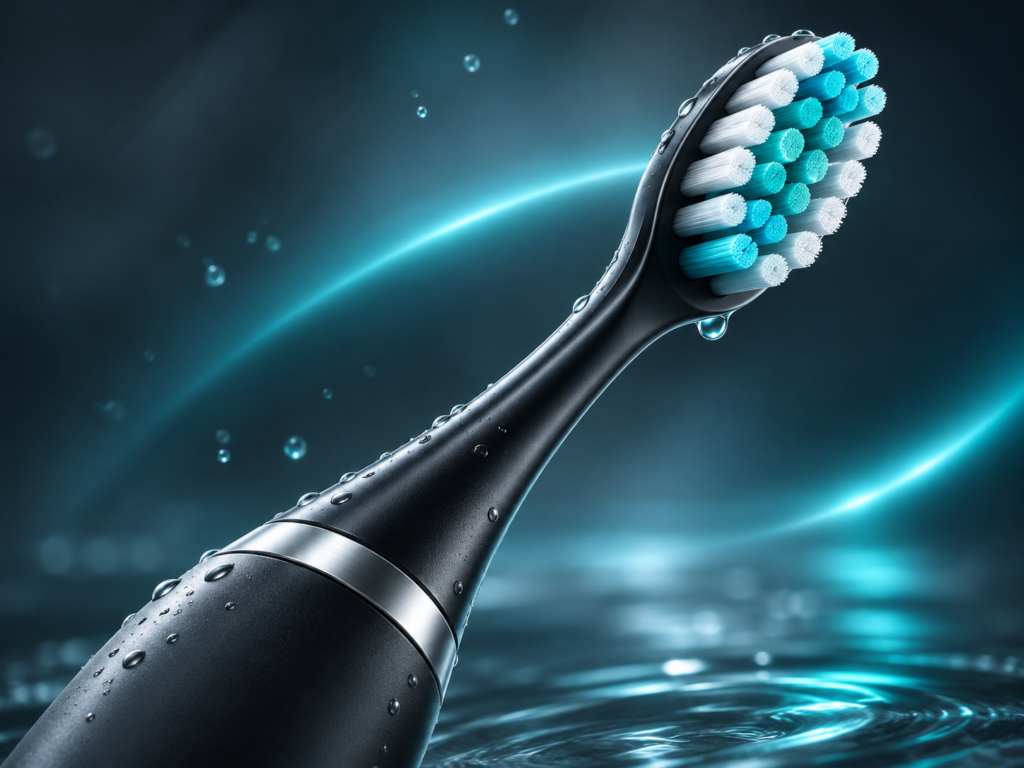
The AquaSonic Black Series PRO uses contoured ProFlex brush heads designed to combine effective surface cleaning with a gentler outer-bristle arrangement.
The central benefit of the AquaSonic Black Series PRO sonic cleaning system is its ability to produce rapid, repetitive bristle movements without requiring users to perform the vigorous back-and-forth scrubbing associated with manual brushing.
With sonic technology, the motor drives the brush head through high-frequency oscillations. When the bristles contact tooth surfaces, this movement helps disrupt dental plaque—a structured microbial biofilm that accumulates on enamel, especially around the gumline and between teeth.
Unlike loose food debris, mature plaque adheres to tooth surfaces. Effective removal therefore requires sufficient mechanical disruption rather than simply exposing the teeth to water, toothpaste, or vibration.
How Sonic Toothbrush Technology Supports Plaque Removal
Sonic cleaning works through two related mechanisms:
Direct mechanical contact: Moving bristles disturb plaque on accessible enamel surfaces. This remains the most important and reliably established mechanism of toothbrush cleaning.
Fluid movement: Rapid brushing motion also generates movement in the surrounding mixture of saliva, water, and toothpaste. Laboratory experiments have demonstrated that fluid forces from some sonic toothbrushes can disturb bacterial deposits beyond immediate bristle contact.
However, this fluid-dynamic effect should not be interpreted as proof that the AquaSonic Black Series PRO can thoroughly clean between teeth without direct brushing or interdental tools. Clinical evidence for substantial plaque removal beyond bristle reach remains more limited than promotional descriptions sometimes suggest.
The practical advantage is better understood as controlled mechanical cleaning supported by high-frequency movement, rather than a guaranteed deep-cleaning effect in every inaccessible area.
Why the ProFlex Brush-Head Design Matters
The AquaSonic toothbrush heads are designed with different bristle characteristics across the cleaning surface.
This arrangement aims to provide stronger contact against accessible tooth surfaces while allowing the surrounding bristles to engage the gumline more gently.
For users who experience discomfort with aggressive brushing, that balance may improve the experience of using a powered toothbrush.
Nevertheless, the design does not eliminate the need for careful technique. Excessive force can compress bristles, increase friction, and contribute to gum abrasion.
Practical Brushing Recommendation
For more consistent results:
- Hold the brush at approximately a 45-degree angle toward the gumline.
- Allow the vibrating bristles to perform the cleaning action without forceful scrubbing.
- Move gradually from one tooth surface to the next, including the inner surfaces of the front teeth.
- Spend adequate time on back molars, where access is often more difficult.
- Continue using dental floss or another appropriate interdental cleaning tool.
HydroPaste Assessment: The AquaSonic Black Series PRO’s sonic technology is a useful mechanical cleaning system, particularly for users transitioning from manual brushing. Its effectiveness should be judged by plaque control, brushing comfort, and consistent coverage—not simply by its advertised vibration frequency.
2. UV Sanitization Advantage: A More Organized Approach to Brush-Head Hygiene
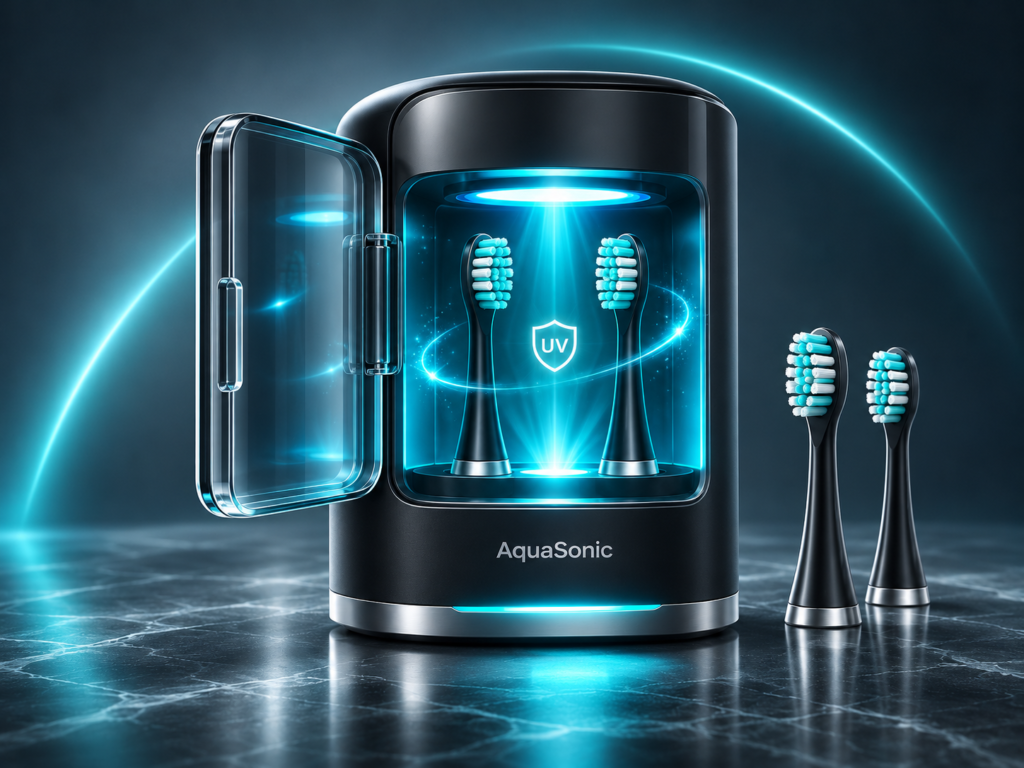
The AquaSonic Black Series PRO UV sanitizing chamber is designed to reduce microbial contamination on stored toothbrush heads between brushing sessions.
The AquaSonic Black Series PRO UV sanitizer introduces a separate hygiene function into the brushing routine: reducing microorganisms that may remain on a brush head after use.
A toothbrush is repeatedly exposed to the oral environment. After brushing, its bristles may retain bacteria, saliva, moisture, and microscopic deposits even after rinsing.
This is not necessarily dangerous. Microbial contamination of toothbrushes is common, and the presence of microorganisms does not automatically establish a risk of infection.
Nevertheless, users who value additional brush-head maintenance may appreciate a system that performs a sanitizing cycle without requiring a separate device.
The Science Behind UV Toothbrush Sanitization
Ultraviolet disinfection works by exposing microorganisms to light at wavelengths capable of damaging biological material essential to their survival and replication.
Its effectiveness depends on several variables, including the UV wavelength, light intensity, exposure duration, microorganism type, and whether the light can reach contaminated surfaces.
This last factor is particularly important for toothbrushes.
Brush heads contain densely arranged bristles that can create shaded areas. Toothpaste residue and moisture may also affect the effectiveness of treatment.
Consequently, a manufacturer’s laboratory germ-reduction percentage should not be assumed to apply equally to every organism or every real-world brushing situation.
A 2026 systematic review and meta-analysis published in the Journal of Evidence-Based Dental Practice examined 41 studies of toothbrush disinfection methods. UV-based methods demonstrated a statistically significant reduction in microbial contamination, although the overall certainty of evidence was rated very low because of study limitations and substantial variation between results.
This supports a measured conclusion: UV sanitization can reduce toothbrush contamination, but its clinical importance for preventing oral disease remains uncertain.
Where the AquaSonic UV System Adds Value
The most defensible benefits are practical:
- Automated maintenance: A dedicated cycle reduces the need to perform a separate sanitizing procedure manually.
- Dedicated storage: The chamber provides a defined location for compatible brush heads.
- Additional microbial reduction: UV exposure may lower contamination when the device is used under suitable conditions.
- Routine consistency: Combining brush storage with automated maintenance may help users maintain a more organized oral-care routine.
The system should not be described as eliminating reinfection cycles or providing complete sterilization.
Important Hygiene Consideration
The American Dental Association recommends thoroughly rinsing toothbrushes, allowing them to air-dry, and replacing them regularly. A UV sanitizer does not remove the need for these practices.
Brush heads should be cleaned and stored according to the manufacturer’s instructions, and users should avoid assuming that placing a visibly dirty brush into a UV chamber will make it hygienically equivalent to a new brush.
HydroPaste Assessment: UV sanitization is an optional but potentially useful feature for buyers who want automated brush-head maintenance. Its strongest advantage is added convenience and potential contamination reduction, not proven prevention of oral infections.
3. Value Stack: Lower Initial Accessory Costs and More Complete Ownership
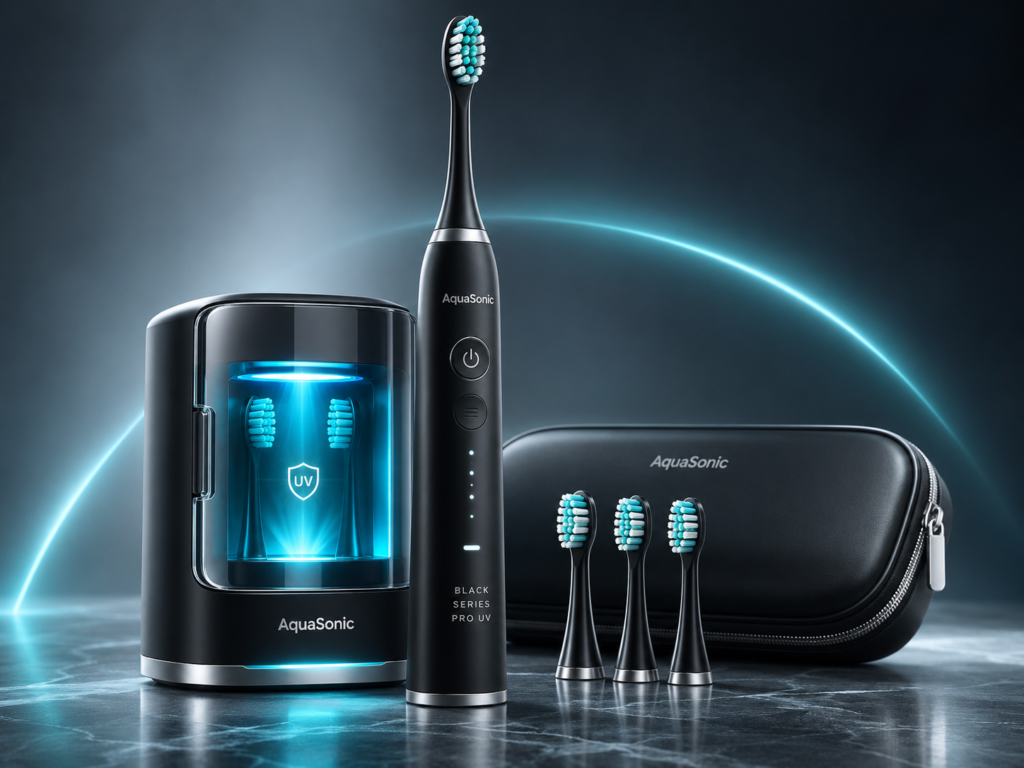
The AquaSonic Black Series PRO UV combines rechargeable sonic brushing, replacement heads, protective travel storage, and UV maintenance accessories in one package.
One of the strongest commercial advantages of the AquaSonic Black Series PRO is its approach to accessory bundling.
When evaluating an electric toothbrush, the purchase price of the handle represents only one component of long-term ownership.
Replacement brush heads, travel accessories, charging equipment, and potential maintenance costs can affect the total amount consumers spend over several years.
A brush that appears inexpensive initially may become less economical if replacement heads carry high recurring costs.
Understanding the Value of Six Included AquaSonic Toothbrush Heads
The six included ProFlex heads provide an extended initial supply, reducing the need to purchase replacements immediately.
Assuming a three-month replacement schedule, the six supplied heads represent approximately 18 months of brush-head use for one person.
This does not mean replacement heads are free indefinitely, and users should change them sooner if wear becomes visible.
However, it improves the initial ownership proposition by allowing buyers to postpone a common recurring purchase.
What the Complete Package Means Financially
| Included Component | Practical Ownership Benefit |
|---|---|
| Six AquaSonic toothbrush heads | Delays early spending on replacement heads |
| Protective travel case | Avoids an immediate separate case purchase |
| UV sanitizing dock | Adds a hygiene feature without buying a standalone UV device |
| Wireless charging station | Provides a dedicated charging and storage location |
| Multiple brushing settings | Allows one handle to accommodate different brushing preferences |
The financial value of the bundle depends on current retail prices, replacement-head availability, warranty coverage, and how frequently the accessories are actually used.
A buyer who never uses the UV sanitizer, for example, should not assign it the same value as someone who uses it regularly.
AquaSonic vs Sonicare: Comparing Total Value
For shoppers investigating AquaSonic vs Sonicare, the relevant financial comparison goes beyond the price displayed at checkout.
Some Philips Sonicare packages include fewer replacement heads but provide features such as pressure feedback or more specialized brush-head options, depending on the model.
AquaSonic places greater emphasis on supplying additional accessories at the point of purchase.
The better-value system therefore depends on what the user needs: additional accessories and lower initial replacement costs, or particular brushing-feedback features.
HydroPaste Assessment: The AquaSonic Black Series PRO UV’s bundled accessories are a meaningful purchase advantage, especially for users buying their first rechargeable toothbrush. The clearest savings opportunity comes from the included replacement-head supply rather than assumptions about superior cleaning performance.
4. Multi-Mode Personalization: More Control Over Brushing Comfort
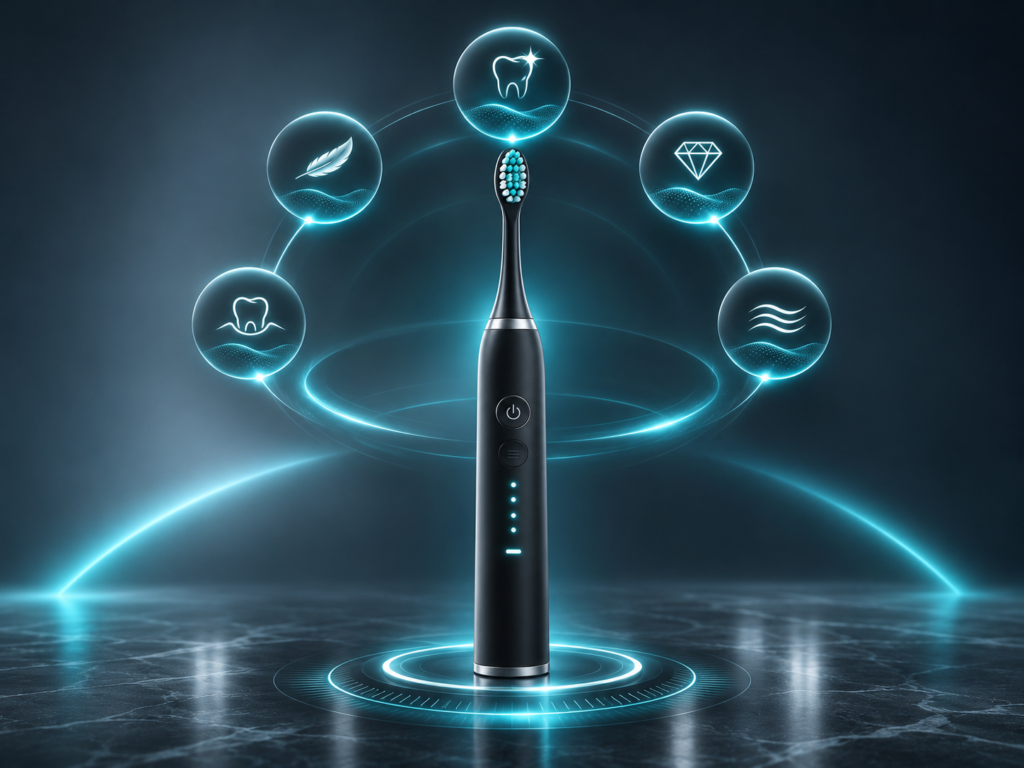
The AquaSonic Black Series PRO offers five brushing modes to accommodate differences in cleaning preferences, vibration tolerance, and everyday oral-care routines.
Not everyone experiences an electric toothbrush in the same way.
Some users prefer a strong, noticeable vibration, while others find high-intensity brushing uncomfortable, particularly around exposed root surfaces, sensitive teeth, or irritated gums.
The benefit of adjustable brushing modes is that they allow users to modify the brushing sensation rather than abandon powered brushing altogether.
How to Choose the Right AquaSonic Brushing Mode
| Mode | Primary Purpose | Practical Consideration |
|---|---|---|
| Clean | Everyday plaque control | A reasonable starting setting for routine brushing |
| Soft | Reduced brushing intensity | May improve comfort for vibration-sensitive users |
| Whiten | Surface-stain management | Can support polishing but does not chemically bleach teeth |
| Massage | Modified pulsing sensation | Provides a different gumline brushing experience |
| Deep Clean | More intensive brushing sensation | Not necessarily more effective for every user |
Sensitive Teeth and Gum Comfort
The Soft setting may be especially useful for individuals who experience discomfort when transitioning from a manual toothbrush to sonic brushing.
However, sensitivity has multiple possible causes, including exposed dentin, gum recession, enamel wear, cavities, and dental restorations.
Changing brushing intensity may make cleaning more comfortable, but it does not diagnose or resolve the underlying cause of persistent sensitivity.
Whitening Without Chemical Bleaching
The AquaSonic Whiten setting is intended to support removal of surface deposits.
This is different from peroxide-based whitening, which works through chemical oxidation of stain molecules.
A whitening toothbrush mode may help reduce external staining when used with an appropriate toothpaste and consistent technique, but it cannot reliably alter the natural internal color of teeth.
For readers exploring the differences between surface cleaning, whitening treatments, and enamel appearance, it is important to distinguish cosmetic polishing from actual changes to tooth color.
Why More Modes Do Not Automatically Mean Better Cleaning
The number of settings available on an electric toothbrush is not an independent measure of clinical effectiveness.
A user who brushes thoroughly and gently with Clean mode may achieve better daily plaque control than someone who frequently switches between multiple modes but misses important surfaces.
The meaningful advantage is adaptability: users can select a comfortable setting and maintain a consistent routine.
HydroPaste Assessment: Multi-mode personalization is most valuable when it improves tolerance and consistency. The AquaSonic Black Series PRO gives users additional control, but its settings should be treated as comfort and movement options rather than specialized dental treatments.
5. Long Battery Life: Rechargeable Convenience for Everyday Use and Travel
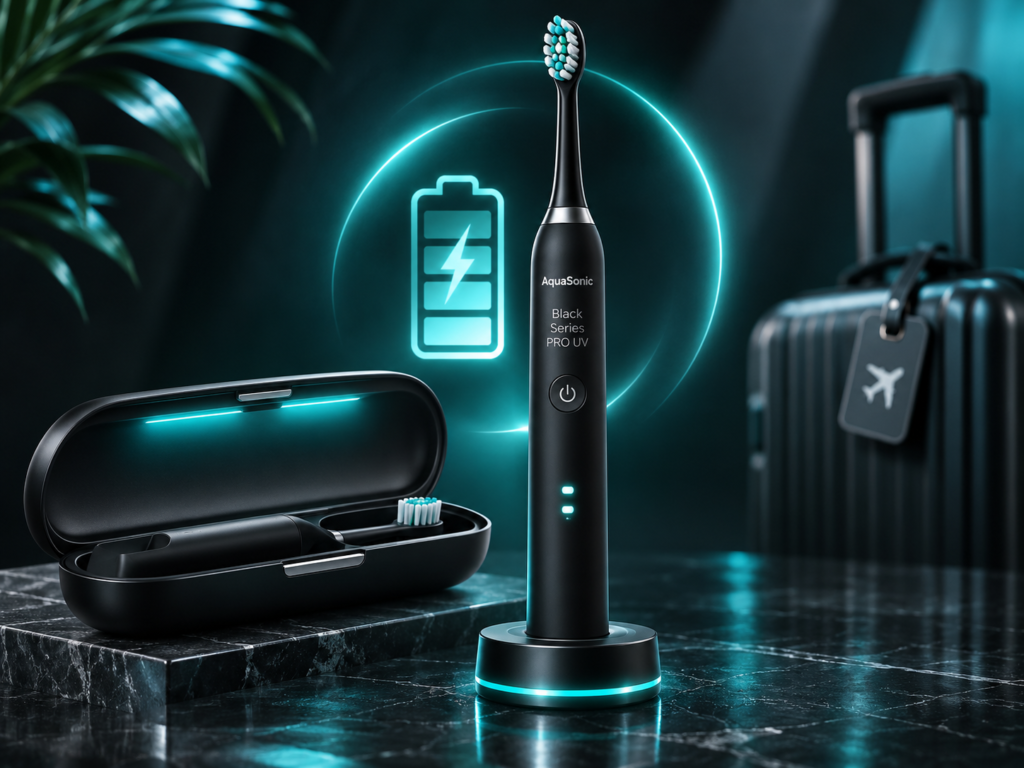
Battery performance may be less visually impressive than a UV sanitizer or high-speed sonic motor, but it can have a greater influence on day-to-day satisfaction.
An electric toothbrush that requires frequent charging creates an additional maintenance task. A rechargeable model with endurance measured in weeks can make twice-daily brushing more convenient, particularly for users who travel or prefer a less cluttered bathroom.
The AquaSonic Black Series PRO is promoted in retail descriptions as offering battery endurance of up to approximately 30 days, although actual performance depends on how it is used.
What Influences AquaSonic Toothbrush Battery Life?
Battery endurance is affected by several factors:
- Selected brushing mode: Different motor settings may consume different amounts of power.
- Brushing frequency: Three sessions per day use more energy than two.
- Session duration: Longer brushing periods increase total operating time.
- Battery age: Rechargeable batteries gradually lose capacity with use.
- Charging conditions: Temperature and charging habits can influence long-term battery performance.
The advertised maximum should therefore be treated as an estimate under particular usage conditions rather than a guaranteed result for every owner.
The Travel Advantage
For short trips, extended battery endurance can eliminate the need to pack a charger.
The protective case also helps keep the handle and compatible heads organized in luggage, while reducing exposure to dirt and accidental damage.
It is still important to rinse and dry the brush appropriately before storage. A sealed travel case is useful for protection during transportation, but it should not become the permanent storage environment for a wet toothbrush.
Wireless Charging: Convenience With a Practical Trade-Off
At home, the charging station provides a simple place to return the toothbrush after use.
However, wireless charging does not mean the station itself operates without an electrical connection.
The UV charging dock also occupies more countertop space than a small standalone charger, making it potentially less convenient for minimalist bathrooms.
HydroPaste Assessment: The main battery-related advantage is reduced charging frequency and improved portability. Buyers should prioritize dependable real-world endurance and convenient charging over an advertised maximum that may vary with daily usage.
AquaSonic Black Series PRO UV: Which Benefits Matter Most?
The five benefits address different aspects of electric toothbrush ownership, but their practical importance varies from person to person.
| Key Benefit | Most Relevant For | Important Limitation |
|---|---|---|
| Sonic cleaning performance | Users seeking powered plaque-removal assistance | Technique and complete surface coverage remain essential |
| UV brush-head sanitization | Buyers interested in automated hygiene maintenance | No established proof of reduced oral infection risk |
| Bundled accessory value | Budget-conscious buyers and first-time electric toothbrush users | Long-term costs depend on compatible head prices |
| Five brushing modes | Users wanting adjustable intensity and comfort | Modes do not replace professional treatment |
| Extended battery convenience | Travelers and users wanting less frequent charging | Actual endurance varies with usage |
AquaSonic Black Series PRO UV Risks & Limitations: What Buyers Should Know Before Purchasing
The AquaSonic Black Series PRO UV combines several desirable electric toothbrush features, but its comprehensive accessory package should not obscure the compromises that accompany its design.
For buyers evaluating an AquaSonic toothbrush against established alternatives, the most important limitations concern brushing-pressure control, the absence of connected feedback, the practical value of UV sanitization, replacement-head compatibility, and long-term serviceability.
Some of these trade-offs are relatively minor. Others could directly influence whether the toothbrush is appropriate for an individual’s oral-health needs.
A balanced AquaSonic Black Series PRO UV review should therefore distinguish between features that are missing, limitations inherent to the technology, and performance characteristics that have not been independently established.
1. No Pressure Sensor: The Most Important Brushing-Control Limitation
One of the most significant omissions in the AquaSonic Black Series PRO is the absence of an advertised automatic brushing-pressure sensor.
A pressure sensor monitors the force applied against tooth surfaces and alerts the user when brushing becomes unnecessarily aggressive. Depending on the competing model, this feedback may take the form of a colored indicator, a change in vibration, or a notification through a connected application.
The AquaSonic Black Series PRO provides adjustable brushing settings but does not advertise comparable automatic pressure warnings.
Why does this matter?
Excessive brushing pressure can flatten bristles against enamel and gingival tissues, potentially increasing friction and contributing to soft-tissue abrasion. Brushing aggressively may also cause discomfort, particularly around exposed root surfaces or areas affected by gum recession.
For some users, a powered toothbrush can create a misleading sensation that stronger pressure produces more effective cleaning.
In reality, increasing force does not necessarily improve plaque removal.
The absence of pressure feedback is therefore especially relevant for:
- Individuals who frequently notice bent or flattened toothbrush bristles.
- People with existing gum recession or exposed root surfaces.
- Users who experience soreness after brushing.
- First-time electric toothbrush users who have difficulty judging pressure.
- Anyone whose dentist has specifically recommended pressure-controlled brushing.
How to minimize the risk: Use gentle contact and allow the powered bristles to perform their intended movement. If maintaining appropriate pressure is difficult, consider an electric toothbrush with an integrated pressure-warning system.
HydroPaste Editorial Assessment: This is the AquaSonic Black Series PRO UV’s most consequential missing feature for users who habitually brush too aggressively. Multiple cleaning settings cannot fully substitute for real-time pressure feedback.
2. No Bluetooth Connectivity, AI Coaching, or Brushing-Coverage Tracking
The AquaSonic Black Series PRO is primarily a self-contained electric toothbrush rather than a connected oral-health monitoring device.
It does not advertise the advanced digital capabilities available in selected premium electric toothbrushes, including Bluetooth synchronization, smartphone-based brushing guidance, position detection, or personalized coverage reports.
This limitation becomes more relevant when comparing AquaSonic vs Sonicare or evaluating premium Oral-B electric toothbrushes.
Connected brushing systems may help certain users recognize behavioral patterns that are difficult to identify independently, such as repeatedly missing the same tooth surfaces or spending insufficient time in particular areas.
Without such monitoring, the AquaSonic relies on the user’s own attention and technique.
Its built-in timing system can structure a brushing session, but it cannot independently confirm that every tooth surface has been cleaned adequately.
Who might find this limiting?
Technology-focused buyers, users who want detailed brushing records, and individuals who benefit from visual feedback when learning a new brushing technique.
However, the absence of an app is not necessarily a disadvantage for everyone. Connected features create additional complexity, and their usefulness depends on whether the owner consistently uses them.
HydroPaste Editorial Assessment: AquaSonic sacrifices advanced feedback in favor of simpler operation. This is a meaningful limitation for users seeking coaching, but a comparatively minor concern for buyers who already maintain an effective brushing technique.
3. UV Sanitization Has Limitations Beyond the Manufacturer’s Germ-Reduction Claims
The UV sanitizing chamber is a central selling point of the AquaSonic Black Series PRO UV, but consumers should evaluate its claims carefully.
AquaSonic’s published marketing materials describe high percentages of microbial reduction. However, its current product page contains inconsistent percentages, including 99.9% and 99.99%.
These figures should not be treated as interchangeable or universally applicable.
The practical effectiveness of a UV toothbrush sanitizer depends on operating conditions, brush-head positioning, maintenance, and the manufacturer’s validated testing methodology.
More importantly, microbial reduction on a brush head is not equivalent to demonstrated protection against oral disease.
Three limitations are particularly relevant:
Laboratory performance may differ from household performance. Controlled microbial testing does not necessarily reproduce every condition encountered in a bathroom.
UV exposure is not equivalent to sterilization. A sanitized toothbrush head should not be described as completely free from microorganisms.
Clinical protection has not been established. The ability to reduce microbial contamination does not independently prove that the device prevents gingivitis, cavities, halitosis, or oral infections.
Buyers should also recognize that the UV chamber requires proper maintenance and use according to the manufacturer’s instructions.
HydroPaste Editorial Assessment: The UV station offers an additional maintenance function, but consumers should not pay a substantial premium solely on the assumption that it produces better oral-health outcomes than conventional toothbrush care.
4. Replacement-Head Compatibility Requires Attention
The AquaSonic Black Series PRO toothbrush heads are replaceable, but buyers should not assume that every AquaSonic replacement-head package fits every AquaSonic handle.
The brand sells multiple product families and replacement-head designs, making compatibility verification an important part of long-term ownership.
The manufacturer currently lists ProFlex replacement heads as compatible with the Black Series PRO and several other AquaSonic models.
Nevertheless, shoppers should confirm the specific product designation before buying third-party or unfamiliar replacement heads.
This is particularly important when purchasing through marketplaces where product listings may use broad descriptions such as “AquaSonic-compatible toothbrush heads.”
An incorrectly fitting replacement head may not attach securely or operate as intended.
What should buyers check?
- The exact AquaSonic toothbrush model and product designation.
- Whether the replacement package explicitly identifies the Black Series PRO as compatible.
- The seller’s authenticity and return policy.
- The available pack size and cost per replacement.
- Whether the replacement heads are genuine AquaSonic products or third-party alternatives.
Compatibility is also a long-term purchasing consideration. The value of an electric toothbrush depends partly on whether suitable replacement heads remain reasonably accessible over its useful life.
HydroPaste Editorial Assessment: Replacement-head compatibility is manageable because AquaSonic offers genuine ProFlex replacements, but buyers should verify fit rather than assuming universal interchangeability.
5. The UV Charging Dock Creates Additional Countertop and Maintenance Requirements
The AquaSonic Black Series PRO UV uses a combined charging and sanitizing station that is more elaborate than a basic charging stand.
This design introduces practical considerations for users with limited bathroom space or minimal countertop storage.
A compact charging base generally requires relatively little surface area. A UV sanitizing chamber must also accommodate the brush heads and their associated storage mechanism.
As a result, buyers should consider the physical space available near a suitable electrical outlet.
The dock also creates another component that must be maintained and kept in appropriate operating conditions.
Water resistance is an important distinction.
The AquaSonic Black Series PRO handle is advertised with an IPX7 water-resistance rating. That rating should not be extended automatically to the charging station or its electrical components.
The dock should be placed on a stable, appropriately dry surface and used according to the manufacturer’s safety instructions.
Users should also avoid exposing their eyes or skin to operating UV light and should not attempt to bypass any protective enclosure or safety mechanism.
HydroPaste Editorial Assessment: The combined dock is practical for users who want centralized toothbrush storage, but buyers prioritizing compactness may prefer a simpler charger without an additional sanitizing chamber.
6. Long-Term Durability Has Not Been Independently Established
A major consideration when purchasing a rechargeable electric toothbrush is how reliably it continues operating after extended daily use.
The AquaSonic Black Series PRO combines an internal rechargeable battery, electronic controls, a sonic motor, and a separate powered sanitizing station.
Each represents a component that may eventually require servicing or replacement.
However, the presence of more electronic components does not establish that the product is less durable than a competing toothbrush.
Without controlled long-term testing, it would be inappropriate to claim that the AquaSonic Black Series PRO has inferior build quality compared with Philips Sonicare or Oral-B.
The more defensible limitation is the absence of sufficient independent, product-specific durability evidence to establish comparative reliability over several years.
Areas worth monitoring during ownership include:
- Consistency of the motor’s operation.
- Battery capacity after repeated charging cycles.
- Secure attachment of replacement heads.
- Reliability of the control buttons.
- Charging-dock functionality.
- Continued operation of the UV sanitizing system.
AquaSonic currently advertises a one-year product warranty and a 30-day risk-free trial on its direct product listing.
However, warranty eligibility, exclusions, return procedures, and third-party retailer conditions should be checked before purchasing.
HydroPaste Editorial Assessment: The AquaSonic Black Series PRO should not be described as having inferior durability without supporting tests. Its main ownership uncertainty is how the complete system performs over several years of routine use.
7. Higher Sonic Speed Does Not Guarantee Superior Clinical Performance
The AquaSonic Black Series PRO is advertised with a high-frequency motor producing up to 50,000 vibrations per minute.
Although this specification is useful for distinguishing product configurations, buyers should avoid interpreting it as a direct measure of cleaning superiority.
Brushing effectiveness depends on the interaction between motor movement, brush-head design, bristle properties, user technique, and the surfaces being cleaned.
A toothbrush with a lower advertised vibration rate may still produce excellent results when its design and brushing technique are appropriate.
This distinction becomes important when comparing the AquaSonic Black Series PRO against other sonic toothbrushes or oscillating-rotating systems.
Without independent head-to-head trials involving the specific models, a higher vibration figure cannot establish superior plaque reduction, gingivitis prevention, or whitening performance.
HydroPaste Editorial Assessment: Motor speed is a product specification, not a standalone clinical performance score. Buyers should not pay more exclusively for a larger vibrations-per-minute figure.
8. Product Listings and Specifications Should Be Checked Carefully
An additional concern identified during this review is the consistency of published product information.
AquaSonic’s current Black Series PRO product page describes five cleaning modes in its main product information, while some lower sections still refer to four modes.
The same page also displays different UV germ-reduction percentages.
Such inconsistencies do not independently demonstrate a product defect, but they make it important for buyers to confirm exactly which configuration they are purchasing.
This is especially relevant because the AquaSonic Black Series family includes different models and accessory configurations.
Before completing a purchase, consumers should check the product model number, included charging station, replacement-head type, advertised features, and applicable warranty.
HydroPaste Editorial Assessment: Clear and internally consistent product specifications are important for informed purchasing. Conflicting marketing details should be clarified rather than interpreted as evidence of additional features.
AquaSonic Black Series PRO UV: Risk and Limitation Summary
| Limitation | Buyer Impact | Recommended Action |
|---|---|---|
| No advertised pressure sensor | High for aggressive brushers | Consider a pressure-sensing model |
| No advanced brushing analytics | Moderate for users needing coaching | Compare connected toothbrushes |
| UV effectiveness varies by conditions | Moderate | Treat sanitization as supplementary |
| Replacement-head compatibility | Manageable | Verify model-specific compatibility |
| Larger charging and UV station | Moderate for small bathrooms | Assess countertop space |
| Limited independent durability evidence | Uncertain | Review warranty and retailer policies |
| Motor speed is not a clinical ranking | Low if expectations are realistic | Prioritize technique and relevant features |
| Inconsistent published specifications | Moderate before purchase | Confirm the exact model and package |
Buyer impact reflects HydroPaste’s editorial assessment of purchasing considerations, not measured defect rates or independently tested product-failure probabilities.
What Should You Check Before Buying the AquaSonic Black Series PRO UV?
Before purchasing, consider the following questions:
- Do you need automatic brushing-pressure feedback? If excessive pressure is a recurring problem, a pressure-sensing toothbrush may better address your needs.
- Will you actually use the UV sanitizer? If not, compare the price and convenience of a simpler rechargeable toothbrush.
- Are compatible replacement heads available at a reasonable price? Check the genuine ProFlex range and confirm model compatibility.
- Does the charging station fit your bathroom setup? Consider counter space, access to power, and safe placement away from running water.
- Are the warranty and return terms acceptable? Confirm the terms offered by the actual seller, particularly when purchasing from a third-party marketplace.
These checks help distinguish features that contribute to everyday value from features that may be unnecessary for a particular buyer.
The central purchasing question is whether its limitations match the buyer’s individual brushing habits, oral-health needs, and expectations for long-term ownership.
Cost Expectations
Upfront Cost
- Typically mid-range (~$40–$80 depending on region)
Long-Term Cost
- Replacement heads every 3 months
- Still cheaper than Philips Sonicare or Oral-B ecosystems
Compared to alternatives, this is a high feature-per-dollar device.
AquaSonic Black Series PRO UV Performance Breakdown: Cleaning Efficiency, Comfort & Hygiene
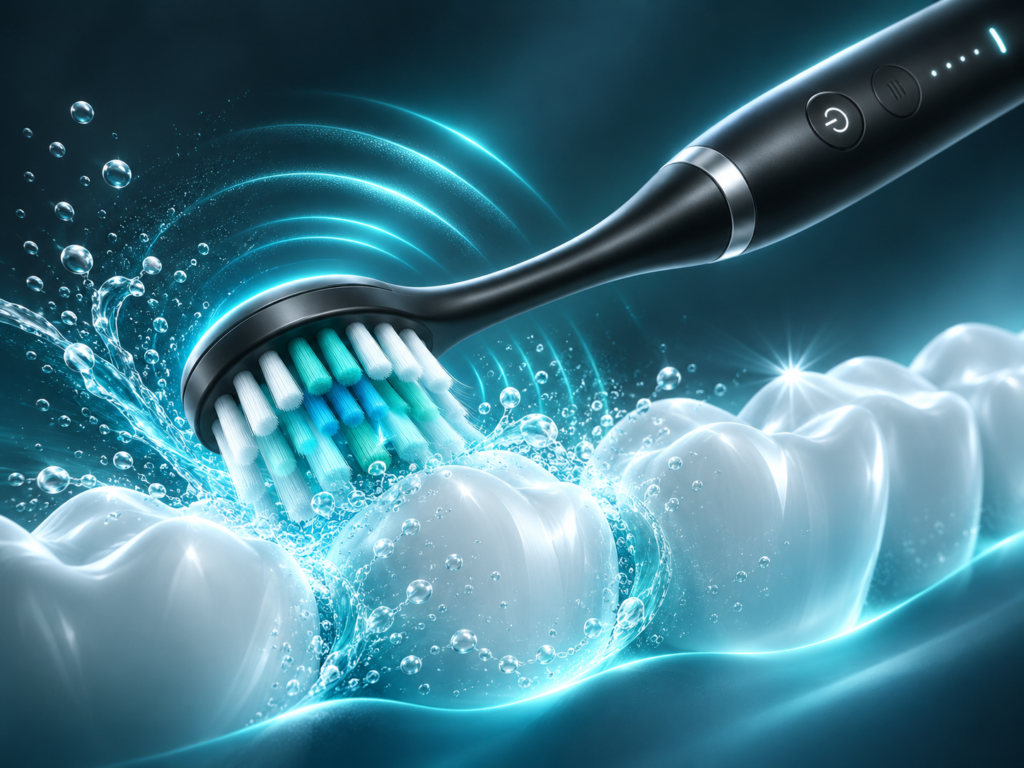
The true performance of an electric toothbrush is determined not by how many features it advertises, but by how effectively those features contribute to a sustainable oral-care routine.
For the AquaSonic Black Series PRO UV, performance evaluation involves four interconnected areas: mechanical plaque removal, surface-stain management, brushing comfort, and the practical effectiveness of its integrated UV hygiene system.
Its advertised 50,000-vibrations-per-minute motor provides a useful starting point for understanding its engineering capabilities. However, motor output alone cannot establish that the AquaSonic Black Series PRO removes more plaque, produces greater whitening, or protects gums more effectively than competing electric toothbrushes.
A meaningful review must instead examine what the available evidence supports, where performance depends on user technique, and which advertised advantages have yet to be demonstrated through independent product-specific clinical comparisons.
Conceptual illustration of the AquaSonic Black Series sonic cleaning mechanism, showing vibration-driven fluid movement and brush-head interaction with tooth surfaces.
1. Cleaning Efficiency: How Effectively Does the AquaSonic Black Series PRO Remove Plaque?
Plaque-removal efficiency is arguably the most important performance measure for any electric toothbrush.
Dental plaque is a structured bacterial biofilm that continuously develops on exposed tooth surfaces. When it accumulates around the gingival margin, it can contribute to inflammation, bleeding, and the development of gingivitis.
The AquaSonic Black Series PRO toothbrush uses high-frequency sonic movement to support mechanical disruption of this biofilm during routine brushing.
However, the effectiveness of any brushing session depends on three essential variables:
Surface coverage: Whether the bristles reach all accessible outer, inner, and chewing surfaces.
Contact quality: Whether the bristles engage tooth surfaces without excessive force.
Cleaning duration: Whether sufficient time is spent brushing each region of the mouth.
The Two-Minute Cleaning Benchmark
The AquaSonic Black Series PRO includes a two-minute brushing timer with 30-second pacing intervals.
This timing structure is clinically relevant because insufficient brushing duration is a common limitation of everyday oral hygiene.
A 2025 systematic review and meta-analysis examining plaque removal after one-minute and two-minute brushing sessions found that two minutes produced significantly greater plaque-score reductions for both manual and powered toothbrushes.
The findings support the value of structured brushing time, although they do not establish a specific plaque-removal percentage for the AquaSonic Black Series PRO.
The practical implication is that its timer can help users achieve the recommended brushing duration, provided they distribute their attention appropriately across the mouth.
A complete two-minute session is more meaningful than simply operating the toothbrush for two minutes while repeatedly cleaning the same accessible front teeth.
Where Cleaning Performance May Vary
| Oral Surface | Performance Consideration | Recommended Approach |
|---|---|---|
| Front tooth surfaces | Generally accessible to sonic bristles | Use controlled, gentle contact |
| Back molars | More difficult to reach consistently | Move slowly around chewing and rear surfaces |
| Gumline | Plaque accumulation can contribute to gingivitis | Angle bristles gently toward the gingival margin |
| Inner tooth surfaces | Frequently overlooked during brushing | Position the head carefully behind the teeth |
| Interdental spaces | Limited access for conventional toothbrush bristles | Use floss or suitable interdental brushes |
| Dental restorations | Cleaning access varies by restoration shape | Follow dentist-specific recommendations |
AquaSonic’s elongated brush-head format may feel familiar to individuals accustomed to manual brushing.
Nevertheless, familiarity does not necessarily mean superior cleaning performance. The user’s ability to guide the brush accurately remains a significant determinant of results.
Performance interpretation: The AquaSonic Black Series PRO offers the mechanical capabilities expected from a modern sonic toothbrush, but a precise product-specific plaque-removal percentage cannot be established from motor specifications alone.
2. Whitening Performance: Can the AquaSonic Toothbrush Improve Tooth Brightness?
The AquaSonic Black Series PRO includes a Whiten setting intended to support removal of external staining.
To assess its potential performance, it is important to distinguish between extrinsic stains, which develop on the outer tooth surface, and intrinsic discoloration, which originates within tooth structures.
Extrinsic staining may result from repeated exposure to coffee, tea, tobacco, and strongly pigmented foods.
Some deposits can be reduced through effective mechanical brushing and appropriate toothpaste formulations.
Intrinsic discoloration, by contrast, generally cannot be corrected by increasing toothbrush vibration.
How Whitening Mode Should Be Evaluated
The most appropriate performance outcome for a whitening toothbrush mode is the reduction of removable surface deposits—not the number of shades a tooth becomes lighter.
AquaSonic’s Whiten mode changes the brushing experience, but publicly advertised motor specifications do not establish how much additional stain removal it delivers compared with its standard cleaning mode.
The visible effect also depends on the user’s starting tooth color, stain severity, toothpaste, brushing habits, and exposure to staining substances.
| Whitening Goal | What the AquaSonic Black Series PRO May Support | What It Cannot Reliably Deliver |
|---|---|---|
| Coffee and tea stains | Mechanical removal of some external deposits | Guaranteed removal of persistent discoloration |
| Surface polishing | Cleaner-looking enamel surfaces | Permanent enamel color changes |
| Daily brightness maintenance | Regular disruption of stain-forming deposits | Professional bleaching-level whitening |
| Intrinsic discoloration | General cleaning of affected teeth | Chemical alteration of internal tooth pigments |
| Whitening longevity | Routine removal of new surface deposits | Prevention of all future staining |
Expected Results Over Time
A user with visible removable deposits may notice a cleaner surface appearance after improving brushing consistency.
Someone whose teeth are naturally darker, or whose discoloration is internal, may experience little visible whitening despite using the Whiten setting regularly.
This distinction is especially relevant for buyers searching for the best AquaSonic whitening toothbrush, because an electric toothbrush is fundamentally a mechanical cleaning device rather than a professional whitening treatment.
Performance interpretation: The AquaSonic Black Series PRO may support maintenance of a brighter-looking smile through regular surface cleaning. However, there is insufficient product-specific evidence to promise a particular whitening improvement or timeframe.
3. Comfort and Gum Compatibility: Evaluating the AquaSonic ProFlex Experience
Cleaning performance and comfort should not be assessed separately.
An electric toothbrush that feels excessively aggressive may encourage users to shorten brushing sessions, avoid sensitive areas, or abandon powered brushing altogether.
The AquaSonic Black Series PRO offers a combination of selectable intensity settings and contoured ProFlex heads intended to accommodate different preferences.
However, the more important issue is whether the device allows users to maintain effective bristle contact without applying damaging pressure.
Brushing Pressure and Soft-Tissue Tolerance
The AquaSonic Black Series PRO does not advertise an automatic pressure-warning sensor.
This omission is relevant because powered vibration can create the impression that stronger contact produces better cleaning.
In practice, excessive pressure may cause bristles to flatten against enamel and gums, potentially increasing soft-tissue abrasion without improving plaque removal.
The American Dental Association recommends gentle pressure and soft bristles to help reduce the risk of gingival injury.
Users should therefore assess comfort by observing whether brushing causes persistent soreness, gum irritation, or visible bristle distortion.
Comfort Across Different User Profiles
| User Profile | Expected Practical Fit | Important Consideration |
|---|---|---|
| First-time electric toothbrush user | Potentially suitable | Initial vibration sensation may require adjustment |
| User with mildly sensitive teeth | Potentially suitable | A gentler setting may improve tolerance |
| User with gum recession | Conditional | Avoid excessive pressure and seek individualized advice |
| Aggressive brusher | Less ideal | No advertised automatic pressure warning |
| User with braces | Potentially suitable | Cleaning around brackets still requires careful access |
| User with persistent gum bleeding | Requires dental assessment | A toothbrush mode cannot diagnose or treat periodontal disease |
ProFlex Head Comfort in Practice
AquaSonic describes the ProFlex design as having firmer central bristles and softer outer bristles.
This arrangement is intended to support surface cleaning while moderating contact around surrounding oral tissues.
However, published comparative clinical data establishing the ProFlex head’s superiority over specific Sonicare or Oral-B brush heads are not readily established by the advertised specifications.
For individuals with significant sensitivity or recession, brush-head softness, contact pressure, and professional advice should take precedence over promotional claims about specialized bristle geometry.
Performance interpretation: The AquaSonic Black Series PRO provides flexibility for users who prefer adjustable sonic intensity. Its primary comfort limitation is the absence of automated feedback when brushing pressure becomes excessive.
4. Hygiene Performance: Does the AquaSonic UV Sanitizer Make a Meaningful Difference?
The AquaSonic Black Series PRO UV toothbrush sanitizer is one of the system’s most recognizable features, but evaluating its effectiveness requires separating microbiological performance from clinical outcomes.
The manufacturer advertises high germ-reduction percentages for its UV system.
These figures should be treated as manufacturer claims rather than independently verified outcomes across all microorganisms and household conditions.
In a real-world environment, UV exposure effectiveness can be influenced by:
- Residual toothpaste or biological material on the bristles.
- Brush-head positioning inside the chamber.
- Shadowing between densely packed bristle clusters.
- Lamp intensity and exposure duration.
- Differences in microbial resistance to ultraviolet exposure.
An important scientific distinction is that reducing microorganisms on a toothbrush is not equivalent to demonstrating that users experience fewer dental infections or better gum health.
What Current Research Suggests
A 2026 systematic review and meta-analysis published in the Journal of Evidence-Based Dental Practice evaluated toothbrush disinfection methods across 41 studies.
UV-based interventions demonstrated statistically significant reductions in microbial contamination.
However, the authors rated the overall certainty of evidence as very low because of methodological limitations and considerable variation between studies.
The research supports the potential effectiveness of UV-based toothbrush disinfection as a category, but it does not establish the exact performance of the AquaSonic chamber in every household setting.
UV Hygiene Performance Assessment
| Evaluation Area | Evidence-Based Interpretation |
|---|---|
| Microbial reduction | UV-based methods can reduce toothbrush contamination |
| Complete sterilization | Not established for ordinary household UV toothbrush sanitizers |
| Protection against oral infections | Clinical preventive benefit remains unproven |
| Brush-head cleanliness | Physical rinsing remains necessary |
| Storage convenience | Dedicated chamber provides organized storage |
| Long-term hygiene outcomes | More product-specific clinical research is needed |
For consumers considering the AquaSonic Black Series PRO primarily because of its UV feature, the most defensible advantage is the convenience of integrated brush-head maintenance.
Performance interpretation: The UV chamber is a distinctive supplementary feature, but it should not be treated as evidence that the AquaSonic toothbrush prevents reinfection or produces superior oral-health outcomes compared with a properly cleaned and air-dried conventional toothbrush.
5. Performance Consistency: What Matters After the First Few Weeks?
A strong initial brushing experience does not necessarily guarantee consistent performance over months or years.
Long-term satisfaction with an electric toothbrush depends on factors that are often overlooked in short product demonstrations.
These include the condition of replacement heads, battery reliability, charging behavior, handle durability, and the ease of obtaining compatible accessories.
The AquaSonic Black Series PRO uses a rechargeable system and replaceable ProFlex heads, making routine maintenance central to its long-term performance.
Four Factors Th at Influence Long-Term Results
Bristle condition: Worn bristles can lose their original shape and become less effective at maintaining controlled surface contact.
Battery condition: Rechargeable battery performance may gradually decline with age and repeated charging cycles.
Cleaning consistency: Improvements are more likely to come from maintaining a reliable routine than from frequently changing settings.
Accessory availability: Continued access to compatible AquaSonic toothbrush heads is important for preserving the usefulness of the handle.
These factors are particularly relevant when evaluating an electric toothbrush as a multi-year purchase.
The manufacturer offers a one-year limited warranty and a 30-day risk-free trial on its direct product listing. Buyers purchasing through third-party retailers should verify the applicable return and warranty conditions.
Performance interpretation: The AquaSonic Black Series PRO has a practical maintenance model, but its long-term mechanical reliability cannot be established without extended, independent durability testing.
AquaSonic Black Series PRO UV: Use Case Positioning and Market Value
The AquaSonic Black Series PRO UV is positioned most appropriately as a feature-rich, mid-priced sonic toothbrush system rather than a flagship connected brushing platform.
The manufacturer’s currently listed price of approximately $79.95 for the UV-equipped Black Series Pro places it below $100 at that retailer, although pricing, promotions, and availability can change.
Its market appeal is built around providing conventional powered brushing capabilities alongside features that emphasize storage, hygiene maintenance, and accessory convenience.
Where Does AquaSonic Fit Among Premium Electric Toothbrushes?
The electric toothbrush market can be broadly divided into three functional categories:
| Category | Typical Product Priorities | AquaSonic Black Series PRO UV Position |
|---|---|---|
| Entry-level rechargeable | Core motor, basic timer, simple charging | Offers more integrated accessories and settings |
| Feature-rich mid-range | Multiple modes, rechargeable convenience, accessory value | Closest competitive positioning |
| Premium connected systems | Pressure feedback, app coaching, position tracking, advanced analytics | Lacks the connected feedback features offered by selected flagship models |
These categories describe product functionality rather than scientifically validated cleaning rankings.
An expensive connected toothbrush is not automatically more effective for every user, while a less expensive toothbrush should not be assumed to deliver equivalent feedback or monitoring capabilities.
AquaSonic vs Sonicare vs Oral-B: Performance Priorities
| Feature | Aquasonic PRO UV | Philips Sonicare | Oral-B iO Series |
|---|---|---|---|
| Cleaning Tech | Sonic | Sonic | Oscillating |
| UV Sanitizer | ✅ Yes | ❌ No | ❌ No |
| Smart App | ❌ No | Limited | ✅ Advanced |
| Price | $$ | $$$ | $$$$ |
| Included Heads | 6 | 1–2 | 1 |
| Travel Case | ✅ Yes | Some models | Yes |
When comparing the AquaSonic Black Series PRO vs Philips Sonicare, the most meaningful distinction is not sonic vibration itself, since both systems offer sonic cleaning.
Instead, buyers should consider the availability of pressure feedback, replacement-head compatibility, brushing guidance, and included accessories in the specific models being compared.
Likewise, an AquaSonic vs Oral-B comparison involves differences in head movement and cleaning approach.
Many Oral-B models use small round oscillating-rotating heads, while AquaSonic uses an elongated sonic head.
A 2026 network meta-analysis of 19 randomized controlled trials found that oscillating-rotating toothbrushes ranked above sonic toothbrushes for plaque and gingivitis outcomes across the studied technologies. These findings describe broader technology categories, however, and should not be used as proof that a particular Oral-B model will outperform the AquaSonic Black Series PRO in an individual user’s mouth.
The more relevant purchasing decision depends on brushing technique, comfort, pressure control, cleaning access, and the features the user will consistently use.
Best Alternative (Travel Focus)
If portability matters more than sanitization:
👉 Brio Ollie SmartClean Review 2026 – Best Travel Sonic Toothbrush for Adults?
The Real Trade-Off: Features Versus Feedback
The clearest distinction between the AquaSonic Black Series PRO UV and more advanced connected toothbrushes is the difference between having brushing features and receiving brushing feedback.
AquaSonic provides the user with cleaning modes, timers, and hygiene accessories.
Advanced connected models may additionally monitor brushing pressure, estimate coverage, or provide coaching through companion applications.
These functions serve different purposes.
A UV sanitizer may improve brush-head maintenance convenience, but it cannot tell the user whether they missed a molar.
A high-frequency motor provides rapid bristle movement, but it cannot automatically determine whether the user is pressing too hard.
The distinction matters because buyers should prioritize features that address their actual brushing difficulties rather than treating the number of advertised functions as a direct measure of quality.
For broader options:
👉 Top Rated Electric, Charcoal & Kids Brushes 2026
AquaSonic Black Series PRO UV Review 2026: Final Verdict and Buying Recommendation
Is the AquaSonic Black Series PRO UV worth buying in 2026? For consumers seeking an affordable, feature-rich electric toothbrush without the complexity of smartphone-connected brushing systems, the answer is yes—provided its limitations align with their needs.
The AquaSonic Black Series PRO UV makes a compelling case through practical functionality rather than technological extravagance. Its greatest strength is bringing together essential sonic brushing capabilities, automated brush-head hygiene, and a generous accessory package at a price substantially below many flagship electric toothbrushes.
However, the presence of more accessories does not automatically translate into superior clinical performance. Buyers should evaluate the AquaSonic Black Series PRO against their actual oral-care priorities, not simply the number of features advertised.
What Makes the AquaSonic Black Series PRO UV Worth Considering?
Three factors define the product’s overall purchasing appeal.
1. A More Complete Initial Purchase
The AquaSonic Black Series PRO UV reduces the need to purchase several supporting accessories separately. Its six ProFlex brush heads, travel case, and combined UV sanitizing and charging dock make it particularly appealing to first-time electric toothbrush buyers.
This bundled approach can improve initial value, although long-term savings depend on replacement-head costs, product durability, and how frequently the included accessories are used.
2. Practical Daily Brushing Without App Dependence
The AquaSonic toothbrush provides adjustable brushing settings and structured timing without requiring Bluetooth connectivity, a companion application, or ongoing digital interaction.
For buyers who simply want to maintain a consistent twice-daily brushing routine, this straightforward approach may be preferable to more complicated connected systems.
3. Additional Hygiene Convenience
The UV chamber provides an optional method of reducing microbial contamination on stored brush heads.
This distinguishes the overall package from many conventional rechargeable toothbrush bundles, although UV disinfection should not be confused with sterilization or considered a clinically proven method of preventing dental infections.
Where the AquaSonic Black Series PRO Falls Short
Despite its appealing configuration, the Black Series PRO UV has several purchasing considerations.
Its most significant omission is the lack of an advertised brushing-pressure sensor, which may be important for users who habitually apply excessive force.
It also lacks the advanced tracking and personalized feedback available on selected Philips Sonicare and Oral-B models.
Additionally, the UV charging station occupies more countertop space than a compact charger, and its long-term value depends partly on continued access to compatible AquaSonic toothbrush heads.
These are meaningful trade-offs, particularly for individuals prioritizing brushing feedback over bundled accessories.
AquaSonic vs Sonicare vs Oral-B: Which Should You Buy?
The most appropriate choice depends on the features that address your everyday brushing needs.
| Your Main Priority | Recommended Direction |
|---|---|
| Complete sonic toothbrush bundle | Consider AquaSonic Black Series PRO UV |
| UV brush-head sanitization | AquaSonic PRO UV offers an integrated system |
| Automatic pressure warnings | Consider a pressure-sensing Sonicare or Oral-B model |
| App-based brushing feedback | Compare compatible premium Sonicare and Oral-B models |
| Travel accessories and included replacement heads | AquaSonic PRO UV deserves consideration |
| Compact charging without a UV chamber | Consider simpler rechargeable models |
The AquaSonic vs Sonicare comparison should ultimately focus on specific models rather than brand reputation alone. A basic Sonicare toothbrush and a flagship connected Sonicare system offer substantially different capabilities.
Similarly, Oral-B’s oscillating-rotating brushing technology provides a different cleaning experience that some users may prefer.
Is the AquaSonic Black Series PRO UV Good Value Under $100?
At its approximately $79.95 manufacturer-listed price for the UV-equipped configuration, the AquaSonic Black Series PRO UV occupies an attractive position among mid-priced electric toothbrushes.
Its value proposition is strongest when buyers intend to use the included accessories and prefer a straightforward brushing system.
However, a lower purchase price should not automatically outweigh clinically relevant features such as pressure feedback, particularly for people with existing gum recession or difficulty controlling brushing force.
Before purchasing, compare the current price, warranty terms, replacement-head availability, and return policy.
HydroPaste Final Verdict
The AquaSonic Black Series PRO UV is a worthwhile electric toothbrush to consider in 2026, especially for consumers who prioritize accessory value, adjustable sonic brushing, travel convenience, and optional UV brush-head maintenance.
It is not the most technologically advanced electric toothbrush available, nor is there sufficient independent product-specific evidence to establish that it cleans better than leading Philips Sonicare or Oral-B alternatives.
Its strength lies in providing a cohesive, convenient oral-care package without requiring a flagship-level investment.
Buy it if: You want a complete, app-free sonic toothbrush system with included replacement heads, travel storage, and automated brush-head sanitization.
Consider an alternative if: You need pressure warnings, advanced brushing analytics, a more compact charging solution, or dentist-recommended features for a specific oral-health concern.
Bottom line: The AquaSonic Black Series PRO UV offers a compelling balance of functionality, convenience, and initial purchase value. For the right buyer, its completeness is more important than its headline vibration speed—and that is what makes it a credible option in the competitive electric toothbrush market of 2026.
Check the latest AquaSonic Black Series PRO UV price and availability before buying.
Frequently Asked Questions
Is the AquaSonic Black Series PRO UV worth buying in 2026?
The AquaSonic Black Series PRO UV is worth considering for buyers who want a 50,000-VPM sonic toothbrush, five brushing modes, a UV sanitizing dock, six replacement heads and a travel case in one system. Its strongest advantage is package completeness rather than app connectivity or advanced brushing analytics.
It is less suitable for aggressive brushers who need a pressure warning or technology-focused users who want Bluetooth coaching, position detection and real-time brushing maps.
AquaSonic Black Series PRO UV Verified Specifications
| Feature | Current Product Specification | Practical Meaning |
|---|---|---|
| Sonic motor | 50,000 vibrations per minute | High-frequency sonic brushing |
| Brushing modes | Clean, Soft, Whiten, Massage and Deep Clean | Five selectable brushing experiences |
| Brushing guidance | Two-minute timer and 30-second pacing | Structures a complete brushing session |
| UV system | Auto-timed UV sanitizing chamber | Designed to reduce brush-head contamination |
| Charging | Wireless charging dock | Handle charges while stored on the base |
| Battery | Up to 30 days per charge | Suitable for home and extended travel |
| Included heads | Six ProFlex brush heads | Approximately 18 months at three months per head |
| Travel accessory | Premium travel case | Protects the handle and heads in luggage |
| Water resistance | IPX7-rated handle | Manufacturer describes it as shower-safe |
| Pressure sensor | Not advertised | Users must control brushing force manually |
Product specifications are based on AquaSonic’s current product page and official AquaSonic retail listing. The UV germ-reduction percentage is a manufacturer claim rather than an independent clinical result for every organism or usage condition.
Does the AquaSonic UV toothbrush sanitizer really work?
The AquaSonic base uses an auto-timed UV cycle intended to reduce microorganisms remaining on the brush head after use. A 2026 systematic review found that UV-based toothbrush disinfection significantly reduced microbial contamination, but the researchers rated the overall certainty of evidence as very low because results and study methods varied considerably.
The system should therefore be described as a UV toothbrush sanitizer, not as medical-grade sterilization or a proven method of preventing oral disease.
How powerful is the AquaSonic Black Series PRO UV?
The current AquaSonic Black Series PRO specification lists a motor producing 50,000 vibrations per minute. This is higher than the 40,000-VPM figure associated with several earlier AquaSonic models, but a larger vibration number does not automatically guarantee superior plaque removal.
Brush-head condition, coverage, pressure, fluoride toothpaste and brushing consistency remain central to real-world performance.
What are the five AquaSonic Black Series PRO brushing modes?
The five AquaSonic brushing modes are Clean, Soft, Whiten, Massage and Deep Clean. Clean is intended for routine brushing, Soft reduces intensity, Whiten targets surface deposits, Massage changes the pulsing pattern around the gums and Deep Clean provides a more intensive brushing experience.
These settings adjust brushing sensation and movement; they do not diagnose gum disease or replace professional whitening and periodontal treatment.
Is the AquaSonic Black Series PRO UV ADA Accepted?
Yes. AquaSonic markets the Black Series PRO as an ADA Accepted electric toothbrush, and the ADA lists the AquaSonic toothbrush family among its accepted powered toothbrushes. The ADA states that its acceptance is based on evidence of safety and effectiveness in removing plaque and helping prevent and reduce gingivitis when the toothbrush is used as directed.
ADA acceptance applies to toothbrush safety and brushing efficacy. It should not be interpreted as separate ADA validation of every marketing claim made about the UV chamber.
Does the AquaSonic Black Series PRO UV have a pressure sensor?
A pressure sensor is not listed among the current AquaSonic Black Series PRO UV features. The brush provides timers and multiple modes, but it does not appear to warn the user automatically when excessive force is applied.
Users should guide the head gently rather than pressing it into the gumline. The ADA recommends soft bristles and light pressure to reduce the risk of gingival abrasion.
How long does the AquaSonic Black Series PRO battery last?
The stated AquaSonic Black Series PRO battery life is up to 30 days on a full charge. Actual endurance can vary according to the selected mode, number of daily sessions, session length, battery age and charging habits.
Its wireless charging base is convenient at home, while the long battery cycle means many travellers can leave the charging dock behind on shorter trips.
How often should AquaSonic ProFlex brush heads be replaced?
AquaSonic states that each ProFlex head is designed for approximately three months of use, allowing the six included heads to provide up to 18 months of replacements. The head should be changed sooner when its bristles become bent, flattened or visibly frayed.
The ADA similarly recommends replacing a toothbrush or powered brush head every three to four months, or earlier when bristle wear becomes visible.
Is AquaSonic a Good Toothbrush? Are AquaSonic Electric Toothbrushes Good in 2026?
Yes, AquaSonic is a good electric toothbrush brand to consider in 2026, particularly for buyers seeking sonic cleaning technology, practical brushing features, and affordable alternatives to premium Philips Sonicare and Oral-B models.
For consumers researching “is AquaSonic toothbrush good” or “is AquaSonic a good electric toothbrush,” the answer depends on the model, brushing habits, and features that matter most.
The AquaSonic Black Series PRO UV offers a 50,000-vibrations-per-minute motor, five brushing modes, a two-minute smart timer, six ProFlex replacement heads, and UV brush-head sanitization. These features make it an appealing option for everyday oral hygiene, although higher vibration speeds do not automatically guarantee better plaque removal.
Are AquaSonic toothbrushes good for plaque removal and gum health? AquaSonic markets its toothbrushes as ADA Accepted, and the American Dental Association lists the AquaSonic toothbrush family among its accepted powered toothbrushes. ADA acceptance supports the safety and effectiveness of covered toothbrushes for plaque removal and helping prevent or reduce gingivitis when used correctly. It does not independently verify every feature or claim associated with the UV sanitizer.
Are AquaSonic electric toothbrushes good compared with Sonicare or Oral-B? AquaSonic generally emphasizes accessory value and straightforward operation, while selected competing models offer pressure sensors, connected brushing feedback, and more specialized cleaning features.
| Evaluation Factor | AquaSonic Black Series PRO UV |
|---|---|
| Everyday plaque removal | Suitable for routine powered brushing |
| Gum-care support | Supports plaque control when used gently |
| Whitening performance | May help remove some surface stains |
| Replacement-head value | Six ProFlex heads included |
| Brushing-pressure feedback | No advertised pressure sensor |
| Smart connectivity | No app-based coaching |
| Overall value | Attractive for buyers prioritizing bundled features |
Final Answer: AquaSonic toothbrushes are worth considering for routine plaque control, ease of use, and accessory value. The Black Series PRO UV is particularly appealing to budget-conscious buyers, but users who need automatic pressure warnings or advanced brushing guidance may benefit from a differently equipped electric toothbrush.
Is the AquaSonic Black Series PRO good for sensitive gums?
The AquaSonic Black Series PRO for sensitive gums offers a Soft mode and ProFlex heads with a firmer central section and softer outer bristles. These features may create a more comfortable routine for some users, but the lack of a pressure sensor means brushing force must be controlled manually.
People with persistent bleeding, gum recession, swelling or pain should obtain a dental assessment rather than relying on a gentler toothbrush mode alone.
Is the AquaSonic Black Series PRO UV good for travel?
The AquaSonic PRO UV is a practical travel electric toothbrush with a case because it includes a premium protective case and offers up to 30 days of stated battery life. Six supplied brush heads also reduce the need to source immediate replacements.
The UV dock is useful for home storage but is considerably bulkier than the brush and travel case, so it may not be necessary for every trip.
AquaSonic Feature-Value Chart
Editorial usefulness scores based on the verified feature set, not clinical performance scores.
UV brush-head hygiene             █████  5/5
Included accessory value          █████  5/5
Cleaning-mode selection           █████  5/5
Replacement-head supply           █████  5/5
Travel readiness                  ████   4/5
Battery convenience               ████   4/5
Sensitive-brushing flexibility    ████   4/5
Pressure-control assistance       █      1/5
App-based brushing feedback       █      1/5
The AquaSonic Black Series PRO UV performs best as a complete, app-free oral-care bundle. Its clearest omissions are automatic pressure feedback and advanced smart-brushing analytics.
People Also Ask
Is AquaSonic as good as Philips Sonicare?
AquaSonic can compete with Philips Sonicare on core sonic brushing, timers and mode selection, while generally emphasizing more included accessories and a lower ownership cost. Philips Sonicare offers a larger replacement-head ecosystem and includes pressure feedback on many popular models.
The AquaSonic Black Series PRO UV is the stronger choice for buyers prioritizing a UV dock, six included heads and bundled value. Sonicare may be preferable for users who prioritize pressure sensing, established head availability or more advanced connected features.
Is AquaSonic better than Oral-B?
AquaSonic uses an elongated head with high-frequency sonic vibration, while Oral-B models commonly use a small round head with oscillating-rotating movement. Neither cleaning motion is automatically best for every user; comfort, access and daily technique influence the result.
The AquaSonic Black Series PRO UV provides five modes, UV head sanitization and six included heads, whereas advanced Oral-B models place greater emphasis on pressure feedback, interactive displays and app-guided brushing.
Does the AquaSonic UV sanitizer kill 99.9% of germs?
AquaSonic claims that its auto-timed UV chamber kills at least 99.9% of germs on stored brush heads. That percentage should remain clearly attributed to the manufacturer because UV effectiveness varies with organism type, exposure time, lamp output, head positioning and whether the bristles block the light.
Independent evidence indicates that UV can reduce toothbrush contamination, but current studies do not justify describing every treated brush head as sterile.
Can the AquaSonic Black Series PRO treat gingivitis?
The AquaSonic Black Series PRO is not a treatment for established periodontal disease. As an ADA Accepted powered toothbrush, it has demonstrated effectiveness in removing plaque and helping prevent or reduce gingivitis when used correctly, but it cannot remove hardened tartar or replace professional dental care.
Bleeding that continues despite careful brushing and interdental cleaning should be assessed by a dentist.
Does AquaSonic Whitening mode actually whiten teeth?
AquaSonic Whiten mode is designed to improve the removal of daily surface stains caused by substances such as coffee or tea. It does not contain a bleaching ingredient and should not be expected to change the natural internal color of enamel like peroxide-based whitening treatment.
The most realistic result is gradual surface polishing rather than dramatic chemical whitening.
Is 50,000 VPM better than 40,000 VPM in an electric toothbrush?
A 50,000-VPM electric toothbrush is not automatically more effective than a 40,000-VPM model. Motor speed is only one part of brushing performance; head design, bristle softness, contact time, pressure and complete tooth coverage can matter more than the headline vibration figure.
The ADA notes that both manual and powered toothbrushes can work effectively when used correctly, reinforcing that technique remains essential.
How do you use the AquaSonic Black Series PRO UV correctly?
Apply fluoride toothpaste, place the brush against the teeth before switching it on and guide the head slowly across the outer, inner and chewing surfaces. Use gentle pressure and follow the 30-second pacing prompts until the two-minute timer completes the session.
After brushing, rinse the head thoroughly, shake off excess water and place it in the UV chamber according to the product instructions.
Can you use the AquaSonic Black Series PRO in the shower?
The AquaSonic Black Series PRO handle is advertised with an IPX7 waterproof rating, and the manufacturer describes it as suitable for use in the shower. The charging and UV dock should still be kept away from running water and used according to its electrical safety instructions.
Water resistance does not make the charging base or exposed power components waterproof.
Are AquaSonic replacement heads easy to find?
Genuine ProFlex replacement heads are available through AquaSonic and authorized retail channels, and six heads are supplied with the PRO UV package. Since those heads represent approximately 18 months of use under the recommended replacement schedule, most buyers will not need immediate refills.
Check the exact handle and head compatibility before purchasing generic or older AquaSonic replacement heads.
Is a UV toothbrush sanitizer necessary?
A UV toothbrush sanitizer is optional rather than essential for most healthy adults. The ADA recommends rinsing the brush thoroughly, storing it upright, allowing it to air-dry and replacing it every three to four months; it also notes that toothbrushes can contain bacteria but that evidence linking those organisms to adverse health effects is lacking.
The AquaSonic UV dock is best viewed as an added hygiene feature for buyers who value automated brush-head maintenance, not as a requirement for effective toothbrushing.
Buyer-Suitability Table
| Buyer Profile | Suitability | Reason |
|---|---|---|
| Buyer wanting a complete bundle | Excellent | UV dock, case and six heads are included |
| Surface-stain-focused user | Excellent | Whiten mode and firmer central head bristles |
| Frequent traveller | Very good | Case and up to 30-day battery |
| App-free toothbrush buyer | Very good | Smart timers without phone connectivity |
| Sensitive-gum user | Good | Soft mode, but pressure must be self-controlled |
| Aggressive brusher | Moderate | No advertised pressure sensor |
| Smart-tracking enthusiast | Low | No app, mapping or AI feedback |
| Minimal-countertop user | Moderate | UV charging dock requires additional space |
Editorial Accuracy Note
Replace the article’s “approximately 40,000 vibrations per minute” statement with “50,000 vibrations per minute”. The currently listed modes are Clean, Soft, Whiten, Massage and Deep Clean, not Gum Care.
The heading “Conditions Treated / Improved” should also be changed to “Oral-Care Concerns It May Help Manage.” An electric toothbrush can support plaque control and gingivitis prevention, but it should not be described as treating halitosis, enamel discoloration or periodontal disease.