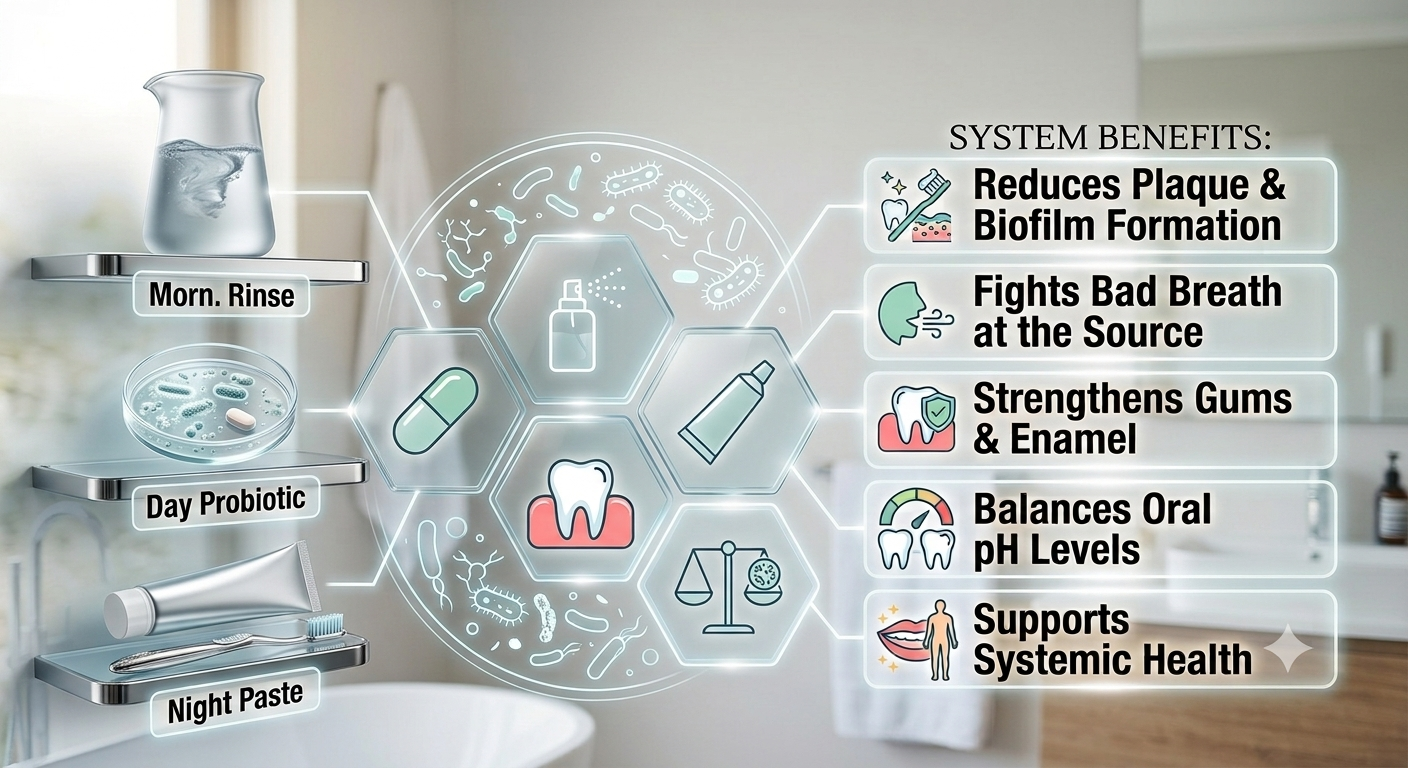
Oral Microbiome Routine Systems: Daily Balance Care Guide
Oral Microbiome Routine Systems: Structured Daily Care for Long-Term Oral Microbiome Balance
Amazon Affiliate Disclosure
This page may contain references to oral care products available through affiliate programs. If a person purchases through these links, the site may earn a small commission at no extra cost.
Introduction
Oral health has traditionally been treated as a surface-level cleaning problem: remove plaque, whiten teeth, eliminate odor. But beneath the enamel sits a far more dynamic system—the oral microbiome. This ecosystem is not static. It responds to timing, pH shifts, dietary exposure, mechanical disruption, and even stress.
The idea behind oral microbiome routine systems is simple but powerful: instead of isolated dental actions, care is structured as a predictable biological rhythm. This approach reduces microbial volatility while supporting beneficial bacterial colonies that maintain enamel stability, breath freshness, and gum resilience.
Unlike conventional oral care, which often focuses on aggressive elimination, routine-based microbiome care is about regulation. Stability over sterilization.
Quick Picks
- Introduction
- What Is an Oral Microbiome Routine System?
- Who Needs This System?
- Benefits of a Structured Oral Microbiome Routine
- Why Routine Consistency Shapes Microbiome Health
- Core Principles Behind Microbiome-Aligned Care
- Complete Daily Oral Microbiome Maintenance Routine
- Microbiome Reset 7-Day Plan
- Morning vs Night Strategy
- Whitening Without Microbiome Damage
- Sensitivity-Safe Routine Design
- Microbiome-Safe Product Selection Framework
- Oral Care Tool Comparison System
- Common Routine Mistakes That Break Microbiome Stability
- Advanced Optimization Strategies
- Upcoming Trends & Oral Microbiome Technology
- FAQs
- People Also Ask Section
- Decision Insight Tables
- Editorial Insights
What Is an Oral Microbiome Routine System?
An oral microbiome routine system is a structured sequence of daily and periodic oral care actions designed to maintain microbial balance rather than simply clean the mouth.
It organizes oral hygiene into:
- Time-based actions (morning, midday, night)
- Biological responses (acid spikes, saliva flow, remineralization cycles)
- Mechanical inputs (brushing, flossing, rinsing pressure levels)
- Chemical modulation (pH balancing, mineral reinforcement)
Instead of treating oral care as a single action, it becomes a predictable biological schedule that aligns with how oral bacteria naturally behave throughout the day.
A well-designed routine system does three things:
- Prevents microbial overgrowth of harmful strains
- Preserves beneficial bacterial communities
- Supports enamel remineralization cycles without disruption
Who Needs This System?
This system is especially relevant for individuals experiencing any of the following patterns:
- Frequent tooth sensitivity after brushing or whitening
- Persistent bad breath despite regular cleaning
- Gum irritation or bleeding during flossing
- Overuse of whitening toothpaste or strips
- Dry mouth episodes during sleep or medication use
- Diets high in sugar, acidic beverages, or frequent snacking
- Use of multiple oral care products without clear structure
It is also highly relevant for individuals who:
- Want whitening without destabilizing enamel biology
- Are transitioning away from harsh peroxide-based routines
- Experience recurring plaque buildup even with brushing
- Prefer long-term oral health optimization over cosmetic-only care
For a deeper understanding of oral care beyond oral microbiome balance and routine systems return to Homepage
Benefits of a Structured Oral Microbiome Routine
A properly designed routine system creates layered biological improvements:
1. Microbial Stability
Instead of sharp swings between over-cleaning and bacterial rebound, microbial populations stabilize into predictable cycles.
2. Reduced Sensitivity Fluctuation
By avoiding excessive disruption of enamel-protective biofilm, nerve exposure episodes reduce over time.
3. Breath Consistency
Odor-causing bacterial spikes become less frequent due to stabilized pH cycling.
4. Enamel Reinforcement
Mineral absorption improves when brushing is aligned with salivary recovery phases.
5. Lower Inflammation Load
Gums experience fewer inflammatory triggers caused by abrasive or poorly timed cleaning routines.
Microbiome Response Comparison Table
| Routine Type | Microbial Impact | Sensitivity Risk | Long-Term Stability |
|---|---|---|---|
| Random brushing habits | Unstable | High | Low |
| Whitening-heavy routines | Disruptive | Very high | Medium |
| Structured microbiome routine | Balanced | Low | High |
Why Routine Consistency Shapes Microbiome Health
The oral microbiome is not influenced only by what is done, but when and how often it is done.
Every oral action creates a biological signal:
- Brushing = mechanical disruption + bacterial reset
- Rinsing = pH modulation + microbial redistribution
- Eating = acid surge + nutrient input for bacteria
- Sleep = salivary slowdown + bacterial concentration window
When these signals are random, microbial communities cannot adapt efficiently. Harmful strains exploit inconsistency faster than beneficial ones.
Routine systems stabilize these signals into predictable cycles, allowing beneficial bacteria to establish dominance patterns.
Think of it less like cleaning a surface and more like training an ecosystem.
Core Principles Behind Microbiome-Aligned Care
A functional oral microbiome routine system is built on five principles:
1. Timing Over Intensity
Gentle but correctly timed care outperforms aggressive cleaning at random intervals.
2. Biofilm Respect
Not all biofilm is harmful; protective layers must be preserved selectively.
3. pH Awareness
Every action should consider acid-base shifts in the oral environment.
4. Mineral Cycling
Remineralization depends on recovery windows, not constant product application.
5. Micro-Disruption Control
Each intervention should have a predictable and minimal disruption footprint.
Oral Ecosystem Cycle Chart (Conceptual)
| Time Window | Dominant Activity | Microbiome Behavior |
|---|---|---|
| Morning | Saliva activation | Microbial dispersion |
| Midday | Dietary exposure | Acid fluctuation |
| Evening | Cleaning + repair | Stability reset |
| Night | Low saliva state | Microbial consolidation |
Framework of Routine Systems
At the structural level, oral microbiome routine systems are built around three repeating layers:
Layer 1: Daily Regulation
Morning and evening routines that stabilize bacterial populations.
Layer 2: Behavioral Correction
Midday habits that prevent acid accumulation and sugar-driven microbial shifts.
Layer 3: Periodic Reset Cycles
Weekly or monthly adjustments that recalibrate biofilm composition.
Full Oral Microbiome Routine Architecture
Complete Daily Oral Microbiome Maintenance Routine
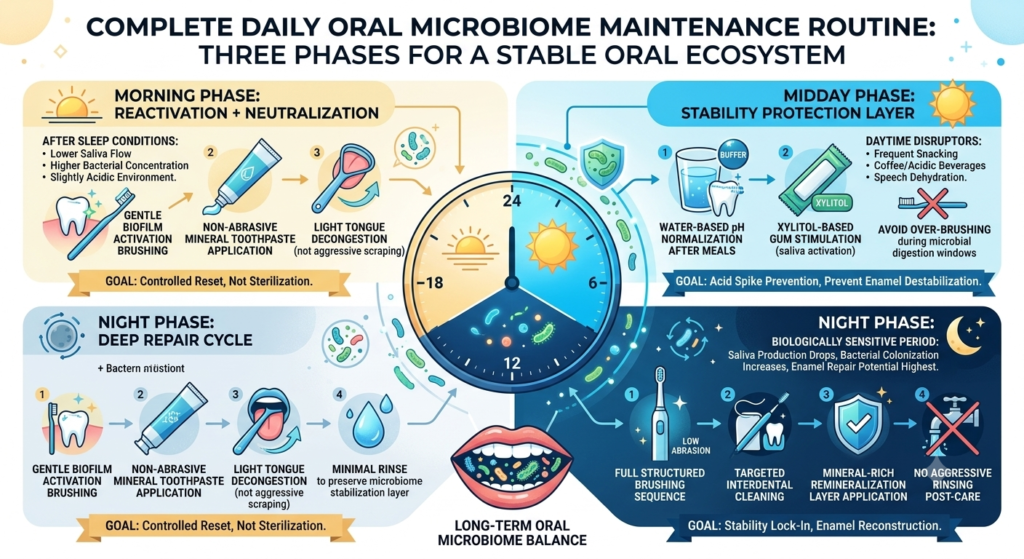
A stable oral microbiome is not achieved through occasional effort—it is the result of predictable biological conditioning across a 24-hour cycle.
A structured daily routine system works across three phases:
Morning Phase: Reactivation + Neutralization
After sleep, the oral environment is typically:
- Lower in saliva flow
- Higher in bacterial concentration
- Slightly acidic due to overnight metabolism
System actions:
- Gentle biofilm activation brushing
- Non-abrasive mineral toothpaste application
- Light tongue decongestion (not aggressive scraping)
- Minimal rinse to preserve early microbiome stabilization layer
The goal is not sterilization—it is controlled reset without ecosystem collapse.
Midday Phase: Stability Protection Layer
During the day, oral microbiome disruption is driven by:
- Frequent snacking
- Coffee / acidic beverages
- Speech dehydration effects
System actions:
- Water-based pH normalization after meals
- Optional xylitol-based gum stimulation (saliva activation)
- Avoid over-brushing during microbial digestion windows
This phase acts as a buffer system, preventing acid spikes from destabilizing enamel surfaces.
Night Phase: Deep Repair Cycle
Night is the most biologically sensitive period:
- Saliva production drops significantly
- Bacterial colonization increases
- Enamel repair potential is highest
System actions:
- Full structured brushing sequence (low abrasion index)
- Targeted interdental cleaning
- Mineral-rich remineralization layer application
- No aggressive rinsing post-care
This is the reconstruction phase, where stability is locked in for the next cycle.
Daily Routine Flow Table
| Phase | Goal | Risk Level | Intervention Style |
|---|---|---|---|
| Morning | Reset balance | Medium | Gentle activation |
| Midday | Stabilize environment | Low | Passive support |
| Night | Repair & strengthen | High sensitivity | Structured rebuilding |
Microbiome Reset 7-Day Plan
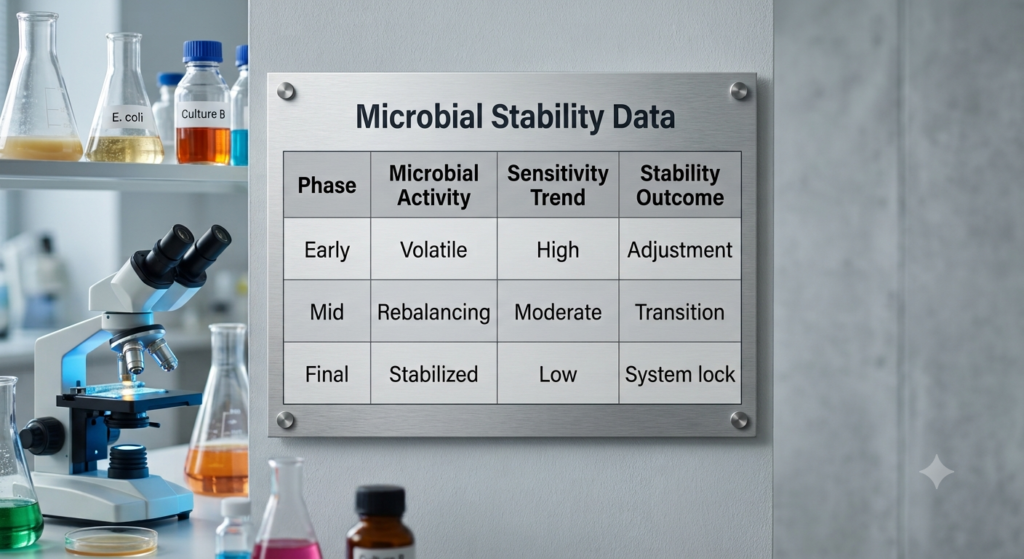
A microbiome reset cycle is not a detox—it is a rebalancing protocol designed to reduce bacterial volatility.
Day 1–2: Stabilization Entry
- Remove aggressive whitening products
- Shift to low-abrasion brushing
- Introduce mineral reinforcement toothpaste
Day 3–4: pH Equalization
- Focus on post-meal rinse discipline
- Reduce acidic exposure (soft drinks, citrus overload)
- Increase saliva stimulation habits
Day 5–6: Biofilm Recalibration
- Controlled plaque management (not over-cleaning)
- Introduce tongue ecosystem balance care
- Evening routines prioritized
Day 7: System Lock-In
- Full routine consistency
- Avoid experimental product changes
- Observe microbial stability indicators (breath, sensitivity, gum comfort)
7-Day Reset Stability Chart
Morning vs Night Microbiome Care Strategy
Morning and night routines serve fundamentally different biological roles.
Morning Strategy
- Prevents overnight bacterial accumulation dominance
- Restores oxygen exposure to oral ecosystem
- Prepares enamel surface for dietary exposure
Night Strategy
- Focuses on long-duration protection
- Reinforces mineral absorption window
- Prevents nocturnal acid-driven enamel weakening
Comparison Matrix
| Factor | Morning Routine | Night Routine |
|---|---|---|
| Purpose | Reactivation | Repair |
| Saliva context | Increasing | Minimal |
| Risk of over-cleaning | Medium | High |
| Mineral absorption | Low | High |
| Microbiome sensitivity | Moderate | Very high |
Whitening Without Damaging the Microbiome
Whitening often disrupts microbial equilibrium when it relies on harsh oxidizing agents or high abrasivity.
A microbiome-safe whitening system uses:
- Low-abrasion polishing agents
- Mineral buffering compounds
- Time-limited exposure strategies
- pH-neutral formulation cycles
Key Rule
Whitening should never interrupt remineralization windows.
Safe Whitening Integration Table
| Method | Microbiome Impact | Enamel Risk | Suitability |
|---|---|---|---|
| Peroxide strips | High disruption | High | Occasional only |
| Abrasive whitening pastes | Moderate-high | Medium | Limited |
| Mineral-based whitening | Low | Low | Preferred |
Sensitivity-Safe Microbiome Routine
Tooth sensitivity is often a sign of biofilm instability + enamel micro-exposure cycles.
A sensitivity-safe system focuses on:
Adjustments
- Reduced brushing force variability
- Avoidance of extreme temperature triggers
- Increased remineralization support intervals
- Controlled fluoride or nano-hydroxyapatite exposure cycles
Behavioral Stabilizers
- No immediate brushing after acidic meals
- Avoid over-cleaning exposed dentin areas
- Maintain predictable routine timing
Sensitivity Stability Table
| Trigger Source | Effect | Routine Correction |
|---|---|---|
| Acidic foods | Enamel softening | Delayed brushing |
| Aggressive brushing | Dentin exposure | Pressure control |
| Whitening agents | Nerve sensitivity | Mineral replacement |
Systems Insight
Across all routines, one principle governs effectiveness:
Stability is not achieved by cleaning harder, but by disturbing less at the right time.
Every routine component is designed to reduce unpredictability in microbial behavior, allowing beneficial oral flora to re-establish dominance patterns.
Advanced Optimization, Tools and Emerging Oral Microbiome Systems
Microbiome-Safe Product Selection Framework
Most oral care systems fail not because of poor habits—but because of incompatible product layering.
A microbiome-aligned selection system evaluates products across four biological dimensions:
1. Abrasion Index
How much mechanical enamel disruption occurs per use.
2. pH Influence
Whether the product pushes the oral environment toward acidity or neutrality.
3. Biofilm Interaction
Whether it strips, preserves, or selectively modifies microbial layers.
4. Remineralization Support
Whether it enhances mineral uptake cycles or blocks them.
Product Compatibility Matrix
| Product Type | Abrasion Risk | Microbiome Effect | Recommended Use |
|---|---|---|---|
| Whitening toothpaste | High | Disruptive | Limited cycles |
| Hydroxyapatite paste | Low | Stabilizing | Daily use |
| Alcohol mouthwash | High | Microbial stripping | Rare use |
| Xylitol rinse | Low | Supportive | Daily adjunct |
Oral Care Tool Comparison System
Different tools do not just clean differently—they alter microbial structure differently.
Manual Brushes
- Lower disruption intensity
- Better microbiome preservation
- Requires technique consistency
Electric Brushes
- Higher plaque removal efficiency
- Higher risk of over-disruption if misused
- Best for controlled pressure systems
Flossing Systems
- Critical for interdental microbial balance
- Overuse can destabilize gum microbiota if aggressive
Water Flossers
- Hydrodynamic cleaning effect
- Lower mechanical trauma
- Better for sensitivity-prone individuals
Tool Impact Table
| Tool | Cleaning Efficiency | Microbiome Stability | Sensitivity Risk |
|---|---|---|---|
| Manual brush | Medium | High | Low |
| Electric brush | High | Medium | Medium |
| String floss | High | Medium | Medium |
| Water flosser | Medium | High | Low |
Common Routine Mistakes That Break Microbiome Stability
Most oral microbiome disruptions come from predictable behavioral errors.
Mistake 1: Over-Cleaning After Every Meal
This prevents microbial recovery cycles and increases enamel exposure time.
Mistake 2: Whitening Without Recovery Windows
Continuous oxidative stress disrupts beneficial bacterial layers.
Mistake 3: Random Product Switching
Microbiome adaptation requires consistency; frequent changes reset adaptation progress.
Mistake 4: High-Acid Diet Without Buffering
Without pH stabilization habits, microbial imbalance accelerates.
Mistake 5: Aggressive Tongue Cleaning
This removes protective microbial reservoirs unnecessarily.
Disruption Pattern Table
| Mistake Type | Microbiome Effect | Long-Term Outcome |
|---|---|---|
| Over-cleaning | Collapse of biofilm | Sensitivity increase |
| Whitening overload | Oxidative imbalance | Enamel weakening |
| Product switching | Adaptation failure | Instability |
| Acidic exposure | pH collapse | Decay risk |
Advanced Optimization Strategies
Once a stable routine is established, optimization focuses on fine-tuning microbial resilience rather than cleaning intensity.
Strategy 1: Timing Compression
Reducing unnecessary cleaning frequency while improving precision.
Strategy 2: pH Cycling Control
Managing acid-base swings through diet timing and post-meal interventions.
Strategy 3: Mineral Saturation Layering
Ensuring consistent enamel reinforcement through nano-mineral cycles.
Strategy 4: Biofilm Preservation Zones
Allowing protective bacterial layers to remain in non-critical areas.
Strategy 5: Stress-Linked Oral Modulation
Recognizing that cortisol levels affect saliva and microbial balance.
Optimization Impact Table
| Strategy | Effect on Stability | Complexity |
|---|---|---|
| Timing compression | High improvement | Medium |
| pH control | Very high | Medium |
| Mineral layering | High | Low |
| Biofilm zoning | High | High |
Upcoming Trends & Oral Microbiome Technology
The next evolution of oral care is moving beyond hygiene into microbial ecosystem engineering.
1. Microbiome Diagnostics at Home
Emerging tools will allow individuals to track bacterial composition in real time, identifying imbalance before symptoms appear.
2. Smart Toothpaste Formulations
Adaptive formulations that adjust mineral release based on saliva composition.
3. AI-Guided Oral Care Systems
Routine optimization driven by behavioral and biological feedback loops.
4. Targeted Probiotic Oral Therapy
Introduction of beneficial bacterial strains designed for enamel protection and breath regulation.
5. pH-Adaptive Rinsing Systems
Solutions that adjust buffering strength based on oral acidity levels.
Future Technology Shift Table
| Technology | Current State | Future Role |
|---|---|---|
| Diagnostics | Rare lab testing | At-home daily monitoring |
| Toothpaste | Static formula | Adaptive bio-response system |
| Probiotics | Limited strains | Precision microbial engineering |
| AI routines | Generic apps | Personalized oral ecosystem control |
Systems Insight
The direction of oral microbiome care is shifting from:
“removing what is harmful” → to “engineering what is sustainable”
Routine systems are becoming predictive biological control systems, not hygiene checklists.
FAQs: Oral Microbiome Routine Systems
What is the best oral microbiome routine for daily balance?
The most effective daily system is one that aligns cleaning intensity with biological cycles rather than random habits.
A stable structure typically includes:
- Gentle morning activation to reset overnight bacterial buildup
- Midday pH stabilization to counter dietary acid exposure
- Evening deep repair routine focused on remineralization
Unlike traditional hygiene routines, the goal is not maximal cleaning but predictable microbial regulation.
Routine Effectiveness Table
| Routine Type | Stability Level | Sensitivity Risk | Long-Term Outcome |
|---|---|---|---|
| Random brushing | Low | High | Unstable |
| Heavy whitening routine | Medium | Very high | Enamel stress |
| Structured microbiome routine | High | Low | Balanced ecosystem |
Can oral microbiome routines improve bad breath long term?
Yes, but only when the system targets microbial imbalance instead of masking odor.
Bad breath is usually driven by:
- Anaerobic bacterial overgrowth
- pH imbalance after meals
- Dry mouth during sleep cycles
A structured routine reduces odor by stabilizing bacterial diversity rather than temporarily masking it with strong mouthwash.
Breath Stability Cycle
| Phase | Condition | Outcome |
|---|---|---|
| Unstructured care | Fluctuating bacteria | Persistent odor spikes |
| Structured care | Balanced flora | Stable breath profile |
How long does it take for oral microbiome balance to improve?
Most individuals notice early stabilization within 7–14 days, but deeper microbial restructuring typically requires 3–6 weeks of consistency.
Progress depends on:
- Diet acidity level
- Product aggressiveness
- Brushing consistency
- Saliva flow health
The microbiome does not reset instantly—it adapts gradually to repeated behavioral signals.
Is whitening compatible with microbiome-friendly routines?
Yes, but only when whitening is structured as a controlled cycle rather than continuous exposure.
Safe integration requires:
- Limited whitening windows
- Mineral recovery periods between sessions
- Avoiding abrasive overload
Whitening Compatibility Table
| Method | Microbiome Impact | Safe Frequency |
|---|---|---|
| Peroxide strips | High disruption | Occasional |
| Abrasive whitening pastes | Medium | Limited cycles |
| Mineral-based whitening | Low | Daily-safe |
What is the biggest mistake in oral microbiome care routines?
The most damaging pattern is over-cleaning combined with inconsistent timing.
This creates:
- Biofilm collapse
- Enamel exposure cycles
- Microbial rebound instability
Ironically, excessive hygiene often leads to more imbalance than moderate structured care.
Mistake Impact Table
| Mistake | Biological Effect | Outcome |
|---|---|---|
| Over-cleaning | Biofilm destruction | Sensitivity increase |
| Random timing | Microbial confusion | Instability |
| Whitening overload | Oxidative stress | Enamel weakening |
People Also Ask: Oral Microbiome Questions
How do oral microbiome routine systems differ from normal brushing habits?
Traditional brushing focuses on surface cleaning, while routine systems manage timed microbial ecology control.
Instead of isolated actions, they create a structured cycle that aligns with saliva flow, pH shifts, and bacterial activity patterns.
Can improving oral microbiome health reduce sensitivity naturally?
Yes. Sensitivity often occurs when enamel protection layers are disrupted.
A stable microbiome routine helps:
- Preserve protective biofilm layers
- Reduce acid-triggered enamel erosion
- Improve remineralization timing
This reduces nerve exposure over time.
Do oral probiotics help within routine systems?
They can support microbial diversity, but only when paired with stable hygiene behavior.
Without routine consistency, probiotics cannot establish long-term colonies.
Is it better to brush before or after breakfast?
It depends on acid exposure.
If breakfast includes acidic foods, immediate brushing can weaken softened enamel. In such cases, delaying brushing allows remineralization cycles to stabilize first.
Can poor sleep affect oral microbiome balance?
Yes. Reduced saliva production during sleep increases bacterial concentration, making nighttime routine structure critical for stability.
Decision Insight Tables
Routine Selection Guide
| Condition | Recommended System Type |
|---|---|
| Sensitivity-prone enamel | Low-abrasion microbiome routine |
| Persistent bad breath | pH-stabilization system |
| Whitening focus | Cycle-based whitening routine |
| Gum irritation | Biofilm-preserving routine |
Daily Optimization Model
| Time Block | Biological Priority | Action Focus |
|---|---|---|
| Morning | Reset | Gentle activation |
| Midday | Stabilization | pH control |
| Night | Repair | Mineral reinforcement |
Editorial Insights on Routine Systems
The evolution of oral care is moving away from mechanical hygiene toward biological rhythm engineering.
Instead of asking:
- “How clean is the mouth?”
The more relevant question becomes:
- “How stable is the oral ecosystem across time?”
Routine systems work because they treat the mouth as a self-regulating biological environment, not a surface to be repeatedly stripped and reset.
Over time, consistency—not intensity—becomes the defining factor in enamel resilience, breath stability, and microbial harmony.
The most advanced & complete oral care approach is therefore not about adding more products, but about removing randomness from behavior.