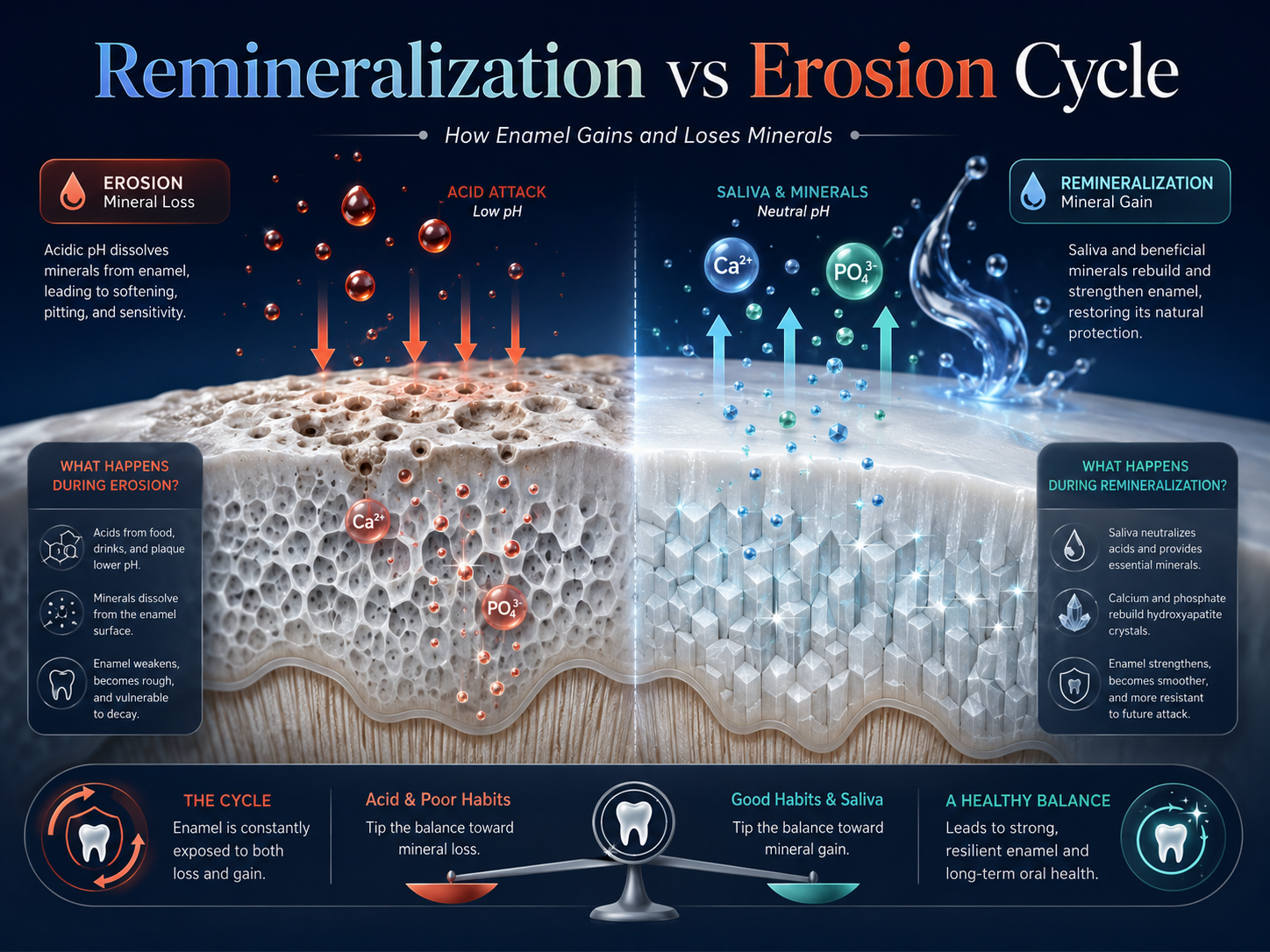
Enamel Remineralization vs Erosion Cycle: How Teeth Gain and Lose Minerals
Amazon Affiliate Disclosure: Hydropaste may earn a commission from qualifying purchases made through Amazon affiliate links. This does not influence the scientific standards, product analysis or editorial conclusions presented on this page.
Enamel does not remain chemically unchanged after a tooth enters the mouth. Its surface is continuously exposed to acids, saliva, minerals, proteins, food particles, bacterial by-products and mechanical forces. Every meal, drink and oral-care decision shifts the balance slightly toward either mineral loss or mineral recovery.
This ongoing contest is the remineralization vs erosion cycle.
When enamel remineralization keeps pace with acid exposure, microscopic mineral losses may be repaired before the tooth develops lasting structural damage. When acid attacks become too frequent, too prolonged or too intense, the recovery phases become too short. The surface remains softened, mineral loss accumulates and the natural shape of the enamel can gradually disappear.
Understanding this distinction prevents two opposite mistakes. The first is assuming that any enamel damage can be rebuilt with toothpaste. The second is assuming that every early sign of mineral loss is permanent. Neither view reflects how enamel behaves.
Early, non-cavitated mineral loss can sometimes be arrested or partially reversed. Enamel that has already been physically dissolved, thinned or worn away cannot simply grow back to its original contour. The practical objective is therefore not to promise unlimited regeneration. It is to identify where the tooth sits within the cycle and move the mineral balance back toward protection.
For a broader explanation of the science behind mineral recovery, begin with the Regenerate Enamel center.
This article is educational and does not replace diagnosis by a dentist, particularly when sensitivity, visible wear, reflux, recurrent vomiting or unexplained changes in tooth shape are present.
Quick Picks: Jump to the Relevant Section
What the Enamel Remineralization vs Erosion Cycle Really Means
The enamel surface is built primarily from tightly organized calcium-phosphate mineral crystals. These crystals provide exceptional hardness, but hardness does not make enamel chemically invulnerable. When the environment surrounding a tooth becomes undersaturated with respect to tooth mineral, calcium and phosphate can begin leaving the crystal surface. When conditions become favorable again, minerals from saliva and oral-care products may redeposit within weakened areas.
This produces two opposing movements:
Demineralization is the movement of minerals out of enamel.
Remineralization is the return or redeposition of minerals into enamel that remains structurally capable of receiving them.
Erosion is the progressive chemical dissolution and physical loss of dental hard tissue caused primarily by acids that are not produced by oral bacteria. Once softened enamel is repeatedly exposed to friction, chewing, grinding or aggressive brushing, chemical damage and mechanical wear can combine.
The cycle is therefore not a simple alternation between “damage” and “complete repair.” It is a competition between the intensity of mineral loss and the strength of the recovery environment.
The National Institute of Dental and Craniofacial Research describes teeth as losing and regaining minerals throughout the day. Calcium and phosphate in saliva, together with fluoride from toothpaste or other sources, can help replace minerals lost during an acid challenge. Early mineral loss can sometimes be stopped or reversed, while a cavity represents permanent structural damage requiring professional treatment.
A person may experience several acidic challenges in one day without developing visible erosion. Problems arise when the cumulative losses repeatedly exceed the available recovery.
The cycle can end in three different outcomes
Positive mineral balance: Recovery outweighs loss. The enamel remains stable or becomes more resistant to future acid challenges.
Neutral mineral balance: Mineral loss and recovery are roughly matched. The surface may appear clinically unchanged, although small fluctuations continue.
Negative mineral balance: Acid exposure and wear exceed remineralization. The enamel becomes progressively thinner, smoother, more translucent or more sensitive.
This is why effective Enamel Repair begins with controlling the entire environment rather than relying on a single toothpaste ingredient.
The Chemistry of Enamel Mineral Balance
Enamel mineral balance is controlled by more than the pH printed on a beverage label. The outcome depends on the chemical relationship between the enamel surface and the fluid surrounding it.
When oral fluid contains sufficient calcium and phosphate and the acidity is controlled, the environment may support mineral stability or deposition. When hydrogen ions from acids interact with enamel, they disturb the mineral equilibrium and encourage calcium and phosphate to leave the crystal structure.
Why pH matters
pH indicates the concentration of hydrogen ions in a solution. A lower pH generally signals a more acidic environment and a greater potential to destabilize enamel mineral.
The familiar idea that enamel always begins dissolving below pH 5.5 is useful as a teaching shortcut, but it should not be treated as an absolute biological switch. The effective critical pH varies according to calcium concentration, phosphate concentration, fluoride availability, saliva composition, plaque conditions and the mineral saturation of the surrounding fluid.
A beverage at pH 3 is not merely “a little” more acidic than one at pH 4. The pH scale is logarithmic, meaning each whole-number decrease represents a tenfold increase in hydrogen-ion concentration. Yet pH still does not tell the entire story.
Titratable acidity: how long an acid can keep working
Two drinks can have a similar starting pH but behave differently in the mouth. One may be neutralized quickly. The other may contain enough total acid to resist neutralization for longer.
This resistance is related to titratable acidity: the amount of neutralizing substance required to raise the drink to a less erosive pH.
A beverage with high titratable acidity can prolong the period during which saliva must work to restore balance. This helps explain why frequency, sipping duration and total contact time can matter as much as the initial pH.
Chelation: mineral removal without extreme acidity
Some acids can bind calcium. Citric acid is especially relevant because citrate can form complexes with calcium ions. That binding may reduce the amount of freely available calcium near the enamel surface and interfere with rapid mineral recovery.
For this reason, “sugar-free” does not necessarily mean “enamel-safe.” A sugar-free acidic drink may reduce bacterial sugar exposure while still presenting a direct erosion challenge.
Saturation determines direction
The mineral direction can be summarized conceptually:
| Oral environment | Relative mineral condition | Likely direction |
|---|---|---|
| Acidic and low in available calcium or phosphate | Undersaturated | Mineral leaves enamel |
| Near neutral with adequate saliva | More balanced | Mineral loss slows |
| Mineral-rich with favorable pH | Supersaturated | Remineralization becomes more likely |
| Repeatedly acidic with insufficient recovery | Persistently undersaturated | Progressive erosion becomes more likely |
The mouth is not static enough for a single pH reading to predict long-term damage. The relevant question is how often the environment becomes erosive, how long it remains that way and how effectively it recovers.
Demineralization vs Remineralization: The Core Comparison
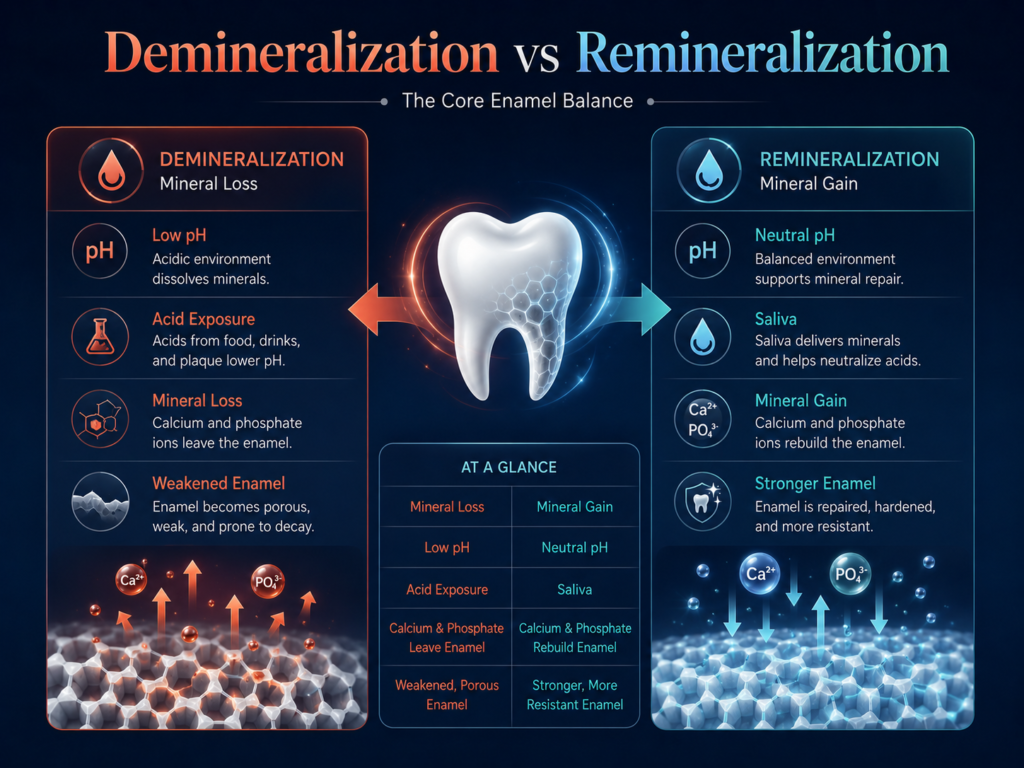
Demineralization and remineralization are opposite chemical movements, but they are not perfectly symmetrical.
Minerals can sometimes return to porous, weakened enamel. They cannot recreate an entire cusp, incisal edge or outer layer that has already been physically lost. Remineralization works within existing tissue; it does not generate a new biological enamel organ.
Demineralization vs remineralization table
| Feature | Demineralization | Remineralization |
|---|---|---|
| Primary movement | Calcium and phosphate leave enamel | Minerals redeposit into weakened enamel |
| Common trigger | Acids, low mineral saturation, frequent sugar fermentation | Saliva, calcium, phosphate, fluoride and favorable pH |
| Initial effect | Crystal dissolution and surface softening | Increased mineral density and surface resistance |
| Visible early sign | Chalky or opaque white area in some caries lesions | Lesion may become harder or less active |
| Effect on lost tooth shape | Can contribute to structural loss | Cannot replace missing enamel volume |
| Time pattern | Can begin during each acid exposure | Requires protected recovery periods |
| Main strategy | Reduce acid frequency and duration | Improve saliva, mineral availability and topical protection |
| Clinical limit | Continued loss can become irreversible | Most useful before cavitation or major tissue loss |
Why the cycle is asymmetrical
Dissolution can occur quickly when enamel is exposed to a strong acid environment. Meaningful mineral recovery requires several favorable conditions to align:
The acid must be cleared or buffered.
The enamel surface must remain present.
Calcium and phosphate must be available.
The area must have enough time without another major acid challenge.
A protective agent such as fluoride or a calcium-phosphate compound must remain in contact long enough to influence the surface.
The tissue must not be repeatedly scrubbed, ground or abraded while softened.
This asymmetry is why prevention is more powerful than attempting to compensate after repeated damage. A five-minute acidic exposure cannot necessarily be “cancelled” by five minutes of remineralizing toothpaste. The two processes do not operate with equal speed, depth or structural consequences.
Enamel Erosion vs Tooth Decay: Similar Mineral Loss, Different Drivers
Erosion and dental caries can both involve enamel demineralization, but their initiating causes differ.
Dental caries commonly begins when bacteria within dental plaque metabolize fermentable carbohydrates and produce acids close to the tooth surface.
Dental erosion is caused by direct exposure to acids that do not originate from bacterial metabolism. These may come from foods, beverages, gastric reflux, recurrent vomiting or certain occupational environments.
The American Dental Association defines dental erosion as chemical loss of mineralized tooth tissue caused by acids not derived from oral bacteria. It also notes that erosion may result from dietary acids or intrinsic gastric acids and can progress to irreversible tissue loss.
Enamel erosion vs tooth decay comparison
| Factor | Enamel erosion | Tooth decay |
|---|---|---|
| Main acid source | Diet, beverages, reflux or vomiting | Bacterial fermentation of sugars and starches |
| Plaque required | No | Usually central to the process |
| Typical pattern | Broad, smooth, cupped or flattened surfaces | Localized lesions in plaque-retentive areas |
| Surface appearance | Silky, glossy, rounded or “melted” | White spot, darkened lesion or cavity |
| Main preventive emphasis | Reduce direct acid contact and protect softened enamel | Control plaque, sugar frequency and bacterial acid production |
| Can both occur together? | Yes | Yes |
| Can remineralization help? | May harden early softened areas | Can arrest or reverse some non-cavitated lesions |
| Can lost contour return naturally? | No | No once cavitation occurs |
The distinction matters because a person can have excellent plaque control yet still experience erosive tooth wear from sipping acidic drinks. Conversely, a diet with few acidic beverages can still promote caries if frequent fermentable carbohydrates continually feed acid-producing plaque.
Some individuals experience both processes at once. Acidic sweetened beverages may directly soften enamel while also supplying fermentable sugar to plaque. This creates a combined chemical challenge that is more complex than either erosion or caries alone.
The Acid-Challenge Timeline: What Happens After an Acidic Drink
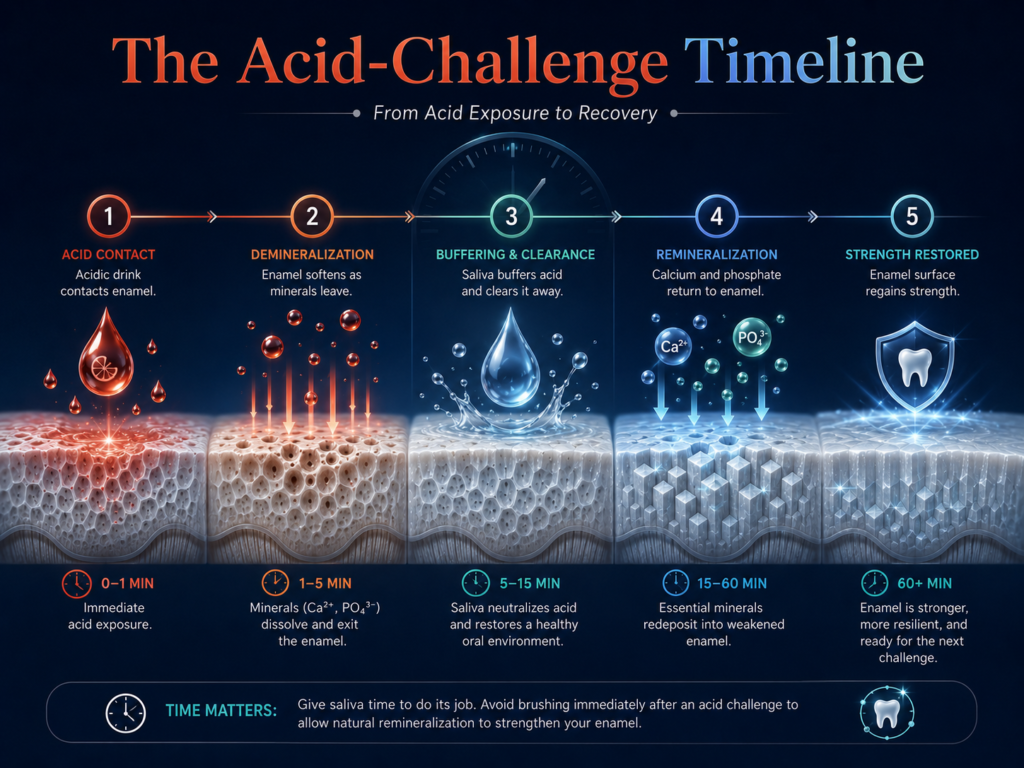
The remineralization vs erosion cycle is easier to understand as a sequence rather than a single event.
Phase 1: Acid contacts the tooth
An acidic drink, food or gastric fluid reaches the enamel surface. Hydrogen ions begin interacting with the outer mineral.
The pattern of drinking changes the exposure. Swishing, holding liquid in the mouth or sipping continuously renews the acid at the enamel surface and extends contact. Research on acidic beverages has identified swishing as an erosive behavior because it continually replaces the liquid layer next to the tooth.
Phase 2: The protective pellicle is challenged
Teeth are normally covered by an acquired enamel pellicle: a thin protein-rich film formed from saliva. It acts as a selective barrier and can slow direct acid diffusion.
Strong or repeated exposures can overwhelm this protection. The pellicle does not make enamel acid-proof, but it can influence how quickly an erosive challenge reaches the mineral surface.
Phase 3: Surface mineral dissolves
The enamel begins losing calcium and phosphate. Surface hardness may fall before obvious tissue loss can be seen.
At this stage, the tooth may not look damaged. The surface can nevertheless be temporarily more vulnerable to abrasion.
Phase 4: Saliva dilutes and buffers the acid
Saliva begins clearing the acidic liquid, raising pH and supplying bicarbonate, calcium and phosphate. Salivary flow is therefore part of the mouth’s recovery capacity.
A person with strong salivary flow may recover faster than someone with chronic dry mouth, dehydration or medication-related salivary reduction. Persistent dry mouth is associated with increased tooth-decay risk because saliva helps control microorganisms and protects the oral environment.
Phase 5: Mineral recovery begins
Once conditions improve, calcium and phosphate can move back toward weakened mineral. Fluoride may encourage remineralization and produce a surface that is more resistant to future acid challenges.
Hydroxyapatite particles and other calcium-phosphate technologies may also interact with surface irregularities, although effectiveness depends on concentration, particle characteristics, formulation and the type of lesion being treated. Research supports a remineralizing role for hydroxyapatite products, but the quality and certainty of evidence vary across applications.
Phase 6: Another exposure either interrupts or permits recovery
If another acidic drink arrives before recovery has progressed, the cycle restarts from a weaker baseline. If the mouth receives an extended low-acid period, mineral recovery has more opportunity to continue.
Conceptual daily mineral-balance chart
| Time and behavior | Mineral pressure | Direction |
|---|---|---|
| Morning brushing with protective toothpaste | Moderate protection | Toward remineralization |
| Breakfast eaten in one sitting | Short acid challenge | Temporary demineralization |
| Water and salivary recovery | Recovery period | Toward balance |
| Acidic coffee sipped for two hours | Prolonged repeated exposure | Toward erosion |
| Lunch with water | Contained exposure | Temporary demineralization |
| Sugar-free gum after lunch | Increased salivary flow | Toward recovery |
| Sports drink consumed throughout workout | Repeated acid exposure plus possible dry mouth | Strongly toward erosion |
| Evening brushing and overnight rest | Mineral contact, but lower nighttime saliva | Depends on routine and residual acid |
The chart illustrates an important principle: exposure pattern often matters more than isolated consumption.
What Shifts the Remineralization vs Erosion Cycle Toward Damage
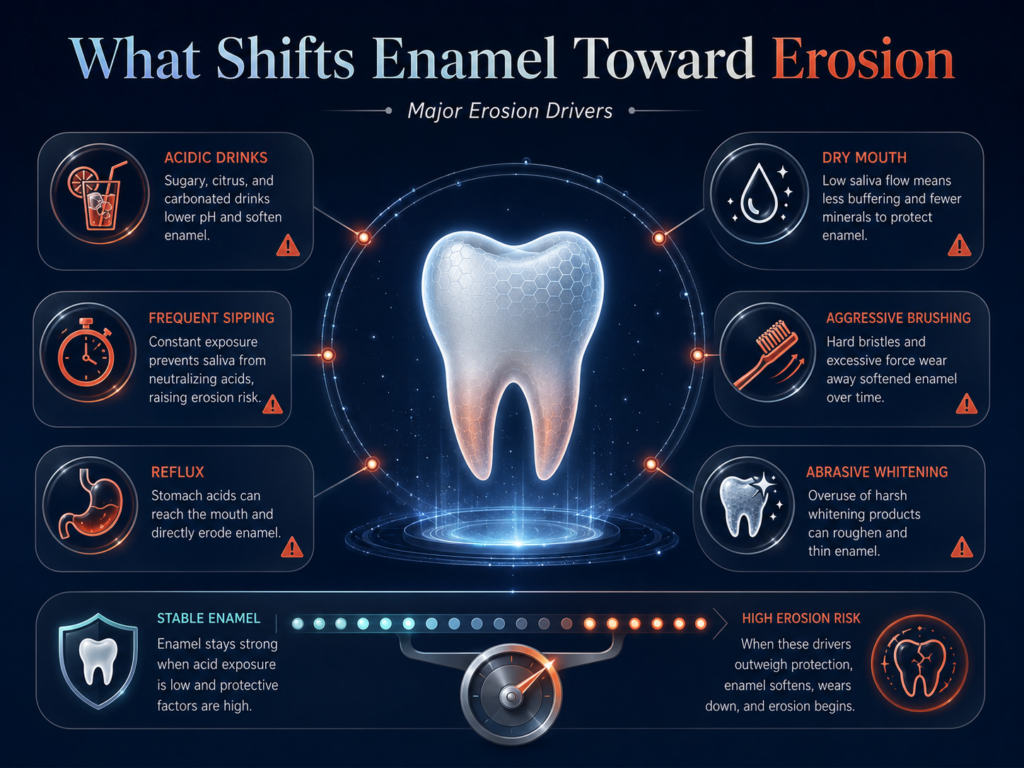
Enamel erosion is rarely caused by one event. It usually develops when several risk factors reinforce one another.
Acid frequency
The number of acidic exposures can be more important than the total quantity consumed.
A person who drinks one acidic beverage with a meal creates a relatively contained challenge. A person who slowly sips the same amount across an afternoon creates repeated or sustained contact, leaving less uninterrupted time for saliva to restore the mineral environment.
Contact duration
Holding a drink in the mouth, swishing it between the teeth or using it as a frequent hydration source increases the time acid remains in contact with enamel.
The ADA advises reducing acidic beverages between meals and avoiding behaviors that bathe teeth in acidic liquid, including swishing or holding drinks in the mouth.
Acid strength and total acid reserve
Low pH can initiate rapid surface softening. High titratable acidity can prolong the challenge because more buffering is needed before the drink becomes less erosive.
Low calcium and phosphate availability
Saliva supplies essential mineral ions. Reduced salivary flow, poor hydration and insufficient recovery can decrease the mouth’s capacity to stabilize enamel.
Saliva naturally contains proteins, enzymes, calcium, phosphate and fluoride-related ions that participate in enamel mineralization and surface protection.
Intrinsic gastric acid
Acid reflux and recurrent vomiting can expose teeth to gastric acid. This is not merely a toothpaste problem. Repeated intrinsic acid exposure requires attention to the underlying medical or behavioral cause.
Dental erosion associated with reflux often follows patterns related to where gastric fluid contacts the teeth. The ADA identifies gastroesophageal reflux and recurrent vomiting as major intrinsic erosion risks.
Dry mouth
Dry mouth reduces acid clearance, buffering and mineral delivery. Causes may include medications, dehydration, mouth breathing, systemic conditions, cancer treatment or reduced salivary-gland function.
Mechanical loading on softened enamel
Brushing, grinding, chewing hard materials and using abrasive products do not usually create chemical erosion by themselves. They can, however, remove or wear a surface that has already been softened by acid.
Experimental research has shown that acidic exposure can reduce enamel surface hardness and that subsequent brushing can remove softened mineral.
Aggressive whitening routines
An erosion-prone tooth may also be exposed to abrasive whitening toothpaste, acidic home mixtures or excessive polishing. Brightness improves only superficially if the intervention accelerates loss of enamel thickness.
The Hydropaste erosion-pressure model
A useful editorial model is:
Erosion pressure = acid frequency × contact time × acid persistence × mechanical stress
Recovery capacity = saliva flow × buffering × mineral availability × protective contact time
This is not a clinical diagnostic equation. It is a practical way to recognize why a person with moderate acid exposure and strong recovery may remain stable while another person with dry mouth, reflux and constant sipping develops rapid wear.
Saliva Is the Main Recovery System in Tooth Remineralization
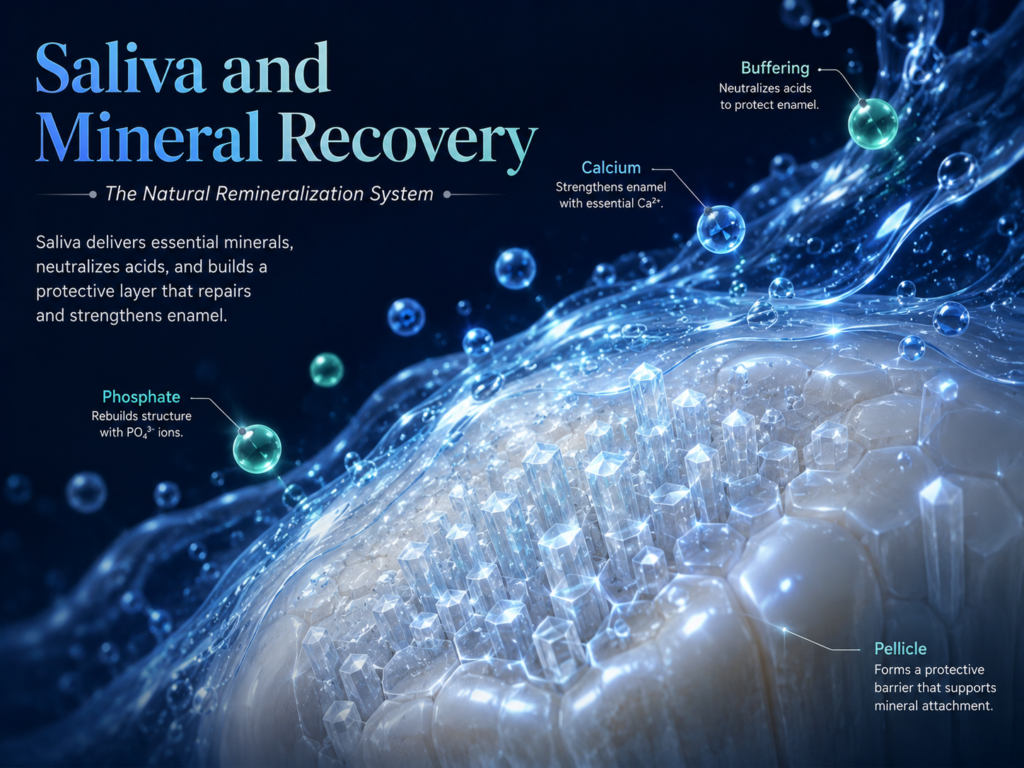
Remineralizing toothpaste receives most of the attention, but saliva performs the continuous work between brushing sessions.
It supports enamel through several overlapping functions.
Acid clearance
Swallowing and salivary flow dilute and remove acids from the mouth.
Buffering
Bicarbonate and other salivary components help raise oral pH after an acid challenge.
Mineral supply
Saliva carries calcium and phosphate ions that can participate in enamel remineralization. These ions can move toward porous regions once the chemical environment becomes favorable.
Pellicle formation
Salivary proteins form the acquired enamel pellicle. This thin film can influence mineral exchange and provide partial protection from direct acid contact.
Lubrication
A lubricated oral environment reduces friction between teeth, food and soft tissues. This matters because chemical erosion becomes more destructive when combined with mechanical wear.
Product distribution
Saliva helps dissolve and distribute active ingredients from toothpaste and rinses. Fluoride concentrations rise after brushing and then gradually return toward baseline.
Why dry mouth changes the strategy
A person with reduced salivary flow cannot assume that a standard routine will provide the same recovery capacity as it does for someone with normal saliva.
The strategy may need to emphasize:
More frequent water intake.
Review of drying medications with a qualified professional.
Sugar-free gum or lozenges where appropriate.
Avoidance of frequent acidic or sugary products.
A non-irritating toothpaste.
Professional fluoride or other preventive treatment when clinically indicated.
Investigation of persistent mouth breathing or systemic causes.
Dry mouth accompanied by difficulty swallowing, persistent oral burning, recurrent cavities or fungal infections deserves professional evaluation rather than product experimentation alone.
Can Tooth Remineralization Reverse Enamel Erosion?
The answer depends on what “reverse” means and how far the damage has progressed.
What may be remineralized
A softened enamel surface may regain mineral density.
A non-cavitated early caries lesion may become harder and less active.
Microscopic porosities may receive calcium, phosphate or fluoride-related mineral.
Early surface changes may become more resistant to future acid exposure.
Sensitivity related to superficial mineral weakness may improve in some individuals.
What cannot be biologically restored
Lost enamel thickness cannot be recreated by normal adult enamel cells.
A rounded tooth edge cannot grow back into its original shape.
Deep cups or depressions cannot be filled by saliva.
Exposed dentin cannot be converted into a full natural enamel layer.
A cavity cannot be closed by ordinary toothpaste.
Mature enamel has no living cellular repair system comparable to bone. Once enamel volume has been physically removed, treatment focuses on arresting progression, reducing sensitivity and restoring structure when necessary. The NIDCR emphasizes that early decay can be stopped or reversed before a cavity forms, whereas a cavity is permanent damage requiring a filling.
The ADA similarly describes erosive tooth wear as progressive and irreversible mineralized-tissue loss, making prevention and reduction of further exposure the primary management goals.
The four-stage reversibility spectrum
| Stage | Typical condition | Remineralization potential | Likely response |
|---|---|---|---|
| Stage 1 | Temporary surface softening without contour loss | Meaningful | Reduce acid, support saliva and use protective toothpaste |
| Stage 2 | Early mineral loss or non-cavitated lesion | Moderate to meaningful | Focused home care plus dental monitoring |
| Stage 3 | Visible thinning, cupping or dentin exposure | Limited for shape restoration | Stop progression and assess restorative needs |
| Stage 4 | Cavitation, fracture or advanced erosive wear | Cannot restore missing structure | Professional restorative treatment |
The most valuable intervention window is before the surface architecture disappears.
Remineralizing Toothpaste: Ingredients That Influence the Cycle
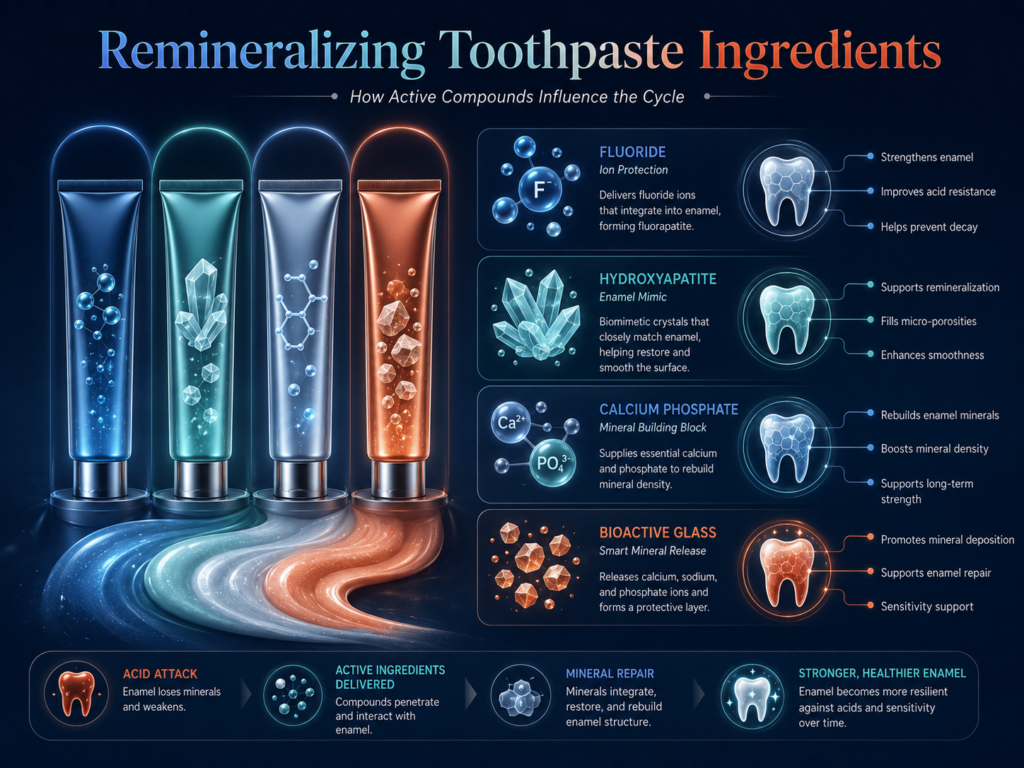
A remineralizing toothpaste should be assessed according to its ability to support mineral recovery without adding excessive abrasive or acidic stress.
The front label alone is not enough. Formulation, concentration, delivery, compatibility and frequency of use determine how an active ingredient behaves.
Fluoride
Fluoride is among the most extensively established ingredients for reducing caries-related mineral loss. It encourages remineralization, reduces demineralization and helps produce a more acid-resistant mineral surface.
The ADA recognizes topical fluoride as a safe and effective method for preventing and controlling dental caries when used as directed. Topical fluoride is available through toothpaste, rinses, gels and professional treatments.
Fluoride should not be described as a universal shield against every form of erosion. Its protective effect can vary with the fluoride compound, concentration, product formulation and severity of the acid challenge. The ADA notes that evidence supports benefits from some fluoride treatments against erosion, but effectiveness differs between preparations.
Hydroxyapatite
Hydroxyapatite is chemically similar to the mineral phase of enamel. Toothpaste formulations may use micro- or nano-scale hydroxyapatite particles intended to interact with surface irregularities and provide calcium-phosphate material.
Clinical and in situ research has reported remineralizing effects for hydroxyapatite toothpaste in early lesions. Some studies have found comparable performance to lower-fluoride controls under particular experimental conditions, while systematic reviews have also described the certainty of evidence as limited or variable.
Hydroxyapatite is best understood as a biomimetic mineral-delivery strategy, not proof that a lost enamel layer can be regrown.
Stannous fluoride
Stannous fluoride delivers fluoride while the stannous component may form deposits on dental surfaces. Depending on formulation, it may provide benefits related to sensitivity, plaque control and protection against erosive challenges.
Its performance is formulation-sensitive. Stabilization, ingredient compatibility and contact time influence how much active stannous ion remains available.
Sodium fluoride
Sodium fluoride is widely used for caries prevention and enamel remineralization. It supplies fluoride ions efficiently but does not provide the same stannous-derived surface effects associated with stabilized stannous fluoride formulations.
Sodium monofluorophosphate
Sodium monofluorophosphate is another fluoride source used in toothpaste. Fluoride becomes available through enzymatic activity in the mouth. Its effectiveness depends on the full formulation and compatible abrasive system.
Calcium-phosphate systems
Calcium-phosphate technologies are designed to keep mineral ions available near the tooth surface. Examples include amorphous calcium phosphate systems and casein phosphopeptide-amorphous calcium phosphate.
Some are intended for high-risk situations or professional recommendation. Milk-derived casein systems may be unsuitable for individuals with certain milk-protein allergies and should not be selected without checking product instructions and professional advice.
Bioactive glass
Bioactive glass ingredients release mineral ions when exposed to oral fluid. They are used in some products for remineralization and sensitivity management. Research reviews have reported remineralizing potential for bioactive-glass toothpaste, although product-specific evidence remains important.
Arginine and bicarbonate
Arginine-containing products may support a less acidic plaque environment through bacterial metabolism, while bicarbonate contributes buffering and cleaning effects. These ingredients may improve the ecological conditions surrounding enamel but should not automatically be treated as direct substitutes for established remineralizing actives.
Remineralizing toothpaste comparison table
| Ingredient system | Main role | Strongest practical use | Important limitation |
|---|---|---|---|
| Sodium fluoride | Enhances remineralization and acid resistance | Daily caries prevention | Does not replace missing enamel |
| Stannous fluoride | Fluoride protection plus surface deposition | Erosion-prone teeth, sensitivity and plaque control | Performance depends heavily on stabilization |
| Hydroxyapatite | Biomimetic calcium-phosphate delivery | Early mineral weakness and sensitivity-focused routines | Evidence and concentrations vary by product |
| CPP-ACP | Maintains calcium and phosphate availability | Selected high-risk or professionally guided cases | Not suitable for some milk-protein allergies |
| Bioactive glass | Releases mineral-forming ions | Sensitivity and mineral-support products | Product-specific evidence is necessary |
| Bicarbonate | Buffers acids and supports cleaning | High-acid or plaque-prone routines | Not a complete remineralizing system alone |
| Arginine systems | Supports a less acidogenic plaque environment | Caries-risk management | Does not restore lost tooth structure |
How to choose a formula
A suitable toothpaste should match the dominant risk.
For frequent cavities, fluoride strength and plaque control may be central.
For erosive wear, low abrasivity, acid-exposure control and surface protection matter.
For sensitivity, stannous fluoride, hydroxyapatite or other tubule-occluding technologies may be useful.
For dry mouth, strong flavors, harsh detergents or irritating formulations may reduce comfort and adherence.
For children, toothpaste quantity, swallowing risk and age-appropriate fluoride guidance must be considered.
The best formula is not the one with the longest ingredient list. It is the one that addresses the person’s actual mineral-loss pathway and can be used consistently without creating another source of irritation or wear.
Biomimetic Mineral Repair and the Future of Enamel Protection
Biomimetic dentistry attempts to work with the chemistry, structure and mechanical behavior of natural dental tissues.
In enamel care, this can include hydroxyapatite particles, calcium-phosphate reservoirs, peptide-guided mineralization, bioactive glasses and materials designed to attach selectively to weakened surfaces.
The goal is not merely to place minerals in toothpaste. It is to deliver them in a form, concentration and environment that allows meaningful interaction with the tooth.
The Homepage provides access to Hydropaste’s broader oral-care research and product-analysis center.
For a deeper examination of these materials, explore Biomimetic Dentistry.
Surface deposition is not the same as deep regeneration
A product may deposit particles on enamel, reduce roughness or improve measured surface hardness without reconstructing the original architecture of the enamel rods.
This distinction is essential when interpreting product claims.
A material can be clinically valuable even if it does not regrow enamel. Reducing sensitivity, sealing microscopic defects, increasing acid resistance or helping arrest an early lesion can still represent meaningful protection.
The formulation problem
An active ingredient may perform differently depending on:
Particle size.
Particle shape.
Concentration.
Solubility.
Residence time.
Toothpaste pH.
Abrasive system.
Surfactants.
Binding agents.
Interaction with saliva.
Whether fluoride is also present.
Two products displaying the same featured ingredient may therefore produce different results.
The next phase of biomimetic enamel science
Future technologies are likely to focus less on placing a generic mineral layer over teeth and more on controlling where crystals nucleate, how they orient and whether they integrate with remaining enamel.
The major scientific challenge is structural organization. Natural enamel is not simply compressed calcium powder. Its strength comes from a highly ordered crystal arrangement created during tooth development. Replicating that organization on an erupted adult tooth remains far more difficult than depositing a surface mineral.
How to Stop Enamel Erosion by Changing the Entire Cycle
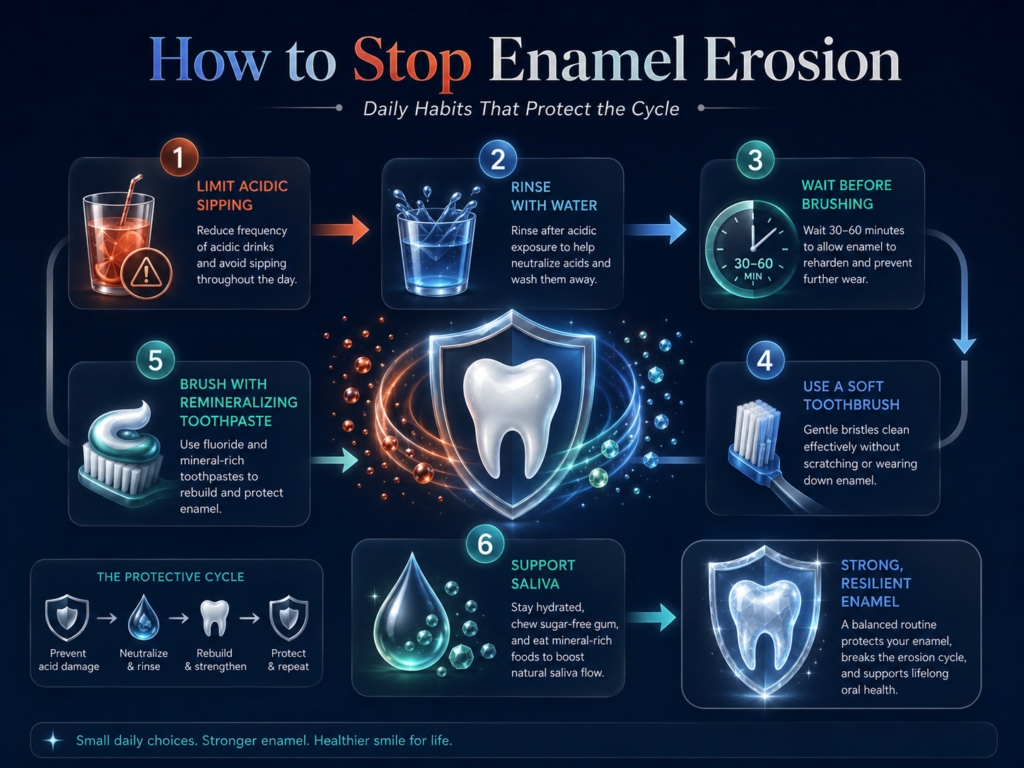
The most effective strategy combines exposure control, salivary recovery, mineral support and mechanical protection.
Step 1: Reduce the frequency of acid exposure
Consume acidic foods and drinks within defined meal periods instead of sipping or grazing continuously.
This does not require eliminating every citrus fruit, coffee or fermented food. It requires preventing the mouth from remaining in a near-continuous acid challenge.
Step 2: Shorten contact time
Do not hold acidic liquid in the mouth.
Avoid swishing carbonated drinks, sports drinks or citrus beverages around the teeth.
When appropriate, use a straw positioned to reduce contact with the front teeth rather than directing liquid across them. The ADA includes reduced contact and avoiding swishing among its erosion-prevention recommendations.
Step 3: Use water as the transition
Rinse with plain water after acidic foods or drinks. Water dilutes residual acid and supports clearance without adding abrasiveness.
After vomiting or reflux, the priority is also to rinse rather than immediately scrub the teeth. The ADA recommends water, a bicarbonate rinse or milk after vomiting.
Step 4: Protect the recovery window
Avoid immediate aggressive brushing after a major acid exposure.
Research on the ideal waiting period is not perfectly uniform. Some laboratory and in situ studies have found that delayed brushing reduces abrasion of softened enamel, while other studies suggest that waiting alone does not completely prevent wear.
The practical lesson is not that a specific waiting time guarantees safety. It is that acid frequency must be reduced and brushing should remain gentle, particularly when the teeth have just been exposed to a strong acid challenge.
Step 5: Brush with a soft-bristled brush
Use controlled pressure and allow the toothpaste rather than force to perform the cleaning.
Normal brushing with a soft-bristled brush and suitable fluoride toothpaste is not considered a primary cause of erosive wear, but excessive force and abrasive products can worsen a chemically softened surface.
Step 6: Keep the protective ingredients in contact
After brushing, avoid repeatedly rinsing away every trace of toothpaste unless product instructions or a dental professional advise otherwise.
This can extend contact between the enamel and the active ingredients.
Step 7: Support saliva
Drink sufficient water.
Address persistent mouth breathing.
Use sugar-free gum where appropriate.
Avoid using acidic sweets or drinks as dry-mouth remedies.
Review chronic dry mouth with a dentist or physician.
Step 8: Investigate intrinsic acid
Recurrent reflux, sour taste on waking, nighttime coughing, repeated vomiting or unexplained erosion on the inner surfaces of upper teeth should not be managed only with toothpaste.
The acid source must be identified and treated.
Step 9: Reduce unnecessary abrasivity
Be cautious with charcoal powders, aggressive whitening pastes, acidic home mixtures and frequent polishing.
An abrasive product may remove surface stains while also increasing wear on already weakened enamel.
Step 10: Monitor the surface, not just sensitivity
Sensitivity can fluctuate. Tooth shape is a more important long-term marker.
Watch for flattening, rounded edges, cupping, translucency, yellowing caused by thinner enamel or changes in the way the teeth meet.
Condition-Specific Enamel Remineralization Strategies
A universal remineralization routine overlooks the cause of mineral loss. The same toothpaste can perform very differently in different oral environments.
Frequent acidic-drink consumption
The main target is exposure architecture.
Keep acidic drinks with meals.
Avoid continuous sipping.
Use water between exposures.
Do not swish.
Select a low-abrasion protective toothpaste.
The problem is not simply what the drink contains. It is how long the teeth remain exposed.
Gastroesophageal reflux
Reflux-related erosion requires medical and dental coordination.
Nighttime reflux may be especially damaging because salivary flow and swallowing decrease during sleep. The ADA identifies reflux as a major intrinsic source of dental erosion.
A protective toothpaste may reduce secondary damage, but it cannot eliminate gastric acid entering the mouth.
Recurrent vomiting
Rinse first. Do not immediately brush.
A neutralizing rinse may be appropriate, but persistent vomiting requires medical assessment. The oral-care strategy should be supportive rather than judgmental.
Dry mouth
Increase non-acidic hydration and salivary stimulation.
Choose a toothpaste that does not cause burning or dryness.
Limit alcohol-containing products where they worsen symptoms.
Ask a dentist about higher-intensity preventive care if cavities or erosion continue.
Endurance exercise
Athletes may combine dehydration, reduced saliva, mouth breathing, sports drinks and reflux. This creates a high-risk erosion pattern even when general health and fitness are excellent.
Water should remain the default hydration source unless carbohydrate or electrolyte replacement is genuinely needed. When sports drinks are used, they should not be held or swished around the teeth.
Orthodontic treatment
Plaque retention around brackets can increase localized caries-related demineralization. Acidic beverages can add a separate erosion pathway.
The priority is meticulous plaque removal, fluoride exposure where appropriate and avoidance of frequent acidic drinks.
Whitening-focused routines
A person seeking whiter teeth may unknowingly respond to early enamel thinning by using increasingly abrasive whitening products. As enamel becomes thinner, the naturally yellower dentin underneath can become more visible, making the teeth appear darker despite greater surface wear.
The correct strategy is to identify whether discoloration comes from surface stain, internal color, enamel thinning or active erosion before escalating whitening.
Children and adolescents
Developing habits matter as much as individual products.
Frequent juice, sour candy, carbonated beverages and sports drinks can create repeated acid exposure. Toothpaste use must also follow age-appropriate quantities and professional guidance to reduce swallowing.
Older adults
Gum recession, exposed root surfaces, medications, dry mouth and accumulated restorations can complicate mineral management.
Root dentin is more vulnerable than enamel to acidic conditions. Prevention must therefore include moisture management, gentle cleaning and professional assessment of exposed surfaces.
Signs That Enamel Erosion Needs Professional Evaluation
Early erosion can be difficult to recognize without a dental examination. Once sensitivity or visible shape changes appear, the process may already be established.
The ADA lists loss of surface texture, cupping, flattening and a glossy or melted appearance among the clinical signs of erosive tooth wear.
Signs to monitor
Increasing sensitivity to cold, heat, sweetness or touch.
Rounded or transparent front-tooth edges.
Shallow cups on chewing surfaces.
Teeth appearing shorter or flatter.
A smooth, silky or unusually glossy surface.
Yellowing that does not respond as expected to stain removal.
Cracks or chips appearing without major trauma.
Changes in the bite.
Fillings appearing raised because the surrounding tooth has worn away.
Persistent sour taste or reflux symptoms.
Repeated white spots near the gumline or around orthodontic brackets.
Seek timely dental assessment when
Sensitivity is persistent or localized to one tooth.
The tooth shape is visibly changing.
Dentin appears exposed.
A tooth has fractured.
Reflux or vomiting is recurrent.
Dry mouth is chronic.
Pain occurs during biting.
A white spot becomes rough, dark or cavitated.
The teeth no longer meet normally.
A professional evaluation can distinguish erosion from caries, abrasion, grinding, developmental enamel defects and other causes of tooth wear. Treating the wrong mechanism can allow the actual problem to continue.
The Enamel Balance Framework: Measuring Your Daily Cycle
A person cannot directly measure mineral exchange at home, but the risk pattern can be assessed.
The following framework focuses on behaviors that increase acid pressure and conditions that reduce recovery.
Enamel balance scorecard
Assign one point for each statement that applies on most days.
| Risk indicator | Point |
|---|---|
| I sip an acidic drink for more than 30 minutes | 1 |
| I have acidic foods or drinks more than three times daily | 1 |
| I regularly swish or hold beverages in my mouth | 1 |
| I experience reflux, sour taste or recurrent vomiting | 1 |
| My mouth frequently feels dry | 1 |
| I breathe through my mouth during sleep or exercise | 1 |
| I brush aggressively or use a hard-bristled brush | 1 |
| I use abrasive whitening or charcoal products frequently | 1 |
| I grind or clench my teeth | 1 |
| I have increasing sensitivity or visible tooth-shape changes | 1 |
Interpretation
| Score | Likely pattern | Suggested response |
|---|---|---|
| 0–2 | Lower apparent erosion pressure | Maintain routine and monitor |
| 3–4 | Moderate cumulative pressure | Reduce exposure frequency and review products |
| 5–6 | High erosion pressure or weak recovery | Arrange a dental risk assessment |
| 7–10 | Multiple interacting risk factors | Seek professional evaluation promptly |
This scorecard is an educational screening model, not a diagnostic instrument. A person with a score of one may still have significant erosion if that single factor is severe, such as frequent gastric acid exposure.
Seven-day mineral-balance journal
For one week, record:
The number of acidic exposures.
Whether each exposure occurred with a meal.
How long the drink or food remained in contact with the teeth.
Dry-mouth periods.
Reflux or vomiting episodes.
Brushing timing and pressure.
Toothpaste used.
Sensitivity patterns.
This often reveals a hidden problem. A person may believe they consume “only one energy drink per day,” yet the journal shows that each can is sipped over four hours. The quantity sounds modest; the contact pattern is not.
Common Mistakes That Keep the Cycle Tilted Toward Erosion
Treating remineralization as a coating project
Enamel protection is not achieved by painting minerals onto teeth while continuing the same acid exposure. Product use must be paired with exposure control.
Focusing only on sugar
Sugar is central to caries risk, but acidity can damage enamel even without sugar. Diet soda, sparkling beverages, citrus water and sugar-free sour candy may still create erosion pressure.
Assuming natural means non-erosive
Fruit juice, kombucha, vinegar drinks and citrus products may be natural while remaining chemically acidic.
Brushing harder to remove roughness
A softened or eroded surface may feel unusual. Increasing brushing pressure can intensify mechanical wear rather than repair the problem.
Using lemon or vinegar for whitening
Acid may temporarily change the surface appearance while dissolving mineral. The brightness comes at the expense of enamel integrity.
Relying on sensitivity as the only warning
Erosion can progress without pain. Visible contour changes, translucency and cupping may be more important than momentary sensitivity.
Assuming every white spot is erosion
A white spot may represent early caries, fluorosis, developmental enamel change, dehydration or another condition. Diagnosis matters because the treatment pathway differs.
Expecting lost enamel to grow back
Remineralization can strengthen remaining tissue. It cannot recreate missing anatomical shape.
Ignoring reflux
A high-quality toothpaste cannot compensate for repeated gastric acid exposure. The underlying condition must be addressed.
Changing products too frequently
Constantly switching between toothpastes makes it difficult to judge tolerance, sensitivity improvement or progression. A stable routine paired with professional monitoring produces more useful information.
Editorial Insights: The Future Is Mineral-Balance Management
The most useful way to think about enamel is not as a permanent shell and not as a tissue that can endlessly regenerate. It is a mineral structure with a limited but meaningful capacity for chemical recovery.
That capacity is strongest before surface architecture is lost.
The future of enamel care will likely move away from broad claims such as “strengthens teeth” and toward more precise mineral-balance systems. These systems will account for acid frequency, salivary function, lesion stage, tooth location, toothpaste abrasivity, active-mineral delivery and individual exposure patterns.
Biomimetic materials may improve the precision of surface repair. Fluoride technologies may become more targeted. Saliva-support products may become increasingly important as medication-related dry mouth becomes more common. Digital imaging may also make it easier to detect small changes in enamel volume before sensitivity or visible damage develops.
Yet the central principle is unlikely to change: preventing repeated mineral loss remains more reliable than trying to rebuild tissue after its structure has disappeared.
The winning strategy is not simply to add more minerals. It is to create enough uninterrupted time for those minerals to matter.
Frequently Asked Questions About Enamel Remineralization and Erosion
Can enamel remineralization repair acid erosion?
Enamel remineralization can strengthen an early softened surface and replace some minerals within enamel that remains physically present. It cannot recreate enamel thickness or tooth shape that has already been dissolved or worn away. Advanced acid erosion may require restorative treatment.
What is the best remineralizing toothpaste for enamel erosion?
The best remineralizing toothpaste depends on the cause of damage. Fluoride toothpaste has strong support for preventing caries-related mineral loss. Stabilized stannous fluoride may provide additional surface and sensitivity benefits, while hydroxyapatite and other calcium-phosphate technologies may support mineral deposition. Low abrasivity is especially important when enamel is already erosion-prone.
How long does tooth remineralization take?
Mineral exchange begins whenever the oral environment becomes favorable, but clinically meaningful improvement depends on lesion depth, salivary flow, acid frequency, active ingredients and adherence. Early lesions may require weeks or months of consistent protection. Visible missing enamel will not return regardless of treatment duration.
Does saliva remineralize teeth naturally?
Yes. Saliva provides calcium and phosphate, clears acids, buffers oral pH and forms a protective pellicle. Fluoride and other topical minerals can strengthen this natural process. Reduced saliva weakens both acid clearance and mineral recovery.
How can I stop enamel erosion from getting worse?
Reduce acidic exposures, avoid continuous sipping, rinse with water, use a soft-bristled brush, select a low-abrasion protective toothpaste, support saliva and investigate reflux or recurrent vomiting. Visible wear, persistent sensitivity or changes in tooth shape require a dental examination.
People Also Ask About Demineralization vs Remineralization
What is the difference between enamel demineralization and erosion?
Demineralization describes mineral leaving the tooth. Erosion describes progressive chemical dissolution and loss of dental tissue caused by acids not produced by bacteria. Demineralization may occur without visible loss of shape, while advanced erosion changes the physical contour of the tooth.
Can demineralized enamel become hard again?
Early demineralized enamel may regain mineral density when saliva, calcium, phosphate and protective toothpaste ingredients are present and acid exposure is controlled. Once the surface has cavitated or been physically worn away, remineralization cannot restore the missing structure.
Is enamel erosion the same as a cavity?
No. Erosion is typically caused by direct dietary or gastric acids. Cavities develop through a plaque-mediated disease process in which bacteria produce acids from fermentable carbohydrates. Both processes can occur on the same tooth.
Should you brush immediately after drinking something acidic?
Avoid aggressive brushing immediately after a strong acid exposure. Rinse with water and reduce the frequency and duration of acid contact. Evidence on a precise waiting interval is mixed, so delaying brushing should not be treated as a substitute for controlling the exposure itself.
Does hydroxyapatite toothpaste rebuild enamel?
Hydroxyapatite toothpaste may deposit mineral particles, improve surface hardness and support remineralization of some early lesions. It does not biologically regrow a missing enamel layer or recreate lost tooth anatomy. Product concentration and formulation substantially affect performance.