Saliva and Tooth Remineralization: How the Mineral Repair Process Protects Enamel
Amazon Affiliate Disclosure
HydroPaste.com may participate in affiliate programs, including the Amazon Services LLC Associates Program. Some links on this page may be affiliate links. If you purchase through one of these links, HydroPaste.com may receive a commission at no additional cost to you. Affiliate relationships do not determine the scientific analysis, product assessment or editorial conclusions presented on this page.
Introduction
Every meal creates a small chemical negotiation on the surface of the teeth.
Acids generated by oral bacteria, acidic beverages and certain foods pull calcium and phosphate from enamel. Saliva then works to clear those acids, raise oral pH and return mineral ions to weakened crystal surfaces. Whether enamel remains stable depends largely on which side of that exchange dominates over time.
This is the foundation of saliva and tooth remineralization.
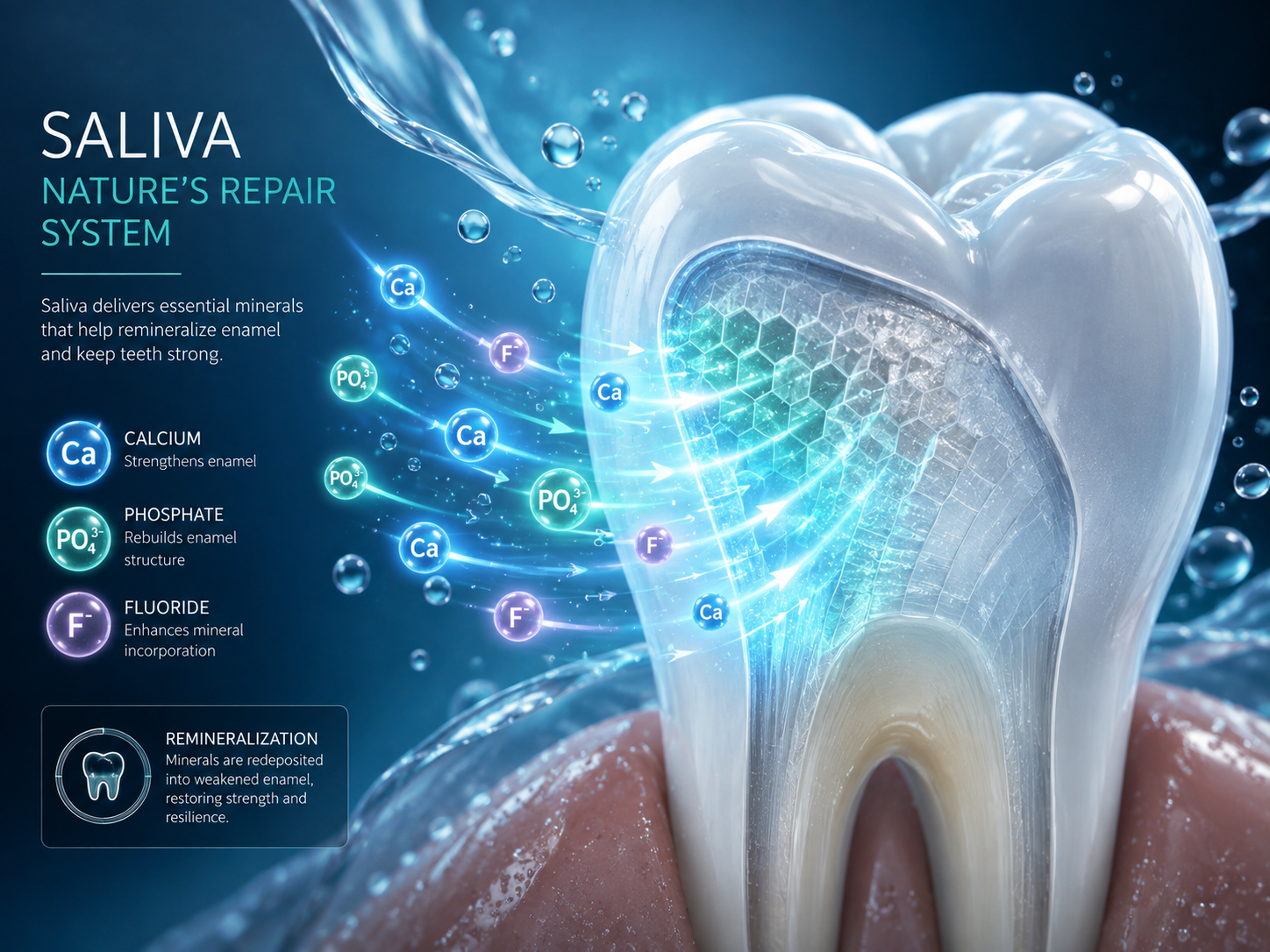
Saliva does not grow a new tooth or biologically regenerate missing enamel. Its role is more precise. It helps repair microscopic mineral loss while the enamel surface is still structurally intact. Calcium and phosphate dissolved in saliva can move back into porous areas of early enamel damage, while small amounts of fluoride can make the repaired mineral less soluble during later acid exposure.
The process is continuous rather than occasional. Teeth move through repeated periods of demineralization and remineralization every day. A person therefore does not simply have “strong” or “weak” enamel. Enamel exists inside a changing oral environment influenced by saliva flow, meal frequency, plaque accumulation, mineral availability, fluoride exposure, medication use and the amount of recovery time between acid challenges.
Understanding that system changes the way enamel care is approached. The objective is not to force minerals onto teeth once a week. It is to create more hours in which saliva can perform meaningful repair than hours in which acid repeatedly dissolves the mineral surface.
For a broader explanation of the underlying enamel science, visit the existing HydroPaste resource labeled Science.
Quick Picks: Jump to a Section
- What Is Saliva and Tooth Remineralization?
- What Is the Saliva Mineral Repair Process For?
- How Does Saliva Protect Teeth?
- The Six Stages of Saliva Remineralization
- Which Minerals in Saliva Repair Enamel?
- Demineralization vs Remineralization
- What Controls the Speed of Mineral Repair?
- Benefits of a Healthy Saliva Mineral Repair Process
- Who Needs More Remineralization Support?
- Signs Saliva Repair Is Not Keeping Up
- How to Support Saliva Remineralization
- Remineralizing Toothpaste and Mineral Technologies
- The FLOW Mineral Repair Framework
- Limits, Myths and Common Mistakes
- Upcoming Trends and Latest Enamel Repair Technology
- Frequently Asked Questions
- People Also Ask
- Editorial Insights
What Is Saliva and Tooth Remineralization?
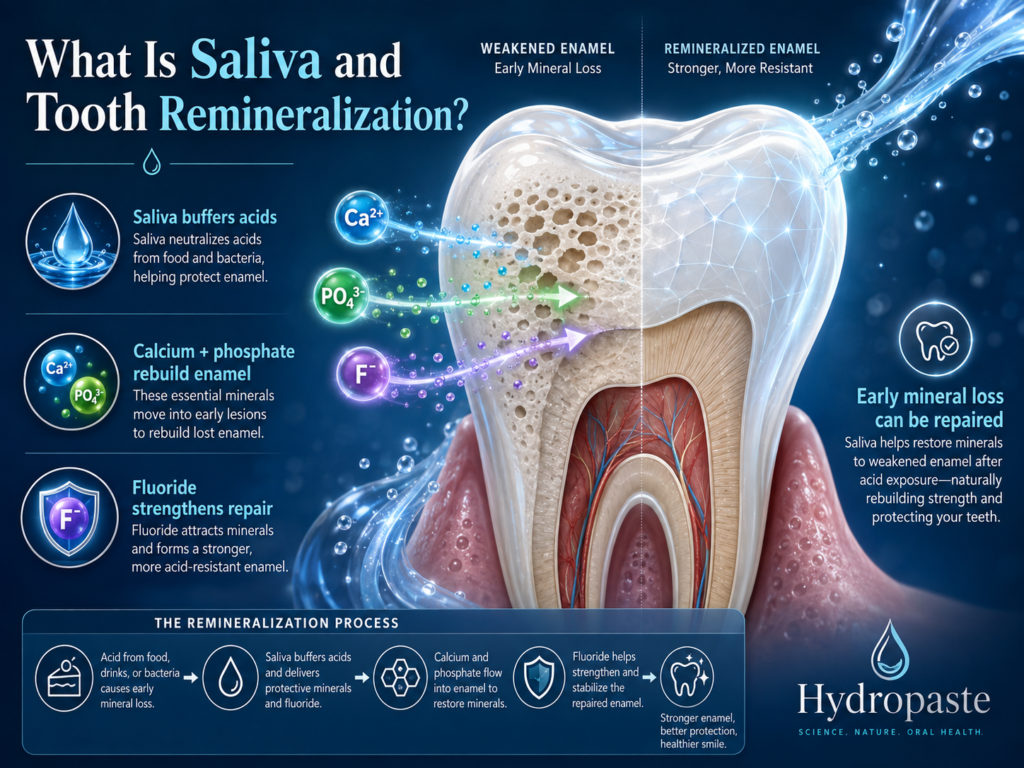
Saliva remineralization is the natural process through which calcium, phosphate and other protective components in oral fluid help restore mineral to enamel that has begun to lose density.
Tooth enamel is primarily a mineralized crystal structure. It contains no living cells capable of rebuilding a missing wall of enamel after a chip, fracture or established cavity. However, early demineralization leaves portions of the underlying crystal framework intact. Those remaining crystals can serve as nucleation sites on which dissolved minerals redeposit.
This distinction matters:
- Regeneration would mean producing entirely new biological enamel.
- Remineralization means strengthening or rebuilding mineral around surviving enamel crystals.
- Restoration means replacing missing tooth structure with a dental material.
Natural remineralization is therefore a repair process, but it operates within strict structural limits.
A chalky white spot may represent subsurface mineral loss beneath an outer layer that remains physically present. In suitable conditions, minerals can diffuse into that porous lesion and improve its mineral density. A visible hole, broken edge or deep cavitated lesion no longer offers the same intact framework and usually requires professional treatment. NIDCR distinguishes early decay that may be stopped or reversed from more advanced decay that has formed a cavity.
Enamel Repair at Three Different Levels
| Level of damage | What has happened | Can saliva help? | Typical management direction |
|---|---|---|---|
| Temporary surface softening | Acid has weakened the outer mineral surface | Yes, especially when acid exposure stops | Saliva recovery, fluoride, reduced acid frequency |
| Noncavitated white spot lesion | Subsurface mineral has been lost but the surface remains largely intact | Potentially | Risk control, remineralizing care and dental monitoring |
| Cavitated lesion | Tooth structure has collapsed and a physical hole is present | Saliva cannot rebuild the missing form | Professional assessment and restorative treatment |
| Chip, crack or severe erosion | Enamel has been physically removed | No biological regrowth | Protection, bonding, restoration or other dental care |
What Is the Saliva Mineral Repair Process For?
The saliva mineral repair process serves four connected purposes: protecting enamel before significant mineral loss begins, limiting damage during acid exposure, rebuilding early mineral loss and preparing the tooth surface to withstand the next acidic challenge.
Maintaining Mineral Equilibrium
Healthy saliva normally contains dissolved calcium and phosphate. Under favorable oral conditions, the fluid surrounding enamel can remain sufficiently saturated with these ions that tooth mineral is less likely to dissolve.
Once oral conditions become strongly acidic, the chemical balance changes. Mineral begins moving out of enamel and into the surrounding plaque fluid. When saliva clears the acids and restores a more favorable environment, the direction can reverse.
Neutralizing Acids
Saliva contains buffering systems, particularly bicarbonate and phosphate, that help raise oral pH after acids are produced or introduced. Salivary flow also dilutes and physically clears sugars, acids and food residues.
This buffering phase is essential. Calcium and phosphate cannot meaningfully rebuild enamel while the environment remains persistently unfavorable to mineral stability. Saliva must first move the mouth out of the demineralizing phase.
Delivering Repair Minerals
Once the environment becomes less acidic, calcium and phosphate in saliva and plaque fluid can diffuse toward weakened enamel. They deposit around remaining crystal structures rather than forming a completely separate replacement tooth surface.
Supporting More Acid-Resistant Mineral
Low levels of fluoride in the fluid around the tooth can accelerate mineral precipitation and contribute to a repaired mineral phase that is more resistant to later acid dissolution. Fluoride works mainly through topical contact with teeth rather than by making enamel permanently invulnerable.
Protecting Exposed Dentin
Saliva also participates in mineral deposition on exposed dentin, although dentin differs structurally from enamel. Mineral-depositing ingredients may help reduce sensitivity by narrowing or blocking open dentinal tubules, but persistent sensitivity should not automatically be assumed to be harmless demineralization.
How Does Saliva Protect Teeth?
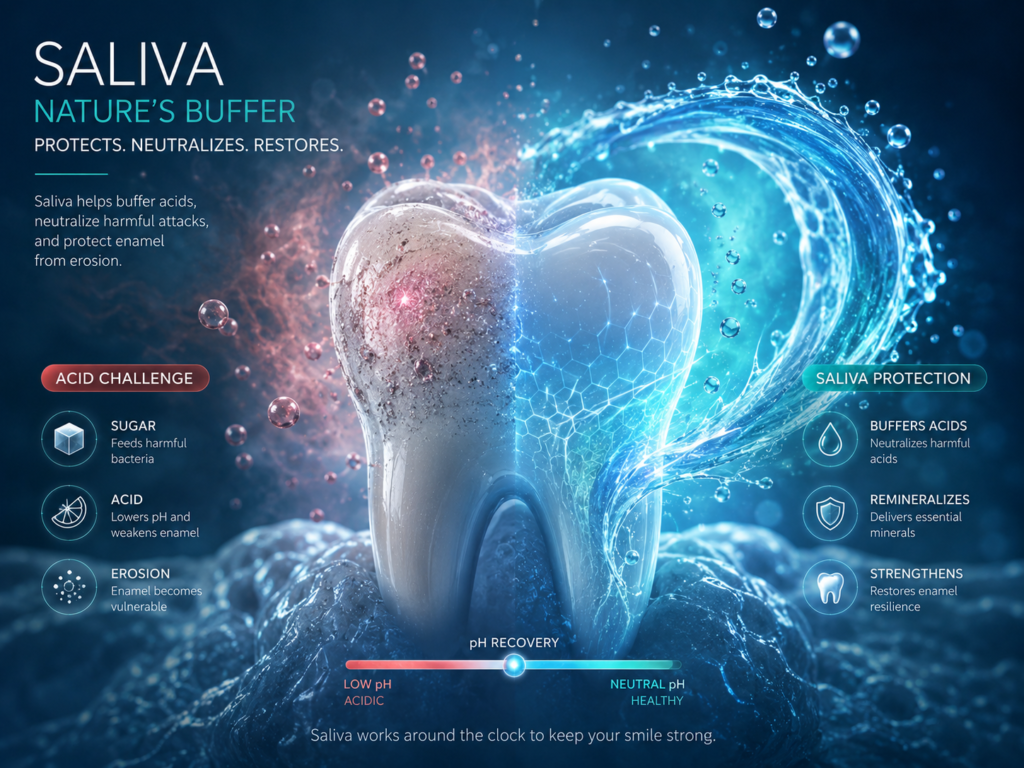
The question “how does saliva protect teeth?” is often answered too narrowly. Saliva does not protect enamel through one mechanism. It operates as a coordinated defensive system.
1. Saliva Dilutes Acids and Sugars
A larger volume of fluid reduces the concentration of acidic compounds around teeth. Swallowing then removes part of that diluted material from the oral cavity.
Clearance is not equal across the entire mouth. Areas near major salivary gland openings may recover faster, while plaque-retentive areas between teeth, around orthodontic appliances and along crowded surfaces may remain acidic for longer.
2. Saliva Buffers Oral pH
Bicarbonate becomes particularly important when salivary flow is stimulated. As flow rises, buffering capacity generally improves, helping plaque fluid move away from conditions that favor enamel dissolution.
The idea of a single universal “critical pH” should be used cautiously. Enamel is often described as becoming vulnerable near pH 5.5, but the true point at which mineral begins dissolving depends on calcium, phosphate, fluoride and local plaque-fluid chemistry. A mouth with poor mineral saturation may become demineralizing at a different pH from a well-buffered environment.
3. Saliva Supplies Calcium and Phosphate
Calcium and phosphate are the primary mineral building blocks involved in natural enamel repair. Saliva keeps these ions available near tooth surfaces and within dental plaque fluid.
A 2024 chemical review described natural saliva-driven remineralization as the crystallization of calcium-deficient hydroxyapatite from saliva that is supersaturated with respect to tooth mineral.
4. Saliva Carries Fluoride
Fluoride from toothpaste, drinking water, mouthrinse or professional treatment can remain in oral fluids and plaque reservoirs. During recovery after an acid challenge, small amounts of fluoride encourage mineral redeposition and reduce future mineral solubility.
5. Saliva Forms the Acquired Enamel Pellicle
Within minutes of cleaning, salivary proteins adsorb to enamel and form an ultrathin, cell-free layer known as the acquired enamel pellicle.
The pellicle is not the same as bacterial plaque. It is a protein-rich conditioning film that can reduce direct contact between acids and the enamel surface, regulate mineral interactions and influence which bacteria initially attach to the tooth. Its protection is incomplete, but it functions as a biologically organized interface between enamel and the oral environment.
6. Saliva Supports Oral Microbial Balance
Saliva contains proteins, peptides and enzymes involved in microbial control and tissue protection. It also prevents the oral environment from becoming stagnant.
Saliva cannot wash away established plaque by itself. Mechanical brushing and interdental cleaning remain necessary because organized biofilm can hold acid directly against enamel even when the rest of the mouth appears adequately moist.
7. Saliva Lubricates Tooth and Soft-Tissue Surfaces
Lubrication reduces friction during chewing, speaking and swallowing. It also helps protect oral tissues from mechanical irritation.
A mouth that feels dry may therefore experience more than discomfort. Reduced salivary secretion can undermine acid clearance, buffering, microbial control and mineral delivery at the same time. NIDCR and the ADA both identify reduced saliva as an important contributor to increased cavity risk.
The Six Stages of Saliva Remineralization
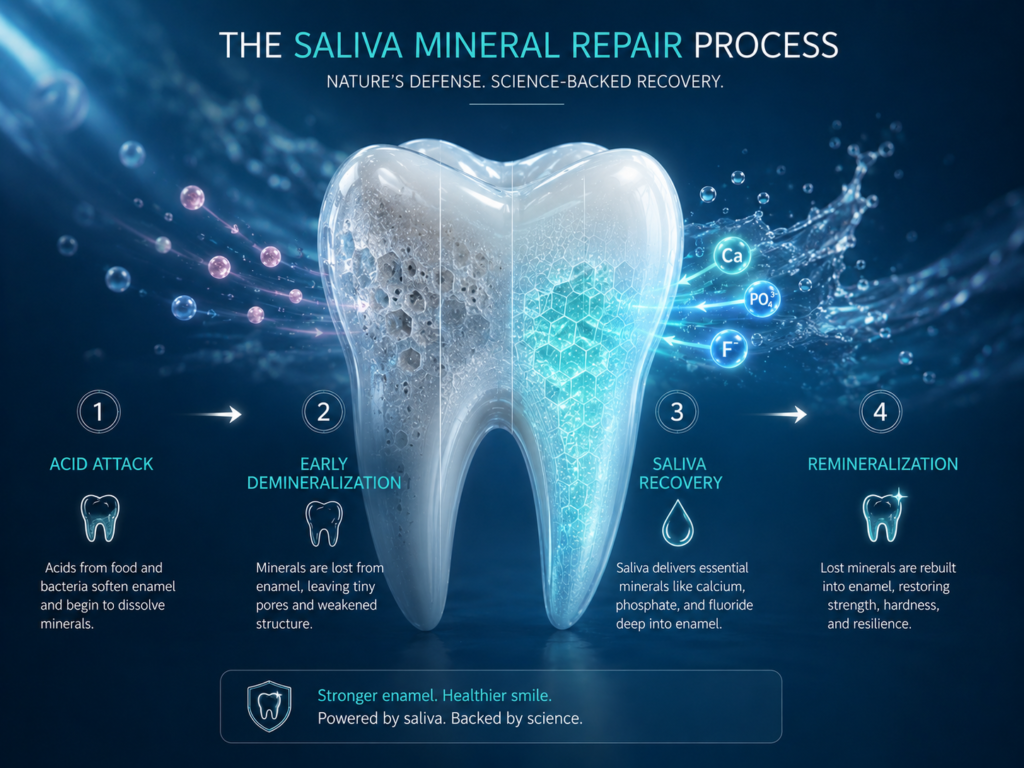
The mineral repair process is best understood as a sequence rather than a single event.
Stage 1: The Acid Challenge Begins
Fermentable carbohydrates enter dental plaque, where acid-producing bacteria metabolize them. Acids can also reach enamel directly through soft drinks, citrus products, sports drinks, gastric reflux or recurrent vomiting.
The hydrogen-ion concentration around the tooth rises. As the local environment becomes undersaturated with respect to enamel mineral, calcium and phosphate begin leaving the crystal structure.
Stage 2: Surface and Subsurface Mineral Dissolve
Acid moves through microscopic spaces in enamel. In early caries, mineral loss may be more pronounced below the surface than at the outermost layer.
This is why an early lesion can appear white even though the enamel surface has not yet collapsed. Changes in porosity alter how light passes through the tissue.
Stage 3: Saliva Dilutes and Clears the Challenge
Salivary fluid dilutes acids and sugars. Cheek, tongue and swallowing movements help remove the diluted material.
The frequency of acid exposure matters because a second snack or drink can restart the acid cycle before the first recovery period has finished.
Stage 4: Buffering Raises pH
Bicarbonate, phosphate and salivary proteins help neutralize the environment. As pH rises, the chemical force pulling mineral out of enamel weakens.
The tooth has not yet “repaired” at this point. It has simply moved from an environment favoring mineral loss toward one in which mineral gain becomes possible.
Stage 5: Calcium and Phosphate Return to Enamel
Mineral ions in saliva and plaque fluid diffuse toward partially dissolved crystals. Deposition occurs preferentially around remaining crystal structures.
Fluoride can speed this process and support the formation of a less soluble mineral surface. Remineralization is therefore not simply the deposit of a thick external coating. It can involve mineral movement into porous enamel where the lesion remains open enough for ion diffusion.
Stage 6: The Surface Becomes More Resistant
Successful remineralization can increase mineral density, improve surface hardness and reduce lesion activity. The repaired region may become more resistant to later acid exposure, especially when fluoride has been available during mineral precipitation.
Visual appearance may improve more slowly than mineral chemistry. A white spot can remain visible after lesion activity has declined because color and light scattering do not always normalize at the same rate as mineral density.
Conceptual Mineral-Balance Chart
This chart illustrates directional pressure rather than a clinical measurement.
| Oral condition | Demineralization pressure | Remineralization opportunity |
|---|---|---|
| Frequent sugary drinks | ██████████ | ██ |
| Acidic sipping throughout the day | █████████ | ██ |
| Heavy plaque with poor cleaning | ████████ | ███ |
| Dry mouth or low salivary flow | ████████ | ██ |
| Meals separated by recovery periods | ████ | ███████ |
| Effective fluoride exposure | ███ | ████████ |
| Healthy saliva flow and controlled snacking | ██ | █████████ |
| Saliva support plus appropriate mineral care | ██ | ██████████ |
Which Minerals in Saliva Repair Enamel?
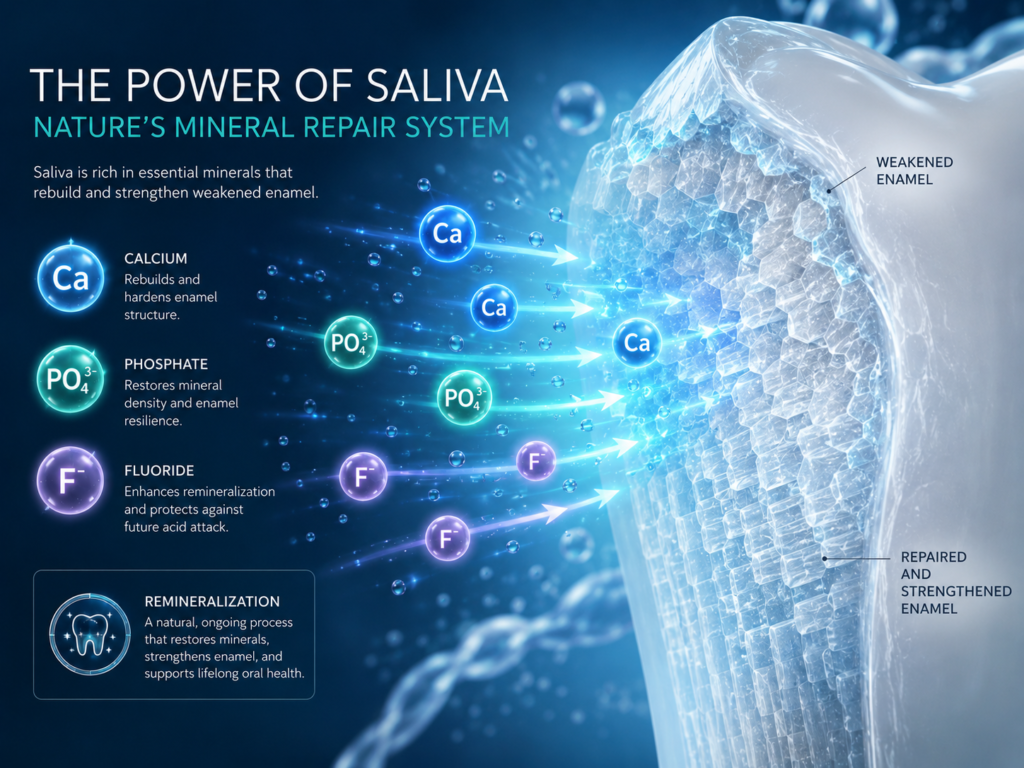
The phrase “minerals in saliva” can suggest that saliva is a simple liquid calcium supplement. Its chemistry is considerably more complex.
Minerals must remain dissolved, reach the tooth at the appropriate time and precipitate in a structure compatible with existing enamel. Proteins, pH, ionic concentration, biofilm chemistry and fluoride availability all influence the result.
Calcium
Calcium is a principal component of hydroxyapatite, the mineral family that gives enamel its hardness.
During an acid challenge, calcium can leave enamel. During recovery, calcium in saliva and plaque fluid can move back toward partially dissolved crystals. Calcium concentration alone does not determine success. Without adequate phosphate, suitable pH and intact crystal remnants, simply introducing more calcium does not guarantee deeper repair.
Phosphate
Phosphate combines with calcium during mineral formation. It also participates in oral buffering.
The relationship between calcium and phosphate is important because both ions must be available in a chemically useful form. Some remineralizing technologies are designed to stabilize these minerals until they reach the tooth surface.
Fluoride
Fluoride is present at much lower concentrations than calcium or phosphate, yet it can meaningfully influence the direction and speed of mineral exchange.
It reduces demineralization under acidic conditions and accelerates remineralization when pH recovers. Topical fluoride also affects bacterial acid production. It should be understood as a catalyst and protective modifier of mineral repair rather than the sole raw material from which enamel is constructed.
Bicarbonate
Bicarbonate is not a major structural component of enamel repair in the way calcium and phosphate are. Its importance lies in buffering.
Higher salivary flow generally brings greater bicarbonate availability, improving the mouth’s capacity to neutralize acids and reopen the remineralization window.
Magnesium, Carbonate and Trace Ions
Natural enamel is not chemically perfect laboratory hydroxyapatite. It contains substitutions and trace ions that influence crystal behavior.
Carbonate substitutions, for example, contribute to the biological character of enamel but can make parts of the mineral more acid-soluble. Research into ion-doped hydroxyapatite is exploring whether modified mineral particles can reproduce useful properties of natural dental mineral while improving acid resistance.
Salivary Proteins and Peptides
Proteins such as statherin and proline-rich proteins help regulate calcium-phosphate chemistry. They prevent uncontrolled mineral precipitation in saliva while still allowing mineral interactions at the tooth surface.
This regulatory function solves a biological problem: saliva must carry enough calcium and phosphate to support teeth without turning the salivary glands and ducts into mineralized structures.
Mineral Function Table
| Salivary component | Primary role | Direct enamel-building role | Strategic importance |
|---|---|---|---|
| Calcium | Structural mineral supply | High | Replenishes calcium around weakened crystals |
| Phosphate | Structural mineral and buffer | High | Combines with calcium and supports pH control |
| Fluoride | Mineral repair catalyst and acid-resistance modifier | Moderate by quantity, high by effect | Accelerates repair and limits future dissolution |
| Bicarbonate | Acid neutralization | Low | Creates the pH conditions required for repair |
| Salivary proteins | Ion stabilization and surface regulation | Indirect | Controls precipitation and pellicle formation |
| Water | Dilution and transport | Indirect | Moves ions, clears acids and supports swallowing |
| Antimicrobial peptides and enzymes | Microbial regulation | Indirect | Helps limit acid-producing ecological pressure |
For a deeper breakdown of calcium, phosphate, fluoride and hydroxyapatite, read what minerals rebuild tooth enamel.
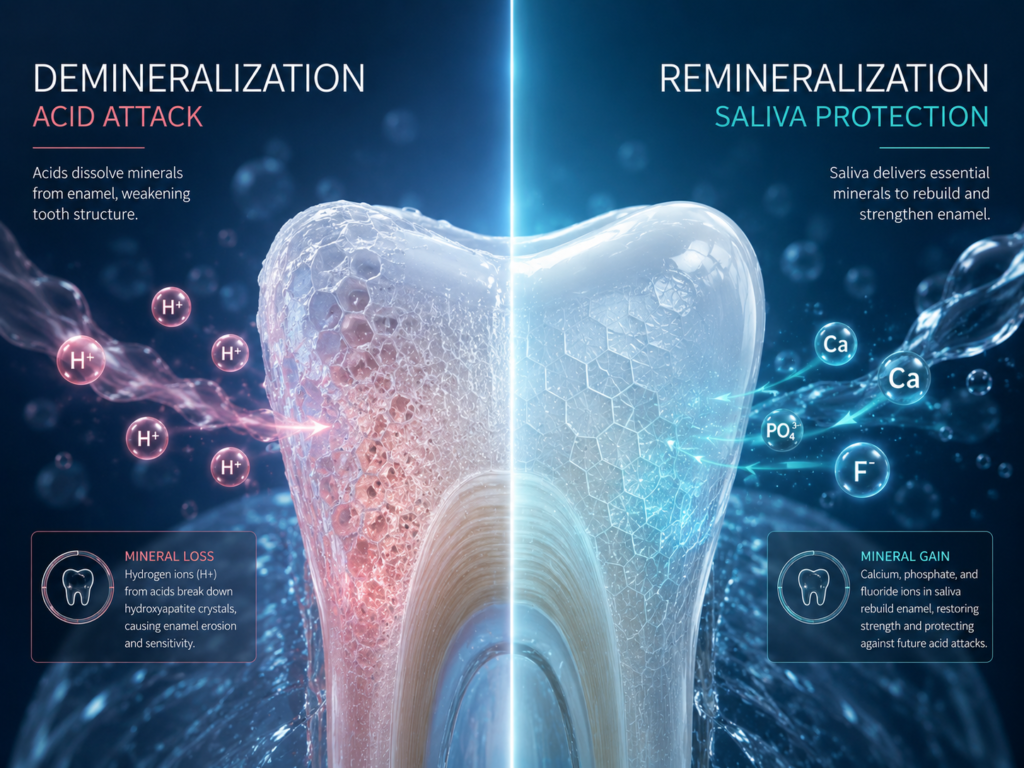
Demineralization vs Remineralization: Which Process Is Winning?
The clinically important question is not whether demineralization occurs. It occurs in almost every mouth.
The important question is whether mineral loss is followed by enough recovery to restore what was removed.
The wider HydroPaste Repair Enamel center examines this balance across the complete enamel remineralization process.
Demineralization
Demineralization occurs when the fluid surrounding a tooth becomes undersaturated with respect to enamel mineral. Calcium and phosphate leave the crystal surface to restore chemical equilibrium.
Common drivers include:
- Acid production inside mature dental plaque
- Frequent sugar and refined-carbohydrate exposure
- Repeated sipping of acidic drinks
- Gastric acid exposure
- Inadequate saliva
- Insufficient recovery time between meals
- Plaque-retentive orthodontic appliances
- Reduced fluoride exposure in a person with elevated caries risk
Remineralization
Remineralization occurs when oral fluid becomes favorable to mineral deposition.
Its main requirements are:
- A noncavitated enamel structure
- Sufficient recovery from acidic pH
- Available calcium and phosphate
- Adequate saliva or a suitable external mineral source
- Time without repeated acid interruption
- Control of plaque and dietary frequency
- Fluoride or another evidence-aligned remineralization strategy when appropriate
Demineralization vs Remineralization Comparison
| Variable | Demineralization | Remineralization |
|---|---|---|
| Mineral direction | Out of enamel | Into weakened enamel |
| Dominant environment | Acidic and mineral-undersaturated | Recovering or near-neutral and mineral-supersaturated |
| Main chemical result | Crystal dissolution | Crystal growth around remaining mineral |
| Visual sign | Chalky white or roughened lesion | Harder, less active and potentially less visible lesion |
| Structural limit | Can progress to surface collapse | Works best before cavitation |
| Role of saliva | Inadequate, overwhelmed or temporarily outpaced | Buffers acid and delivers repair ions |
| Role of fluoride | Limits dissolution | Accelerates mineral deposition |
| Effect of frequent snacking | Repeatedly restarts mineral loss | Shortens the recovery window |
| Clinical direction | Risk reduction is needed | Protective routine should be maintained |
Why Frequency Can Matter More Than Quantity
A large dessert eaten with a meal may create one concentrated acid challenge. The same amount of sugar divided into small portions across several hours may create repeated drops in plaque pH.
From the tooth’s perspective, the second pattern can be more difficult because saliva is repeatedly denied an uninterrupted repair period. Mineral care is therefore partly a question of scheduling.
This does not make sugar quantity irrelevant. It shows why total exposure and exposure frequency must be considered together.
What Controls the Speed of Saliva Mineral Repair?
Saliva does not repair every tooth at the same rate or to the same depth. The process is shaped by local chemistry and behavior.
Salivary Flow Rate
Higher flow improves dilution, clearance and bicarbonate delivery. Stimulated saliva produced during chewing is generally more protective against an immediate dietary acid challenge than very low resting flow.
Sugar-free chewing gum after meals can increase salivary flow. Its main immediate advantage is not that gum mechanically scrubs enamel clean, but that chewing stimulates a larger volume of better-buffered saliva. Experimental and clinical literature has associated stimulated saliva after carbohydrate exposure with plaque-acid neutralization and improved remineralization conditions.
Buffering Capacity
Two people can produce a similar amount of saliva but differ in how effectively that saliva neutralizes acid.
Buffering capacity is affected by salivary composition and flow. A person with adequate-looking saliva may still experience a prolonged acidic environment in plaque-retentive areas.
Calcium and Phosphate Saturation
Saliva must contain minerals in a form that remains available for repair. Protein binding and local plaque chemistry determine whether ions remain soluble, precipitate harmlessly or reach a demineralized lesion.
Fluoride Availability
Small, repeated topical exposures are valuable because fluoride needs to be present in the plaque–saliva–enamel interface when mineral loss or gain occurs.
This is one reason daily toothpaste use can be more strategically important than occasional use of a heavily marketed treatment.
Thickness and Maturity of Dental Plaque
Dental plaque can store minerals and fluoride, but thick acid-producing biofilm can also create a protected acidic microenvironment against the tooth.
A person may have normal bulk saliva while the fluid directly beneath mature plaque remains damaging. Saliva cannot compensate fully for biofilm that is not mechanically disrupted.
Lesion Depth and Surface Condition
Shallow, active lesions with open diffusion pathways may respond differently from deeper lesions with a hardened outer layer.
A highly mineralized surface can sometimes restrict mineral movement into the lesion body. Surface hardness alone therefore does not always prove that the entire subsurface lesion has recovered.
Meal Timing
Remineralization requires time. Repeated eating, tasting or sipping can compress the repair window even when the foods involved appear individually modest.
Tooth Location
Saliva is not distributed uniformly.
Upper front teeth, lower molars, crowded contacts and areas around brackets experience different flow patterns. Mineral repair is local, which helps explain why one person can develop lesions on specific surfaces while other teeth remain unaffected.
Night-Time Conditions
Salivary flow naturally falls during sleep. Bedtime therefore deserves special attention.
Going to sleep immediately after a sugary or acidic exposure can leave the mouth with reduced clearance and buffering capacity. Night-time dry mouth, mouth breathing and certain medications can intensify this disadvantage.
Conceptual Repair-Speed Chart
| Factor | Slows repair | Neutral position | Supports repair |
|---|---|---|---|
| Saliva flow | Persistent dryness | Normal resting moisture | Strong stimulated flow after meals |
| Acid frequency | Continuous sipping | Occasional exposure | Defined meals with recovery time |
| Biofilm | Thick and mature | Partially controlled | Regular mechanical disruption |
| Mineral availability | Low calcium-phosphate access | Normal saliva | Saliva plus appropriate mineral technology |
| Fluoride exposure | Inadequate for risk level | Standard routine | Professionally matched higher-intensity care |
| Lesion structure | Cavitated or sealed deep lesion | Uncertain | Early, accessible noncavitated lesion |
| Night routine | Sugary intake before sleep | Water only | Thorough cleaning and retained toothpaste fluoride |
Benefits of a Healthy Saliva Mineral Repair Process
The benefits of saliva extend far beyond preventing the mouth from feeling dry.
Slower Progression of Early Enamel Damage
When acid challenges are controlled, saliva can help stabilize noncavitated lesions before they progress into physical cavities.
This is the most important benefit because the transition from reversible mineral imbalance to irreversible structural collapse changes the type of care required.
Greater Resistance to Future Acid Challenges
Repaired enamel mineral can be less soluble than the material lost during demineralization, particularly when fluoride participates in the repair process.
Reduced Surface Softening After Meals
Faster pH recovery shortens the period during which enamel remains chemically softened.
This matters for brushing behavior. Aggressive brushing immediately after a strong erosive exposure may add mechanical wear to a surface that has not yet recovered.
Support for White Spot Lesion Management
Early white spot lesions can occur near the gumline, around orthodontic brackets and in plaque-retentive areas.
Improving saliva conditions does not guarantee complete visual disappearance, but it can contribute to lesion arrest and mineral recovery when combined with biofilm control and appropriate professional care.
Better Protection During Orthodontic Treatment
Fixed braces create new plaque-retentive surfaces. Saliva still reaches these areas, but its access and clearance may be reduced.
People with orthodontic appliances benefit from routines that preserve fluoride around brackets while controlling the frequency of fermentable carbohydrates.
Reduced Dry-Mouth Complications
Adequate saliva supports swallowing, speech, taste, microbial control and soft-tissue comfort. People with salivary gland hypofunction face increased risks of cavities, infection and tooth loss because several protective systems are weakened simultaneously.
More Effective Use of Remineralizing Ingredients
Many oral-care ingredients depend on saliva.
Fluoride, hydroxyapatite particles, calcium-phosphate technologies and bioactive glass do not operate in a chemical vacuum. Saliva affects their movement, retention, dissolution and interaction with tooth mineral.
A More Stable Oral Environment
The strongest long-term benefit is not one dramatic episode of repair. It is a mouth that returns to mineral stability reliably after normal daily challenges.
Explore additional preventive oral-care analysis through the HydroPaste Homepage.
Who Needs More Saliva Remineralization Support?
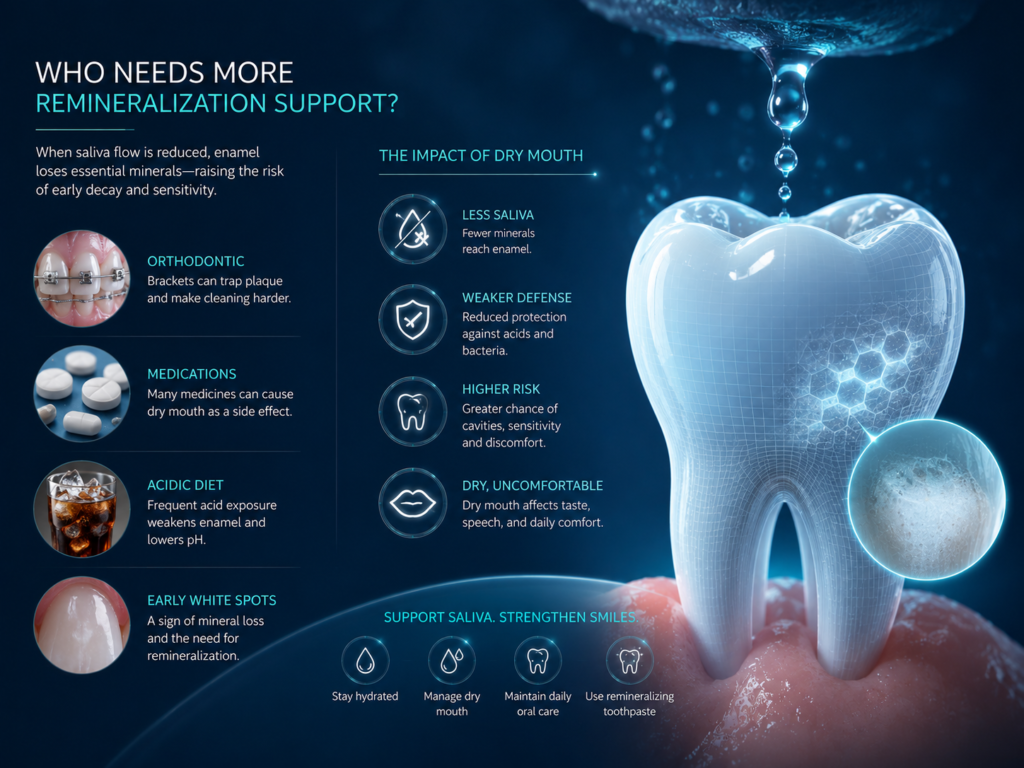
Everyone with natural teeth relies on saliva, but certain individuals have less biological margin for repeated acid exposure.
People With Persistent Dry Mouth
Dry mouth may arise from medication use, salivary gland disease, dehydration, radiation therapy, systemic conditions or a combination of factors.
A subjective dry-mouth feeling is called xerostomia, while objectively reduced salivary secretion is often described as hyposalivation. A person may experience one without the other, although both warrant attention when persistent.
Because dry mouth can increase cavity and infection risk, it should not be managed solely as a comfort problem.
Individuals With Early White Spot Lesions
White spots may indicate early mineral loss, especially when they appear near plaque-retentive areas.
Not every white mark is active decay. Developmental enamel defects, fluorosis and other conditions can also alter tooth appearance. Diagnosis matters before a person begins an aggressive home remineralization routine.
People Wearing Braces or Retainers
Brackets, wires and removable appliances can retain plaque and interfere with normal clearance.
The need is not necessarily for the strongest available product. It is for a routine that improves plaque access, maintains daily fluoride exposure and prevents continuous snacking.
Frequent Snackers and Grazers
A person who eats small amounts throughout the day may maintain a reasonably balanced diet yet still expose enamel to repeated acid cycles.
The mineral issue is not the number of calories. It is the number of times the plaque environment is pushed toward demineralization.
People Who Sip Acidic Drinks
Sports drinks, soda, energy drinks, citrus water and other acidic beverages can maintain direct erosive pressure when sipped slowly.
Even sugar-free acidic drinks may soften enamel because erosion can occur without bacterial sugar metabolism.
Individuals With Reflux or Recurrent Vomiting
Gastric acid can create intense erosive exposure, especially on the inner surfaces of upper teeth.
Treating only the tooth surface without addressing the medical source leaves the primary acid challenge in place.
Mouth Breathers
Chronic mouth breathing can dry particular tooth surfaces and oral tissues, especially overnight.
Localized dryness may reduce the protective salivary film even when overall daytime saliva appears adequate.
Older Adults Taking Multiple Medications
Age alone does not eliminate the ability to produce saliva. The larger concern is that many commonly used medications can contribute to dry-mouth symptoms or reduced flow.
A medication should not be stopped without guidance from the prescribing professional. Dental prevention may instead need to be intensified around the person’s medical treatment.
People Receiving Head and Neck Radiation
Radiation involving the salivary glands can cause severe, persistent reduction in saliva production and substantially raise caries risk. These individuals generally require professional preventive plans rather than standard retail advice.
People With Repeated New Cavities
Frequent new decay despite regular brushing suggests that the full risk system should be examined.
Possible contributors include brushing technique, interdental plaque, diet frequency, saliva flow, fluoride exposure, appliance use, anatomy and hidden medical factors.
Saliva Repair Priority Matrix
| Individual profile | Likely repair challenge | Priority |
|---|---|---|
| Normal saliva, low snack frequency, no active lesions | Routine daily acid recovery | Standard |
| Frequent acidic drinks | Repeated surface softening | Moderate |
| Fixed braces with visible plaque | Localized biofilm acidity | High |
| Early white spot lesion | Active subsurface mineral loss | High |
| Persistent medication-related dry mouth | Reduced buffering and mineral transport | High |
| Head and neck radiation history | Severe salivary impairment | Very high |
| Visible cavity or broken enamel | Structural loss beyond saliva repair | Immediate professional assessment |
Signs Saliva Repair Is Not Keeping Up
The mineral balance can deteriorate before a person experiences toothache.
Chalky White Areas
Opaque white patches around the gumline or orthodontic brackets may represent early mineral loss.
A lesion that looks matte, rough or plaque-covered may be more active than one that appears smooth and shiny, but visual inspection alone is not always sufficient.
Increasing Sensitivity
Sensitivity to cold, sweet or acidic foods may indicate exposed dentin, erosion, recession, cracking or another condition.
Remineralizing products can sometimes reduce sensitivity, but a new or localized painful tooth should not be self-diagnosed as simple mineral loss.
Rough or Dull Enamel
Erosive softening can alter the texture and gloss of enamel.
A rough surface can also retain more plaque, creating a feedback loop in which chemical damage makes biofilm control increasingly difficult.
Rapid Plaque Accumulation
Thick or sticky plaque may indicate ineffective mechanical cleaning, frequent fermentable-carbohydrate exposure or reduced oral clearance.
Constant Thirst or Oral Stickiness
Persistent dryness, difficulty swallowing dry food, stringy saliva, altered taste and a burning oral sensation may indicate xerostomia or reduced salivary function.
Recurrent Cavities Along the Gumline
Root surfaces and cervical areas can become especially vulnerable when saliva is reduced. Root dentin is less mineralized than enamel and can demineralize under less acidic conditions.
Worsening Decay Despite Brushing
Twice-daily brushing is essential, but frequency alone does not establish protection.
A person can brush regularly while using an unsuitable technique, rinsing away toothpaste immediately, missing interdental plaque, sipping acidic drinks all day or experiencing severe dry mouth.
When to Seek Dental Assessment
Professional evaluation is appropriate when there is:
- A visible hole or broken tooth
- Persistent spontaneous pain
- Pain when biting
- Swelling or drainage
- Rapidly increasing sensitivity
- New white or brown lesions
- Severe or persistent dry mouth
- Repeated cavities despite a careful routine
- A history of radiation therapy involving the head or neck
How to Support Saliva Remineralization Naturally
Supporting saliva is not the same as attempting to make the mouth continuously alkaline. Oral health depends on controlled biological balance, not extreme pH manipulation.
Create Recovery Time Between Acid Exposures
Defined meals allow saliva to complete more of its buffering and mineral-return work.
The goal is not rigid fasting for dental reasons. It is reducing unnecessary exposure from continuous sipping, tasting and grazing.
Drink Plain Water
Water helps clear food residues and supports hydration, although it does not reproduce the full buffering, mineral and protein functions of saliva.
For dry mouth, repeated water sipping may improve comfort without fully correcting reduced salivary function.
Stimulate Saliva When Appropriate
Chewing sugar-free gum after meals can increase salivary flow and support faster acid clearance.
Individuals with jaw-joint pain, chewing restrictions, dentures or swallowing concerns may need another strategy. Sugar-free lozenges and professional saliva-support products are alternatives in selected cases.
Use Fluoride Toothpaste Consistently
For most individuals, brushing twice daily with an age-appropriate fluoride toothpaste remains a central way to support enamel remineralization.
Spitting out excess toothpaste without immediately rinsing with a large amount of water can leave more fluoride available around teeth. Product concentration and use should be appropriate for age and individual risk.
Control Plaque Mechanically
Saliva works at the chemical level, while toothbrushes and interdental tools disrupt organized biofilm.
Neither can fully replace the other. Mineral-rich saliva cannot protect a surface indefinitely beneath thick acid-producing plaque.
Reduce Acid Contact Time
Drinking an acidic beverage in one sitting is generally less damaging than slowly sipping it over several hours.
Using a straw may reduce contact with some front-tooth surfaces, but it does not make an acidic drink harmless and may not protect back teeth.
Avoid Aggressive Brushing After Strong Acid Exposure
After an erosive event, rinse with water and allow the oral environment to recover before brushing aggressively.
The ideal delay depends on the severity and frequency of exposure. People with recurrent erosion should obtain individualized dental guidance instead of relying on a single universal waiting period.
Address the Cause of Dry Mouth
Dry-mouth management may involve medication review, saliva stimulation, saliva substitutes, humidification, fluoride treatment and more frequent professional monitoring.
A person should not stop prescribed medication solely because it contributes to dryness. The prescriber and dental professional can help balance medical need with oral protection.
Protect the Night-Time Repair Environment
The bedtime routine should remove plaque, deliver appropriate fluoride and avoid leaving fermentable carbohydrates or acids in a low-flow sleeping mouth.
Plain water is preferable to juice, soda, sweetened tea or sports drinks during the night.
Saliva-Support Routine Table
| Time | Saliva-focused action | Mineral-repair purpose |
|---|---|---|
| Morning | Brush thoroughly with appropriate toothpaste | Removes mature biofilm and delivers active ingredients |
| With meals | Drink water and limit prolonged acidic sipping | Reduces contact time |
| After meals | Allow saliva to recover; consider sugar-free gum | Stimulates flow and buffering |
| Between meals | Avoid continuous grazing | Preserves the remineralization window |
| Evening | Clean interdental areas and brush | Reduces overnight acid production |
| After brushing | Avoid washing away all residual toothpaste immediately | Extends ingredient contact |
| Overnight | Use dry-mouth strategies when professionally indicated | Protects during naturally lower salivary flow |
Remineralizing Toothpaste and the Saliva Mineral Repair Process
A remineralizing toothpaste should be evaluated by how it interacts with the oral environment, not by whether the label promises to “rebuild enamel.”
Different technologies solve different parts of the repair problem.
Fluoride Toothpaste
Fluoride has the strongest established role in caries prevention and remineralization.
It helps reduce mineral loss during acidic periods, accelerates mineral gain after pH recovers and affects bacterial metabolism. Its effectiveness still depends on calcium and phosphate being available from saliva, plaque fluid or another source.
Hydroxyapatite Toothpaste
Hydroxyapatite toothpastes provide particles chemically related to tooth mineral.
Depending on particle size, concentration and formulation, hydroxyapatite may deposit on enamel defects, support mineral formation and reduce sensitivity by blocking dentinal tubules. Research on nano-hydroxyapatite has reported promising results for erosive lesions and white spot lesions, although formulations are not interchangeable and long-term evidence varies by product type.
Fluoride and Hydroxyapatite Combinations
Combining fluoride with hydroxyapatite is intended to unite fluoride’s catalytic and acid-resistance effects with a direct calcium-phosphate mineral source.
A 2024 systematic review evaluated the association of nano-hydroxyapatite and fluoride for initial enamel lesions. This remains an evolving formulation area rather than proof that every dual-active toothpaste performs identically.
CPP-ACP and Related Calcium-Phosphate Systems
Casein phosphopeptide-amorphous calcium phosphate is designed to stabilize calcium and phosphate in a bioavailable form near teeth.
These systems may support subsurface remineralization and are often studied for white spot lesions. Results depend on lesion type, formulation, fluoride combination and adherence. Some products are casein-derived and may not be suitable for every individual.
Bioactive Glass
Bioactive glass releases ions when it contacts saliva. Those ions can contribute to the formation of a hydroxycarbonate-apatite-like layer on enamel or dentin.
The technology is particularly relevant to sensitivity and mineral deposition. Its performance depends on particle chemistry, concentration and how long the product remains in contact with saliva. A 2024 review identified bioactive glass toothpaste as a promising mineral-delivery approach, while broader clinical comparisons remain formulation-dependent.
Prescription-Strength Fluoride
People at elevated caries risk may require professional fluoride varnish, higher-strength home-use fluoride products or other interventions.
The ADA lists fluoride varnish, gels, prescription pastes and certain rinses among options used according to age and risk. These are not automatically necessary for every person and should be matched to clinical circumstances.
Product Technology Comparison
| Technology | Main active function | Dependence on saliva | Best-aligned intent | Important limitation |
|---|---|---|---|---|
| Fluoride | Reduces mineral loss and accelerates repair | Moderate to high | Daily caries prevention | Does not replace missing tooth structure |
| Hydroxyapatite | Supplies tooth-like calcium-phosphate particles | Moderate | Surface repair and sensitivity support | Evidence varies by formulation |
| Fluoride plus hydroxyapatite | Combines catalytic and mineral-supply mechanisms | Moderate | Multi-mechanism enamel support | Combination does not guarantee superiority |
| CPP-ACP | Stabilizes calcium and phosphate near enamel | High | White spot and targeted remineralization care | Casein-derived; suitability varies |
| Bioactive glass | Releases ions and forms mineral-like deposits | High | Dentin sensitivity and mineral deposition | Product chemistry differs substantially |
| Prescription fluoride | Provides higher-intensity topical fluoride | High | Elevated caries risk | Requires age- and risk-appropriate guidance |
| Saliva substitute | Improves lubrication and moisture | Low to moderate | Dry-mouth comfort | May not reproduce natural mineral and enzyme functions |
How to Assess a Remineralizing Toothpaste
A useful assessment asks:
- What active ingredient is present?
- Is the concentration disclosed?
- Is the formula intended for caries prevention, sensitivity or both?
- Does the person have normal or reduced saliva?
- Is the damage noncavitated?
- Is the product being used frequently enough?
- Is plaque and acid frequency being controlled?
- Does the claim exceed what remineralization can biologically achieve?
A premium-looking package cannot compensate for an undefined active ingredient or a routine that exposes teeth to acid throughout the day.
The FLOW Saliva-Mineral Repair Framework
The FLOW framework provides a practical way to evaluate whether a person’s oral environment favors enamel repair.
F — Flow
Assess whether saliva is present in sufficient volume and whether it increases during eating or chewing.
Questions include:
- Does the mouth feel dry during the day or night?
- Is saliva thin and fluid or thick and stringy?
- Is dry food difficult to swallow?
- Are new cavities appearing near the gumline?
- Does medication timing correspond with dryness?
L — Local Chemistry
Evaluate pH recovery, calcium-phosphate availability and fluoride exposure.
The objective is not to measure one saliva pH reading and declare the mouth healthy. A single reading may not represent what occurs inside plaque after meals.
O — Oral Exposure Pattern
Map the number and duration of acid challenges.
A routine with six small snacks, two coffees with sugar and an afternoon acidic drink may create more mineral stress than its calorie total suggests.
W — Window for Repair
Identify how much uninterrupted recovery time saliva receives.
A remineralizing ingredient is most useful when the surrounding routine allows it to remain near enamel rather than immediately restarting an acid cycle.
FLOW Framework Table
| FLOW element | Key question | Low-repair pattern | High-repair pattern |
|---|---|---|---|
| Flow | Is enough saliva reaching the teeth? | Persistent dryness or thick saliva | Comfortable moisture and stimulated flow |
| Local chemistry | Can the mouth neutralize acid and supply minerals? | Prolonged acidity and weak fluoride exposure | Effective buffering with mineral availability |
| Oral exposure | How often are teeth challenged? | Constant sipping and grazing | Defined meals and limited acidic contact |
| Window | Is there time for mineral redeposition? | Acid cycles overlap | Recovery periods are protected |
Using FLOW to Find the Bottleneck
The framework prevents a common error: assuming every enamel problem is caused by the wrong toothpaste.
For one person, the bottleneck may be dry mouth. For another, it may be heavy plaque around braces. For another, it may be acidic drinks consumed over several hours.
Changing the toothpaste without identifying the bottleneck may add a helpful ingredient while leaving the dominant source of mineral loss untouched.
Limits, Myths and Common Mistakes
Myth: Saliva Can Regrow Missing Enamel
Saliva can help remineralize surviving enamel crystals. It cannot biologically reconstruct a missing cusp, fill a physical cavity or restore enamel removed by severe erosion.
Mature enamel lacks the living cellular machinery that originally formed it.
Myth: More Calcium Automatically Means More Repair
Mineral repair depends on calcium, phosphate, pH, lesion structure, diffusion and time.
A very high concentration of one mineral does not ensure that it reaches the correct area or forms organized dental mineral.
Myth: An Alkaline Mouth Is Always Better
Persistently forcing oral pH upward is not a substitute for normal salivary regulation.
The objective is to recover from acid challenges, not to disrupt the mouth’s biological balance with untested alkaline products.
Myth: All White Spots Are Early Cavities
White spots can have several causes. Some are active demineralization, while others are developmental or cosmetic enamel changes.
An incorrect assumption can lead to unnecessary treatment or delay appropriate assessment.
Myth: Remineralizing Toothpaste Repairs Cracks
Toothpaste may deposit mineral on microscopic surface defects or reduce sensitivity. It cannot fuse a cracked tooth back together.
Pain on biting, recurrent localized sensitivity or a visible fracture needs professional evaluation.
Mistake: Rinsing Away Active Ingredients Immediately
A large water rinse directly after brushing can reduce the amount of fluoride or other active material remaining around teeth.
The routine should follow product directions and age-appropriate safety guidance.
Mistake: Focusing on Ingredients but Ignoring Frequency
A high-quality toothpaste cannot completely offset continuous sugar and acid exposure.
The chemistry is time-dependent. Every new exposure can interrupt the repair stage.
Mistake: Treating Dry Mouth Only With Water
Water relieves dryness temporarily but lacks many proteins, minerals, buffers and antimicrobial components of natural saliva.
Persistent dry mouth may require saliva stimulation, substitutes, fluoride support and investigation of the underlying cause.
Mistake: Delaying Care for a Visible Cavity
Early mineral loss and structural cavitation are not interchangeable.
Learning how to reverse tooth decay early is useful only when the lesion remains within the biologically reversible stage. Once the tooth surface has collapsed, home remineralization cannot rebuild the missing anatomy.
Upcoming Trends and Latest Technology in Saliva-Driven Enamel Repair
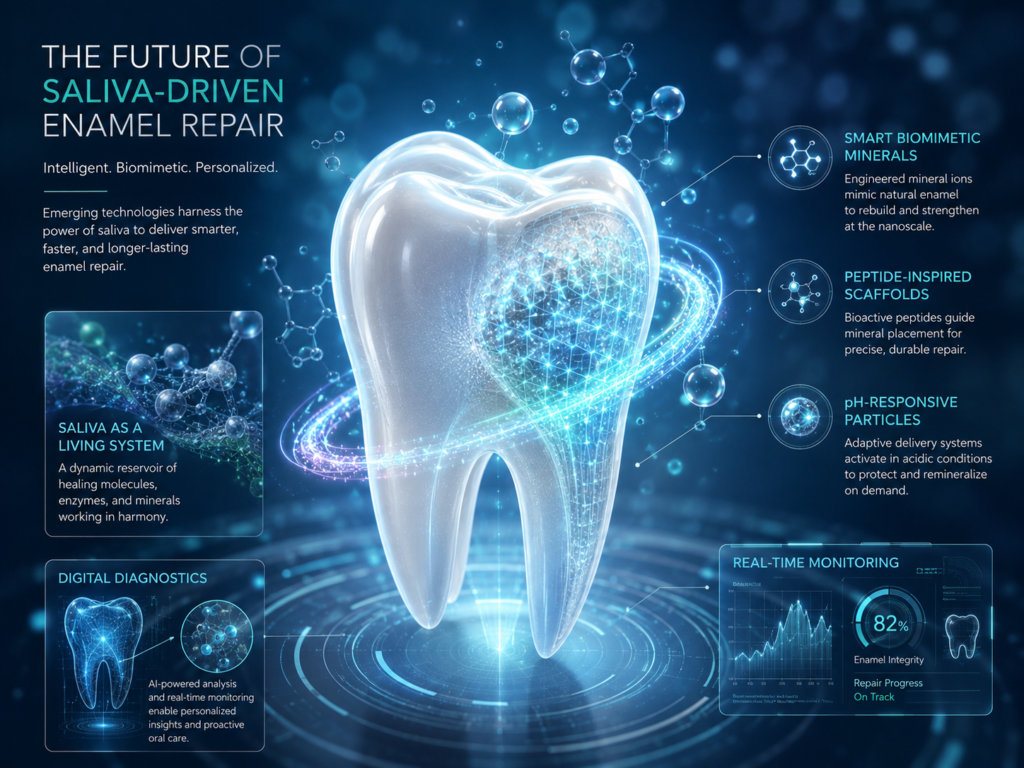
The direction of enamel science is moving from passive mineral exposure toward targeted systems that respond to local oral conditions.
The most important development is not a claim that enamel can now grow back without limitation. It is the attempt to control where, when and how mineral crystals form.
pH-Responsive Mineral Release
Smart dental materials are being designed to release calcium, phosphate, fluoride or antimicrobial compounds when the local environment becomes acidic.
This approach is strategically attractive because mineral delivery would increase when demineralization pressure rises instead of remaining constant regardless of need.
Recent 2026 literature describes pH-responsive composites and ion-releasing sealants that combine remineralizing and antibacterial functions. Much of this technology remains under laboratory or early translational evaluation.
Self-Assembling Peptide Scaffolds
Self-assembling peptides are designed to penetrate early lesions and organize into a three-dimensional matrix.
The scaffold can attract calcium and phosphate from saliva, giving mineral a structured environment in which to form. P11-4 is among the most studied peptide approaches for noncavitated lesions and white spots.
Systematic reviews and comparative studies report promising remineralization potential, but outcomes vary by lesion type, study design and comparator.
Amelogenin-Derived Peptides
Amelogenin is one of the proteins involved in natural enamel formation during tooth development.
Researchers are studying smaller amelogenin-derived sequences that can organize mineral growth without attempting to recreate the entire developmental process. A 2025 in-situ study evaluated recombinant tyrosine-rich amelogenin peptide for early enamel caries, illustrating the movement from laboratory mineralization toward biologically relevant oral testing.
Advanced Hydroxyapatite Particles
Future hydroxyapatite products may be differentiated by more than particle size.
Researchers are examining ion-doped particles, surface-modified particles and hybrid mineral systems intended to improve acid resistance, adhesion or crystal integration. These approaches aim to make synthetic mineral behave more like a functional participant in enamel chemistry rather than an inert powder.
Polymeric Mineral Carriers
Advanced polymers can hold calcium-phosphate precursors, penetrate demineralized tissue and release ions in a controlled manner.
Poly(amidoamine) dendrimers, chitosan-based materials and other polymeric scaffolds are being investigated as templates for organized mineral deposition. A 2026 review described polymeric biomaterials as a developing route for biomimetic enamel and dentin repair while noting the translational challenges that remain.
Bioactive Glass With Controlled Ion Release
Next-generation bioactive glasses may be engineered to release selected ions at specific rates.
Beyond calcium and phosphate, research is exploring strontium, zinc and other substitutions for potential effects on mineral formation, sensitivity and microbial behavior.
Polyphosphate Technologies
Polyphosphates can stabilize mineral ions, modify crystal behavior and potentially improve subsurface remineralization.
A 2026 review examined compounds such as sodium trimetaphosphate, sodium hexametaphosphate and calcium glycerophosphate as components of minimally invasive enamel care. Their eventual clinical value will depend on formulation quality and human outcome data rather than laboratory mineral deposition alone.
Saliva-Activated Protein and Keratin Films
Protein-based coatings are being explored as mineral-organizing surfaces.
Instead of supplying a finished artificial enamel layer, these systems attempt to recruit calcium and phosphate from saliva and guide their assembly into a stronger mineralized film. The concept is promising, but public reporting should not be interpreted as proof that a consumer toothpaste can already regenerate missing enamel.
Real-Time Intraoral pH Monitoring
Miniaturized sensors may eventually allow researchers and clinicians to observe how quickly an individual mouth becomes acidic and recovers after specific foods or drinks.
A 2026 prototype described a battery-powered wireless intraoral pH telemetry system capable of transmitting measurements in real time. It remains a research platform rather than a standard home diagnostic device, but it illustrates a future in which enamel care could be based on personal acid-recovery patterns instead of generic dietary assumptions.
Salivary Caries-Risk Diagnostics
Saliva contains measurable ions, proteins, microbial markers and buffering characteristics.
The challenge is converting those signals into a test that reliably predicts where and when disease will occur. The ADA’s salivary diagnostics review noted that, as of its October 2023 assessment, no FDA-approved salivary diagnostic test was available for evaluating dental-caries risk.
Future systems may combine flow rate, buffering capacity, microbial activity and mineral saturation, but a single saliva marker is unlikely to replace a full clinical examination.
Precision Remineralization
The longer-term direction is individualized treatment intensity.
A low-risk person with healthy saliva may need only routine fluoride toothpaste and controlled dietary frequency. Someone with radiation-induced salivary loss may need prescription fluoride, saliva substitutes, professional coatings and close monitoring. A person with an early orthodontic white spot may benefit from a different mineral-delivery strategy.
The technology is becoming more sophisticated, but the strategic principle remains biological: restore favorable local conditions before asking mineral to rebuild the tooth.
Technology Readiness Table
| Technology | Primary mechanism | Development position | Main unanswered question |
|---|---|---|---|
| Fluoride toothpaste | Enhances repair and limits dissolution | Established | How should intensity be matched to individual risk? |
| Nano-hydroxyapatite | Supplies tooth-like mineral particles | Commercial with growing evidence | Which formulations and concentrations perform best? |
| Bioactive glass | Releases mineral-forming ions | Commercial and developing | How durable is the deposited layer under real use? |
| CPP-ACP | Stabilizes calcium-phosphate complexes | Commercial and clinically studied | Which lesions gain the greatest added benefit? |
| Self-assembling peptides | Creates an internal mineral scaffold | Early clinical and translational use | How consistent is deep lesion repair long term? |
| Amelogenin-derived peptides | Directs biomimetic crystal growth | Experimental and early translational | Can organized mineral match natural enamel durability? |
| pH-responsive materials | Releases actives during acid stress | Research and developing | Can release remain safe, selective and repeatable? |
| Polymeric mineral carriers | Controls ion delivery and crystal nucleation | Experimental | Can materials penetrate lesions without sealing the surface prematurely? |
| Intraoral pH sensors | Measures personal acid-recovery cycles | Prototype research | Can devices become comfortable, accurate and affordable? |
| Salivary diagnostics | Estimates caries risk from oral biomarkers | Investigational | Can testing outperform conventional risk assessment? |
FAQs
How does saliva remineralize tooth enamel?
Saliva remineralizes tooth enamel by neutralizing acids and delivering calcium and phosphate to partially demineralized crystals. Fluoride from toothpaste or other topical sources can accelerate this mineral repair and make the restored surface more resistant to later acid attacks.
Which minerals in saliva rebuild tooth enamel?
Calcium and phosphate are the main structural minerals involved in enamel remineralization. Fluoride supports the process by reducing mineral loss and promoting the formation of a less acid-soluble repaired surface. Bicarbonate helps indirectly by raising oral pH.
Can dry mouth stop tooth remineralization?
Dry mouth can severely weaken natural tooth remineralization because less saliva means slower acid clearance, weaker buffering and reduced mineral transport. Persistent xerostomia is associated with increased cavity risk and should be evaluated rather than managed only with water.
Does remineralizing toothpaste work without saliva?
Remineralizing toothpaste may still deposit active ingredients on teeth, but saliva supports their movement, dissolution and interaction with enamel. Severe salivary reduction can limit natural calcium-phosphate availability, which is why people with dry mouth may require a more intensive professional prevention plan.
How long does saliva take to repair enamel after eating?
There is no universal repair time. Oral pH recovery and mineral redeposition depend on saliva flow, buffering capacity, plaque thickness, meal composition and whether another snack or acidic drink interrupts the recovery period.
People Also Ask
| Search question | Yes | No or limited |
|---|---|---|
| Can saliva reverse early tooth decay? | Noncavitated mineral loss may recover | A physical cavity cannot regrow |
| Does chewing gum help remineralize teeth? | Sugar-free gum can stimulate protective saliva | It cannot replace brushing or dental treatment |
| Is saliva enough to repair enamel? | It supports normal daily repair | High-risk conditions often need fluoride or other care |
| Can enamel grow back naturally? | Mineral can redeposit around surviving crystals | Missing enamel anatomy does not regenerate |
| Does fluoride need saliva to work? | Saliva supplies minerals and transport | Fluoride alone cannot reconstruct lost tooth form |
Can saliva reverse early tooth decay naturally?
Saliva can help reverse or arrest early noncavitated tooth decay by restoring calcium and phosphate after acids are neutralized. It cannot rebuild a cavity after the enamel surface has physically collapsed.
Does sugar-free gum help saliva remineralization?
Sugar-free gum can support saliva remineralization by stimulating flow after meals. Increased flow improves acid dilution, bicarbonate buffering and mineral transport, but gum does not remove established plaque or repair deep decay.
Is saliva enough to remineralize teeth without toothpaste?
Saliva performs natural enamel repair, but toothpaste can strengthen that process. Fluoride toothpaste reduces demineralization and increases remineralization, while hydroxyapatite and calcium-phosphate products may provide additional mineral support depending on formulation and individual risk.
Can saliva repair enamel erosion from acidic drinks?
Saliva can reharden temporarily softened enamel and support limited mineral redeposition after mild acid exposure. It cannot replace substantial enamel thickness lost through repeated erosion, so controlling the acidic exposure remains essential.
Why do teeth decay when saliva contains enamel-repair minerals?
Teeth decay when acid production and mineral loss occur more often or more intensely than saliva can correct. Frequent sugar exposure, heavy plaque, dry mouth, inadequate fluoride and repeated acidic drinks can overwhelm the natural repair cycle.
Editorial Insights: Saliva Is the System, Not a Single Ingredient
The most useful way to understand enamel remineralization is to stop viewing it as a toothpaste feature and begin viewing it as an oral operating system.
Saliva controls transport. It carries calcium, phosphate, fluoride and proteins to the tooth surface.
Saliva controls timing. Its flow and buffering determine how quickly the mouth exits an acidic phase.
Saliva controls access. It reaches exposed surfaces more easily than protected plaque niches, crowded contacts or areas around orthodontic brackets.
Saliva controls the performance of products. A mineral technology that appears powerful in a laboratory solution may behave differently in a dry mouth, a heavily acidic biofilm or a lesion whose surface prevents deeper diffusion.
The next generation of enamel repair will attempt to work with this system more intelligently. pH-responsive materials may release minerals during acid stress. Peptide scaffolds may guide calcium and phosphate into early lesions. Sensors may reveal each person’s actual recovery pattern after meals.
Yet advanced technology will not change the biological boundary between remineralization and reconstruction.
Microscopic mineral loss can be repaired when enough enamel framework remains. Missing anatomy cannot be restored by saliva, supplements or toothpaste. That boundary should guide every product claim, home routine and editorial recommendation.
The strongest enamel strategy is therefore not the pursuit of one miraculous mineral. It is the deliberate creation of an oral environment in which saliva has enough flow, chemistry, access and uninterrupted time to perform the repair work it was designed to do.