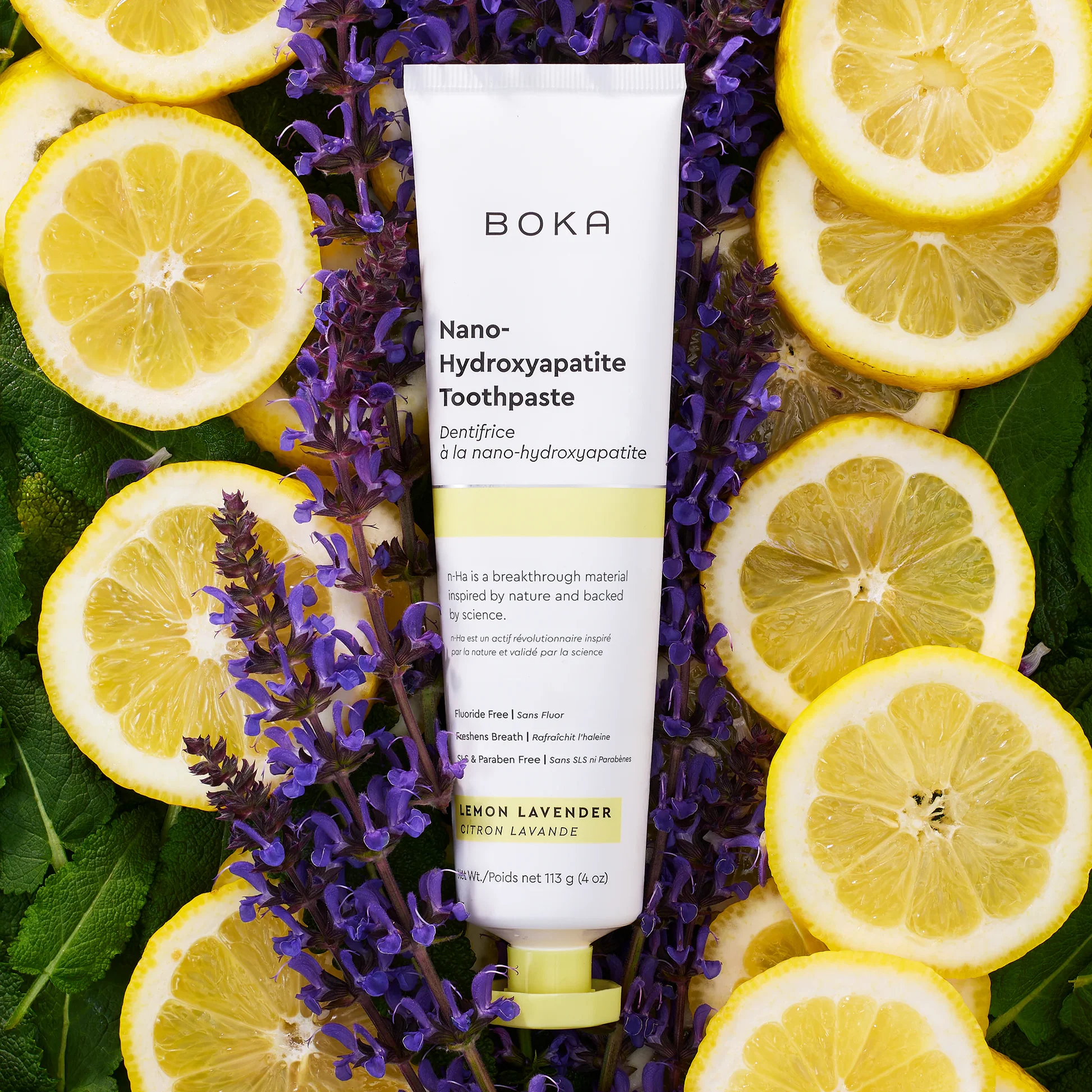
Boka Toothpaste Review: The Ultimate Guide to Nano-Hydroxyapatite Oral Care
In the ever-evolving world of dental hygiene, few brands have made a splash quite like Boka. As consumers shift away from traditional chemical-heavy formulas toward biocompatible alternatives, Boka toothpaste has emerged as a frontrunner. Specifically, their Boka Lemon Lavender variant has become a cult favorite, promising not just clean teeth, but a fundamental shift in how we approach enamel health.
In this exhaustive review, we will explore why Boka is leading the “n-Ha” revolution, the science behind its ingredients, and whether it truly lives up to the hype of being a superior fluoride-free alternative.
What is Boka Toothpaste?
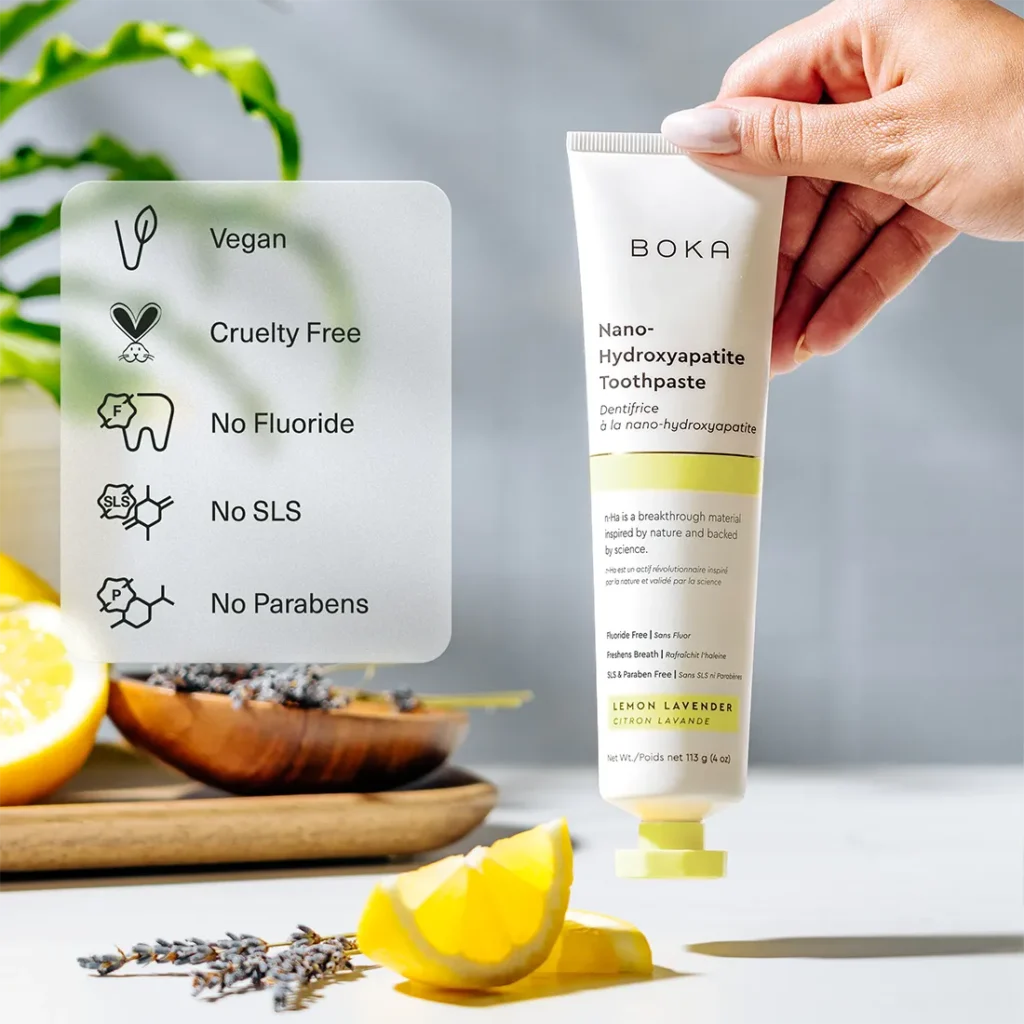
Boka is a boutique oral care brand that prioritizes “biocompatibility.” While traditional brands have relied on fluoride for over a century, Boka toothpaste utilizes a powerhouse ingredient called Nano-hydroxyapatite.
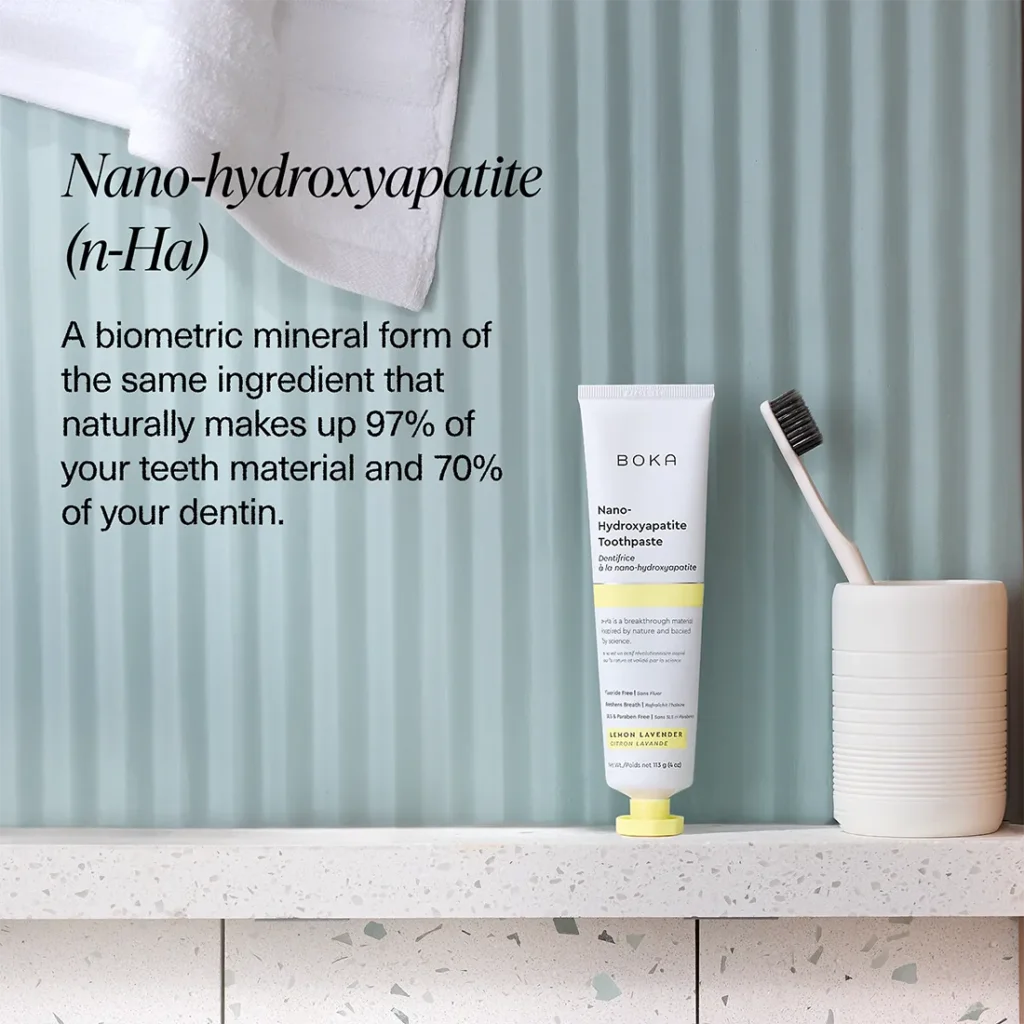
Originally developed by NASA to help astronauts maintain bone and tooth density in zero-gravity environments, n-Ha is a calcium phosphate mineral that makes up 97% of your tooth enamel. By using this “biomimetic” approach, Boka seeks to repair teeth with the same materials they are naturally made of.
The Boka Philosophy: Beyond Basic Brushing
The philosophy behind Boka is simple: your mouth is the gateway to your overall health. Many conventional toothpastes contain endocrine disruptors, sulfates, and artificial flavors. Boka strips these away, focusing instead on a US-manufactured, non-toxic formula that is safe for the whole family.
Boka Lemon Lavender n-Ha Toothpaste
While many people associate toothpaste with stinging, artificial mint, the Boka Lemon Lavender flavor offers a radical departure. It is currently the #1 community favorite for a reason.
1. The Flavor Profile: A Spa-Like Experience
The first thing you notice about Boka Lemon Lavender is the scent. It’s botanical, soothing, and sophisticated. The lemon provides a crisp, clean sensation, while the lavender adds a calming floral note. This makes it an excellent choice for:
- Nighttime routines: The lavender helps signal the body to relax.
- Kids: Many children find mint “too spicy.” This citrus-floral blend is gentle and inviting.
- Sensory sensitivity: For those who find traditional oral care overwhelming, Boka offers a more grounded experience.
2. The Power of Nano-Hydroxyapatite (n-Ha)
The star of the show in Boka toothpaste is medical-grade Nano-hydroxyapatite. Unlike fluoride, which creates a protective layer over the tooth (fluorapatite), n-Ha actually penetrates the tooth surface.
- Enamel Remineralization: It fills in the microscopic “potholes” in your enamel.
- Sensitivity Relief: By sealing open dentin tubules, it effectively stops the “zing” felt from cold or hot drinks.
- Whitening: It smooths the surface of the enamel, making it harder for stains to stick and giving teeth a natural, pearlescent glow.
Science-Backed Results
Studies have shown that a 10% concentration of Nano-hydroxyapatite is just as effective, if not more so, than fluoride at remineralizing early-stage caries (cavities). Boka toothpaste is engineered to deliver these results without the “poison control warning” found on standard tubes.
The Benefits of Boka for Different Users
For the Biohacker
If you are someone who tracks every nutrient and avoids toxins, Boka fits perfectly into a clean lifestyle. It is free from:
- Sodium Lauryl Sulfate (SLS)
- Parabens
- Artificial Flavors and Colors
- Endocrine Disruptors
For the Sensitivity Sufferer
If you’ve used “sensitivity” toothpastes in the past, you know they often rely on potassium nitrate to numb the nerves. Boka takes a restorative approach. Instead of numbing the pain, it helps “repair” the holes causing the sensitivity in the first place.
For Kids and Families
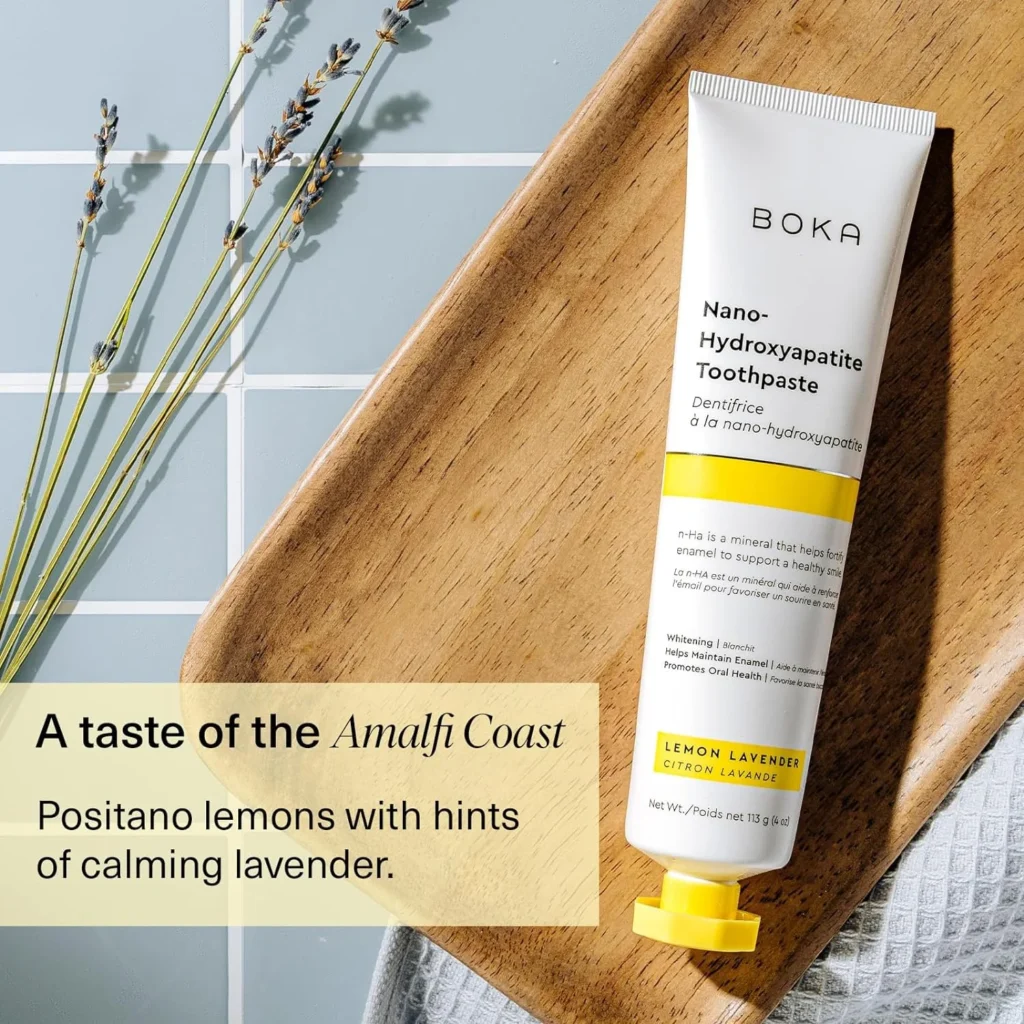
The Boka Lemon Lavender 4 oz tube is a versatile family staple. It’s manufactured in the USA under strict quality controls, ensuring that what you put in your child’s mouth is of the highest medical grade.
How to Use Boka Toothpaste for Maximum Results
To get the most out of Boka, you need to change your brushing habits slightly.
- Don’t Rinse Immediately: Because n-Ha is a biomimetic mineral, it needs time to bond with your teeth. After brushing with Boka, spit out the excess but avoid rinsing with water for at least 30 minutes.
- Dry Brushing: Some enthusiasts recommend applying a small amount of Boka to the teeth and leaving it on like a “mask” to help with extreme sensitivity.
- Consistency is Key: Remineralization isn’t an overnight process. Use Boka toothpaste twice daily to see a visible difference in enamel thickness and brightness.
This is Why Lemon Lavender Wins
While Boka offers Mint and Ginger flavors, the Lemon Lavender remains the best-seller. It bridges the gap between “medicinal” and “luxurious.”
- Boka Mint: Great for traditionalists who want that zing.
- Boka Ginger: Best for those with gum inflammation (ginger is naturally anti-inflammatory).
- Boka Lemon Lavender: The gold standard for a soothing, effective, and unique clean.
Technical Specifications: The 4 oz 1-Pack
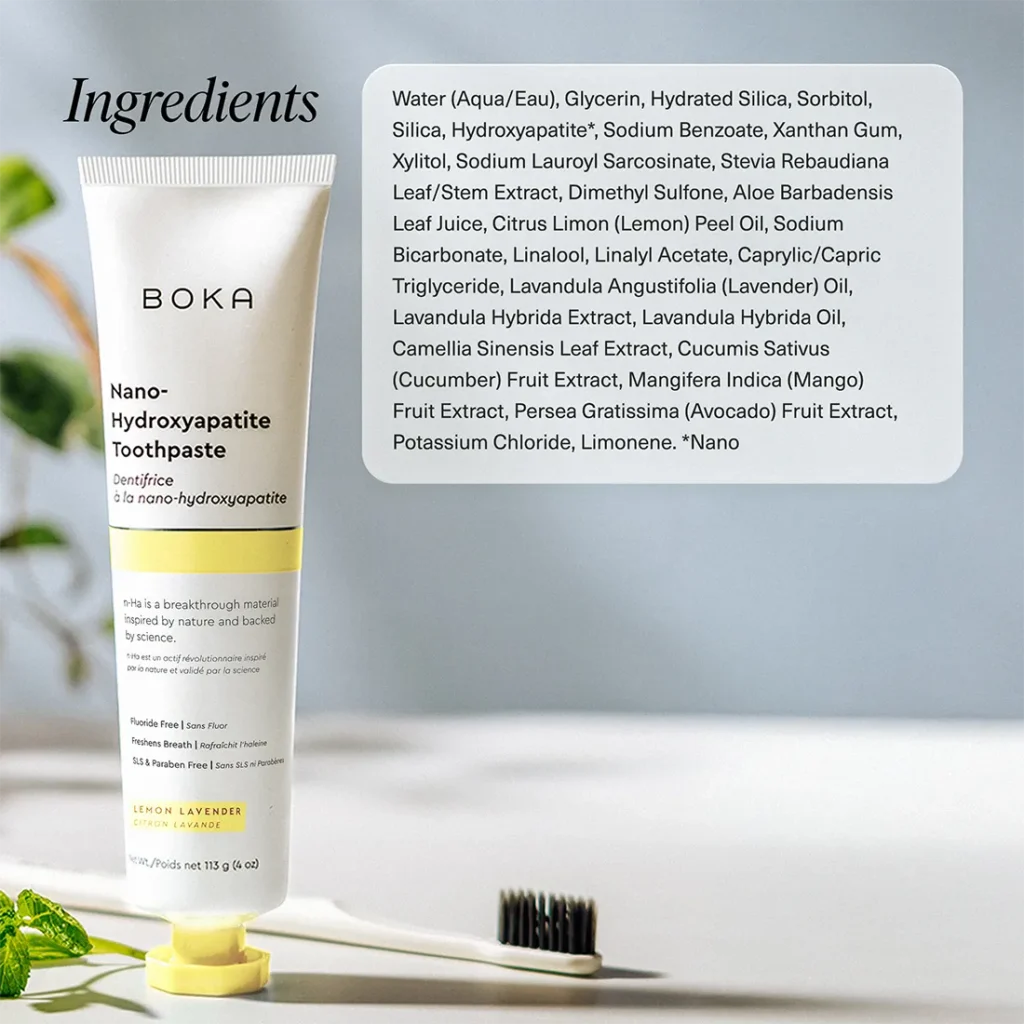
- Size: 4 Fl Oz (118ml)
- Origin: Made in the USA.
- Key Ingredients: Nano-hydroxyapatite, Xylitol (to fight bacteria), Green Tea Antioxidants, and Aloe Vera (to soothe gums).
- Packaging: High-quality, BPA-free tube designed to squeeze out every last drop.
Is Boka Worth It?
If you are looking for a high-performance, non-toxic, and aesthetically pleasing oral care solution, Boka is an easy recommendation. The Boka Lemon Lavender n-Ha Toothpaste manages to turn a mundane chore into a ritual.
By replacing fluoride with the superior science of Nano-hydroxyapatite, Boka doesn’t just clean your teeth—it rebuilds them. For the health-conscious consumer, the parent, or the person with sensitive teeth, this is the #1 choice on the market today.
Pros:
- Superior enamel repair via n-Ha.
- Incredible, non-mint flavor profile.
- Safe for kids and adults alike.
- SLS-free (no canker sores!).
Cons:
- Higher price point than drugstore brands (but worth the investment in dental health).
- Requires a “no-rinse” habit change for best results.
Shop Boka Today

- ENAMEL CARE: Our proprietary and innovative formula includes Nano-hydroxyapatite (n-Ha) – a biomimetic mineral form of t…
- FLUORIDE-FREE: Gentle for daily use as directed, our nano hydroxyapatite toothpaste is science-backed and nature-inspire…
- LIGHT AND LOW-FOAMING: A soft, creamy texture that keeps brushing comfortable from start to finish.
Ready to experience the #1 community favorite? Head over to our shop to grab your Boka Fluoride-Free Nano-Hydroxyapatite Toothpaste – Lemon Lavender (4 oz) and start your journey toward a healthier, more radiant smile.
And if you want your smile whiter 👇
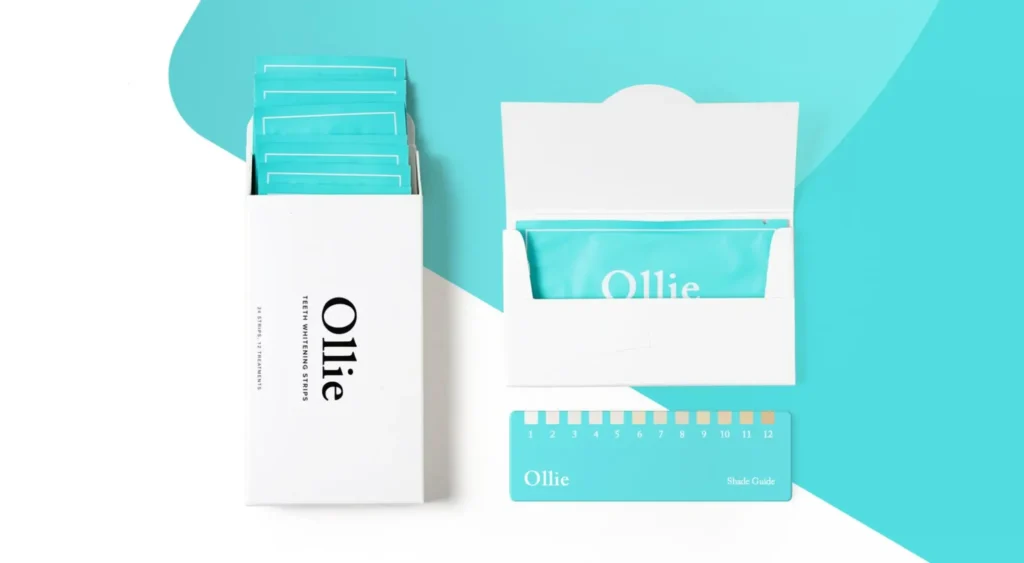
Try ollie whitening strips Buy Now
Frequently Asked Questions (FAQs)
Boka toothpaste review nano hydroxyapatite benefits for enamel remineralization — is it really effective?
Yes, especially for early-stage enamel demineralization. Boka toothpaste uses nano-hydroxyapatite (n-Ha), a biomimetic mineral that closely matches the structure of human enamel.
Instead of only coating teeth like some fluoride-based systems, n-Ha integrates into microscopic enamel defects, helping rebuild mineral density over time.
How it works in practice:
| Mechanism | Fluoride Toothpaste | Boka (n-Ha) Toothpaste |
|---|---|---|
| Action type | Surface protection (fluorapatite layer) | Structural repair (mineral replacement) |
| Sensitivity relief | Indirect | Direct (fills dentin tubules) |
| Whitening effect | Chemical stain resistance | Physical smoothing of enamel |
| Safety profile | Not ingestible | Generally considered biocompatible |
Clinical research on nano-hydroxyapatite suggests remineralization performance comparable to fluoride in early caries prevention, especially at ~10% concentration ranges found in modern formulations.
Boka Lemon Lavender toothpaste flavor taste experience and sensitivity use — what does it feel like?
The Lemon Lavender variant is designed for users who dislike the intense burn of mint toothpaste. It is one of the most searched sensory alternatives in the “natural toothpaste experience” niche.
Flavor profile breakdown:
- Top note: Bright citrus lemon (clean, fresh impression)
- Middle note: Herbal lavender (calming, floral softness)
- Aftertaste: Neutral, non-chemical finish
| User Type | Why It Works |
|---|---|
| Sensitive users | No menthol irritation |
| Children | Mild, non-spicy flavor |
| Nighttime brushing | Lavender supports relaxation cues |
| Sensory-sensitive adults | Reduces oral overstimulation |
Unlike traditional mint pastes that trigger a “cold shock,” this formula creates a spa-like brushing experience, making compliance easier for twice-daily routines.
Is Boka toothpaste fluoride free nano hydroxyapatite safety review for kids and adults?
Yes, it is fluoride-free and relies on nano-hydroxyapatite instead. This is one of the most common long-tail searches for modern oral care transitions.
Key safety considerations:
- No fluoride ingestion risk
- No SLS (sodium lauryl sulfate) irritation
- No artificial dyes or harsh foaming agents
- Safe for supervised children use
Safety comparison chart:
| Factor | Fluoride Toothpaste | Boka n-Ha Toothpaste |
|---|---|---|
| Swallow risk | Toxic in high doses | Low toxicity profile |
| Child safety | Requires supervision | More forgiving formulation |
| Pregnancy suitability | Generally safe but dosage-sensitive | Commonly preferred alternative |
| Long-term use | Widely studied | Emerging but promising evidence |
This makes it especially popular among parents seeking a “low-intervention oral care routine” without abandoning remineralization benefits.
Does Boka toothpaste help with tooth sensitivity nano hydroxyapatite repair mechanism explained?
Yes, sensitivity reduction is one of its most documented functional benefits.
Tooth sensitivity usually occurs when dentin tubules are exposed. Nano-hydroxyapatite helps by physically sealing those channels.
Step-by-step mechanism:
- Tubules are exposed due to enamel erosion
- n-Ha particles penetrate micro-openings
- Mineral deposition occurs inside tubules
- External stimuli (cold/heat) no longer reach nerves
| Sensitivity Cause | Conventional Treatment | Boka Approach |
|---|---|---|
| Exposed dentin | Nerve desensitization | Structural repair |
| Cold/heat pain | Temporary blockage | Tubule sealing |
| Acid erosion | Surface protection | Mineral rebuilding |
Unlike potassium nitrate-based sensitivity pastes, which mainly dull nerve response, this approach aims to reduce the underlying structural vulnerability.
How to use Boka toothpaste correctly no-rinse nano hydroxyapatite method for best results?
Proper usage significantly impacts effectiveness because nano-hydroxyapatite requires contact time with enamel.
Recommended routine:
- Brush twice daily for 2 minutes
- Use a soft-bristle brush (manual or electric)
- Spit, but do not rinse immediately
- Avoid eating or drinking for 20–30 minutes
Absorption effectiveness model:
| Habit | Remineralization Efficiency |
|---|---|
| Rinsing immediately | Low |
| Spit only (no rinse) | High |
| Leaving thin residual film | Highest |
| Night application | Maximum repair window |
Night use is particularly important because saliva flow decreases during sleep, allowing longer mineral interaction time with enamel surfaces.
People Also Ask (PAA)
What does nano-hydroxyapatite do for teeth in Boka toothpaste enamel repair mechanism explained?
Nano-hydroxyapatite acts as a synthetic version of the same mineral that makes up 97% of tooth enamel. In oral care, it behaves like “biological patch material.”
It works by:
- Filling microscopic enamel cracks
- Rebuilding mineral density in early decay zones
- Reducing surface roughness (which improves whiteness)
- Sealing dentin tubules for sensitivity relief
Unlike abrasive whitening agents, it does not strip enamel. Instead, it reinforces it, making teeth smoother and less prone to staining over time.
Does Boka toothpaste actually whiten teeth natural whitening nano hydroxyapatite results?
Yes, but not through bleaching. Whitening happens through surface refinement rather than chemical oxidation.
Whitening process:
- Enamel becomes smoother
- Light reflection improves
- Stain adhesion decreases
| Whitening Type | Mechanism | Risk Level | Result Style |
|---|---|---|---|
| Hydrogen peroxide | Chemical bleaching | Medium | Fast but temporary |
| Abrasive whitening | Physical scrubbing | Higher enamel wear | Immediate brightness |
| Boka n-Ha | Surface smoothing | Low | Gradual natural whiteness |
The result is often described as a “polished enamel glow” rather than artificial brightness.
Is Boka toothpaste better than fluoride toothpaste nano hydroxyapatite vs fluoride comparison?
It depends on the goal. Fluoride has decades of clinical validation, while nano-hydroxyapatite represents a newer biomimetic approach.
| Category | Fluoride | Nano-Hydroxyapatite (Boka) |
|---|---|---|
| Evidence base | Extensive | Growing |
| Remineralization | Strong | Comparable in early lesions |
| Toxicity concern | Ingestion risk | Lower concern |
| Cosmetic effect | Indirect whitening | Visible smoothing |
Many users switch due to perceived safety and ingredient simplicity rather than performance gaps.
Can Boka toothpaste heal cavities naturally early cavity reversal n-Ha science?
It can help with early-stage demineralization (incipient cavities), but not fully formed cavities.
What it can do:
- Reverse early enamel weakening
- Stop progression of white-spot lesions
- Strengthen surrounding enamel matrix
What it cannot do:
- Rebuild lost tooth structure (advanced decay)
- Replace dental fillings or restorations
Think of it as a “repair prevention system” rather than a restorative dental procedure.
Is Boka toothpaste safe for pregnancy fluoride free oral care alternatives review?
Yes, it is widely considered a low-risk alternative during pregnancy due to its fluoride-free formulation and minimal systemic absorption concerns.
Key considerations:
- No fluoride ingestion risk
- No harsh chemical additives
- Gentle formulation reduces nausea triggers (important in pregnancy)
However, dental professionals still recommend maintaining routine dental checkups, as pregnancy increases gum sensitivity and inflammation risk regardless of toothpaste choice.
What does Lemon Lavender toothpaste taste like compared to mint toothpaste sensory review Boka flavor profile?
It is significantly softer and more aromatic than mint-based toothpaste.
- Mint toothpaste: cooling, sharp, sometimes burning
- Lemon Lavender: citrus-floral, smooth, non-tingling
This makes it particularly useful for:
- Users with mint intolerance
- Children transitioning from training toothpaste
- Evening routines where calming sensory input is preferred
The experience is closer to herbal skincare than traditional oral hygiene products.