Chewing Gum: Best Gums for Teeth, Enamel Remineralization & Oral Health
Updated November 2026 | HydroPaste Oral Health Research & Product Guides
Chewing gum has evolved from a simple breath freshener into something more interesting: a portable oral-care product that can stimulate saliva, influence the conditions surrounding tooth enamel, and, in specialized formulations, deliver ingredients such as xylitol, hydroxyapatite, and calcium-phosphate compounds.
Yet the difference between ordinary chewing gum and dental chewing gum is not always obvious. A mint-flavored gum may leave the mouth feeling clean without providing additional protection against decay. A sugar-free chewing gum may offer established benefits through saliva stimulation even when it contains no sophisticated ingredients. Meanwhile, a premium remineralizing gum can contain technologically advanced mineral particles without having clinical trials demonstrating that its finished formulation repairs enamel.
That is where a more careful examination becomes necessary.
Every time a person eats, drinks, swallows, or chews, the mouth undergoes a series of physical and chemical changes. Acids can encourage mineral loss from enamel; saliva helps dilute and neutralize those acids. Naturally occurring calcium and phosphate in saliva support the conditions necessary for remineralization.
Chewing gum can influence this process, particularly by increasing salivary flow. The American Dental Association recognizes that chewing certain sugar-free gums after meals can help prevent cavities as an addition to regular oral hygiene—not as a replacement for brushing or flossing. American Dental Association
At HydroPaste, we examine chewing gum through the same principles used to understand toothpaste, enamel chemistry, and oral microbiome health: what ingredients are present, how they interact with the mouth, what clinical evidence supports them, and whether their practical benefits justify their cost.
This guide covers the science of chewing gum, its ingredients, dental benefits, potential disadvantages, important product categories, and the differences between conventional sugar-free gum and newer remineralizing formulations.
Amazon Affiliate Disclosure
HydroPaste may earn a commission from qualifying purchases made through affiliate links, including Amazon Associates links. This does not increase the price paid by the individual.
Our product coverage distinguishes manufacturer claims from independently established clinical evidence. Advertising relationships, affiliate commissions, and supplied product samples do not determine our assessments or guarantee positive editorial coverage. Products not personally tested are evaluated using their published specifications, ingredient disclosures, relevant research, and available product documentation.
Quick Picks: Explore Chewing Gum Benefits, Types & Best Products
Whether you are researching the best chewing gum for teeth, comparing hydroxyapatite and xylitol gum, or trying to understand whether daily chewing is healthy, use these links to navigate directly to the relevant section.
| What you want to explore | Jump to section |
|---|---|
| Best dental chewing gum options | Best Dental Chewing Gum — Quick Picks |
| What chewing gum actually is | What Is Chewing Gum? |
| Ingredients and manufacturing | What Is Chewing Gum Made Of? |
| Dental and general benefits | Benefits of Chewing Gum |
| Oral pH and saliva | How Chewing Gum Affects Saliva and Oral pH |
| All dental chewing gum categories | Types of Dental Chewing Gum |
| Hydroxyapatite and mineral gum | Hydroxyapatite Remineralizing Chewing Gum |
| Xylitol and sugar-free formulations | Sugar Free Chewing Gum and Xylitol |
| Oral microbiome and probiotic gum | Oral Microbiome and Probiotic Chewing Gum |
| Best gums for specific oral concerns | Best Chewing Gum for Teeth by Need |
| Dental gum product comparisons | Best Chewing Gum Products Compared |
| Ordinary gum and bubble gum | Chewing Gum vs Bubble Gum |
| Scientific research and effectiveness | Does Dental Chewing Gum Really Work? |
| Ingredients, testing, and product quality | How to Choose the Best Chewing Gum for Teeth |
| Everyday use and oral-care routines | When and How to Chew Gum for Oral Health |
| Side effects and safety | Is Chewing Gum Bad for You? |
| Research and specialist articles | Dental Chewing Gum Research & Advanced Guides |
| Editorial assessment standards | How HydroPaste Evaluates Chewing Gum |
| Seven frequently asked questions | Frequently Asked Questions |
| Seven People Also Ask questions | People Also Ask |
| Overall recommendations | HydroPaste Final Verdict |
Best Dental Chewing Gum — Quick Picks
The best chewing gum for teeth depends on the purpose of chewing. A person seeking fresh breath after lunch may not need the same formulation as someone exploring enamel remineralization, while an individual experiencing dry mouth may benefit primarily from the physical stimulation of saliva.
The following selections identify relevant product options and their distinguishing characteristics. They are not a ranking of independently proven enamel-repair performance.
| Category | Products worth comparing | Principal reason to consider |
|---|---|---|
| Best conventional sugar-free option | Trident Sugarfree, Orbit Sugarfree | Established saliva-stimulation benefits; ADA-accepted varieties |
| Hydroxyapatite gum with disclosed nano-HAp dose | Minvelle | Publishes 5.7 mg nano-hydroxyapatite per piece |
| Natural-resin remineralizing gum | Underbrush | Combines chicle, plant resins, xylitol, and hydroxyapatite |
| Dentist-formulated mineral gum | Dentagum | Nano-hydroxyapatite and additional oral-care ingredients |
| Non-nano hydroxyapatite option | Crait | Advertises 70 mg non-nano hydroxyapatite per piece |
| Plant-based hydroxyapatite gum | Enamio | Nano-hydroxyapatite, xylitol, and chicle |
| Xylitol-focused dental gum | Spry, Epic Dental, PUR | Sugar-free alternatives with xylitol-based formulations |
| Microbiome-oriented gum | Specialized probiotic and prebiotic formulations | Emerging microbial-delivery technologies |
| Dry-mouth chewing gum | Suitable sugar-free, soft-texture gums | Saliva stimulation and temporary relief of oral dryness |
HydroPaste’s selection principle: Choose a product for its verified ingredients and intended purpose, not solely because the packaging promises stronger enamel, cleaner teeth, or advanced dental technology.
For routine use, an established sugar-free gum may be entirely adequate. For mineral-delivery formulations, the more informative questions are how much active ingredient is present, whether it can become available during chewing, and what clinical evidence exists for the finished product.
What Is Chewing Gum?
Chewing gum is a soft, cohesive product designed to be chewed for an extended period without being intentionally swallowed.
Unlike ordinary food, which breaks apart during chewing and digestion, chewing gum contains a resilient base that retains much of its structure. Sweeteners, flavoring compounds, and other soluble ingredients gradually move into saliva while the remaining base continues to provide texture.
How chewing gum works inside the mouth
The process begins almost immediately.
The teeth compress and stretch the gum, activating the muscles responsible for chewing. Taste receptors respond to flavoring and sweeteners, while the movement of the jaw stimulates salivary glands.
As saliva production increases, the oral environment changes in several ways.
First, there is more liquid available to clear the mouth. Saliva helps wash away loose particles and dilute substances remaining after eating.
Second, salivary buffering becomes more important. Bicarbonate and other constituents help counter acid challenges created by foods, drinks, and bacterial metabolism.
Third, the mineral environment around enamel can improve. Saliva contains calcium and phosphate, which contribute to the dynamic balance between mineral loss and recovery.
These effects explain why sugar-free chewing gum can have oral-health value even when the gum contains no fluoride, hydroxyapatite, or other specialized dental ingredient.
Dental chewing gum vs ordinary chewing gum
Dental chewing gum is a useful descriptive term for gum formulated or marketed with oral-health objectives.
However, it is not a standardized product classification. The label alone does not confirm clinical effectiveness.
| Feature | Ordinary chewing gum | Dental chewing gum |
|---|---|---|
| Main purpose | Flavor, enjoyment, freshness | Oral-health support |
| Sweeteners | Sugar or sugar substitutes | Usually noncariogenic substitutes |
| Mineral ingredients | Usually absent | May include hydroxyapatite or calcium compounds |
| Saliva stimulation | Yes | Yes |
| Additional oral-care ingredients | Variable | Often emphasized |
| Clinical validation | Depends on product | Also depends on product |
| Recommended role | Recreational chewing | Complementary daily oral care |
A conventional sugar-free gum with an independently evaluated dental claim may be better supported than an expensive specialty product with impressive ingredients but little product-specific research.
This distinction is central to choosing chewing gum intelligently.
What Is Chewing Gum Made Of?
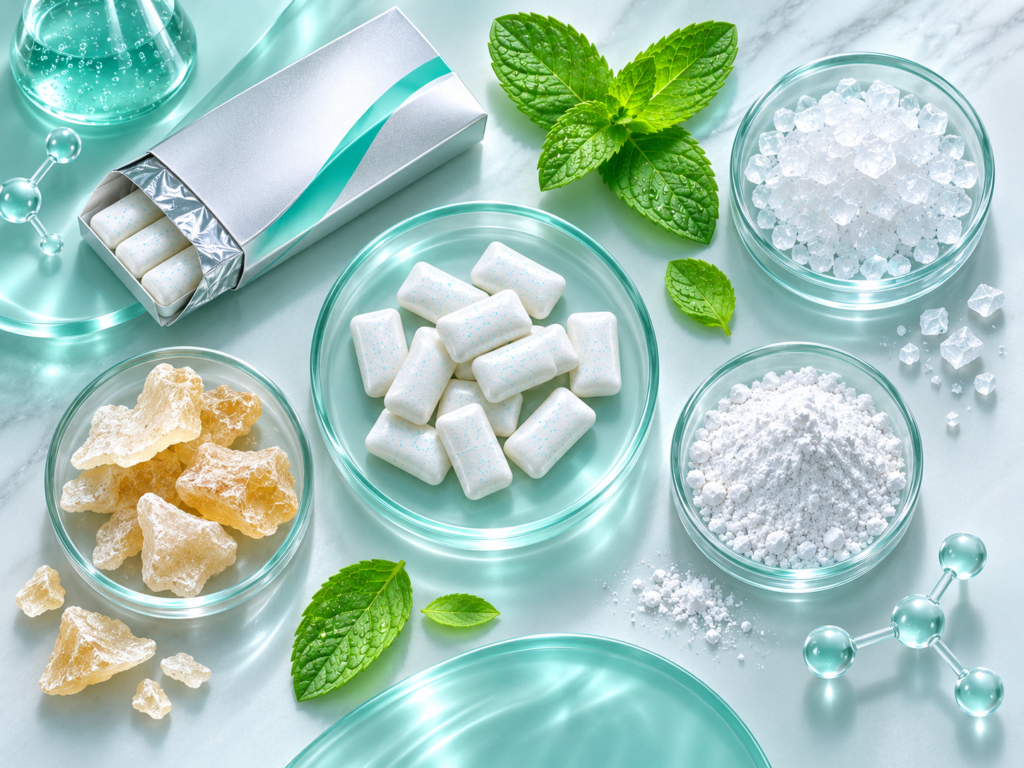
The answer to what is chewing gum made of begins with five major components: gum base, sweeteners, softeners, flavorings, and optional functional ingredients.
A finished piece of gum is an engineered material. Its texture must remain consistent while repeated chewing exposes it to moisture, temperature changes, saliva, and mechanical pressure.
1. Gum base: the structure that remains
The gum base provides elasticity, cohesion, and chew resistance.
Traditional chewing materials included natural plant resins and latexes. Modern commercial chewing gum may use synthetic polymers, naturally derived materials, or combinations of both.
Examples include:
- Chicle, historically obtained from sapodilla trees.
- Mastic resin, associated with the Greek island of Chios.
- Other food-grade natural resins and waxes.
- Permitted synthetic elastomers and polymeric materials.
- Softeners and texturizing agents that control consistency.
The presence of a synthetic gum base does not automatically mean the product is unsafe. Likewise, a natural gum base does not establish superior dental benefits.
2. Sweeteners: sugar vs sugar-free alternatives
Sweeteners are especially important when assessing chewing gum for dental health.
Regular sugar can be metabolized by acid-producing oral microorganisms. Sugar-free gum commonly uses sweeteners that are poorly or not fermented by these organisms.
| Sweetener | Common role | Dental consideration |
|---|---|---|
| Sucrose | Conventional sweetness | Fermentable; can contribute to plaque acid production |
| Glucose syrup | Sweetness and texture | Contains fermentable carbohydrates |
| Xylitol | Sugar-free sweetness | Noncariogenic; specific anticaries benefit under study |
| Sorbitol | Sweetness and moisture retention | Less readily fermented than ordinary sugar |
| Erythritol | Sugar-free sweetness | Generally considered noncariogenic |
| Maltitol | Sweetness and texture | Sugar alcohol; formulation and exposure matter |
| Stevia-derived sweeteners | High-intensity sweetness | Do not provide fermentable sugar in the way sucrose does |
| Aspartame | High-intensity sweetness | Noncariogenic; unsuitable for individuals with phenylketonuria |
An important detail: sugar-free does not necessarily mean xylitol-only. Many commercial gums combine several sweeteners to achieve a particular flavor-release profile and texture.
3. Flavoring systems
Peppermint and spearmint remain familiar choices, but dental chewing gum can also contain cinnamon, citrus, berry, herbal extracts, or other flavors.
Flavor quality matters because it influences how long an individual is willing to chew. A formula designed to support saliva stimulation is less useful in practice if the taste disappears almost immediately or becomes unpleasant.
However, botanical flavorings can irritate sensitive oral tissues. Natural does not automatically mean gentler.
4. Softeners, coatings and stabilizers
These ingredients control the physical behavior of chewing gum.
They may include glycerin, food-grade waxes, coating agents, emulsifiers, or other permitted additives.
A coating can create the initial crunch associated with pellet gum. A softer formulation may feel more comfortable to someone who experiences jaw fatigue.
5. Functional and mineral ingredients
Modern specialty gums can include ingredients selected for more than taste.
| Ingredient category | Examples | Intended function |
|---|---|---|
| Mineral ingredients | Hydroxyapatite, calcium phosphate | Enamel-related mineral delivery |
| Saliva-related ingredients | Xylitol and selected flavor systems | Support sugar-free chewing and saliva flow |
| Microbiome ingredients | Specific probiotics, prebiotics | Investigational microbial effects |
| Botanical ingredients | Mastic, plant extracts | Flavor and potential functional properties |
| Breath-related ingredients | Zinc compounds, flavor oils | Breath management |
| Other specialty additives | Vitamins and functional compounds | Product-specific purposes |
The presence of an ingredient should not be confused with proof that it reaches its intended target at a clinically useful dose.
Natural vs synthetic gum base
The difference is primarily material composition and sourcing.
Chicle-based and mastic-based gums may appeal to people seeking plant-derived products. Synthetic bases can offer greater consistency, prolonged chewability, and precise manufacturing control.
Environmental claims need similar scrutiny. A company may describe a gum as plastic-free or biodegradable, but the exact base composition, disposal conditions, and supporting evidence still matter.
A gum made from natural resin can be more expensive because of sourcing, harvesting, processing, and supply-chain constraints.
That expense does not necessarily translate into better enamel protection.
Benefits of Chewing Gum: What Does the Science Support?
The benefits of chewing gum depend on the type of gum, its ingredients, how long it is chewed, and the individual’s existing oral-health condition.
For dental health, the strongest established effects relate to saliva stimulation and sugar-free chewing.
1. Increased saliva production
Chewing activates salivary secretion through mechanical movement and taste stimulation.
This is particularly useful after meals, when food residues and acids can remain in the mouth.
Saliva contains protective constituents, including bicarbonate, calcium, phosphate, and proteins involved in oral lubrication and defense.
The benefit is not simply that the mouth feels wetter. The increased availability of saliva supports the biological environment in which enamel is maintained.
2. Improved acid clearance after meals
Following exposure to fermentable carbohydrates, plaque microorganisms can produce acids that lower the local pH around the teeth.
Chewing sugar-free gum increases saliva flow, helping dilute and neutralize these acids.
The ADA reports that chewing sugar-free gum for approximately 20 minutes after eating can contribute to cavity prevention when used as part of a regular oral-care routine. mouthhealthy.org
3. Support for enamel mineral balance
Enamel is not a static surface. The outer mineral layer undergoes recurring cycles of demineralization and remineralization.
When the environment becomes sufficiently acidic, mineral can leave the enamel. When conditions recover, calcium and phosphate may redeposit into susceptible areas.
Chewing gum supports this process indirectly by encouraging saliva production.
For a more comprehensive explanation of the relationship between acids, minerals, and enamel, explore our Enamel Health center.
4. Temporary relief from mild dry mouth
People experiencing occasional oral dryness may find sugar-free gum helpful because chewing stimulates saliva.
This can be especially useful during speaking, travel, or periods when the mouth feels uncomfortable.
However, severe or persistent dry mouth requires evaluation. Medications, salivary-gland disorders, and other conditions may reduce saliva production, and gum may not provide sufficient relief.
5. Fresher breath
Chewing gum can help refresh breath through increased saliva, flavor release, and temporary reduction of oral dryness.
But freshness is not the same as eliminating the underlying cause of persistent halitosis.
Gum cannot remove hardened calculus, treat periodontal infection, or replace tongue cleaning.
6. Practical oral care away from home
A person may not always have immediate access to a toothbrush after eating.
Sugar-free gum can provide a convenient interim measure. It is portable, requires no water, and can be used during appropriate situations when brushing is unavailable.
It remains an addition to oral hygiene, not a substitute for plaque removal.
Benefits of chewing gum: evidence overview
| Claimed benefit | Evidence assessment | Important limitation |
|---|---|---|
| Stimulating saliva | Well established | Response varies by individual |
| Helping neutralize plaque acids | Well established for appropriate sugar-free gum use | Does not eliminate all acid exposure |
| Contributing to cavity prevention | Supported for sugar-free gum as an adjunct | Does not replace fluoride toothpaste |
| Temporarily freshening breath | Established practical effect | Does not treat persistent halitosis |
| Relieving mild oral dryness | Supported as a saliva-stimulating approach | Not sufficient for every dry-mouth condition |
| Repairing enamel with hydroxyapatite gum | Preliminary product-specific evidence | Finished formulations need stronger trials |
| Improving the oral microbiome | Emerging research | Clinical health benefits remain uncertain |
| Creating a sharper jawline | Not established | Excessive chewing can aggravate jaw symptoms |
The useful distinction is between a benefit created by the act of chewing and a benefit claimed for an additional active ingredient.
A person can obtain the former without paying a premium for the latter.
How Chewing Gum Affects Saliva and Oral pH
The most important dental effect of chewing gum takes place in saliva rather than inside the gum itself.
Saliva provides the fluid environment surrounding enamel, dental plaque, soft tissues, and exposed tooth roots. Its protective functions include lubrication, dilution, buffering, and the supply of minerals involved in enamel maintenance.
Understanding this relationship makes it easier to separate meaningful oral-health benefits from marketing claims.
Saliva stimulation: the first protective mechanism
When chewing begins, salivary secretion typically increases.
The response is influenced by several factors, including chewing intensity, flavor, oral hydration, and salivary-gland function.
A strong initial flavor may stimulate saliva rapidly, but the response can change as flavor compounds are depleted. Mechanical chewing continues even after the taste becomes weaker.
This creates two overlapping processes:
Mechanical stimulation: Jaw movement activates salivary reflexes.
Gustatory stimulation: Taste compounds contribute additional stimulation.
The resulting saliva helps clear fermentable sugars and dilute acids.
Oral pH and enamel demineralization
The mouth does not maintain one fixed pH throughout the day.
Salivary pH, plaque pH, and the chemical environment directly next to enamel can differ.
After an acidic meal or drink, conditions may favor mineral dissolution. As saliva dilutes and neutralizes the challenge, the mineral environment can recover.
The commonly cited enamel critical pH of approximately 5.5 is a useful reference, but it is not a universal threshold. Actual demineralization depends on calcium and phosphate saturation, fluoride availability, and local conditions.
The HydroPaste Enamel Recovery Model
An effective way to understand the role of chewing gum is to consider two competing influences:
Erosion and demineralization pressure: Acid exposure frequency, acid contact duration, acidity persistence, and mechanical stress.
Recovery capacity: Saliva flow, buffering activity, mineral availability, and the time available for protective processes.
A dental chewing gum may help improve recovery conditions through saliva stimulation. A specialized mineral gum may also provide additional ingredients intended to interact with enamel.
However, a chewing gum cannot reliably overcome continuous acid exposure, poor plaque control, or established cavities.
Conceptual chart: what happens after eating?
| Oral phase | Main process | Role of sugar-free gum |
|---|---|---|
| Immediately after eating | Food residues and acids may remain | Begins stimulating saliva |
| Early recovery | Saliva dilutes residual substances | Supports acid clearance |
| Continuing recovery | Salivary buffering helps restore a less acidic environment | Maintains salivary stimulation during chewing |
| Between meals | Enamel remains exposed to saliva and plaque conditions | Gum is no longer necessary for normal salivary function |
This chart illustrates physiological processes rather than fixed recovery times. Recovery varies substantially with food composition, plaque activity, saliva production, and oral-health conditions.
Types of Dental Chewing Gum
Dental chewing gum includes several overlapping product categories.
Some formulations emphasize sugar-free sweetness. Others incorporate mineral particles, botanical compounds, or ingredients intended to interact with the oral microbiome.
These distinctions are useful because a product’s formulation determines what additional questions should be asked about its effectiveness.
1. Hydroxyapatite remineralizing gum
Hydroxyapatite gum incorporates calcium-phosphate mineral particles related to the mineral structure of teeth.
Products may use nano-hydroxyapatite, micro-hydroxyapatite, or other mineral preparations.
The intended advantage is to combine saliva stimulation with mineral delivery. The clinical challenge is determining whether the particles are released, retained, and deposited in sufficient quantities to provide measurable additional benefits.
2. Xylitol dental chewing gum
Xylitol gum replaces ordinary fermentable sugar with a noncariogenic sweetener.
Its strongest practical attraction is that it allows saliva-stimulating chewing without the same sugar exposure as conventional sweetened gum.
Some research suggests that xylitol may provide additional benefits against certain cavity-associated bacteria, although the size and consistency of those benefits remain debated.
3. Sugar-free dental chewing gum
Sugar-free gum is the broadest evidence-supported category.
It can contain xylitol, sorbitol, erythritol, or other noncariogenic sweeteners.
Not every sugar-free gum contains xylitol, and not every sugar-free gum has been independently evaluated for cavity prevention.
The most important established mechanism is saliva stimulation.
4. Oral microbiome and probiotic gum
Microbiome-oriented gums may contain live probiotic strains, prebiotics, or other ingredients intended to influence oral microbial ecology.
This is an emerging category. Demonstrating that a probiotic reaches dental plaque does not automatically establish fewer cavities, healthier gums, or sustained changes in oral health.
5. Dry mouth and saliva-stimulating gum
These gums emphasize comfort and saliva production.
They may be particularly useful for individuals experiencing mild, occasional dryness, provided they can safely chew.
A person with significant salivary-gland dysfunction may need a more comprehensive approach.
6. Breath-freshening dental gum
Fresh-breath gum commonly contains mint flavorings and may include other breath-related ingredients.
It is useful for temporary freshness, but should not be confused with treatment for periodontal disease or persistent halitosis.
7. Natural and plastic-free dental gum
These products emphasize gum-base composition and ingredient sourcing.
Common features include chicle, mastic, botanical flavors, and alternatives to conventional synthetic polymers.
Their environmental and ingredient characteristics are separate from clinical evidence of oral-health benefits.
8. Mineral and calcium-phosphate gum
Mineral chewing gum can include hydroxyapatite, calcium-phosphate preparations, or technologies such as casein phosphopeptide-amorphous calcium phosphate (CPP-ACP).
These formulations aim to improve mineral availability around teeth.
Their performance depends on the specific chemistry, concentration, delivery method, and clinical evidence.
Dental chewing gum categories compared
| Category | Main mechanism | Primary interest | Evidence maturity |
|---|---|---|---|
| Hydroxyapatite gum | Saliva + mineral-particle delivery | Enamel and sensitivity | Emerging |
| Xylitol gum | Sugar substitution + saliva stimulation | Cavity-risk management | Established chewing benefits; mixed xylitol-specific results |
| Conventional sugar-free gum | Saliva stimulation | Everyday oral care | Established |
| Probiotic gum | Microbial delivery | Oral microbiome | Preliminary |
| Dry-mouth gum | Salivary stimulation | Oral comfort | Established mechanism |
| Breath-freshening gum | Flavor release and saliva | Temporary freshness | Established cosmetic effect |
| Natural gum | Plant-derived gum base | Ingredients and sustainability | Product-dependent |
| Calcium-phosphate gum | Mineral delivery | Enamel support | Formulation-dependent research |
The best approach is to select the category that addresses the actual oral-health concern, then examine individual formulations within it.
Hydroxyapatite Remineralizing Chewing Gum
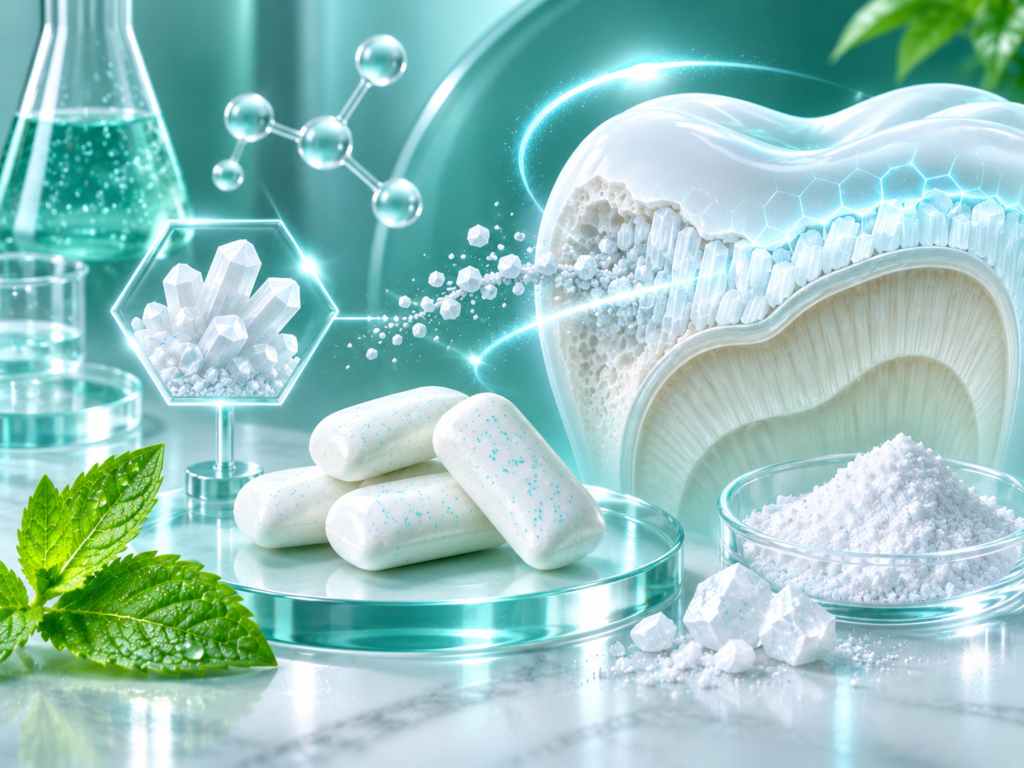
Hydroxyapatite is one of the most technically interesting developments in modern dental chewing gum.
Human tooth enamel is composed predominantly of mineral crystallites based on carbonated hydroxyapatite. These crystals provide enamel with its remarkable hardness and resistance to mechanical wear.
Hydroxyapatite oral-care products attempt to use mineral particles with chemical similarities to tooth mineral.
How hydroxyapatite gum is intended to work
When a person chews a hydroxyapatite-containing gum, the formulation is intended to release some of its mineral particles into saliva.
Those particles may then interact with tooth surfaces, depending on their composition, dimensions, dispersion, concentration, and surrounding chemistry.
The proposed process can be described in four stages:
- Chewing stimulates saliva and exposes the gum’s ingredients to the oral environment.
- Hydroxyapatite particles are released from the gum base to varying degrees.
- Released particles may interact with enamel or exposed dentin surfaces.
- Under suitable conditions, mineral-related surface effects may occur.
Each stage represents a different technical question.
The most important limitation is that the presence of hydroxyapatite on an ingredient label does not establish how much becomes available to enamel during chewing.
For a deeper explanation of the material itself, explore our Hydroxyapatite Mechanism guide.
Nano-hydroxyapatite vs micro-hydroxyapatite gum
Particle dimensions influence surface area, dispersion, suspension behavior, and potential interactions with enamel.
Nano-hydroxyapatite generally has a greater surface-area-to-mass ratio than larger particles. However, particle size alone does not establish a superior chewing-gum formulation.
| Property | Nano-hydroxyapatite | Micro-hydroxyapatite |
|---|---|---|
| Typical particle scale | Nanoscale | Larger, microscale particles |
| Surface area per unit mass | Generally greater | Generally lower |
| Dispersion considerations | Aggregation and stabilization matter | Particle distribution still matters |
| Potential enamel interaction | Studied in topical dental applications | Depends on material and formulation |
| Gum-specific clinical evidence | Limited | Limited |
| Ingredient evaluation | Particle size, morphology, dose, release | Particle characteristics, dose, release |
A product containing 5 mg of nano-hydroxyapatite cannot be declared inferior or superior to another containing 50 mg of a larger or composite mineral preparation solely from the mass figures.
The two products may differ in chemistry, accessibility, surface area, and release behavior.
How much hydroxyapatite is actually in remineralizing gum?
This is one of the most useful questions an individual can ask before paying a premium for mineral chewing gum.
Some manufacturers disclose the precise quantity of hydroxyapatite per piece. Others disclose only that it appears in the ingredient list.
For example, Minvelle advertises 5.7 mg of nano-hydroxyapatite per piece, while Crait advertises 70 mg of its non-nano hydroxyapatite preparation per piece. These figures come from their respective published specifications and should not be interpreted as equivalent mineral delivery. minvelle.com+1
A manufacturer that publishes dosage, particle specifications, testing documentation, and formulation details gives individuals more information to evaluate.
But even excellent ingredient transparency is not a substitute for clinical evidence.
Can hydroxyapatite gum rebuild damaged enamel?
The answer depends on what rebuild means.
Early mineral loss within enamel may be reversible under favorable conditions. Once enamel structure is physically lost through extensive erosion, fracture, or cavitation, chewing gum cannot regenerate the missing tooth anatomy.
A hydroxyapatite gum may be designed to support mineral-related processes, but the extent to which current commercial products achieve this in humans is not firmly established.
Our detailed Best Remineralizing Gum guide examines mineral formulations, reported dosages, clinical research, and the limitations of manufacturer claims.
Sugar Free Chewing Gum and Xylitol
For many people, sugar free chewing gum is the most practical place to begin.
It is widely available, generally less expensive than specialty mineral gum, and benefits from a substantial body of research relating to saliva stimulation.
Why sugar-free gum is different from conventional gum
Ordinary sugar can supply fermentable carbohydrates to plaque microorganisms.
These microorganisms produce acids as they metabolize sugars, potentially increasing demineralization pressure around the teeth.
Sugar-free gum replaces this source of fermentable sugar with alternative sweeteners.
The chewing action then stimulates saliva without adding the same conventional sugar exposure.
Is xylitol better than other sugar-free sweeteners?
Xylitol is a five-carbon sugar alcohol that many common cavity-associated bacteria cannot readily use to produce acid.
It has been investigated for possible effects on Streptococcus mutans, dental plaque, and cavity development.
However, evidence of xylitol’s additional benefit beyond chewing another sugar-free gum is not completely consistent.
A 2025 systematic review reported favorable findings for xylitol gum in several studies involving mutans streptococci and plaque accumulation. Other systematic reviews have concluded that the evidence remains insufficient or inconsistent for confirming an independent cavity-prevention effect. PubMed+1
The sensible interpretation is that xylitol is a reasonable ingredient to consider, but it should not be treated as a guaranteed cavity treatment.
Xylitol vs sorbitol vs erythritol
| Ingredient | Chemical category | Common use in gum | Main consideration |
|---|---|---|---|
| Xylitol | Sugar alcohol | Dental-oriented sugar-free gum | Research on bacterial and cavity-related outcomes |
| Sorbitol | Sugar alcohol | Mainstream sugar-free gum | Widely used, generally less cariogenic than sucrose |
| Erythritol | Sugar alcohol | Specialty sugar-free gum | Noncariogenic sweetener with a different taste profile |
| Maltitol | Sugar alcohol | Sweetness and texture | Potential digestive effects with higher consumption |
| Aspartame | High-intensity sweetener | Conventional sugar-free gum | Phenylalanine source; relevant to PKU |
| Stevia extracts | High-intensity sweeteners | Natural-positioned gum | Often combined with bulk sweeteners |
For a detailed ingredient and product comparison, see our Best Xylitol Gum guide.
Is every sugar-free chewing gum good for teeth?
Not necessarily.
A sugar-free label tells you something about the sweeteners, but it does not establish that the product has been clinically evaluated.
Individuals should also consider acidity, flavoring ingredients, chewing texture, and any relevant medical or dental conditions.
The ADA Seal of Acceptance provides one useful form of independent evaluation for eligible sugar-free gums. Trident Sugarfree and Orbit Sugarfree are examples with ADA acceptance listings. American Dental Association+1
Our Best Sugar-Free Gum comparison examines everyday formulations, sweetener systems, and oral-health suitability.
Oral Microbiome and Probiotic Chewing Gum
The oral microbiome consists of microorganisms living on tooth surfaces, the tongue, soft tissues, saliva, and other oral structures.
A healthy mouth is not a sterile environment.
Its microbial communities interact with diet, saliva, immunity, oral hygiene, and local chemical conditions. Problems arise when ecological changes favor disease-associated processes, such as sustained acid production or periodontal inflammation.
This makes chewing gum an interesting potential delivery system for ingredients intended to influence the oral environment.
Probiotic, prebiotic, and postbiotic gum
These terms describe different approaches.
Probiotic chewing gum contains selected live microorganisms intended to provide a health benefit when administered in an appropriate amount.
Prebiotic chewing gum contains substrates intended to be selectively utilized by microorganisms in ways that confer a health benefit.
Postbiotic chewing gum may contain preparations of inactivated microorganisms and their components, formulated for proposed health effects.
Not every botanical ingredient or xylitol-based gum qualifies as a prebiotic or probiotic product.
Can probiotic chewing gum change oral bacteria?
Recent research indicates that chewing gum can deliver selected microorganisms into the oral environment.
In a 2026 randomized controlled trial, 52 adults were enrolled to investigate a sugar-free gum containing Heyndrickxia coagulans SNZ1969. Forty-four completed the study, and researchers observed modest, temporary changes in plaque microbial composition.
These results support the feasibility of microbial delivery through gum. They do not establish that probiotic gum prevents cavities or treats periodontal disease. pubmed.ncbi.nlm.nih.gov
Does microbiome gum improve bad breath?
The evidence is not yet convincing for a general claim.
A secondary analysis of the 2026 trial found no statistically significant advantage over placebo for the measured volatile sulfur compounds associated with breath odor. pubmed.ncbi.nlm.nih.gov
That result illustrates an important distinction: changing bacterial measurements does not necessarily produce a meaningful clinical improvement.
Why microbial balance matters more than bacterial elimination
Dental plaque is a structured microbial community, not merely a collection of unwanted bacteria.
Some organisms contribute to normal oral ecological processes, while others become problematic under particular environmental conditions.
Sugar exposure, low pH, inflammation, and reduced saliva can influence this balance.
The objective of preventive oral care should therefore be to maintain conditions compatible with oral health, rather than indiscriminately attempting to eliminate every microorganism.
Our Microbiome Science guide examines this relationship in greater detail.
For developments in live microbial, prebiotic, and postbiotic formulations, explore Best Probiotic and Prebiotic Gum.
Best Chewing Gum for Teeth by Need
There is no universally superior chewing gum for every mouth.
A person with dry mouth, another with frequent acidic exposures, and someone investigating early enamel mineral loss may all benefit from different approaches.
The following framework connects specific oral-health concerns with suitable chewing gum categories.
Best chewing gum for enamel protection
For general enamel protection, the starting point is a sugar-free chewing gum that can be used comfortably after meals.
Salivary stimulation helps dilute acids and supports mineral balance.
Hydroxyapatite and calcium-phosphate gums introduce additional mineral-delivery possibilities, but their added benefits depend on the finished formulation and supporting research.
Consider: Sugar-free gum with independently supported dental claims; specialty mineral gum as an optional complement.
Best chewing gum for cavity-prone teeth
An individual with recurring cavities should prioritize an evidence-based preventive routine.
Sugar-free gum can provide supplementary protection after meals, but it cannot replace appropriate fluoride exposure, plaque removal, and professional management of caries risk.
Xylitol-containing gums are worth considering, although the additional benefit of xylitol over other sugar-free formulations is not uniformly established.
Consider: ADA-accepted sugar-free gum and a dental preventive plan matched to personal cavity risk.
Best chewing gum for dry mouth
Dry mouth, or xerostomia, can interfere with speaking, swallowing, eating, and oral comfort. Reduced saliva can also increase vulnerability to dental decay.
Sugar-free chewing gum may help when the salivary glands retain enough function to respond to stimulation.
A soft, comfortable gum is preferable to an unusually hard formulation that causes jaw fatigue.
The ADA identifies sugar-free gum as one option for stimulating saliva, while persistent xerostomia may require additional treatments and investigation of underlying causes. mouthhealthy.org
Explore our Best Dry Mouth Gum guide for products and selection considerations.
Best chewing gum for bad breath
Bad breath can result from numerous causes, including tongue coating, periodontal inflammation, oral dryness, and retained food debris.
Mint-flavored sugar-free gum may temporarily improve freshness through flavor release and salivary stimulation.
However, a strong flavor is not evidence that a gum treats the source of halitosis.
An individual with persistent breath odor should investigate the underlying cause rather than repeatedly using gum to conceal it.
Our Best Breath-Freshening Gum guide compares dental-oriented options for everyday freshness.
Best chewing gum for sensitive teeth
Tooth sensitivity can arise from exposed dentin, enamel wear, gum recession, cracks, or other dental conditions.
Some mineral-containing chewing gums have been investigated for hypersensitivity, with promising findings in specific formulations.
Nevertheless, a general claim that hydroxyapatite gum treats sensitive teeth is not supported for every commercial product.
Persistent or worsening sensitivity requires dental evaluation.
Best chewing gum for orthodontic appliances
Braces, aligners, and dental restorations introduce additional considerations.
Sticky or unusually tough gum may interfere with orthodontic appliances. People wearing fixed braces should follow their orthodontist’s specific instructions.
For removable aligners, gum should generally be chewed only after removing the aligners.
Chewing gum selection chart by oral-health objective
| Oral-health concern | Starting category | Additional consideration |
|---|---|---|
| Everyday cavity-risk management | Sugar-free dental gum | Regular fluoride toothpaste remains essential |
| Enamel mineral support | Hydroxyapatite or calcium-phosphate gum | Check dose and evidence |
| Frequent dry mouth | Sugar-free saliva-stimulating gum | Investigate persistent symptoms |
| Temporary bad breath | Sugar-free breath-freshening gum | Address the underlying cause if persistent |
| Interest in oral microbiome science | Probiotic or prebiotic gum | Clinical outcomes remain uncertain |
| Natural-ingredient preference | Chicle- or mastic-based gum | Verify allergens and formulation |
| Sensitive teeth | Comfortable sugar-free gum; selected mineral formulas | Determine the actual cause of sensitivity |
| Braces or orthodontic treatment | Orthodontist-approved options | Avoid appliance damage |
Best Chewing Gum Products Compared
The dental chewing gum market includes both inexpensive established sugar-free gums and specialized products with more complex formulations.
The difference in price often reflects ingredients, packaging, manufacturing scale, and brand positioning. It does not necessarily correspond to proven effectiveness.
Best hydroxyapatite chewing gum products
Several newer brands offer gum formulated with hydroxyapatite.
Among the most relevant are Minvelle, Underbrush, Dentagum, Enamio, and Crait.
| Product | Mineral system | Other notable ingredients | Published HAp amount |
|---|---|---|---|
| Minvelle | Nano-hydroxyapatite | Xylitol, mastic resin | 5.7 mg per piece |
| Underbrush | Nano- and micro-hydroxyapatite | Xylitol, chicle, plant resins | Not disclosed |
| Dentagum | Nano-hydroxyapatite | Xylitol, erythritol, eggshell powder, propolis | Not disclosed |
| Enamio | Nano-hydroxyapatite | Xylitol, chicle, calcium glycerophosphate | Not disclosed |
| Crait | Non-nano hydroxyapatite preparation | Xylitol and other sugar-free sweeteners | 70 mg per piece advertised |
Product specifications are based on published manufacturer information available in 2026. Formulations may change. The amount declared for one mineral preparation should not be directly compared with another without considering material composition and delivery.
The differences are commercially and scientifically important.
Minvelle provides a specific per-piece nano-hydroxyapatite quantity. This improves formulation transparency, although its finished gum does not have published clinical evidence establishing superiority over standard sugar-free gum.
Underbrush emphasizes a natural gum-base system and combines multiple botanical resins with both nano- and micro-hydroxyapatite. Its mineral dose remains an important unanswered question.
Dentagum combines nano-hydroxyapatite with sweeteners and additional ingredients, including eggshell powder. Individuals with relevant allergies should inspect its complete ingredient list. Manufacturer outcome percentages should be assessed against identifiable clinical studies rather than accepted at face value.
Enamio combines nano-hydroxyapatite with ingredients such as calcium glycerophosphate and xylitol. Its formula raises interesting questions about multiple mineral sources and how those ingredients behave during chewing.
Crait takes a non-nano approach and publishes an advertised mineral quantity per piece. The composition of its OMYADENT mineral preparation should be understood before comparing its mass with pure nano-hydroxyapatite.
For the complete analysis of particle type, mineral transparency, product claims, and formulation differences, visit Best Hydroxyapatite Gum.
Best xylitol and conventional sugar-free chewing gum products
The comparison changes considerably when examining established sugar-free gum.
| Product | Primary category | Important feature | Product-selection consideration |
|---|---|---|---|
| Trident Sugarfree | Conventional sugar-free gum | ADA-accepted formulations | Sweetener combinations vary |
| Orbit Sugarfree | Conventional sugar-free gum | ADA-accepted product line | Check current flavor and label |
| Spry Gum | Xylitol-focused gum | Xylitol-based formulation | Check xylitol quantity and flavor |
| Epic Dental Gum | Xylitol-focused gum | Dental-oriented positioning | Compare xylitol per piece |
| PUR Gum | Xylitol gum | Xylitol-sweetened, aspartame-free positioning | Ingredient and flavor preferences |
Trident and Orbit are particularly relevant because the ADA has evaluated eligible formulations for their ability to help prevent cavities through saliva stimulation after meals.
That does not mean all products from those brands or every available flavor have identical specifications.
What separates a strong dental gum from an expensive one?
Three factors matter more than premium packaging.
Ingredient transparency: Can the manufacturer identify the ingredients and relevant quantities?
Clinical relevance: Does the research address the finished chewing gum, or merely one ingredient used elsewhere?
Practical usability: Is the gum comfortable, reasonably priced per piece, and suitable for the individual’s routine?
For a detailed individual formulation assessment, see the forthcoming Minvelle Gum Review.
The most useful comparisons consider all three factors rather than assuming an advanced mineral formula must outperform a conventional sugar-free gum.
Chewing Gum vs Bubble Gum: What’s the Difference?
Although people often use the terms interchangeably, chewing gum vs bubble gum describes a meaningful difference in formulation and intended experience.
Ordinary chewing gum is generally optimized for flavor, texture, and prolonged chewing.
Bubble gum is specifically designed to stretch into thin films that can trap air and form bubbles.
The difference comes primarily from the composition and mechanical properties of the gum base.
What makes bubble gum stretch?
Bubble gum bases are typically formulated with elastomer characteristics that support greater stretching and bubble formation.
A stronger, stretchable film can expand without breaking as easily.
Conventional chewing gum may also produce bubbles, but it is not necessarily optimized for that purpose.
Chewing gum vs bubble gum comparison
| Feature | Chewing gum | Bubble gum |
|---|---|---|
| Primary purpose | Extended chewing, flavor, freshness | Chewing and blowing bubbles |
| Gum-base characteristics | Optimized for chew texture | Optimized for elasticity and bubble formation |
| Texture | Soft to firm, depending on formulation | Often more stretchable |
| Sugar content | Sugar-containing or sugar-free | Sugar-containing or sugar-free |
| Dental-health potential | Depends on sweeteners and formulation | Also depends on sweeteners and formulation |
| Functional ingredients | May include xylitol, hydroxyapatite, minerals | Less common in conventional bubble gum |
| Oral-health recommendation | Sugar-free versions are preferable | Sugar-free versions are preferable |
Is bubble gum worse for teeth?
Bubble gum is not automatically worse because it can form bubbles.
The main dental distinction is whether it contains fermentable sugar and how it is used.
A sugar-free bubble gum can stimulate saliva in the same general way as other sugar-free gums.
A sugar-containing bubble gum introduces fermentable carbohydrate exposure, which is less desirable for individuals concerned about cavities.
For dental health, ingredient composition matters more than whether a gum can produce large bubbles.
Why dental chewing gum deserves a separate category
Bubble gum and dental chewing gum serve different primary purposes.
One emphasizes a recreational experience. The other emphasizes oral-health-related functionality.
A product can satisfy both purposes, but a bubble gum’s ability to form large bubbles does not establish that it supports enamel remineralization.
Does Dental Chewing Gum Really Work?
The scientific answer depends on what outcome is being measured.
A gum can stimulate saliva, change plaque acidity, deliver mineral particles, alter bacterial measurements, or affect sensitivity. These are different outcomes, and evidence supporting one does not automatically establish the others.
Evidence for conventional sugar-free gum
The strongest established role is saliva stimulation following meals.
The ADA’s sugar-free gum category recognizes products that help prevent cavities when chewed for 20 minutes after eating, based on appropriate safety and efficacy evidence. American Dental Association
This benefit is important precisely because it does not require a complicated formulation.
Evidence for hydroxyapatite chewing gum
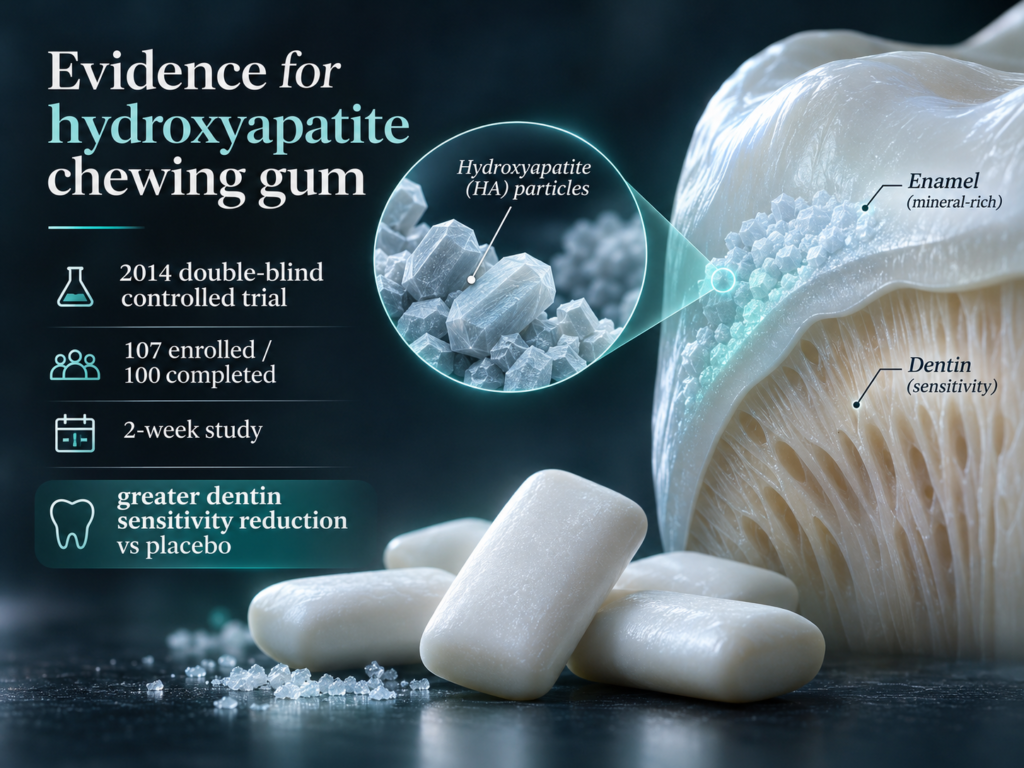
A 2014 double-blind clinical study investigated a sugar-free chewing gum containing calcium hydroxyapatite and dicalcium phosphate dihydrate.
The trial enrolled 107 individuals, with 100 completing the study. Researchers compared the mineral-containing gum with a placebo gum and measured dentin hypersensitivity.
After two weeks, the mineral-containing formulation produced greater reductions in the measured sensitivity responses than placebo. PubMed
Clinical study: reduction in dentin sensitivity after two weeks
Hydroxyapatite-containing gum vs placebo
2014 controlled trial; percentage reductions from baseline at week two.
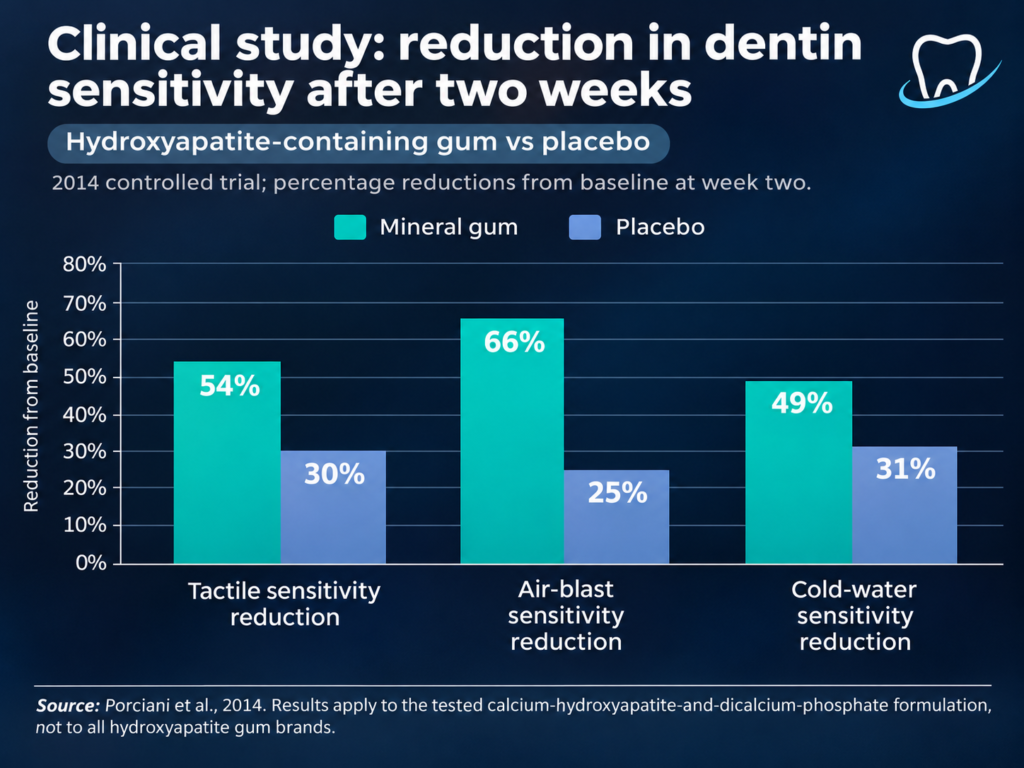
Source: Porciani and colleagues, 2014. Results apply to the tested calcium-hydroxyapatite-and-dicalcium-phosphate formulation, not to all hydroxyapatite gum brands.
| Sensitivity measurement | Mineral gum | Placebo gum |
|---|---|---|
| Tactile sensitivity reduction | 54% | 30% |
| Air-blast sensitivity reduction | 66% | 25% |
| Cold-water sensitivity reduction | 49% | 31% |
These findings are encouraging, but their interpretation has limits.
The tested formulation contained more than one mineral ingredient. The trial assessed dentin hypersensitivity over two weeks, not long-term prevention of cavities. Its findings cannot be transferred automatically to newer products with different particle types, concentrations, and gum bases.
Evidence for calcium-phosphate chewing gum
Calcium-phosphate delivery is another important research direction.
Calcium and phosphate ions are necessary for enamel remineralization. Formulations containing CPP-ACP, for example, are intended to stabilize and deliver these ions.
Some clinical investigations have reported benefits for early enamel lesions, but formulation differences and study quality complicate the interpretation of results.
An additional issue is that CPP-ACP is casein-derived and may be unsuitable for individuals with relevant milk-protein allergies.
Our Calcium Phosphate Systems guide examines mineral chemistry and the differences between major remineralizing technologies.
For chewing-gum-specific formulations, the Best Calcium-Phosphate Gum guide focuses on ingredient availability and clinical evidence.
Evidence for probiotic chewing gum
Probiotic chewing gum has demonstrated the feasibility of delivering selected microorganisms to the mouth.
However, evidence for long-term improvements in cavities, gingivitis, or persistent halitosis remains preliminary.
Clinical studies need to establish not only that microorganisms are delivered, but also that meaningful benefits occur consistently and safely.
The difference between ingredient evidence and product evidence
This is one of the most important distinctions in dental chewing gum research.
| Evidence level | What it demonstrates | What it does not necessarily demonstrate |
|---|---|---|
| Ingredient identification | A compound appears in the formula | That enough is released during chewing |
| Laboratory experiment | A mechanism works under tested conditions | That it works identically in the human mouth |
| Saliva-release testing | A quantity enters saliva | That it reaches and remains on enamel |
| Short-term human trial | A measured effect occurs during the study | Long-term cavity prevention |
| Finished-product clinical trial | A specific gum affects measured outcomes | Superiority over every competing product |
| Long-term clinical outcomes | Effects on clinically relevant endpoints | Universal benefit for every individual |
A well-designed dental-gum review should distinguish these levels.
A scientifically interesting ingredient may justify further investigation without yet justifying strong clinical promises.
How to Choose the Best Chewing Gum for Teeth
The best chewing gum for teeth should be selected through a combination of ingredient analysis, scientific evidence, practical suitability, and cost.
A product with a longer ingredient list is not necessarily more effective. A product with fewer ingredients is not necessarily safer.
The goal is to identify the characteristics that are relevant to the individual’s specific oral-health needs.
1. Examine the sweetener system
For regular use, sugar-free gum is generally preferable to sugar-containing gum from a cavity-prevention perspective.
Check whether the product contains xylitol, sorbitol, erythritol, or combinations of sweeteners.
A formula containing xylitol as its principal sweetener may differ substantially from one containing only a small quantity near the end of the ingredient list.
Ingredient order provides useful clues, but it cannot establish the exact dose.
2. Check the active ingredient quantity
For specialty remineralizing gum, look beyond the words contains hydroxyapatite.
Relevant information includes:
- Hydroxyapatite quantity per piece.
- Nano, micro, or non-nano particle classification.
- Source and chemical composition.
- Whether the preparation is pure mineral or a composite ingredient.
- Testing documentation.
- Evidence that the mineral is released during chewing.
A manufacturer willing to disclose these characteristics gives individuals a stronger basis for comparison.
3. Examine chewing texture and formulation stability
Chewing texture affects the actual experience of using a product.
Very hard gum may be uncomfortable for someone with jaw sensitivity. A gum that becomes excessively sticky may be inconvenient for people with certain dental appliances.
Flavor longevity also matters.
A product designed for a 20-minute chewing session should remain reasonably comfortable over that period.
4. Assess ingredient sourcing and environmental claims
Natural gum-base products may use chicle, mastic, or other plant-derived materials.
For individuals seeking alternatives to conventional synthetic gum bases, this can be an important distinction.
However, claims such as plastic-free, biodegradable, organic, and sustainably sourced should be evaluated separately.
A natural gum does not automatically contain dental-health ingredients, and a biodegradable gum is not necessarily more effective for cavity prevention.
Our Best Natural and Plastic-Free Gum guide examines these ingredient and sourcing differences.
5. Consider price per piece rather than package price
Premium chewing gum may be sold in different package quantities, making headline prices difficult to compare.
Price per piece provides a useful starting point.
Price per piece = Total package price ÷ Number of pieces
For example:
| Hypothetical package | Package price | Number of pieces | Price per piece |
|---|---|---|---|
| Conventional sugar-free gum | $5.00 | 50 | $0.10 |
| Xylitol specialty gum | $12.00 | 60 | $0.20 |
| Premium mineral gum | $24.00 | 30 | $0.80 |
| Advanced functional gum | $25.00 | 18 | $1.39 |
These are illustrative figures, not verified current prices for specific brands.
A more expensive product may contain specialized ingredients or involve higher production costs. That additional expense should be weighed against the quantity supplied and the quality of evidence supporting its benefits.
6. Use an evidence-based selection framework
HydroPaste evaluates dental chewing gum across five dimensions.
| Evaluation dimension | Key question | Why it matters |
|---|---|---|
| Oral-health suitability | Does the product address the intended concern? | Prevents mismatched product selection |
| Ingredient transparency | Are active ingredients and quantities disclosed? | Makes formulations easier to evaluate |
| Clinical relevance | Is there research on the finished product? | Separates product evidence from ingredient claims |
| Practical usability | Is the gum comfortable and convenient? | Influences actual use |
| Cost and consistency | Is repeated use financially practical? | Supports realistic long-term routines |
The best choice is the product that performs appropriately across the dimensions relevant to the individual—not necessarily the one with the greatest number of advertised benefits.
When and How to Chew Gum for Oral Health
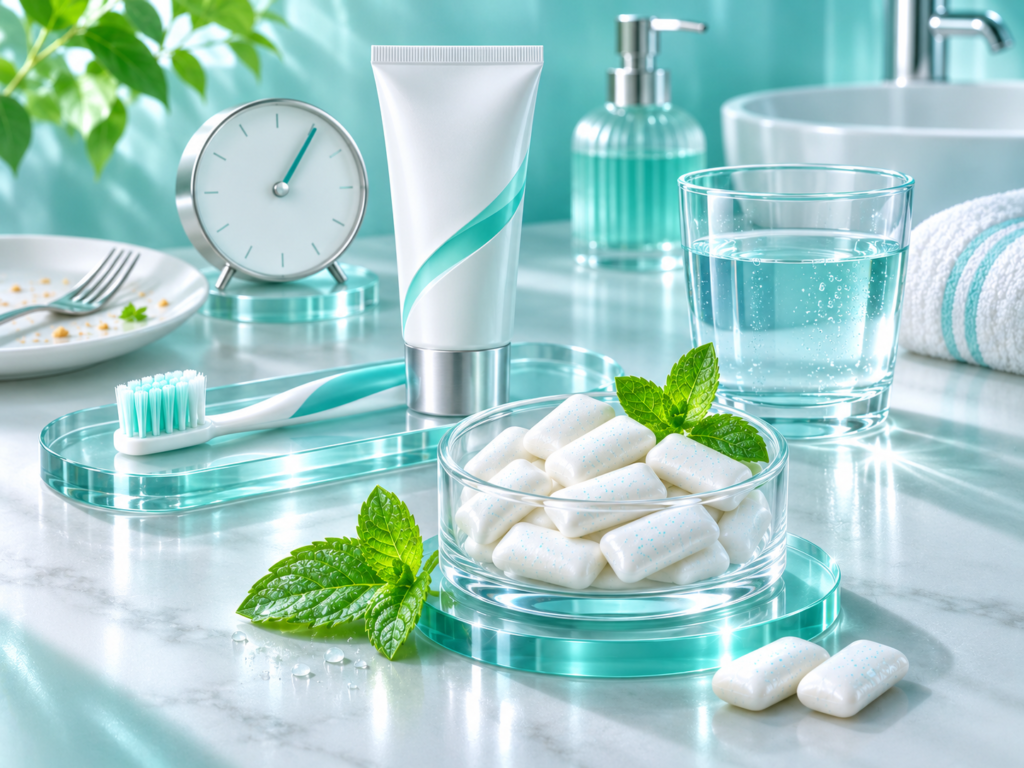
Timing influences the role chewing gum can play in an oral-care routine.
For most individuals interested in cavity prevention, chewing appropriate sugar-free gum after meals is a sensible starting point.
How long should you chew gum after eating?
The ADA identifies 20 minutes after meals as an evidence-supported chewing period for accepted sugar-free gums.
That does not mean every individual must chew for exactly 20 minutes, or that longer chewing automatically provides greater benefits.
It means this duration has been used in the evidence supporting the ADA’s category claims.
An individual with jaw discomfort may need to limit chewing or avoid it.
A practical after-meal dental gum routine
| Step | Action | Purpose |
|---|---|---|
| 1 | Finish eating | End the immediate food exposure |
| 2 | Drink or rinse with plain water if convenient | Help clear residual food and drink |
| 3 | Chew suitable sugar-free gum | Stimulate saliva |
| 4 | Continue for a comfortable period, up to approximately 20 minutes | Support salivary clearance and buffering |
| 5 | Dispose of the gum | Avoid swallowing the gum base |
| 6 | Maintain normal brushing and interdental cleaning | Remove plaque and provide preventive treatment |
This routine is particularly convenient following lunch or when brushing is temporarily unavailable.
For a more detailed daily schedule, see our After-Meal Dental Gum Routine.
Should you chew remineralizing gum after acidic drinks?
Acidic drinks may leave the oral environment temporarily less favorable for enamel.
Water is a simple, appropriate first measure following acidic exposure.
Sugar-free gum may then stimulate saliva, provided chewing is comfortable.
However, the use of mineral gum should not be presented as a reliable way to neutralize the effects of repeated acidic drinking.
The frequency and duration of acid exposure remain important.
Can chewing gum replace brushing?
No.
Chewing gum can stimulate saliva, but it cannot reliably clean every surface of the teeth.
It does not replace toothbrush bristles at the gumline, interdental cleaning between teeth, or the preventive benefits of appropriate toothpaste.
Chewing gum and remineralizing toothpaste
These products have different delivery mechanisms.
Toothpaste allows active ingredients to contact tooth surfaces during brushing and for a period afterward.
Chewing gum uses prolonged mechanical activity and saliva to distribute soluble or released ingredients.
The comparison is not simply about which product contains more hydroxyapatite.
It also concerns how ingredients are delivered, how much remains available, and whether clinically meaningful effects occur.
A practical oral-care schedule
Morning: Brush thoroughly using an appropriate toothpaste, and clean between teeth according to your routine.
After lunch: Consider sugar-free gum for a comfortable chewing period if brushing is unavailable.
During the day: Maintain hydration and limit frequent exposure to sugary or acidic drinks.
Evening: Brush and clean between teeth. Spit out toothpaste rather than immediately rinsing away the protective residue, particularly when using fluoride toothpaste.
Chewing gum should occupy a supporting role within this routine, not become its central treatment.
Is Chewing Gum Bad for You? Risks, Side Effects & Limitations
Chewing gum is generally well tolerated when used appropriately, but it is not suitable for everyone or every situation.
The principal concerns involve jaw loading, digestive responses to certain sweeteners, dental appliances, allergies, and accidental ingestion.
Jaw discomfort and temporomandibular joint problems
Chewing activates the masseter, temporalis, and other muscles involved in jaw movement.
For most healthy individuals, moderate chewing is not inherently harmful.
However, prolonged or forceful chewing may aggravate jaw muscle fatigue or temporomandibular disorder symptoms in susceptible people.
A 2025 systematic review found mixed evidence concerning gum chewing and temporomandibular disorders, with some studies suggesting that greater chewing duration and frequency are associated with increased symptoms. jofph.com
Individuals experiencing jaw pain, locking, frequent clicking accompanied by discomfort, or headaches associated with chewing should reduce or discontinue gum use and seek appropriate evaluation.
Digestive discomfort from sugar alcohols
Xylitol, sorbitol, maltitol, and other sugar alcohols can cause gastrointestinal symptoms when consumed in sufficient quantities.
Possible effects include bloating, gas, and diarrhea.
Tolerance varies between individuals.
A person new to xylitol gum may prefer to begin with a smaller amount and assess comfort.
Is swallowing chewing gum dangerous?
Accidentally swallowing a small piece is usually not dangerous.
The gum base is not readily digested, but it generally passes through the digestive tract rather than remaining in the stomach.
Mayo Clinic notes that intestinal obstruction is rare but can occur, particularly in children after swallowing large quantities of gum in certain circumstances. Mayo Clinic
Chewing gum is designed to be discarded, not swallowed.
Allergies and ingredient sensitivities
Specialty chewing gums may include milk-derived casein compounds, eggshell powder, propolis, botanical resins, or essential oils.
These ingredients can matter for individuals with specific allergies.
Ingredient labels should be checked carefully, particularly when evaluating mineral or natural oral-care products.
Xylitol and household pets
Xylitol is highly toxic to dogs.
Even comparatively small quantities of xylitol-containing products may cause serious poisoning.
The US Food and Drug Administration warns that xylitol can cause a dangerous fall in blood glucose and potentially liver injury in dogs. FDA
Keep dental chewing gum securely stored away from pets. Suspected ingestion requires immediate veterinary assistance.
Chewing gum for children
Gum can present a choking hazard for young children and for anyone unable to chew and dispose of it safely.
Parents should consider age, swallowing behavior, and product-specific guidance rather than assuming a natural or sugar-free gum is suitable for every child.
When chewing gum may not be appropriate
| Situation | Main concern | Sensible approach |
|---|---|---|
| Active jaw pain or TMD symptoms | Muscle and joint loading | Avoid or seek individualized advice |
| Fixed orthodontic appliances | Sticking or appliance damage | Follow orthodontist guidance |
| Significant dry mouth with poor chewing comfort | Limited saliva and oral irritation | Consider medical or dental management |
| Sugar-alcohol intolerance | Digestive discomfort | Reduce intake or select alternatives |
| Relevant ingredient allergies | Allergic reactions | Check complete ingredient lists |
| Young children | Choking and swallowing risk | Follow age and supervision guidance |
| Fasting blood tests | Possible interference with fasting requirements | Avoid gum unless the testing service permits it |
The useful principle is moderation combined with individual suitability.
Chewing gum can provide benefits without being appropriate for unrestricted use throughout the day.
Dental Chewing Gum Research & Advanced Guides
Dental chewing gum sits at the intersection of several scientific disciplines.
Its performance can depend on material engineering, mineral chemistry, salivary physiology, microbiology, and mechanical behavior.
These interactions explain why apparently similar products can differ substantially.
For a deeper understanding of these mechanisms, explore Hydropaste’s advanced guides, which examine nano vs micro hydroxyapatite gum, hydroxyapatite vs xylitol gum, remineralizing gum compared with toothpaste, oral microbiome formulations, ingredient safety, and the clinical evidence behind dental chewing gum.
The science of chewing gum and oral health
The physical action of chewing affects saliva, oral clearance, and the environment surrounding tooth surfaces.
Meanwhile, the chemical properties of the gum determine which ingredients are released.
Explore our dedicated Chewing Gum Science guide for a deeper examination of these mechanisms.
Hydroxyapatite vs xylitol gum
Hydroxyapatite and xylitol address different aspects of oral health.
Hydroxyapatite is a calcium-phosphate mineral intended for tooth-surface interaction.
Xylitol is a sugar substitute with potential oral microbial effects.
Some products combine both, but their mechanisms are not interchangeable.
A dental gum containing hydroxyapatite and xylitol may deliver more than one ingredient class, yet its actual additional benefit still requires formulation-specific evidence.
Our Hydroxyapatite vs Xylitol Gum comparison examines these distinctions.
Mineral-release efficiency: the unanswered formulation question
One of the most important technical questions is how efficiently a chewing gum releases its active ingredients.
A gum may contain a substantial quantity of hydroxyapatite, but some particles could remain trapped in the gum base.
Other particles may enter saliva but be swallowed or cleared without substantial interaction with enamel.
Consequently, three quantities should be distinguished:
Declared dose: The amount incorporated into the product.
Released dose: The amount that becomes available during chewing.
Retained or delivered amount: The amount that reaches and remains available at the intended oral surface.
A fourth factor is clinical effectiveness.
Even if mineral deposition can be measured, it is still necessary to demonstrate whether that deposition produces meaningful benefits.
This framework can help individuals evaluate product claims more critically.
What future clinical studies should measure
The next generation of dental chewing gum research would benefit from measuring:
- Actual ingredient release during chewing.
- Changes in stimulated saliva flow and plaque acidity.
- Mineral deposition under clinically realistic conditions.
- Changes in dentin sensitivity.
- Changes in early enamel lesions.
- Long-term cavity incidence.
- Oral microbiome effects where relevant.
- Product tolerability and adverse events.
Studies should compare finished specialty gums with suitable sugar-free controls, not only with the absence of chewing.
That comparison is especially important because sugar-free gum already provides benefits through saliva stimulation.
How HydroPaste Evaluates Chewing Gum
HydroPaste’s approach to dental chewing gum separates product information from scientific conclusions.
A manufacturer may publish a technically detailed formula, but that information is only one part of a meaningful review.
Ingredient and formulation verification
The first consideration is whether the product’s ingredients are clearly disclosed.
For hydroxyapatite gum, this includes mineral type, dose where available, source, particle classification, and relevant testing documentation.
For xylitol gum, it includes the sweetener system and the amount of xylitol where published.
For probiotic gum, it includes strain identity, viable count where appropriate, storage conditions, and relevant clinical research.
Distinguishing evidence from product claims
Marketing language can describe a plausible mechanism without demonstrating a proven outcome.
For example, hydroxyapatite may have recognized uses in dental products, but evidence from toothpaste cannot automatically establish the performance of a specific chewing gum.
Similarly, research showing that a probiotic strain survives in saliva does not necessarily demonstrate reduced gum inflammation or fewer cavities.
Product experience and limitations
Where firsthand product testing is available, useful observations include flavor duration, chewing texture, packaging, aftertaste, and practical convenience.
These observations should remain separate from clinical conclusions.
A person reporting smoother-feeling teeth after chewing gum does not establish that enamel mineral density has increased.
Commercial transparency
HydroPaste may feature affiliate-supported products and clearly disclosed sponsored placements.
Commercial relationships should not guarantee favorable reviews or determine product rankings.
Review methods, ingredient evidence, and limitations remain central to editorial assessments.
Additional brand-specific analysis will appear in the Dental Gum Product Reviews section.
Frequently Asked Questions (FAQs)
1. Is Chewing Gum Good for Your Teeth, and Which Sugar-Free Gum Is Best?
Chewing sugar-free gum can be good for your teeth when used alongside brushing and interdental cleaning. Its main benefit is stimulating saliva, which helps clear food residues, neutralize plaque acids, and support enamel mineral balance.
ADA-accepted sugar-free chewing gums, including eligible Trident and Orbit formulations, offer a useful starting point for individuals seeking evidence-supported everyday options.
Specialty hydroxyapatite gum may provide additional mineral ingredients, but its finished-product benefits are not yet as firmly established.
| Chewing gum type | Main dental benefit | Evidence position |
|---|---|---|
| ADA-accepted sugar-free gum | Saliva stimulation and cavity-risk reduction | Established |
| Xylitol gum | Sugar-free chewing; possible additional microbial effects | Mixed for xylitol-specific outcomes |
| Hydroxyapatite gum | Intended mineral delivery | Preliminary |
| Probiotic gum | Potential microbial modulation | Emerging |
| Sugary chewing gum | Saliva stimulation but added fermentable sugar | Less desirable for cavity prevention |
2. What Is Gum Made Of, and Are Natural Chewing Gum Ingredients Better?
Chewing gum is typically made from a gum base, sweeteners, flavorings, softeners, and optional functional ingredients.
The gum base may contain permitted synthetic polymers, natural materials such as chicle, or combinations of different substances.
Natural chewing gum may appeal to individuals seeking plant-derived ingredients, but natural sourcing does not automatically produce better oral-health outcomes.
For dental purposes, sugar content, ingredient suitability, and evidence matter more than the natural or synthetic label alone.
3. What Are the Main Benefits of Chewing Gum After Meals?
The principal benefits of chewing sugar-free gum after meals are increased saliva production, improved acid clearance, and support for the natural mineral environment around teeth.
Chewing for approximately 20 minutes after eating is an evidence-supported practice for certain sugar-free gums.
Additional benefits may include temporary breath freshness and relief from mild oral dryness.
Chewing gum should complement, rather than replace, regular dental hygiene.
4. Is Chewing Gum Bad to Swallow, and Does It Stay in Your Stomach?
Accidentally swallowing a piece of chewing gum is generally harmless. The gum base is not easily digested, but it usually moves through the digestive tract and leaves the body naturally.
It does not remain in the stomach for seven years.
Repeatedly swallowing gum, particularly in large amounts, is discouraged because intestinal blockage can occur in rare circumstances.
Young children require particular care because of choking and swallowing risks.
5. Can You Chew Gum With Braces or Invisalign Aligners?
Chewing gum with fixed braces may damage or stick to orthodontic components, especially when the gum is tough or sticky.
Some orthodontists may permit particular sugar-free gums, but the appropriate guidance depends on the appliance and treatment plan.
Individuals using removable Invisalign-style aligners should remove the aligners before chewing gum.
For orthodontic care, always follow the treating professional’s instructions.
6. Can Hydroxyapatite Chewing Gum Remineralize Enamel Better Than Xylitol Gum?
Hydroxyapatite gum and xylitol gum use different mechanisms.
Hydroxyapatite formulations are designed to deliver mineral particles, while xylitol is primarily a noncariogenic sweetener that may have additional microbial effects.
Both can stimulate saliva through chewing.
However, there is insufficient direct comparative clinical evidence to conclude that currently available hydroxyapatite gums consistently remineralize enamel better than conventional xylitol gums.
7. What Is the Best Dental Chewing Gum for Dry Mouth and Sensitive Teeth?
For mild dry mouth, a comfortable sugar-free gum can help stimulate saliva.
Individuals with sensitive teeth should select formulations based on the cause of sensitivity rather than assuming all remineralizing gums provide treatment.
Some mineral chewing gum formulations have demonstrated short-term improvements in dentin sensitivity, but these findings do not establish that every hydroxyapatite gum produces the same result.
Persistent oral dryness or sensitivity should be professionally evaluated.
People Also Ask (PAA)
1. Does Chewing Gum Help Jawline Definition or Make Your Face Sharper?
Chewing gum is not a proven method for creating a sharper jawline. It activates the jaw muscles and may influence chewing strength, but this does not mean it changes facial bone structure.
A randomized clinical trial involving 58 participants found improved maximum bite force after gum-chewing training but no significant changes in masseter muscle thickness or mandibular shape. pubmed.ncbi.nlm.nih.gov
Excessive chewing may also produce jaw pain or muscle fatigue. Dental chewing gum should therefore be selected for oral-care purposes rather than unproven facial-sculpting claims.
2. Is Chewing Gum Bad for You if You Chew It Every Day?
Daily chewing gum is not necessarily harmful for healthy individuals who tolerate it well.
The main considerations are the type of gum, frequency of use, chewing duration, and individual jaw health.
Sugar-free gum after meals can support saliva production and cavity-risk management.
However, prolonged or forceful chewing may aggravate jaw discomfort, while high sugar-alcohol intake can cause digestive symptoms.
A moderate routine is generally more appropriate than continuous chewing throughout the day.
3. Can You Chew Gum While Fasting Without Breaking Your Fast?
The answer depends on the type of fast.
| Fasting type | Chewing gum considerations |
|---|---|
| Intermittent fasting for calorie management | A small amount of sugar-free gum may be compatible with some approaches, but products can contain calories |
| Strict fasting | Gum may conflict with the rules or objective |
| Fasting before blood tests | Avoid chewing gum unless the testing service explicitly permits it |
| Ramadan fasting | Rulings depend on the religious authority and whether substances are released and swallowed |
For Ramadan, conventional flavored gum generally presents a concern because ingredients dissolve into saliva. Specific legal rulings can vary, so individuals should consult their recognized religious authority. For medical testing, follow the laboratory’s fasting instructions. ascls.org+2
4. Is Sugar-Free Chewing Gum Better Than Regular Gum for Teeth?
Yes. For dental-health purposes, sugar-free chewing gum is generally preferable to gum sweetened with fermentable sugars.
Both stimulate saliva, but regular sugar-containing gum introduces carbohydrates that oral bacteria can metabolize into acids.
Sugar-free gum provides the chewing-related benefit without the same conventional sugar exposure.
An ADA-accepted sugar-free gum offers additional assurance that the relevant product has been evaluated for its stated dental benefits.
5. Is It Bad to Chew Gum Every Day for 30 Minutes or Longer?
Chewing gum for 30 minutes is not automatically harmful, but longer chewing does not guarantee greater oral-health benefits.
The ADA’s commonly cited evidence-supported interval is approximately 20 minutes after meals for eligible sugar-free gums.
Individuals who experience jaw pain, fatigue, headaches, or discomfort should reduce chewing duration or stop.
Those with temporomandibular disorders may need individualized advice.
6. Can Chewing Gum Remove Cavities or Rebuild Tooth Enamel Naturally?
Chewing gum cannot remove an established cavity or regenerate missing tooth structure.
Sugar-free gum can stimulate saliva, supporting conditions favorable to natural enamel remineralization.
Mineral-containing chewing gum may offer additional possibilities for early surface-level mineral changes, but the clinical evidence remains limited.
A tooth with a cavitated lesion generally requires professional evaluation and treatment. Chewing gum should not be presented as an alternative to necessary restorative care.
7. What Is the Healthiest Chewing Gum to Use Every Day?
For most individuals seeking everyday dental support, a suitable sugar-free chewing gum with a well-understood formulation is a reasonable choice.
Products with an ADA Seal of Acceptance provide a useful evidence-based starting point.
Individuals may additionally consider xylitol content, gum-base preferences, allergens, chewing comfort, and the price per piece.
Hydroxyapatite and microbiome-oriented gums are interesting alternatives, but their additional clinical benefits should be judged separately from the established benefits of chewing sugar-free gum.
HydroPaste Final Verdict: The Role of Chewing Gum in Modern Oral Health
Chewing gum occupies a distinctive position in preventive dentistry.
It is not a toothbrush, toothpaste, mouthwash, or professional treatment. Yet it can influence one of the mouth’s most important protective systems: saliva.
That is the foundation on which the best-supported dental benefits of sugar-free gum are built.
The newer generation of mineral and microbiome-oriented gums introduces another possibility. Instead of relying only on saliva stimulation, these products attempt to deliver specialized ingredients during the chewing process.
Hydroxyapatite gum is particularly interesting because it connects a familiar consumer product to mineral technologies already investigated in toothpaste and other dental applications.
Xylitol gum remains relevant because it offers a sugar-free chewing experience with a growing, although not entirely consistent, evidence base concerning microbial and cavity-related outcomes.
Probiotic and prebiotic gums represent a younger research direction, where microbial delivery has become feasible but important clinical questions remain unanswered.
Which type of chewing gum should you choose?
| Your primary objective | HydroPaste recommendation |
|---|---|
| General everyday dental care | Suitable ADA-accepted sugar-free gum |
| Interest in mineral technology | Investigate transparent hydroxyapatite formulations |
| Preference for xylitol | Compare xylitol-based dental gum |
| Mild, occasional dry mouth | Comfortable sugar-free saliva-stimulating gum |
| Fresh breath after meals | Sugar-free breath-freshening gum |
| Natural gum-base preference | Chicle- or mastic-based sugar-free gum |
| Interest in oral microbiome research | Examine specialized products with appropriate caution |
| Frequent cavities or sensitivity | Seek dental assessment alongside an appropriate home-care routine |
Where dental chewing gum is heading
The most meaningful developments will likely involve greater formulation transparency and better clinical testing.
Manufacturers increasingly have the ability to characterize mineral particles, investigate ingredient-release behavior, and examine microbial changes in the mouth.
The remaining challenge is demonstrating that those technological advances produce benefits that matter to individuals—not merely favorable laboratory measurements.
For example, a well-designed comparative study of hydroxyapatite gum and conventional sugar-free gum would need to measure more than the quantity of mineral incorporated into each piece.
It would need to investigate release, retention, enamel-related outcomes, comfort, and safety under realistic conditions.
The same principle applies to probiotic gum. Delivering microorganisms is technically interesting; demonstrating sustained improvements in oral health is the more important achievement.
HydroPaste’s editorial position is that chewing gum should be evaluated by its contribution to oral health, not by the complexity of its ingredient list.
A conventional sugar-free gum may be entirely appropriate for everyday use. A premium mineral gum may justify interest when its formulation and supporting evidence address a specific need.
Neither product replaces sound dental hygiene.
For most people, the strongest foundation remains regular brushing with an appropriate toothpaste, daily interdental cleaning, sensible dietary habits, and professional dental care.
Chewing gum can strengthen that routine by providing another opportunity for saliva-supported oral protection between meals.
The future of dental chewing gum will be determined not simply by how many new ingredients manufacturers introduce, but by how effectively those ingredients can be delivered and how convincingly their benefits can be demonstrated.