Chewing Gum Benefits: The Science of Saliva, pH & Enamel Remineralization
Updated November 2026 | HydroPaste Oral Health Science
The science behind chewing gum benefits begins with something most people rarely consider: the mouth is continuously exchanging minerals, responding to acids, producing protective fluids, and supporting an extraordinarily complex community of microorganisms.
A piece of chewing gum can influence several of these processes.
Chewing stimulates saliva production. Saliva helps dilute acids, supports the natural recovery of tooth enamel, and supplies calcium and phosphate ions involved in mineral equilibrium. Certain sugar-free gums also avoid providing the readily fermentable sugars that oral bacteria use to produce acids.
More specialized formulations attempt to extend these effects by incorporating xylitol, hydroxyapatite, calcium-phosphate compounds, or ingredients intended to influence the oral microbiome.
However, not every claimed benefit has the same scientific foundation.
Increased saliva production is an established consequence of chewing gum. Reduced dental caries risk from regular sugar-free gum use has supportive clinical evidence. Claims that specialized gums rebuild enamel, independently prevent cavities, or permanently rebalance oral bacteria require more careful examination.
Understanding these distinctions is essential because healthier teeth depend on more than the ingredients printed on a package. The surrounding oral environment determines whether enamel is being protected, demineralized, or given an opportunity to recover.
This Science Center examines those processes in detail, explains the relevant clinical research, and establishes how chewing gum fits within a complete oral-care routine.
For the broader overview of dental gum categories, formulations, everyday applications, and available products, visit HydroPaste’s Chewing Gum guide.
Amazon Affiliate Disclosure
HydroPaste.com participates in the Amazon Services LLC Associates Program, an affiliate advertising program designed to provide a means for websites to earn advertising fees by advertising and linking to Amazon.com.
As an Amazon Associate, HydroPaste may earn from qualifying purchases. This does not increase the price paid by the individual.
Our scientific content distinguishes established clinical findings, preliminary research, theoretical mechanisms, and manufacturer claims. Affiliate relationships do not determine our interpretation of clinical evidence or recommendations.
This content is educational and does not replace individualized dental diagnosis, preventive care, or treatment.
Quick Picks: Explore the Science of Chewing Gum
Use these links to navigate directly to the biological mechanism, ingredient research, clinical evidence, or practical guidance most relevant to your question.
| Research area | Jump to section |
|---|---|
| Purpose of dental chewing gum science | What Is Chewing Gum Science? |
| Biological process of chewing | How Chewing Gum Works |
| Saliva and enamel protection | Saliva Stimulation and Remineralization |
| Nano-hydroxyapatite and mineral repair | Hydroxyapatite Gum Science |
| Sugar-free vs conventional gum | Xylitol Gum vs Regular Gum |
| Oral bacteria and biofilm ecology | Oral Microbiome and Chewing Gum |
| Calcium and phosphate delivery | Calcium Phosphate Gum Science |
| Acid neutralization | Chewing Gum and Oral pH |
| Research-backed dental benefits | Sugar-Free Chewing Gum Benefits |
| Who may benefit | Who Needs Dental Chewing Gum? |
| Formulation comparison | Best Gum for Teeth |
| Disadvantages and precautions | Is Chewing Gum Good for Your Teeth? |
| Timing and daily use | How to Use Chewing Gum |
| Clinical studies and evidence | What Clinical Research Demonstrates |
| New technologies and developments | Upcoming Trends and Latest Research |
| Common scientific questions | Frequently Asked Questions |
| Additional search questions | People Also Ask |
| Broader scientific perspective | Editorial Insights |
What Is Chewing Gum Science and What Is It For?
Chewing gum science is the study of how repeated mastication, salivary stimulation, chewing-gum ingredients, and oral exposure conditions affect the tissues and biological systems of the mouth.
It combines several disciplines:
- Oral physiology: How chewing stimulates salivary glands, changes oral fluid flow, and influences the muscles of mastication.
- Dental chemistry: How acids, calcium, phosphate, fluoride, and other compounds influence enamel mineral balance.
- Oral microbiology: How microorganisms within dental plaque respond to sugars, alternative sweeteners, changing pH conditions, and functional ingredients.
- Biomaterials science: How hydroxyapatite particles, calcium-phosphate systems, and other substances interact with dental surfaces.
- Clinical dentistry: Whether changes observed in laboratory experiments lead to measurable improvements in tooth sensitivity, enamel lesions, cavity occurrence, or other meaningful health outcomes.
The practical purpose of this research is to determine whether chewing gum can provide preventive oral-health benefits beyond breath freshness and whether particular formulations offer advantages over conventional sugar-free gum.
Dental chewing gum is a delivery system, not simply a sweetened product
Ordinary chewing gum consists of an elastic gum base combined with soluble ingredients such as sweeteners, flavorings, and softeners.
During chewing, soluble components move from the gum into saliva. The remaining gum base continues to generate mechanical stimulation.
This creates two separate opportunities for oral-health benefits.
First, the physical act of chewing stimulates saliva. Second, the formulation may release ingredients that interact with dental plaque, tooth surfaces, or oral tissues.
These mechanisms must be evaluated separately.
A gum can stimulate saliva effectively without containing any specialized dental ingredient. Conversely, a formulation can contain an advanced mineral compound without releasing enough of it, for long enough, to achieve the intended clinical effect.
The distinction is central to evaluating claims about dental chewing gum.
The four systems involved in chewing gum and oral health
| Scientific system | Function | How chewing gum may affect it |
|---|---|---|
| Salivary system | Lubrication, clearance, buffering, mineral transport | Stimulates saliva production |
| Enamel mineral system | Balances mineral loss and replacement | Supports a more favorable environment for remineralization |
| Oral microbial ecosystem | Produces acids and other metabolic compounds | Changes exposure to fermentable substrates and potentially delivers bioactive ingredients |
| Oral pH regulation | Determines acidity around dental surfaces | Helps neutralize acids through salivary buffering |
These systems interact rather than operate independently.
For example, reducing plaque acidity can help preserve enamel minerals, while increasing salivary flow can accelerate acid clearance and replenish the surrounding mineral environment.
For an examination of these relationships as an integrated biological process, see chewing gum and oral health science.
How Chewing Gum Changes the Oral Environment
The process begins the moment chewing activates the muscles of the jaw and stimulates sensory receptors within the mouth.
Mechanical movement and taste signals trigger salivary secretion. As saliva accumulates, the oral environment becomes more fluid, allowing dissolved substances to move away from tooth surfaces.
Chewing also affects how long ingredients remain in contact with different parts of the mouth. A substance delivered through gum may encounter saliva, the tongue, tooth enamel, dental plaque, and oral mucosa before being swallowed.
The resulting effect depends on the chewing process and the chemical characteristics of the gum.
Mechanical and gustatory stimulation
Two mechanisms contribute to saliva stimulation.
Mechanical stimulation comes from repeated compression and movement of the gum. Jaw movement activates sensory pathways involved in the salivary reflex.
Gustatory stimulation comes from flavor and taste compounds. Sweet, sour, and other taste sensations can increase the salivary response.
The combined effect is usually greater than that produced by chewing an unflavored gum base alone.
The American Dental Association reports that chewing unflavored, unsweetened gum base can stimulate saliva flow to approximately 10–12 times the unstimulated rate under the conditions examined in the underlying studies. This does not mean that every individual will experience that exact increase. American Dental Association+1
The oral-health response is not identical throughout chewing
The first minutes of chewing can differ substantially from later minutes.
Flavor and soluble sweeteners are released relatively quickly, while the gum base maintains the mechanical activity needed to stimulate saliva.
As the chewing period continues, the chemical contribution of the formulation may change because some ingredients have already been released.
This introduces an important distinction between ingredient content and delivered dose.
A gum may contain a specific amount of xylitol or hydroxyapatite, but the amount actually released into saliva—and its concentration at a relevant dental surface—depends on the formulation, chewing conditions, and time.
For research purposes, measuring ingredient release may therefore be as important as measuring the amount added during manufacturing.
A practical model of the chewing-gum response
Chewing begins
Jaw movement + taste stimulation
Salivary secretion increases
Fluid volume, bicarbonate availability, clearance
Acid exposure may decreaseDilution, neutralization, swallowing
Mineral conditions may improveCalcium, phosphate, protective saliva
Potential support for enamel health
A preventive contribution, not automatic enamel repair
The crucial insight is that chewing gum primarily changes the conditions surrounding tooth enamel. Whether those changes translate into fewer cavities or improved mineral recovery depends on repeated use, the individual’s overall oral health, and the formulation involved.
Saliva Stimulation and Enamel Remineralization
Saliva is the principal reason chewing gum can benefit oral health even without medicinal or mineral additives.
It is not simply moisture. Saliva is a complex biological fluid containing water, electrolytes, proteins, enzymes, calcium, phosphate, bicarbonate, and protective compounds.
Its composition makes it essential to the maintenance of oral tissues and the mineral stability of teeth.
How saliva protects tooth enamel
Human enamel is composed predominantly of mineralized hydroxyapatite crystals. These crystals are continually exposed to changing chemical conditions.
After carbohydrate consumption, plaque bacteria may produce acids that encourage mineral ions to leave the enamel surface.
Saliva helps counteract this process in several ways.
Acid dilution and clearance: Increased salivary flow reduces the concentration and residence time of some acids and soluble food components. Swallowing helps clear these substances from the mouth.
Chemical buffering: Bicarbonate and other salivary constituents neutralize acids, helping the oral environment recover after eating.
Mineral availability: Saliva contains calcium and phosphate ions. When chemical conditions are favorable, these ions can contribute to remineralization of partially demineralized enamel.
Surface protection: Salivary proteins contribute to the acquired enamel pellicle, a thin protective film that can modify how acids and other compounds interact with dental surfaces.
These functions explain why reduced salivary flow is associated with greater vulnerability to tooth decay and other oral complications.
Why stimulated saliva is chemically different
A common misunderstanding is that chewing gum simply increases the quantity of saliva without changing its protective properties.
In reality, stimulation also affects salivary composition.
As flow increases, the concentration of certain electrolytes, particularly bicarbonate, generally rises. This improves the saliva’s capacity to buffer acids.
The relationship is important because two individuals can produce similar volumes of saliva while having different buffering capacities and mineral conditions.
| Salivary characteristic | At resting flow | During stimulated flow |
|---|---|---|
| Volume | Lower | Higher |
| Acid clearance | Slower | Generally faster |
| Bicarbonate availability | Lower | Generally higher |
| Buffering capacity | Lower | Generally greater |
| Calcium and phosphate supply | Continuous | Greater fluid delivery; ion concentrations vary |
| Oral lubrication | Baseline maintenance | Often improved during chewing |
The average unstimulated flow rate in healthy individuals is commonly reported around 0.3–0.4 mL/min, although individual measurements vary. American Dental Association
This difference matters especially after eating, when acid-producing bacteria have access to fermentable carbohydrates.
Enamel remineralization is not the same as growing new enamel
Enamel remineralization refers to the return of mineral into an existing, partially demineralized enamel structure.
It is different from regenerating enamel that has been physically lost.
A chalky, early noncavitated lesion may retain a structure that can undergo mineral recovery under appropriate conditions. A cavity involving structural loss cannot simply be rebuilt by chewing gum.
This distinction prevents an exaggerated interpretation of terms such as enamel repair, tooth restoration, and remineralizing gum.
Saliva can support mineral recovery, but the process also depends on:
- Whether an intact, remineralizable enamel structure remains.
- The frequency and duration of acidic conditions.
- Calcium, phosphate, and fluoride availability.
- The condition of the dental plaque surrounding the tooth.
- Whether the person continues exposing teeth to frequent sugar or acid challenges.
Can chewing gum help restore early enamel mineral loss?
Potentially, by improving the conditions under which naturally occurring remineralization takes place.
The sequence is biologically plausible:
- Chewing stimulates salivary flow.
- Increased saliva promotes acid clearance and buffering.
- The environment around enamel becomes less favorable for further mineral dissolution.
- Available calcium and phosphate can support mineral deposition when conditions permit.
However, saliva stimulation alone does not guarantee remineralization of a particular lesion.
Clinical enamel recovery also depends on the wider preventive routine, especially effective plaque control and evidence-based remineralization measures.
For a deeper examination of mineral saturation, saliva chemistry, enamel recovery, and the relationship between mechanical stimulation and tooth mineral balance, visit saliva stimulation and enamel remineralization.
Hydroxyapatite Gum Remineralization Science
Hydroxyapatite chewing gum represents an emerging application of biomimetic dental materials.
Rather than depending exclusively on saliva stimulation, these formulations contain mineral particles intended to interact with tooth surfaces during chewing.
It is the principal mineral phase found in tooth enamel and is widely studied in dental materials and remineralizing oral-care formulations.
However, the presence of hydroxyapatite in chewing gum is not, by itself, proof that the finished product repairs enamel or prevents cavities.
How hydroxyapatite gum is intended to work
Hydroxyapatite particles incorporated into chewing gum may become dispersed into saliva as the gum is chewed.
Depending on particle characteristics, formulation, local conditions, and available exposure time, mineral particles may interact with dental surfaces.
Potential mechanisms under investigation include:
Surface interaction: Mineral particles may adhere to enamel or other oral surfaces. Their behavior depends on surface chemistry, particle characteristics, and surrounding saliva.
Mineral supplementation: Hydroxyapatite particles can potentially participate in calcium-phosphate interactions, although their dissolution and bioavailability depend on environmental conditions.
Dentin tubule occlusion: Appropriately formulated mineral particles may reduce fluid movement through exposed dentinal tubules, providing a plausible mechanism for dentin hypersensitivity reduction.
Changes in local mineral equilibrium: Supplemental mineral material might influence the conditions surrounding partially demineralized surfaces.
These mechanisms are not interchangeable.
A formulation that reduces tooth sensitivity through tubule occlusion has not necessarily demonstrated regeneration of enamel or long-term cavity prevention.
Nano-hydroxyapatite vs micro-hydroxyapatite gum
The distinction between nano- and micro-hydroxyapatite is relevant because particle dimensions can influence surface area, aggregation, suspension, and interaction with dental structures.
| Characteristic | Nano-hydroxyapatite | Micro-hydroxyapatite |
|---|---|---|
| Particle dimensions | Nanoscale in at least one dimension | Generally larger particles |
| Relative surface area | Potentially higher per unit mass | Generally lower |
| Interaction with small surface irregularities | Particle size may be advantageous | Depends on particle geometry |
| Behavior in saliva | Influenced by aggregation and formulation | Influenced by dispersion and formulation |
| Gum-specific clinical evidence | Limited | Limited |
| Superior enamel repair established? | No | No |
Particle size alone does not establish efficacy.
A smaller particle may have greater surface area, but it can also aggregate, become trapped within a gum base, or fail to remain at a dental surface long enough to provide the intended effect.
Likewise, a formulation containing a large mass of mineral particles cannot automatically be assumed superior to one containing a smaller amount.
The formulation’s ability to deliver the material is critical.
What clinical research shows about hydroxyapatite gum
A randomized, double-blind clinical study published in 2014 investigated a sugar-free chewing gum containing calcium hydroxyapatite and dicalcium phosphate dihydrate.
The study enrolled 107 participants, with 100 completing the trial.
Participants used either the active gum or an otherwise comparable control gum for two weeks.
The intervention group experienced greater improvements in several clinical measures of dentin hypersensitivity than the control group.
After two weeks, reductions in the relevant sensitivity indices were:
| Sensitivity test | Mineral gum | Control gum |
|---|---|---|
| Tactile sensitivity | 54% | 30% |
| Air-blast sensitivity | 66% | 25% |
| Cold-water sensitivity | 49% | 31% |
These results suggest that the mineral-containing gum had a beneficial effect on dentin hypersensitivity under the study conditions. pubmed.ncbi.nlm.nih.gov
Two limitations deserve attention.
First, the active gum contained both calcium hydroxyapatite and dicalcium phosphate dihydrate, so the trial cannot establish the independent contribution of hydroxyapatite.
Second, reduced dentin sensitivity is not equivalent to clinically proven enamel remineralization or cavity prevention.
Why the finished gum formulation matters
For hydroxyapatite gum, meaningful evaluation requires several distinct questions.
What is the mineral concentration per piece? What are the particle dimensions? How much mineral is actually released during chewing? Does the released material remain available near enamel, and has the finished formulation been tested in humans?
An ingredient study involving hydroxyapatite toothpaste cannot automatically validate a chewing-gum product.
Toothpaste and chewing gum differ in contact time, particle release, distribution, formulation chemistry, and exposure conditions.
Hydroxyapatite gum has scientific potential, but direct clinical evidence remains more limited than evidence supporting conventional sugar-free gum’s salivary effects.
Explore the material properties, clinical sensitivity findings, and mineral-delivery limitations in hydroxyapatite gum remineralization science.
Xylitol Gum vs Regular Gum: Cavity Prevention
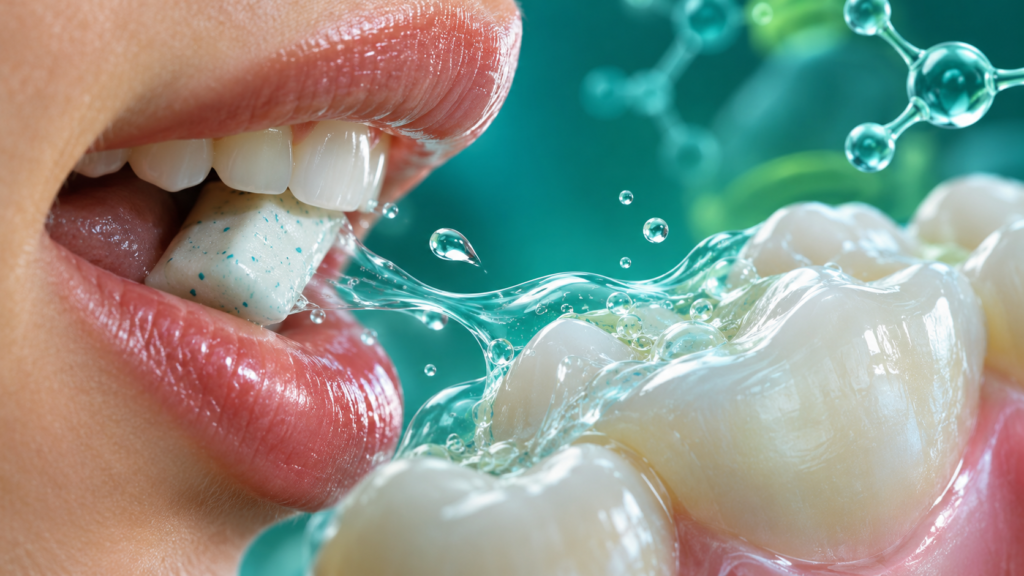
Xylitol is among the most extensively studied sugar substitutes in dental chewing gum.
It belongs to the polyol family, commonly known as sugar alcohols, although it is not the same substance as drinking alcohol.
Its relevance to dental science begins with how oral microorganisms process carbohydrates.
Why sugar-containing gum can contribute to cavities
Certain oral bacteria metabolize fermentable sugars and produce organic acids as metabolic byproducts.
When these acids accumulate within dental plaque, the local environment can become undersaturated with respect to enamel minerals.
Repeated periods of mineral loss may eventually contribute to dental caries.
Sugar-containing chewing gum creates a particular concern because sugar may remain available to plaque microorganisms throughout part of the chewing period.
Although chewing stimulates saliva, the presence of fermentable sugar may work against some of its protective benefits.
How xylitol differs from conventional sugar
Xylitol is not efficiently fermented into acids by many important cariogenic oral bacteria, including Streptococcus mutans.
That gives it a useful characteristic: it can provide sweetness without producing the same direct acid challenge as sucrose.
Research has also investigated whether xylitol exposure can alter bacterial metabolism, plaque formation, and the abundance of certain organisms associated with tooth decay.
However, it is important to separate two conclusions:
Replacing fermentable sugar with xylitol is a sound dental strategy.
Whether xylitol produces a substantial additional reduction in cavities beyond the general benefits of sugar-free gum is less certain.
The second question depends on factors such as gum composition, frequency of use, population characteristics, and the comparison group.
Xylitol gum vs regular gum: Scientific comparison
| Feature | Xylitol gum | Sugar-containing gum | Other sugar-free gum |
|---|---|---|---|
| Stimulates saliva | Yes | Yes | Yes |
| Supplies readily fermentable sugar | Generally no | Yes | Generally no |
| Supports acid clearance through chewing | Yes | Yes, but sugar can counteract the benefit | Yes |
| Xylitol-specific bacterial effects | Possible | No | Only if xylitol is included |
| Potential caries-preventive role | Supported with limitations | Not preferred for caries prevention | Supported |
| Suitable as a brushing replacement | No | No | No |
The distinction between sugar-containing gum and other sugar-free gum is often more consequential than the distinction between two different sugar-free sweeteners.
Does xylitol gum prevent cavities?
A systematic review of sugar-free gum interventions published online in 2019 and in print in 2020 examined 12 studies.
The analysis reported an estimated preventive fraction of 28% for sugar-free chewing gum compared with nonchewing controls. For the subgroup of eight xylitol-gum trials, the estimated preventive fraction was 33%.
The review described the findings as tentative because the studies differed substantially in design and were generally of moderate quality. pubmed.ncbi.nlm.nih.gov
Other reviews have reached different conclusions about xylitol’s independent effectiveness.
A 2021 review found very low-certainty evidence for xylitol-only chewing gum in children, while a 2024 review reported some support for daily xylitol gum use among children with moderate-to-high baseline caries levels. pubmed.ncbi.nlm.nih.gov+1
These findings should not be converted into a universal promise that xylitol gum prevents a particular percentage of cavities.
Does the amount of xylitol matter?
Potentially, but the dose-response relationship is not sufficiently established to prescribe one universally effective chewing-gum dosage for cavity prevention.
Product labels may disclose the amount of xylitol per piece or list it without providing its exact quantity.
An individual might chew several pieces throughout the day but receive a very different total xylitol exposure depending on the formulation.
The total amount is not the only variable. Distribution across the day, the number of chewing sessions, salivary response, and the individual’s existing caries risk may all affect outcomes.
Excessive polyol consumption may also cause abdominal discomfort or diarrhea in susceptible individuals.
For the underlying research on sugar substitutes, plaque bacteria, dosing, clinical trials, and cavity prevention, read xylitol gum and cavity prevention.
Oral Microbiome and Chewing Gum
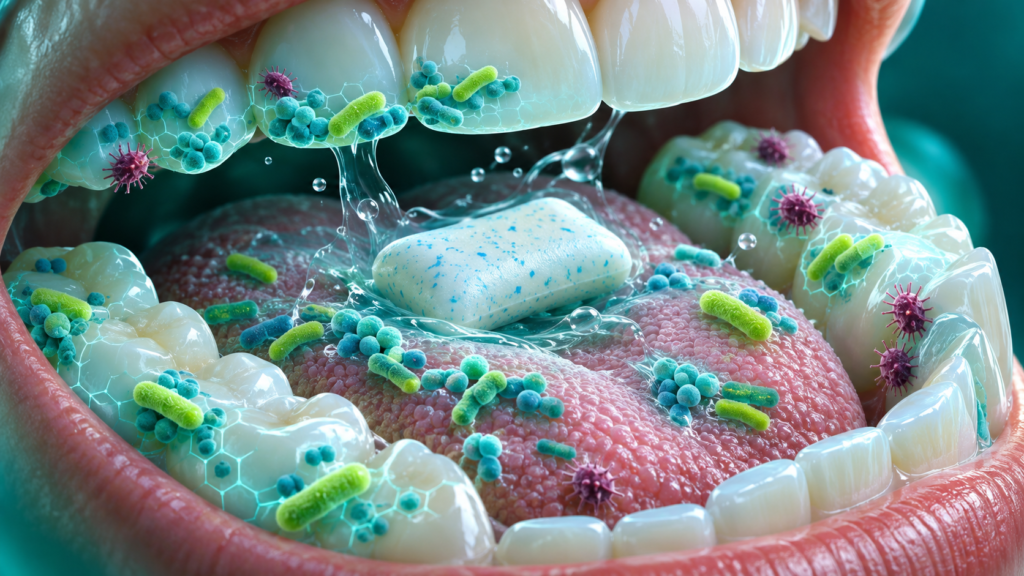
The oral microbiome is the collection of microorganisms living within the mouth, including bacteria, fungi, viruses, and other microscopic organisms.
These organisms occupy different environments: the tongue, saliva, gums, cheeks, and tooth surfaces.
Dental plaque itself is a structured microbial biofilm rather than a random collection of bacteria.
The significance of chewing gum lies in its ability to influence some of the environmental conditions in which these microbial communities operate.
Oral bacteria are not universally harmful
A healthy mouth contains diverse microorganisms performing different ecological functions.
Some contribute to normal oral stability, while others can participate in disease processes under unfavorable conditions.
Dental caries is closely associated with an ecological shift toward microbial communities capable of producing and tolerating acids.
This means a major objective of preventive oral care is not to eliminate bacteria indiscriminately. It is to reduce the conditions that favor disease-associated microbial activity.
Frequent sugar exposure and prolonged acidity can create selective pressure for acid-producing and acid-tolerant organisms.
Conversely, reduced fermentable sugar exposure and improved acid clearance may support a less cariogenic environment.
How sugar-free chewing gum may influence microbial activity
Sugar-free gum can influence the oral ecosystem through several pathways.
Reduced fermentable substrate exposure: Choosing sugar-free gum rather than sugar-containing alternatives avoids introducing a substantial source of readily fermentable sugars during chewing.
Salivary clearance: Increased fluid movement can help dilute soluble bacterial metabolites and loosen some particles.
Changes in acidity: Improved buffering may reduce the duration of conditions favorable to acid-tolerant organisms.
Ingredient delivery: Certain formulations may introduce xylitol, probiotic organisms, or other compounds intended to influence microbial behavior.
These effects vary in strength and clinical relevance.
Stimulating saliva does not sterilize the mouth. It also does not remove established dental plaque sufficiently to replace toothbrushing or interdental cleaning.
Does chewing gum reduce Streptococcus mutans?
Some studies report reductions in salivary or plaque-associated S. mutans following regular sugar-free or xylitol gum use.
However, bacterial counts are surrogate outcomes.
A reduction in one bacterial species does not necessarily demonstrate a corresponding long-term reduction in cavities.
Dental caries involves multiple organisms, biofilm metabolism, diet, host conditions, and time.
A useful study must therefore distinguish between changes in microbial measurements and changes in clinically important outcomes.
Probiotic chewing gum and oral microbiome balance
Probiotic chewing gum attempts to deliver selected microorganisms through the gum matrix.
The proposed objective is to influence microbial interactions within the mouth, potentially modifying the ecology of dental plaque.
This is scientifically different from ordinary breath-freshening gum.
A successful probiotic formulation must preserve organism viability, release the intended dose, and demonstrate that the delivered organism can influence a relevant oral environment.
Even then, a change in microbial composition is not automatically a health benefit.
A 2026 randomized, double-blind clinical trial involving Heyndrickxia coagulans gum enrolled 52 healthy adults, with 44 completing the study.
Researchers observed that the probiotic could be detected in dental biofilm during the intervention and that some microbial changes occurred. The reported shifts were modest and partly transient, demonstrating biological activity rather than established cavity-prevention efficacy. pubmed.ncbi.nlm.nih.gov
The difference between microbial balance and antibacterial activity
| Research outcome | What it demonstrates | What it does not establish |
|---|---|---|
| Lower S. mutans count | Change in a measured bacterial population | Guaranteed cavity prevention |
| Increased microbial diversity | Ecological change | Automatically healthier plaque |
| Probiotic organism detected in plaque | Delivery and temporary presence | Permanent colonization |
| Reduced plaque acidity | Change in microbial metabolic conditions | Complete prevention of dental disease |
| Reduced gingival inflammation | Potential clinical improvement | That all gum formulations share the effect |
Microbiome-focused gum is a developing area of research. Its scientific credibility will depend on whether future trials demonstrate sustained improvements in clinically relevant outcomes.
Explore the relationship between microbial ecology, biofilms, xylitol, probiotics, and oral health in oral microbiome and chewing gum.
Calcium Phosphate and Mineral Delivery Gum
Calcium and phosphate are fundamental to dental enamel.
The mineral stability of enamel depends partly on the concentration and chemical availability of these ions in the fluid surrounding the tooth.
This has encouraged the development of chewing gums that attempt to supplement or stabilize mineral availability.
Why calcium and phosphate matter
Enamel exists in a dynamic equilibrium with saliva and plaque fluid.
Under favorable conditions, surrounding fluids can be sufficiently saturated with respect to enamel minerals to discourage dissolution and support mineral recovery.
Acid challenges shift this equilibrium toward mineral loss.
Calcium and phosphate are therefore relevant not merely as ingredients but as components of a chemical environment.
Their effectiveness depends on whether they are available in suitable forms and concentrations at the relevant surface.
A high mineral content printed on a package does not necessarily mean those minerals are biologically available during chewing.
Types of calcium-phosphate delivery systems
Several mineral systems have been investigated for dental applications.
| Mineral system | Scientific principle | Principal limitation |
|---|---|---|
| Calcium phosphate compounds | Supply calcium and phosphate species | Solubility and release vary |
| Amorphous calcium phosphate (ACP) | Provides a relatively reactive calcium-phosphate phase | Stability and delivery are formulation-dependent |
| CPP-ACP | Uses casein phosphopeptides to help stabilize calcium phosphate | Milk-derived ingredient and product-specific evidence |
| Hydroxyapatite | Provides an enamel-related calcium-phosphate mineral | Particle release, deposition, and clinical efficacy require verification |
| Dicalcium phosphate dihydrate | Source of calcium and phosphate under suitable conditions | Contribution depends on formulation and oral chemistry |
CPP-ACP chewing gum and enamel remineralization
Casein phosphopeptide-amorphous calcium phosphate, or CPP-ACP, combines calcium-phosphate chemistry with peptides derived from milk casein.
These peptides help stabilize calcium phosphate in an amorphous form.
In appropriate conditions, this system may help maintain mineral availability near tooth surfaces.
A 2023 systematic review included 16 studies examining CPP-ACP delivered through foods or confectionery, including 12 studies involving chewing gum.
The authors identified potential remineralizing activity but emphasized the need for stronger clinical evidence demonstrating reductions in actual cavity occurrence. pubmed.ncbi.nlm.nih.gov
Because CPP-ACP is milk-derived, people with milk-protein allergy should avoid products containing it unless their treating clinician advises otherwise.
Why ingredient release determines mineral-delivery performance
Chewing gum is an unusually demanding delivery medium.
The gum base must remain elastic while releasing selected ingredients into a warm, wet environment under repeated mechanical pressure.
Some compounds dissolve easily. Others may remain trapped, aggregate, or release gradually.
For mineral-containing gums, several measurements are especially informative:
- Initial mineral content per piece.
- Percentage of the mineral released over the chewing period.
- Chemical form and particle distribution after release.
- Retention or interaction at the dental surface.
- Changes in enamel mineral content under controlled conditions.
- Clinical outcomes after repeated use.
These measurements reveal a crucial difference between formulation potential and demonstrated performance.
A scientific framework for mineral-delivery gum
A useful conceptual model is:
\[ \text{Potential delivery} = \text{Ingredient content} \times \text{Released fraction} \times \text{Relevant exposure} \]
Here, relevant exposure represents the fraction of released material that reaches and remains available at the target site. This is an explanatory model, not a validated clinical efficacy equation.
For example, a gum containing more hydroxyapatite could still produce less relevant mineral exposure than another formulation if most of its particles remain trapped within the gum base.
Mineral delivery should therefore be evaluated through measured release and biological outcomes rather than the ingredient quantity alone.
For additional research on calcium-phosphate chemistry, CPP-ACP, hydroxyapatite, mineral saturation, and gum-based delivery mechanisms, see calcium phosphate and mineral delivery gum.
Chewing Gum Effects on Oral pH
Oral pH is one of the most important variables connecting chewing gum, bacterial metabolism, enamel demineralization, and saliva protection.
The pH scale describes acidity and alkalinity.
Dental plaque and saliva do not necessarily have the same pH at the same moment. Conditions also vary across different tooth surfaces and throughout the day.
These differences help explain why chewing gum can influence the conditions surrounding teeth without completely controlling acid production inside dental plaque.
The relationship between oral pH and enamel demineralization
Enamel mineral dissolution is influenced by hydrogen ion activity, calcium and phosphate concentrations, fluoride availability, and the saturation state of the surrounding fluid.
A pH near 5.5 is commonly used as an approximate reference point for enamel demineralization under certain plaque-fluid conditions.
However, it is not a universal critical pH for every person or every tooth surface.
The actual threshold depends on the chemical composition of the surrounding fluid, including mineral availability.
The relevant question is therefore not simply whether oral pH is above or below one number.
It is whether the local environment favors mineral dissolution or stability.
The Stephan curve: What happens after sugar exposure
Following exposure to fermentable carbohydrates, dental plaque pH may fall as microorganisms produce acids.
This pattern is often illustrated using the Stephan curve.
The typical sequence involves an initial acid-producing phase followed by gradual recovery as sugars are cleared and saliva buffers the environment.
Schematic: Plaque acidity after a sugar challenge
Illustrative unaided recovery
Illustrative faster buffering
Conceptual illustration only. Curves and timings are not measured clinical data or a prediction of an individual’s plaque pH.
How chewing gum influences pH recovery
Sugar-free gum may support a faster return toward less acidic conditions by increasing saliva production.
Salivary bicarbonate helps neutralize hydrogen ions, while additional fluid dilutes and clears soluble acids.
This is particularly relevant after eating, when microbial acid production may otherwise prolong the period of unfavorable enamel conditions.
Nevertheless, salivary buffering does not immediately eliminate acid inside every region of a mature plaque biofilm.
The depth and structure of plaque, local diffusion, and bacterial metabolism affect the rate of pH recovery.
Salivary pH vs plaque pH
A common mistake is to measure whole-saliva pH and assume that the reading describes conditions at the enamel surface.
These are different environments.
| Measurement | What it indicates | Important limitation |
|---|---|---|
| Whole-saliva pH | Acidity of collected oral fluid | May not reflect plaque pH |
| Plaque pH | Local acidity within dental biofilm | Varies by site and depth |
| Salivary buffering capacity | Resistance to an acid challenge | Does not directly measure enamel repair |
| Enamel mineral changes | Loss or recovery of mineral | Requires specific testing |
| Cavity incidence | Clinically meaningful disease occurrence | Requires longer-term follow-up |
A short-term rise in salivary pH is a useful physiological observation, but it does not establish that cavities have been prevented.
Why acid frequency matters more than chasing a high pH reading
Consider two individuals consuming similar amounts of sugar.
One consumes sugar during a few defined meals. The other consumes small amounts throughout the day.
Although their total sugar intake might be comparable, repeated exposures can generate more frequent acid challenges.
The cumulative time spent in conditions favoring enamel mineral loss may therefore differ.
A useful explanatory model is:
\[ \text{Acid exposure burden} \approx \sum(\text{Acid intensity}\times\text{Exposure duration}) \]
This conceptual relationship emphasizes that both the severity and duration of acidic conditions matter.
Chewing sugar-free gum may help shorten some post-meal acid challenges. It does not make frequent sugary snacks or acidic drinks harmless.
For a dedicated explanation of plaque acid production, buffering capacity, pH recovery, and dental erosion, explore chewing gum effects on oral pH.
Sugar-Free Chewing Gum Benefits: What Science Supports
The benefits of chewing gum depend heavily on whether the gum contains fermentable sugar, whether the individual can produce sufficient saliva, and whether the formulation has additional clinically validated ingredients.
Some effects occur immediately, while others may require repeated use over time.
There is also an important difference between observing a biological change and demonstrating that the change improves long-term dental health.
1. Increased saliva production
The most consistently established benefit is salivary stimulation.
Chewing activates physiological reflexes that increase salivary secretion.
For individuals with functioning salivary glands, this can temporarily increase oral moisture and improve clearance of food residues and acids.
The benefit may be especially noticeable after meals or during periods of mild oral dryness.
2. Reduced plaque acid exposure
Sugar-free chewing gum can help dilute and buffer acids produced after eating.
This may reduce the time during which enamel remains exposed to unfavorable acidic conditions.
The protective contribution depends on the individual and does not mean that chewing gum completely neutralizes every acid challenge.
3. Support for enamel mineral balance
By increasing salivary flow and helping restore more favorable chemical conditions, chewing gum may support the natural environment required for enamel remineralization.
This is an indirect benefit of saliva stimulation.
Specialized mineral gums attempt to provide additional support, but their individual effectiveness requires separate clinical evaluation.
4. Potential reduction in dental caries risk
Clinical studies provide evidence that regular sugar-free chewing gum can contribute to reducing the development of new caries lesions when compared with no chewing intervention.
The American Dental Association recognizes sugar-free gum as a possible complement to preventive oral hygiene.
Nevertheless, the extent of protection varies, and chewing gum should not replace fluoride toothpaste, dental cleaning, or professional preventive care. American Dental Association
5. Temporary support for dry mouth
Chewing can increase saliva production in individuals with remaining functional salivary gland tissue.
This may improve the sensation of moisture and provide temporary comfort.
However, severe salivary gland dysfunction may respond poorly to mechanical stimulation.
People experiencing persistent dry mouth should have the underlying cause evaluated, particularly when medication effects or systemic conditions may be involved.
6. Fresh breath and oral comfort
Chewing gum can temporarily improve perceived breath freshness through flavor release, increased saliva, and partial clearance of soluble oral compounds.
However, persistent halitosis may originate from tongue biofilm, periodontal disease, dental decay, or other causes that gum cannot adequately address.
Mint flavor should not be confused with clinical treatment of bad breath.
Evidence-based benefit comparison
| Chewing gum benefit | Scientific support | Important qualification |
|---|---|---|
| Increased salivary flow | Strong physiological evidence | Requires functioning salivary glands |
| Faster acid clearance | Well-established mechanism | Plaque conditions vary |
| Improved buffering | Well-established mechanism | Does not completely prevent acid exposure |
| Reduced cavity occurrence | Supportive clinical evidence | Study results vary |
| Enamel remineralization support | Biologically supported | Direct lesion improvement depends on context |
| Dentin sensitivity reduction from mineral gum | Limited product-specific clinical evidence | Does not prove enamel regeneration |
| Temporary dry-mouth relief | Supportive but variable evidence | Not uniformly effective |
| Microbiome modification | Emerging clinical evidence | Long-term outcomes uncertain |
| Fresh breath | Common temporary effect | Does not treat all causes of halitosis |
The distinction between a demonstrated mechanism and a proven clinical outcome is essential.
For example, a study may show that a gum increases saliva production. That finding is meaningful, but it does not automatically establish that the same gum prevents more cavities than another product.
Likewise, a mineral gum may produce promising laboratory measurements without having evidence of long-term clinical benefit.
Who Needs Dental Chewing Gum?
Dental chewing gum is most relevant to individuals who could benefit from additional saliva stimulation or from replacing sugar-containing gum with a less cariogenic alternative.
Its usefulness is determined more by oral-health circumstances than by age, lifestyle, or product price.
Individuals who frequently experience post-meal acid challenges
People who regularly eat carbohydrate-containing meals or snacks may benefit from sugar-free gum after eating when brushing is inconvenient.
The physiological objective is to increase saliva production during the period of acid clearance.
This does not eliminate the importance of reducing frequent sugar exposure.
Individuals with mild dry mouth
Dry mouth, clinically referred to as xerostomia, may occur temporarily or persistently.
Possible contributing factors include dehydration, medications, mouth breathing, and disorders affecting salivary function.
Chewing sugar-free gum may be helpful when sufficient salivary gland function remains.
A systematic review and meta-analysis published in 2023 reported improvements in salivary flow among some elderly and medically compromised individuals using gum, although responses and subjective symptom improvements varied. pubmed.ncbi.nlm.nih.gov
For individuals with persistent symptoms, chewing gum should be considered one possible supportive measure rather than a complete treatment.
Individuals concerned about early enamel mineral loss
People with early noncavitated enamel changes may be interested in gum that supports salivary recovery or contains remineralizing ingredients.
However, the first priority should be determining the cause and extent of the mineral loss.
Enamel demineralization associated with dental caries is not managed identically to acid erosion from dietary or gastric acids.
A dentist can assess whether a lesion is noncavitated, active, or structurally damaged.
Individuals seeking a healthier gum alternative
For someone who already chews sugar-containing gum, changing to an appropriate sugar-free formulation may reduce exposure to readily fermentable sugars.
This is a straightforward preventive improvement without requiring an expensive specialty product.
Individuals who may not be suitable candidates
Chewing gum may be inappropriate for people experiencing jaw pain, temporomandibular disorders, difficulty chewing, swallowing problems, or an increased risk of choking.
Young children who cannot reliably chew without swallowing the gum should not be given chewing gum.
Individuals with orthodontic appliances should follow the instructions provided by their orthodontist, particularly where gum could damage or dislodge components.
Dental chewing gum by individual need
| Individual circumstance | Potential role of gum | Priority consideration |
|---|---|---|
| Healthy adult after meals | Saliva stimulation and acid clearance | Sugar-free formulation |
| Mild dry mouth | Temporary salivary stimulation | Soft gum and tolerability |
| Frequent sugar exposure | Supplementary prevention | Reduce sugar frequency first |
| Early enamel demineralization | Supportive mineral environment | Professional assessment and established remineralization care |
| Interest in advanced mineral ingredients | Possible additional functionality | Clinical evidence for the finished gum |
| Jaw pain or TMD | May aggravate symptoms | Avoid gum and seek appropriate guidance |
| Severe salivary gland dysfunction | May provide limited benefit | Clinician-directed management |
Dental chewing gum is most useful when it addresses a specific biological need, rather than when it is consumed continuously without a defined purpose.
Best Gum for Teeth: Ingredient and Evidence Comparison
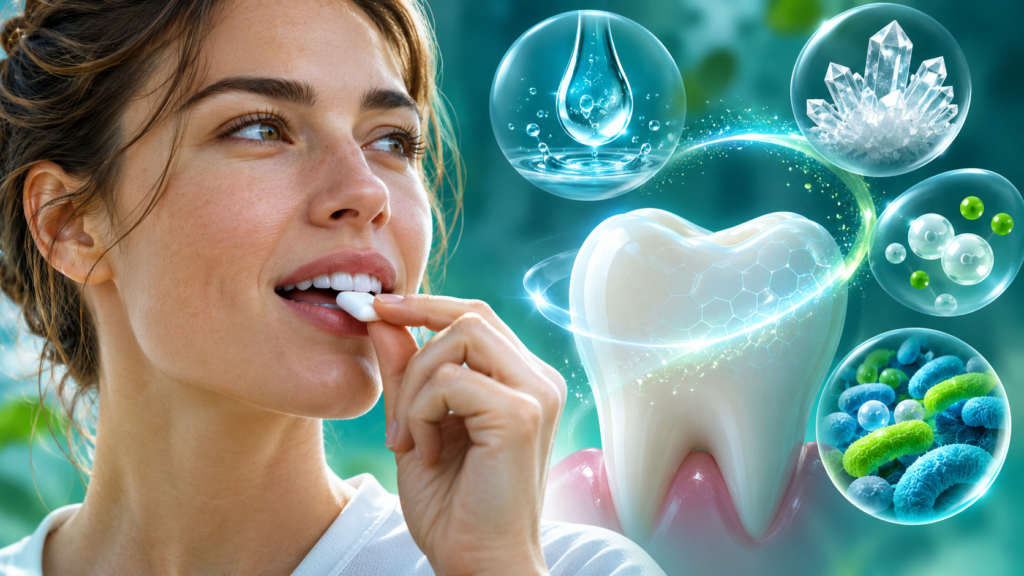
The best gum for teeth is not necessarily the formulation containing the largest number of active ingredients.
A simpler sugar-free gum with established salivary benefits may be more defensible scientifically than a complicated mineral formulation with little clinical testing.
The most useful comparison considers the primary mechanism, clinical evidence, and intended oral-health outcome.
Conventional sugar-free gum
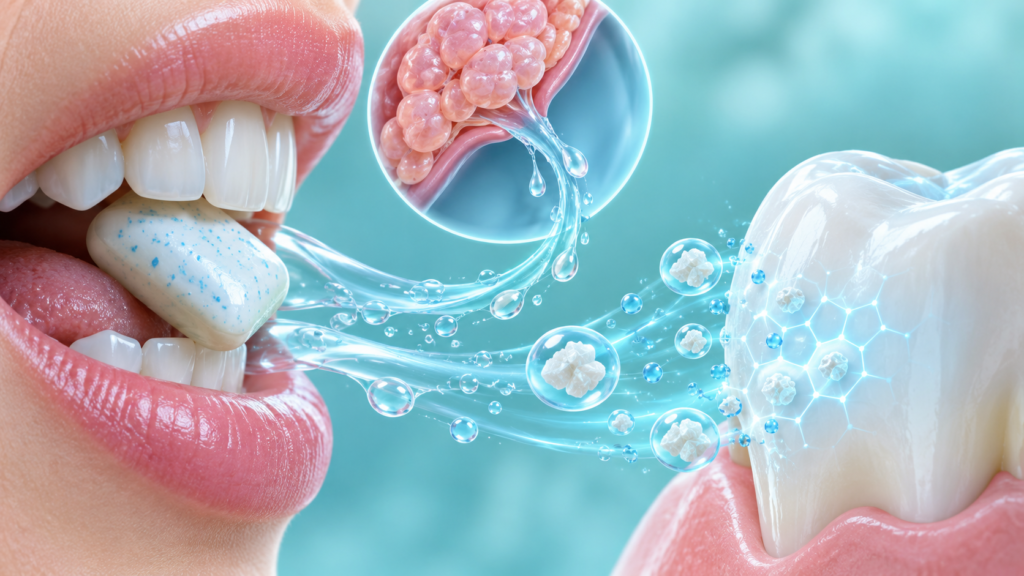
Conventional sugar-free gum generally relies on noncariogenic sweeteners and the mechanical stimulation of saliva.
Its principal benefits are straightforward: increased saliva, improved acid clearance, and support for the oral environment.
It is a reasonable option for many individuals seeking post-meal oral-health support.
Xylitol-focused chewing gum
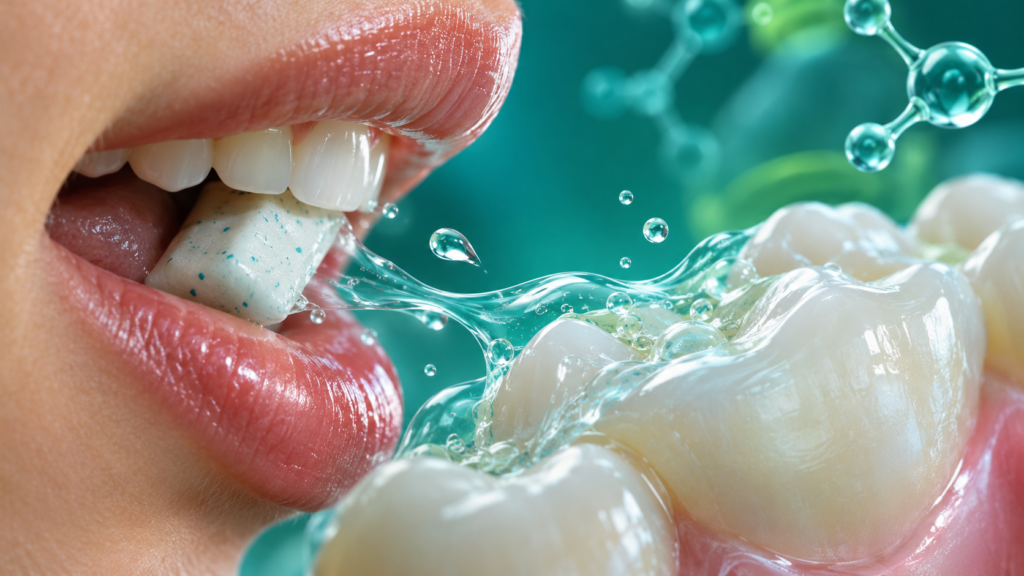
Xylitol-based gum provides the same fundamental chewing-related benefits while using a sweetener with specific dental research behind it.
Some studies suggest additional benefits for caries-associated microorganisms and cavity prevention, but the independent effect beyond ordinary sugar-free gum remains incompletely established.
Hydroxyapatite chewing gum
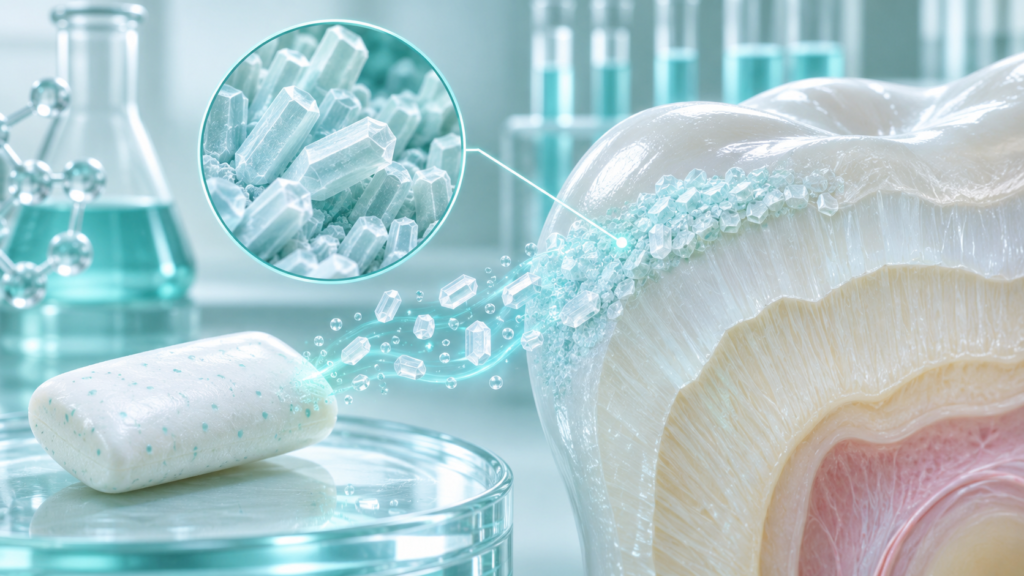
Hydroxyapatite formulations attempt to introduce enamel-related mineral particles into the oral environment.
Their scientific appeal lies in biomimetic mineral chemistry.
However, direct evidence for meaningful enamel repair or cavity prevention from finished hydroxyapatite gums remains limited.
Calcium-phosphate chewing gum
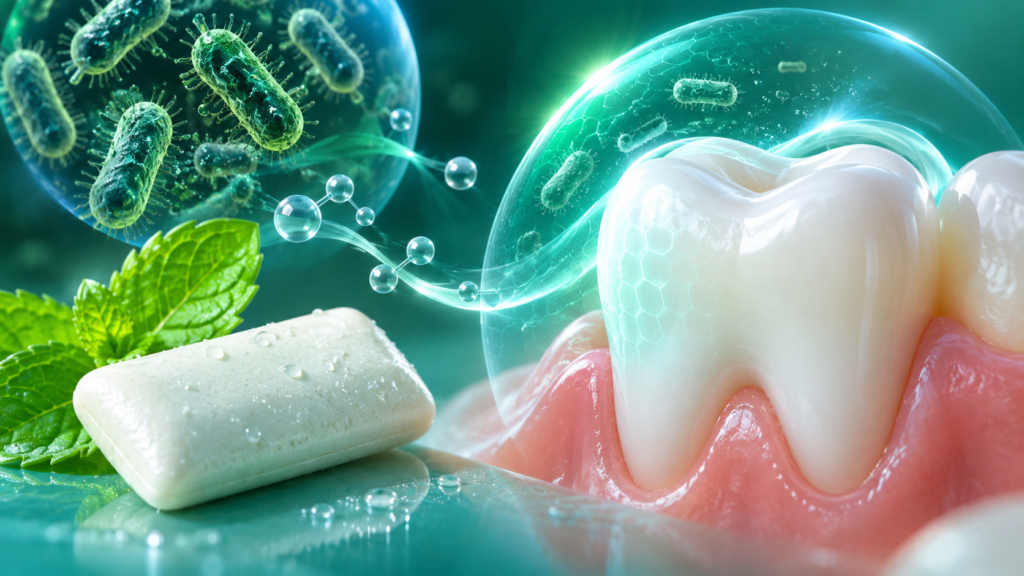
Calcium-phosphate formulations attempt to improve mineral availability.
Certain systems, especially CPP-ACP, have supportive experimental and clinical research relevant to remineralization.
The strength of evidence depends on the formulation and measured outcome.
Probiotic and microbiome-focused gum
These formulations aim to influence oral microbial ecology.
The concept is scientifically plausible, and recent research has demonstrated changes in microbial measurements.
Evidence establishing reliable long-term prevention of caries or periodontal disease remains insufficient.
Comparing dental chewing gum categories
| Gum category | Main mechanism | Scientific advantage | Evidence limitation |
|---|---|---|---|
| Sugar-free gum | Salivary stimulation | Established physiological effects | Benefits vary by individual |
| Xylitol gum | Sugar substitution and possible microbial effects | Dental caries research | Independent xylitol effect remains debated |
| Hydroxyapatite gum | Mineral particle delivery | Biomimetic potential | Limited finished-product trials |
| CPP-ACP gum | Stabilized mineral delivery | Remineralization research | Long-term clinical outcomes require confirmation |
| Probiotic gum | Microbial delivery | Emerging ecological research | Clinical benefits not yet well established |
| Sugar-containing gum | Saliva stimulation plus sugar exposure | No clear dental advantage | Fermentable sugar can contribute to acid production |
A better framework for comparing dental gum formulations
A scientifically meaningful comparison should answer five questions.
1. Is the gum genuinely sugar-free? Check whether it contains sugars that can serve as readily fermentable substrates.
2. What is the principal intended mechanism? Saliva stimulation, cavity prevention, mineral delivery, and microbiome modification are distinct objectives.
3. Is the active ingredient amount disclosed? A named ingredient without a meaningful quantity provides limited information.
4. Does clinical evidence exist for the finished formulation? Studies involving isolated ingredients or different delivery formats may not adequately establish the gum’s effectiveness.
5. Is the claimed outcome clinically meaningful? Increased saliva, reduced tooth sensitivity, and fewer new cavities are different outcomes requiring different evidence.
For individuals comparing available formulations rather than researching their biological mechanisms, HydroPaste’s Gum Hub provides the dedicated center for chewing-gum categories, ingredients, and product-specific information.
Is Chewing Gum Good for Your Teeth? Safety and Limitations
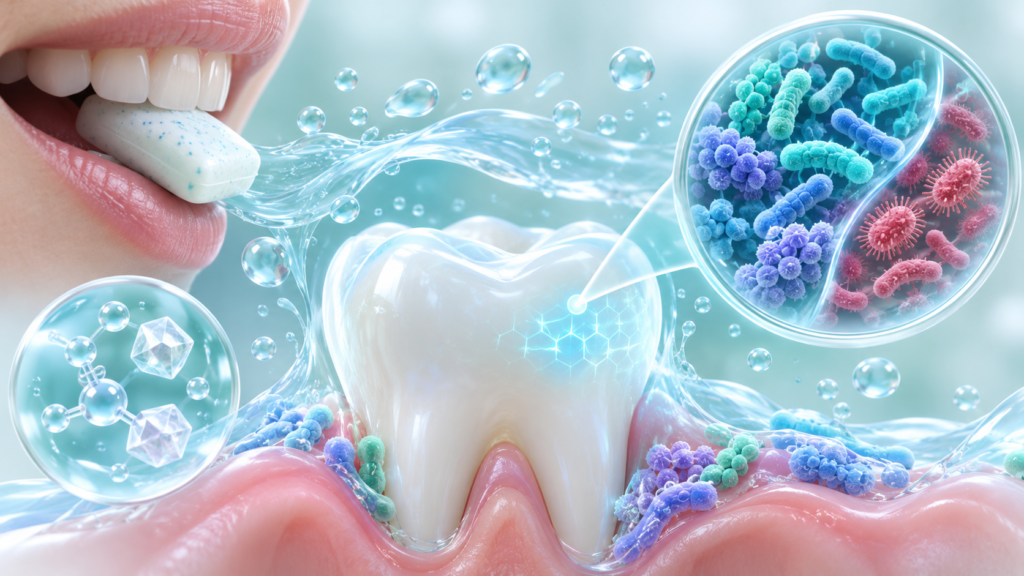
For many people, chewing appropriate sugar-free gum can be a useful addition to oral hygiene.
However, chewing gum is not universally beneficial.
Potential disadvantages arise from excessive mechanical activity, gastrointestinal sensitivity, individual health conditions, and unsuitable ingredients.
Excessive chewing and jaw discomfort
Chewing requires repeated activity of the masseter, temporalis, and other muscles involved in mastication.
Unlike food, gum does not progressively break down into a swallowed bolus, so the chewing activity can continue for an extended period.
Prolonged chewing may contribute to muscle fatigue, jaw discomfort, or headaches in susceptible people.
Individuals with temporomandibular disorders may experience worsening symptoms.
The NHS and ADA advise avoiding gum when managing TMD symptoms.
Chewing harder gum or chewing for longer periods should not be assumed to produce greater oral-health benefits.
Sugar alcohols and gastrointestinal tolerance
Sugar alcohols such as xylitol, sorbitol, and maltitol can be incompletely absorbed in the gastrointestinal tract.
Consuming large quantities may lead to bloating, gas, or diarrhea.
Tolerance varies considerably between individuals.
A person using multiple sugar-free products throughout the day may receive a greater cumulative polyol intake than expected.
Oral dryness despite frequent gum use
Not everyone with dry mouth responds adequately to chewing.
People with severely reduced salivary gland function may experience little improvement.
Strong flavors or certain additives may also feel uncomfortable to individuals with sensitive oral tissues.
For persistent dryness, gum is not a substitute for appropriate assessment and treatment.
Important ingredient precautions
Products containing CPP-ACP require attention to milk-protein allergy.
Products containing aspartame require consideration of phenylketonuria.
Xylitol-containing gum must be kept away from dogs because xylitol is highly toxic to them.
Individuals should also follow dental or orthodontic instructions regarding chewing gum after procedures or while wearing specific appliances.
What chewing gum cannot accomplish
Even advanced dental chewing gum cannot be assumed to:
- Rebuild a physically missing section of tooth enamel.
- Repair an established dental cavity.
- Remove hardened dental calculus.
- Replace effective toothbrushing or interdental cleaning.
- Cure periodontal disease.
- Eliminate every cause of persistent bad breath.
- Permanently restore a disrupted oral microbiome.
These limitations do not make gum ineffective. They establish its appropriate role within preventive dental care.
How to Use Sugar-Free Chewing Gum for Oral Health
The timing of chewing gum is generally more important than maximizing the total number of hours spent chewing.
When should you chew gum?
For most healthy individuals who tolerate chewing, the period immediately following a meal or snack is a practical choice.
This is when saliva stimulation may help clear food residues and buffer acids generated following carbohydrate exposure.
The American Dental Association reports that chewing sugar-free gum for approximately 20 minutes after meals can help reduce dental caries risk. mouthhealthy.org
That does not mean precisely 20 minutes is necessary for every individual or that longer chewing automatically produces greater benefits.
A practical post-meal routine
| Stage | Action | Purpose |
|---|---|---|
| After eating | Finish food and sugary beverages | Avoid prolonged repeated exposure |
| Immediately afterward | Drink or rinse with plain water if convenient | Help clear soluble residues |
| Post-meal period | Chew suitable sugar-free gum for approximately 20 minutes if comfortable | Stimulate saliva and acid clearance |
| Throughout the day | Maintain hydration | Support ordinary salivary function |
| Morning and evening | Brush with fluoride toothpaste and clean between teeth daily | Essential plaque control and cavity prevention |
People who cannot chew gum comfortably can still support oral health through hydration, appropriate oral hygiene, and other measures recommended by a dental professional.
Should gum be chewed before or after brushing?
Chewing gum is generally more useful as a post-meal supplement than as a replacement for brushing.
After brushing with fluoride toothpaste, the priority is to preserve the topical fluoride’s opportunity to act. Routine gum chewing is not a substitute for that exposure.
The most practical separation is to use sugar-free gum after meals when brushing is not convenient, while maintaining regular toothbrushing and interdental cleaning.
How much chewing gum is necessary?
There is no universal number of pieces that guarantees improved enamel health.
For ordinary sugar-free gum, a comfortable post-meal chewing session may be adequate to stimulate saliva.
For specialized gums containing mineral particles or other active ingredients, the instructions and any clinically studied dosing schedule should be considered.
A product’s recommended serving should not be increased merely because a larger active-ingredient dose appears theoretically beneficial.
Why more chewing does not necessarily mean more protection
The salivary response, ingredient release, and mechanical activity do not necessarily increase proportionately with chewing duration.
Prolonged chewing may increase jaw workload without producing a corresponding improvement in clinical outcomes.
A useful preventive routine aims for a favorable balance between biological benefit and unnecessary exposure or mechanical strain.
What Clinical Research Actually Demonstrates
Scientific credibility depends on the outcome being measured.
A study demonstrating that chewing gum increases salivary flow answers a different question from a study investigating whether people develop fewer cavities over several years.
Both are useful, but they support different kinds of claims.
Understanding the hierarchy of dental chewing gum evidence
Clinical caries outcomes
New cavities or progression of lesions measured over time
Clinical enamel or sensitivity outcomes
Measured mineral changes or responses to standardized sensitivity tests
Physiological and microbiological outcomes
Saliva flow, pH, microbial measurements, or ingredient release
Laboratory mechanisms
In-vitro mineral interaction, particle behavior, or bacterial responses
Conceptual evidence hierarchy for clinical relevance, not numerical evidence scores. Study quality, controls, and risk of bias remain critical at every level.
Sugar-free gum and caries prevention research
A 2019 systematic review and meta-analysis, published in print in 2020, included 12 intervention studies investigating sugar-free gum and dental caries.
It reported an estimated preventive fraction of 28%, with a 95% confidence interval ranging from 7% to 48%.
The authors regarded the results as tentative, partly because of substantial differences between studies. pubmed.ncbi.nlm.nih.gov
A preventive fraction describes the proportional reduction in caries increment under the study conditions. It is not an individual’s guaranteed probability of avoiding a cavity.
Hydroxyapatite gum and dentin hypersensitivity
The 2014 controlled trial involving calcium hydroxyapatite and dicalcium phosphate dihydrate provides a useful example of a relatively direct clinical outcome.
The mineral-containing gum performed better than placebo gum in standardized dentin hypersensitivity tests after two weeks.
Clinical trial: Reduction in dentin hypersensitivity indices after two weeks

■ Mineral-containing gum
■ Control gum
Porciani et al., 2014; 100 trial completers. Percentage reductions in test indices, not percentage of patients cured.
Source: Porciani and colleagues, Journal of Clinical Dentistry, 2014. The active gum contained both hydroxyapatite and dicalcium phosphate dihydrate. pubmed.ncbi.nlm.nih.gov
The results support further investigation of mineral-containing gum for sensitivity management.
They do not establish that hydroxyapatite alone was responsible or that the gum rebuilt enamel.
CPP-ACP and enamel remineralization research
Studies involving CPP-ACP gum have reported potentially favorable enamel remineralization outcomes, particularly in experimental or in situ settings.
However, the 2023 systematic review of CPP-ACP-containing foods and confectionery emphasized that further clinical research is needed to establish the significance of these effects for cavity prevention. pubmed.ncbi.nlm.nih.gov
Comparing major scientific findings
| Research area | Study evidence | Observed outcome | Interpretation |
|---|---|---|---|
| Sugar-free gum and cavities | 2019/2020 systematic review, 12 studies | Estimated 28% preventive fraction | Promising preventive contribution; heterogeneous studies |
| Xylitol-only gum in children | 2021 systematic review | Inconsistent outcomes | Very low-certainty evidence |
| Xylitol gum in higher-risk children | 2024 systematic review | Some preventive benefit | Population and comparison conditions matter |
| Calcium hydroxyapatite gum | 2014 randomized trial, 100 completers | Reduced dentin sensitivity | Specific mineral combination; short follow-up |
| CPP-ACP delivery | 2023 systematic review | Potential enamel remineralization | Long-term clinical relevance uncertain |
| Probiotic chewing gum | 2026 randomized trial, 44 completers | Modest microbial changes | Clinical disease prevention not established |
Why study duration matters
Some oral-health mechanisms can be measured within minutes.
Salivary flow and pH changes may appear during a single chewing session.
Dentin sensitivity may be assessed over days or weeks.
Changes in dental caries incidence require substantially longer observation because cavities develop over time.
This creates a practical evidence problem for advanced gum formulations.
It is comparatively easy to show that an ingredient is released or that saliva production increases.
It is more difficult to demonstrate that the product prevents clinically significant disease in people already using effective oral-care methods.
What strong future trials should measure
An informative trial of specialized dental chewing gum should ideally include an appropriate sugar-free gum comparator.
That would help separate the benefits of the active ingredient from the benefits of chewing itself.
The trial should also use an adequate sample size, appropriate follow-up, clear dosage reporting, clinically meaningful endpoints, and methods that reduce bias.
For mineral gums, ingredient-release testing and dental-surface measurements could help explain the mechanism.
For probiotic formulations, both microbial changes and clinical outcomes are needed.
Without this separation, promising ingredients may receive more credit than their finished formulations have earned.
Upcoming Trends and Latest Chewing Gum Research
Dental chewing gum research is moving beyond the traditional question of whether sugar-free gum increases saliva.
New work is investigating controlled ingredient release, mineral-based biomaterials, oral microbial ecology, and more sophisticated ways of measuring the relationship between gum formulations and dental health.
As of November 2026, several areas warrant particular attention.
1. Biomimetic mineral-delivery systems
Hydroxyapatite and related calcium-phosphate materials are being investigated as ingredients capable of interacting with mineralized dental tissues.
Future formulations may focus increasingly on particle distribution, stability, release characteristics, and interaction with enamel surfaces.
The important advancement will not simply be adding more mineral powder.
It will be demonstrating that released mineral reaches a relevant surface and produces measurable clinical benefit.
2. Controlled-release dental chewing gum
Traditional chewing gum releases many soluble ingredients relatively quickly.
Advanced formulation research may improve the ability to control the timing and availability of selected compounds.
For oral-health applications, a controlled-release system could theoretically extend exposure to minerals or other ingredients during a chewing session.
However, prolonged release is not automatically beneficial. Clinical effectiveness depends on the identity, concentration, safety, and behavior of the released substance.
3. Probiotic and microbiome-targeted gum
The oral microbiome is increasingly being investigated as an ecological system rather than a collection of isolated disease-causing organisms.
A March 2026 randomized trial of gum delivering Heyndrickxia coagulans demonstrated that a probiotic organism could reach dental biofilm and produce measurable, though modest and partly temporary, microbial changes.
This provides a research direction for future delivery systems without establishing long-term disease-prevention benefits. pmc.ncbi.nlm.nih.gov
Future studies will need to determine which microbial changes are beneficial, whether they persist, and whether they improve clinical outcomes.
4. More detailed research on salivary pH
Researchers are also investigating how different sugar-free gum formulations affect plaque and salivary conditions.
A 2025 retrospective study involving 100 children aged 7–14 examined xylitol and maltitol chewing gums in relation to plaque and salivary pH outcomes.
Such studies contribute to understanding formulation differences, but their designs and endpoints must be considered before drawing conclusions about long-term cavity prevention. pmc.ncbi.nlm.nih.gov
An important future direction is distinguishing whole-saliva pH improvements from changes in the localized plaque environments where demineralization occurs.
5. Greater emphasis on measurable ingredient delivery
An important limitation in the functional-gum category is inconsistent disclosure of actual delivered doses.
Manufacturers may specify how much of an ingredient was added during manufacturing without demonstrating how much becomes available during chewing.
More informative research would measure:
- Ingredient loading per piece.
- Release rate over the chewing period.
- Local concentration in saliva or plaque fluid.
- Interaction with dental surfaces.
- Persistence of the intended effect.
- Reproducibility across different users.
This approach could substantially improve the assessment of specialized mineral and microbiome formulations.
6. Personalized saliva-based oral care
Salivary flow and buffering capacity differ between individuals.
This raises the possibility of more personalized oral-care strategies based on measured salivary function, caries risk, and oral conditions.
For example, a person experiencing reduced salivary flow may have different preventive needs from someone with normal salivary function but frequent dietary acid exposure.
Chewing gum might eventually occupy a more defined role within such individualized approaches.
However, personalized chewing-gum prescriptions based on comprehensive salivary measurements remain a developing concept rather than an established standard of care.
The next important question for dental gum research
The central question is shifting from Does this gum contain an advanced ingredient? to Does that ingredient improve a meaningful clinical outcome beyond what ordinary sugar-free gum already provides?
That comparison is essential.
For broader investigations of specialized oral-care formulations, research methods, and more technical chewing-gum topics, visit HydroPaste’s Advanced Guides.
Frequently Asked Questions
Is chewing gum good for your teeth after eating?
Yes, appropriate sugar-free chewing gum can benefit teeth after eating by increasing saliva production and helping clear and neutralize acids.
The resulting improvement in the oral environment may contribute to cavity prevention when gum is used alongside regular brushing with fluoride toothpaste and daily interdental cleaning.
Sugar-containing gum does not offer the same favorable profile because its sugars can be fermented by oral bacteria.
Does sugar-free chewing gum prevent cavities?
Sugar-free chewing gum may contribute to reducing cavity development, but it does not provide complete protection.
Clinical research supports a preventive benefit, particularly when gum is chewed after meals. The magnitude of that benefit varies between studies and individuals.
Toothbrushing, fluoride exposure, diet, and professional dental care remain essential.
Can chewing gum remineralize enamel naturally?
Chewing sugar-free gum stimulates saliva, which contains calcium and phosphate and helps create conditions favorable for natural enamel remineralization.
This can support recovery of mineral within existing, partially demineralized enamel.
It does not regenerate enamel that has been physically lost or repair an established cavity.
Hydroxyapatite and calcium-phosphate gums are being investigated for additional mineral-delivery benefits.
Is xylitol gum better than regular sugar-free gum?
Xylitol gum may offer additional dental benefits, but clinical evidence does not consistently establish that it prevents more cavities than every other sugar-free formulation.
Both xylitol and other suitable sugar-free gums stimulate saliva without supplying substantial readily fermentable sugars.
The difference between xylitol gum and sugar-containing gum is more clearly relevant to dental prevention.
Does chewing gum help dry mouth and bad breath?
Chewing gum can temporarily increase saliva production, improve oral moisture, and provide breath freshness through flavor release.
The benefits depend on remaining salivary gland function and the cause of the symptoms.
Persistent dry mouth or bad breath requires assessment because gum cannot treat every underlying cause.
FAQ reference table
| Question | Main scientific mechanism | Practical conclusion |
|---|---|---|
| Gum after meals | Saliva and acid clearance | Useful supplementary measure |
| Cavity prevention | Sugar substitution and saliva | Supportive, not complete protection |
| Enamel remineralization | Mineral equilibrium | Possible support for noncavitated enamel |
| Xylitol vs sugar-free gum | Nonfermentable sweeteners | Additional superiority uncertain |
| Dry mouth and breath | Salivary stimulation | Temporary and individual-dependent |
People Also Ask
How long should you chew gum to protect your teeth?
Approximately 20 minutes after a meal is a commonly studied and ADA-supported approach for sugar-free gum.
Chewing longer does not guarantee additional dental protection and may cause jaw discomfort in susceptible individuals.
Does chewing gum increase saliva and raise mouth pH?
Chewing gum stimulates saliva production, which generally increases the mouth’s ability to buffer and clear acids.
Sugar-free gum may help oral pH recover after eating, but saliva pH and plaque pH are different measurements.
An improved saliva reading does not guarantee the elimination of acidic conditions within dental plaque.
Can hydroxyapatite chewing gum repair cavities?
No clinical evidence establishes that hydroxyapatite chewing gum can rebuild the missing structure of an established cavity.
Mineral-containing gums are being investigated for their interactions with dental tissues, and one clinical trial involving hydroxyapatite combined with dicalcium phosphate demonstrated improvements in dentin hypersensitivity.
That result should not be interpreted as proof of cavity repair.
Is chewing gum every day bad for your jaw?
Daily chewing is not necessarily harmful for an individual with healthy, comfortable jaw function.
However, extended chewing, hard gum, or existing temporomandibular problems can contribute to jaw discomfort.
Anyone experiencing jaw pain, locking, or recurrent headaches associated with chewing should stop and seek professional advice.
What is the best gum for teeth with weak enamel?
An appropriate sugar-free gum is a reasonable supplementary option because it can stimulate saliva and support acid clearance.
Xylitol formulations may be considered, while hydroxyapatite and calcium-phosphate gums offer emerging mineral-delivery approaches with varying levels of evidence.
People with weak or demineralized enamel should prioritize determining the cause, obtaining appropriate dental treatment, and using established preventive measures.
People Also Ask: Scientific outcome chart
| Oral-health goal | Most relevant gum mechanism | Evidence assessment |
|---|---|---|
| Increase saliva | Mechanical chewing | Established |
| Reduce post-meal acidity | Salivary buffering | Established physiological mechanism |
| Support enamel recovery | Saliva and mineral environment | Supported, context-dependent |
| Reduce cavities | Regular sugar-free gum use | Supportive clinical evidence |
| Improve dentin sensitivity | Certain mineral-containing formulations | Limited direct trials |
| Repair established cavities | No demonstrated gum mechanism | Not established |
| Permanently rebalance the microbiome | Experimental microbial delivery | Not established |
Editorial Insights: The Future of Dental Chewing Gum
Chewing gum occupies an unusual position in oral health.
It is an everyday consumer product capable of activating one of the mouth’s most important natural defense systems: saliva.
Its established scientific value comes primarily from that physiological response.
By stimulating saliva, suitable sugar-free gum can help improve acid clearance, enhance buffering, and support the conditions necessary for enamel mineral stability.
This creates a useful preventive role, particularly after meals.
The emergence of xylitol-focused, hydroxyapatite-containing, calcium-phosphate, and probiotic formulations introduces a second possibility: chewing gum as a localized delivery system for oral-care ingredients.
That possibility is scientifically interesting because the gum remains in the mouth while its ingredients are released into saliva.
But the next stage of progress depends on evidence rather than formulation complexity.
A product containing advanced minerals is not necessarily more effective than ordinary sugar-free gum. A probiotic formulation capable of changing bacterial measurements is not automatically protective against cavities. And a substance associated with enamel remineralization in toothpaste research does not necessarily produce the same effect when delivered through gum.
The most important scientific distinction is between improving the oral environment and repairing dental damage.
Chewing gum can contribute to the first. The extent to which specialized formulations can accomplish more remains an active research question.
For individuals, the practical message is clear: choose sugar-free gum when appropriate, use it strategically after meals, and maintain the preventive practices that have stronger established clinical benefits.
For researchers and product developers, the opportunity lies in producing formulations that release active ingredients predictably and demonstrate improvements in meaningful dental outcomes.
The future of dental chewing gum will be determined less by how many functional ingredients a piece contains and more by what those ingredients demonstrably accomplish inside the mouth.